Overlap
Study guideEternity & Eschatology
Is this really what the Bible says about hell?
By the end of this guide you will be able to follow the Bible's own account of what happens to people who finally refuse God, from the guarded tree in Genesis 3 to the lake of fire in Revelation 20, and see why a God who brings sin to an end is better news than a God who keeps it alive forever.
By Tim Barber·
Photo by Tolga Ahmetler on Unsplash
A study companion to the video
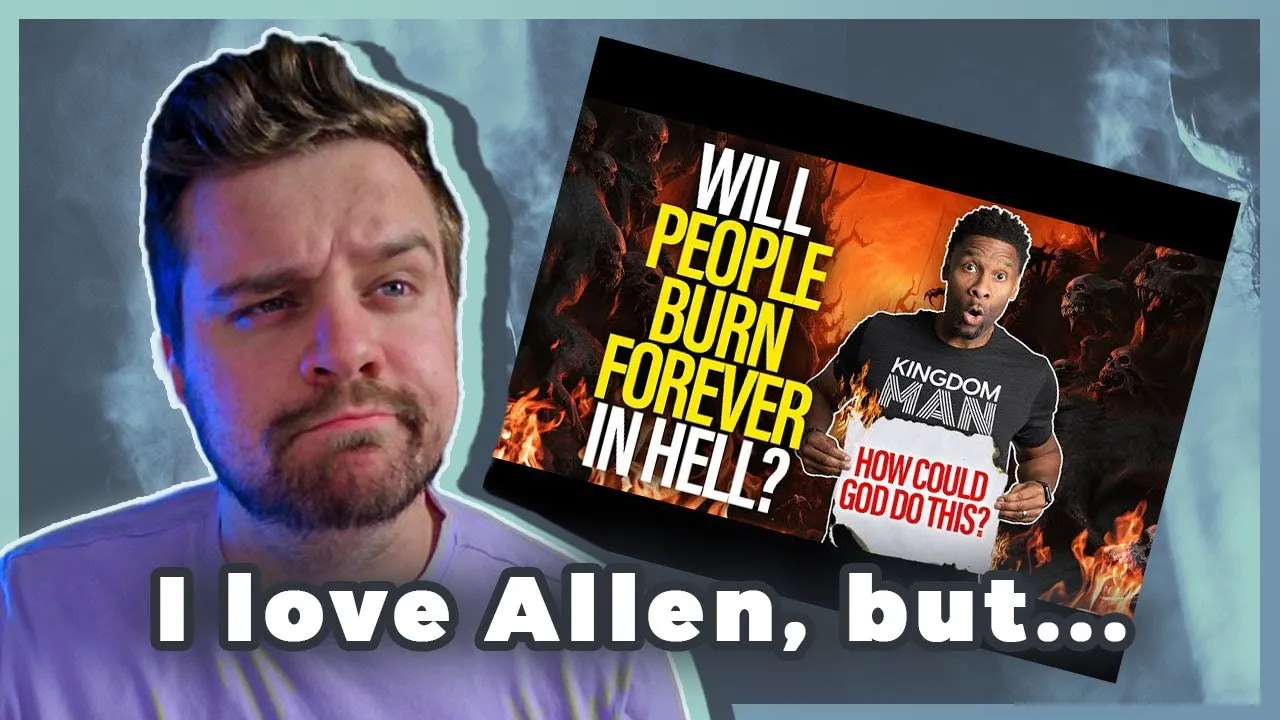
Is this REALLY what the Bible says about Hell? Responding to Allen Parr
Watch it first if you can, then read with your Bible open.
Start here
This is a companion to the video "Is this REALLY what the Bible says about Hell? Responding to @thebeatagp." In that video I responded to Allen Parr, a teacher I respect a great deal, who had just published a survey of five views of hell and, when he got to the view I hold, suggested that people arrive at it by moral feeling first and go hunting for verses second. This guide is the written version of my answer. It is for the person who has read the Bible carefully enough to feel the strain in the traditional picture and has never said so out loud. It is for the person who was handed "God is in control" and "the lost suffer forever" in the same breath and has been trying to love that God ever since. And it is for the person who followed the logic of what they were taught all the way down and is now asking, "Am I a heretic for not believing this anymore?" You are in good company. Some of the earliest Christian teachers on record read these texts the way this guide does.
Here is how to use it. Watch the video first if you can. Then open your Bible and keep it open beside you, because the whole point of this study is that the argument lives in the text, and you should be able to check every step of it yourself. Read "The teaching" straight through; it carries the entire case on its own. Then work through "The passages" slowly, with a pen, reading each quotation in your own Bible and marking what you see. Save "Questions to sit with" for last, and answer them on paper.
One thing before we start, and I mean it. Being right about hell does not save anyone. Faith in Christ saves you. The thief on the cross could not have explained the Trinity, and I doubt he had a doctrine of final punishment; he saw a King, asked to be remembered, and that was enough. I have friends all over the map on this question who love the Lord and love other people, and I am not walking away from any of them over it. So hold this study the way I hold it: be convinced by the text if the text convinces you, and stay generous toward everyone who reads it differently.
What you believe about the end of the story changes how you carry the middle of it. Roughly 168,000 people die every day. If you believe that a large share of them begin a torment that never ends, and you actually let yourself feel that, I do not know how you get out of bed in the morning. Most people manage it by not letting themselves feel it, which means they live as though the doctrine were false while insisting that it is true. That is a heavy way to live, and I do not think the Bible asks it of you.
Up next
Now to the passages themselves. Read each one slowly, in full, with your Bible open beside you.
Unlock the full guide
Get the whole study guide
Seven more sections: the teaching, key terms, the glossary, every passage in full, questions to sit with, where to go deeper, and a PDF you can print.
The next step is a conversation. Bring what you wrote to the community, or go back to the video.