Overlap
Study guide
Where is God in our darkest tragedies? The study guide
God does act, and most often he acts through human hands. Nobody earned a death, and the Bible holds back one answer on purpose. This guide walks that argument slowly, gives you every passage in full, and hands you three things to do while your questions are still open.
By Tim Barber·
Photo by Antônia Felipe on Unsplash
A study companion to the video
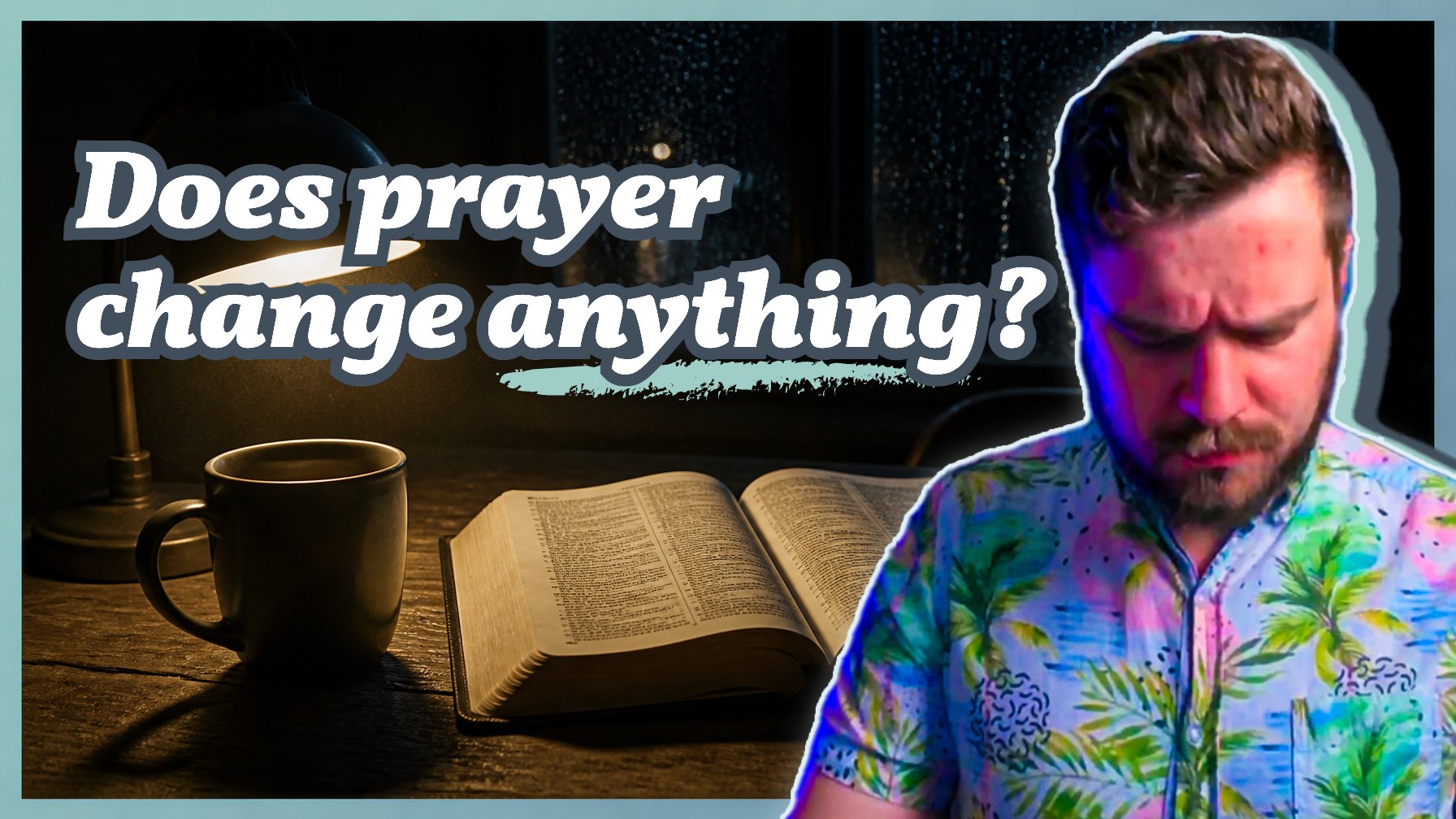
Where Is God in Our Darkest Tragedies?
Watch it first if you can, then read with your Bible open.
Start here
A viewer wrote to me with a handful of questions that she said were bothering her every day. She wanted to know why we pray at all, and whether God really steps in. If he doesn't, why ask him for anything? If he does, why does he help some people and not everyone? If everything was fixed from the beginning, what is the point of asking for change? And is there a right way and a wrong way to pray?
Later she told me what was underneath those questions. A baby she loves survived in a NICU. In the same unit, with the same doctors and the same nurses, another family's baby died. She was terrified and close to walking away from her faith, and she kept apologizing for her questions as though they were foolish. I told her what I'd tell you: these are the questions. Job asked them. The psalmists sang them. Habakkuk climbed up onto the rampart to wait for God to answer them.
If you have ever prayed for someone who lived while someone else's person died, and then wondered what that says about God or about you, this guide is for you.
This is the written companion to the video "Where Is God in Our Darkest Tragedies?" It is built to be read slowly, with a Bible open and a pen nearby. Read "The teaching" straight through first, because it carries the whole argument by itself. Then come back to the passages and the questions, one sitting at a time. Each term is defined where it first appears and collected again in the glossary.
One more word before you begin. I'm going to argue hard against something a lot of us were taught. This isn't a line between the saved and the unsaved. Faith in Jesus is what saves a person, and some people I love hold the view I'm arguing against. My aim is to get you back into the text, where the answers are better than the ones you were handed.
Up next
Now to the passages themselves. Read each one slowly, in full, with your Bible open beside you.
Unlock the full guide
Get the whole study guide
Seven more sections: the teaching, key terms, the glossary, every passage in full, questions to sit with, where to go deeper, and a PDF you can print.
The next step is a conversation. Bring what you wrote to the community, or go back to the video.