Why I’m Not PART OF ANY Denomination (and You Shouldn’t Be Either)
The word church just means gathering. Denominations were never the point.
By Tim Barber··Video·Updated
Chapters
- 0:00Introduction: The True Meaning of 'Church'
- 1:40Denominational Claims and Historical Context
- 4:40Biblical Definition of Ekklesia
- 13:13Jesus' Vision of Authority and Leadership
- 20:09Unity in the Body of Christ
- 32:01Practical Implications and Personal Reflections
- 36:01Conclusion: Embracing the Universal Church
The Biblical Truth About the Church That Destroys Denominational Thinking
For centuries, Christians have argued about which denomination represents the “true church.” Catholics claim apostolic succession from Peter. Orthodox claim to maintain the authentic ancient tradition. Protestants claim to have reformed corrupt practices and returned to biblical truth.
But what if all of them are missing what Scripture actually means by “church” in the first place?
The Fundamental Misunderstanding
The Greek word “ekklesia” that we translate as “church” in our English Bibles simply means “assembly” or “gathering.” In ancient Greek society, it referred to an assembly of citizens called together for a purpose. When the Septuagint (Greek translation of the Hebrew Scriptures) was written, it used “ekklesia” to translate the Hebrew “qahal,” which referred to the assembly of God’s covenant people.
This means Jesus wasn’t introducing a new concept when He talked about building His “ekklesia” in Matthew 16:18. He was saying He would gather His covenant people, just as God had always had a covenant people throughout biblical history.
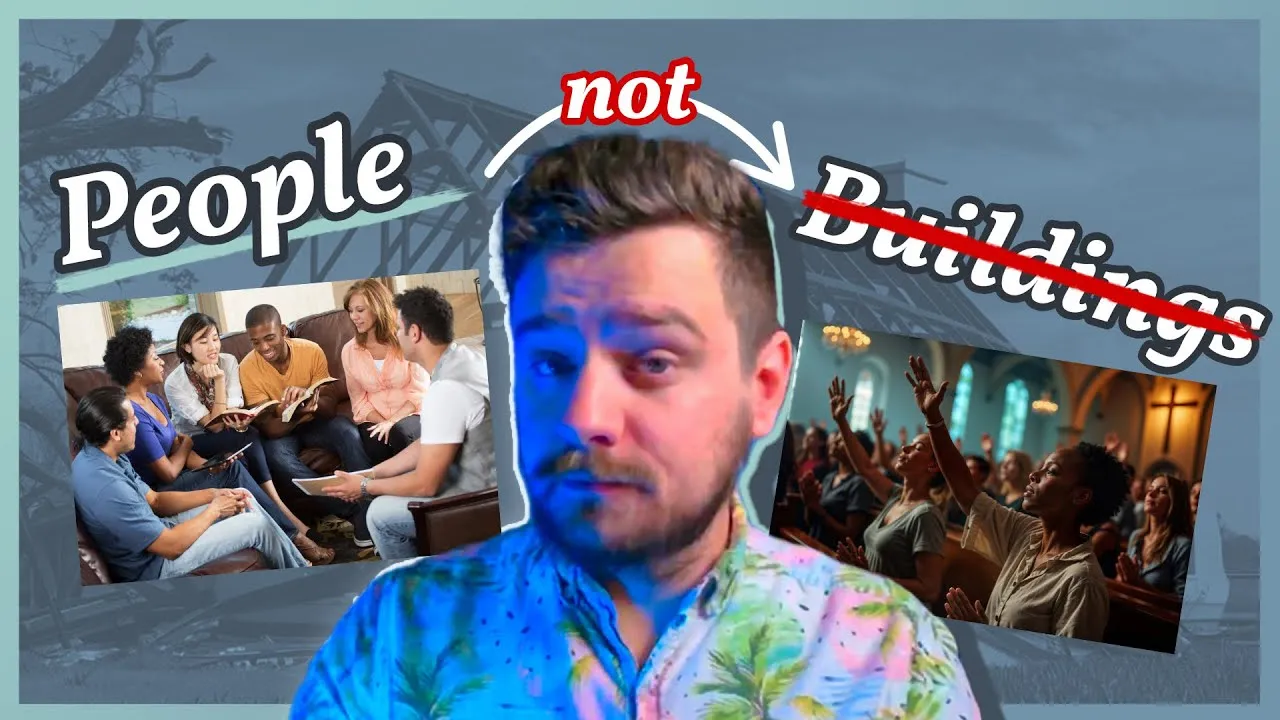
The Church is People, Not an Institution
When we read the New Testament, we don’t see people joining “the Catholic Church” or “the Orthodox Church.” We see people putting their faith in Jesus and becoming part of the community of believers. There’s no headquarters, no central administration, no denominational structure.
Jesus explicitly rejected hierarchical authority structures when He said, “You know that those who are considered rulers of the Gentiles lord it over them, and their great ones exercise authority over them. But it shall not be so among you” (Mark 10:42-43).
Jesus’s Revolutionary View of Authority
Jesus went further in Matthew 23:8-10, saying, “But you are not to be called rabbi, for you have one teacher, and you are all brothers. And call no man your father on earth, for you have one Father, who is in heaven. Neither be called instructors, for you have one instructor, the Christ.”
He rejected the very titles and positions that we still see in churches today. When He established leadership in His ekklesia, it was based on service, not position—”whoever would be great among you must be your servant” (Mark 10:43).
The Liberating Truth of Biblical Ekklesia
Understanding the church as God’s people rather than an institution is incredibly liberating:
- God’s people can be found anywhere. Wherever believers gather in Jesus’s name, that’s church happening (Matthew 18:20).
- This view promotes true unity. When we unify around Jesus and love rather than precise doctrinal statements, we experience the unity Jesus prayed for in John 17.
- It frees us from peripheral concerns. Arguments about music styles, dress codes, and building aesthetics are revealed as preferences, not principles.
The biblical view of ekklesia invites us to see beyond denominational boundaries and recognize that all who belong to Christ are part of one body—His church. This doesn’t mean abandoning all structure or gathering, but it does mean holding our institutional affiliations loosely while embracing our identity as part of God’s universal family.
In the New Creation, we won’t be divided into denominations. We’ll all be together, as one people, under one Lord. Why not start practicing that reality now?
Transcript
[0:00] [Music] What if I told you that the Catholic Church, the Orthodox Church, the Baptist Church, Presbyterians, and every other denomination that you can name aren't actually the church at all. In fact, what if I told you that for 2,000 years, Christians have been arguing about who gets to be the true church while completely missing what Jesus and the apostles meant by the word church in the first place. Here's the somewhat provocative truth. The Greek word ecclesia that we translate as church simply means assembly or gathering. It refers to the people of God, not buildings, not organizations, not denominations or movements. When Jesus said, "I will build my church in Matthew 16," he wasn't talking about establishing the Catholic Church or the Orthodox Church or the Baptist church. He was talking about gathering his own
[0:49] covenant people together. And the more that I've studied scripture, the more I've realized that none of the major denominations actually represent what the Bible means by church. But the good news is the church can be found in all of them. What are we even talking about? We will get into it. But also, Jesus explicitly rejected the kind of hierarchical authority structures that all of these other denominations have created. He said, "The rulers of the Gentiles lorded over them, and their great ones exercise authority over them, but it shall not be so among you." Today, I want to show you why I'm not a part of any denomination, and why you might want to reconsider your own denominational identity as well. Buckle up because, as usual, this is probably going to be a little offensive, but I'm going to do my best to be loving and to be patient with probably the entire world disagreeing with me. Uh, but what
[1:37] else is new? So, without further ado, let's get into the video. So, let's dive deeper into this problem of denominational claiming. When you look at the landscape of Christianity today, it can kind of feel like walking into a courtroom where everyone is arguing over who gets the real inheritance. And it's like there's three kids. There's the Catholic, there's the Orthodox, and there's the Protestant. And they're all arguing over who gets the family estate because who's the original? Who has all the rights? Who is the one who really represents best their father's intentions? And all of them are sort of claiming to be the rightful heir to what Jesus started. Now, the Catholic Church makes the most direct historical claim. They'll tell you that they're the church that Jesus founded, tracing an unbroken line back to Peter himself to espouse. They'll quote from Matthew 16:18. You are Peter and on this rock I will build my church. Now, their entire claim to
[2:26] this authority rests on the idea of apostolic succession. That the authority that Jesus gave to Peter has been passed down through an unbroken chain of popes. They'll say, "We have the records. We have the history. we were there first. This isn't just like an academic claim they're making. This this claim actually fundamentally shapes how Catholics understand salvation, authority, and what it means to be a part of the church. They believe to be that separated from the Catholic Church is to be separated from Christ himself. Now, in the same courtroom scene, you now have the Orthodox Church, which essentially says, "Not so fast, Rome." They argue that it was actually the Catholic Church that innovated and strayed from apostolic teaching, particularly around the time of the great schism in 1054. There's a lot going on here and I'm going to be referring to things like this a lot and
[3:13] we don't have time to get into literally thousands of history. So, if there's more that you want to go and research on your own, you know, great schism, for example, I'm going to use these phrases. If this is foreign to you, there's research that you can do on your own to kind of catch up on things because I'm going to go in a very high level flyover over all this. But in any case, the Orthodox Christians will tell you that they maintained the true apostolic tradition, the true liturgy, the true theology, while Rome introduced changes like papal supremacy, the filioquay clause, and other innovations. Now, they also claim apostolic succession, but through different bishops than the Catholics. They'll point to their preservation of ancient worship practices and say we are the ones who stayed true to what the apostles established which I think falls apart under some more scrutiny but we will be charitable and say this is their case. And then the Protestants very ironically
[4:02] literally their name reformers Protestants whatever you want to call them is they give themselves the name that they have and in reference to the fact that they're protesting against the Catholic Church. They are reforming the practices of the Catholic Church. They're protesting against the Catholic Church's doctrine and practice. And so, it's almost like their rebellious younger brother in this view who just wants to fight back against whatever his older brother is saying. My claim is essentially that the judge looks at all three of these bickering siblings, looks across the room and looks at them and says, "I think you're misunderstanding the situation here. I'm not giving the inheritance to only one of you. Actually, every one of you is included in the inheritance." You see, when we actually go back to scripture, we see a lot of fascinating things. The Greek word eklesacia that gets translated as church in our English Bibles doesn't
[4:50] refer to an institution or an organization or a denomination at all. In ancient Greek society, the eklesia was simply an assembly of citizens called together for a purpose. When the septuagent, the Greek translation of the Hebrew scriptures was written, it used eklesia to translate the Hebrew word cahal, which referred to the assembly of God's covenant people. This is a very very very important point that I need to make as carefully as I can. Some people will say that you're not really a part of the church unless you're physically gathering in person with people. Like you just have to be like part of a church group or a go to a local church or all these different things that they say in order to really be part of the church. Well, actually, no. Biblically speaking, you simply need to be a member
[5:38] of God's covenant people that would have made you in the Old Testament a member of the kahal. Whether you were gathered together with them or not, you were part of that group of people. And then in the New Testament, the eklesia is Christ's body. It is all of the people throughout time who have ever placed their trust in Jesus and exist in good standing covenant relationship with him. For us in the New Testament and onward in the years and thousands of years that have followed since, it's those of us who claim Christ as Lord. We are all members of the eklesia. Whether we are together or not, whether we're around one another or not, whether we're gathering or not. Of course, what we do is gather, but we'll get to that later. Jesus did not introduce some brand new concept when he talked about building his ecclesia. He was saying that he would gather his covenant people just as God had always
[6:26] had a covenant people. The church isn't an organization that Jesus founded. It's the people of God's kingdom. When we read Acts, when we read the epistles, we don't see people joining the Catholic Church or the Orthodox Church. Hilarious, by the way, both of those names. Catholic just means universal. And what they're claiming is that, well, we're the real universal church. So, if everybody if you disagree with the Catholic Church on this thing, you're just a bad Catholic. The Orthodox say the same thing. Orthodox means correct doctrine or correct opinion. We're the right opinion people. If you really are part of the the true church, then you're just part of the Orthodox Church whether you're here or not. You're just a bad Orthodox. And again, the pro the Protestants and the reformers are over there just arguing with the Catholics and saying, "Well, we protest what you're saying and doing. We are going to reform what you're saying and doing and
[7:12] take it our own direction." But all of this developed in the years following the completion of the canon. So, if these aren't the categories that are happening on the pages of scripture in the Old and New Testaments, then what's happening here? What we see is people put their faith in Jesus and become part of the community of believers. There's no headquarters. There's no central administration. There's no denominational structure at all. So both the Catholic and Orthodox claims as well as the Protestant counter claims are really all missing the foundational truth. The church was never meant to be an institution. It was always meant to be the people of God gathered together by Jesus Christ, empowered by his spirit to live as his hands and feet in the world. And this is not just semantics. This changes everything about how we understand authority, membership, Christian identity. If the church is
[8:00] equal to the people, it's indivisible from the people. It's inseparable from the people. And it's not an institution, a movement, an event on a Sunday, a 501c3 nonprofit, or a building. Then the question isn't which denomination is right, but am I a part of God's covenant family? It's a radically different way of thinking about church. In fact, now that we've seen some of the historical problems with these claims, let's crack open our Bibles together and see what the scriptures actually have to say about the church. I've done lots of videos on this, so there's a whole backlog of other things that I can say, of which this is again just a flyover. But we've seen how these major denominations have fundamentally misunderstood what the church is. When we look at what the scripture actually teaches, let's set aside everything that we've been taught about the church and look at the Bible with fresh eyes. It takes a bold person to allow themselves to be alone with their New Testament.
[8:48] But you're bold and you're here. But you're here because you're bold and you are willing to do this sort of thing and risk seeing something on the pages of the scriptures that you didn't know was there before. So here's my first major point. Eklesia in both the New Testament and the Septuagent refers to God's covenant people. Let me prove it. The word eklesia here occurs about 114 times in the New Testament. Here's something most people don't realize. Again, this wasn't a new Christian term that Jesus invented. It was already being used in the sept the Greek translation of the Hebrew scriptures that the apostles frequently quoted from. Now, of course, eklesia being a Greek word, you're only going to be seeing it on the pages of the New Testament because the Old Testament was written in Hebrew, but that's where the Septuagent comes in. The Septuagent, again, if you're not familiar with this, if this is kind of like fuzzy language to you, the Septuagent is the Greek translation of the Hebrew Bible. So faithful, devout
[9:38] Jewish people who were fluent in both Hebrew and Greek during Jesus's time and around there. The Septuagent actually probably would have been the Bible that Jesus grew up with would have been the Old Testament that Jesus grew up with. They translated the Hebrew Bible into Greek so that the modern world could understand it. So Ekles used to translate the Hebrew word kahal in the Septuagent which refers to the assembly of God's covenant people. You see this in passages here like Deuteronomy 4:10. Let's find that now. Yeah. H gather the people to me. That's the ecclesia. It's the assembly of God's covenant people. If we were to do the same thing a couple chapters later, Deuteronomy 9:10, that was 4:10. This is 9:10. See it again. And delivered Yahweh to me two tablets of stone written with the finger of God. Holy cow, quite a passage. And on them were all the words which had spoken
[10:25] Yahweh to you on the mountain from the midst of the fire in the day of the assembly. The is the There you are again, right? The assembly. But in the Septuagent, that's the ecclesia. So this is pretty crucial to understand. When Jesus and the apostles are using the word eklesia, they're tapping into the existing concept of God's covenant community. The church isn't something brand new that started at Pentecost. In that sense, there is a very unique outpouring of the spirit that begins at Pentecost, but it's not the same thing. This is the continuation and fulfillment of the plan for God to have a covenant people working with him to further his purposes in the world throughout history. That is what the ecclesia is. In fact, right here, let's look at Acts 7:38. This is such an interesting one. This is Steven talking. Steven refers to Israel in the wilderness as the eklesia in the wilderness in Acts 7:38. The
[11:14] church didn't start with Peter or Paul. It's the ongoing story of God gathering his people from Abraham to today. I think it's very important that we talk about this because Jesus never established an institution. He gathered people into his kingdom. When we look at Jesus's ministry, we see something pretty fascinating. He never set up headquarters. He never established a formal institution. He never created a hierarchical structure. What did he do? He went around proclaiming the kingdom of God and invited people to enter it. This is all really closely tied to the definition of the gospel as well. I have a whole video about that. But if you go to Mark 1:15, very early in the Gospel of Mark, Jesus gives you his definition of what the gospel is. And he begins his ministry by saying, "The time is fulfilled. The kingdom of God is at hand. Repent and believe the gospel or believe the good news." That word of
[12:02] good news, Yuang Gelon, is always connected with the royal announcement of a coming king. Not I'm here to start a new religious organization called church, the Catholic Church. His focus was on his kingdom. Now later when Jesus says in Matthew 16:18, I believe it is, I will build my ecclesia, he's not talking about establishing the Catholic Church or any institution. He's talking about gathering people into his kingdom. The eklesia is the assembly of kingdom citizens everywhere in the world. as far as the extent of the borders of his kingdom spreads. Throughout the gospels, Jesus talks about the kingdom of God or the kingdom of heaven over 100 times. But he only mentions eklesia twice. This tells us something really, really profound. The church is simply the community of those who have entered God's kingdom. It's not an organization.
[12:50] It's a people. In the past, I've said it this way. It is the biblical belief that the church is the people of God's family and there is no distinction. Everything that they do together is living together as though Jesus is the king of the universe and the new creation has begun to spread in and through him and his followers. And the church that Jesus is building is simply the people of the kingdom which he is establishing. Jesus consistently rejected institutional models of religious authority. In Matthew 23, again, I believe it's Matthew 23, he criticized the religious institutions of his day precisely because they had replaced the true covenant relationship with God with organizational structures. Call no one your father on earth," he said in verse 9, directly challenging the kind of hierarchical titles we see in institutional churches today. In fact,
[13:37] let's camp out there for a minute, too, because there's a lot happening in that passage as well. Matthew 23, I would give you all the context if I could. There's a lot. He is in the middle of, we could call it the passion week where he is passionately disagreeing with the Pharisees in public. Says, "Then Jesus spoke to the crowds and to his disciples, saying, the scribes and the Pharisees have seated themselves in the chair of Moses. Therefore, all that they tell you, do and observe, but do not do according to their deeds. For they say things and do not do them. They tie up heavy burdens and lay them on men's shoulders, but they themselves are unwilling to move them with so much as a finger. But they do all their deeds to be noticed by men. For they broaden their factories and lengthen the tassels of their garments. They love the place of honor at banquetss and the chief seats in the synagogues and respectful greetings in the marketplaces and being called rabbi by men. Jesus has very sharp words for religious hypocrites and
[14:25] people who want to elevate themselves in a system rather than humbling themselves to be servants. As my teenage nephews might say, that's a bar. But do not be called rabbi. for one is your teacher and you are all brothers. Do not call anyone on earth your father for one is your father, he who is in heaven. Do not be called leaders, for one is your leader, that is Christ. But the greatest among you shall be your servant. Whoever exalts himself shall be humbled, and whoever humbles himself shall be exalted. I just don't really think he could be any clearer. Don't let people call you titles. You're brothers. You're equal. If you want to avoid the problems that the Pharisees are running into where they're a wash in this hypocrisy, they're elevating themselves, they're mistreating others because they are so prideful, then don't follow in their footsteps. Give yourself a bunch of
[15:14] titles and then lord it over other people. In fact, a couple passages earlier, couple chapters, let's say, Matthew 20, James and John, the sons of Zebedee, both fall into this trap where they're trying to say, "Hey, we know there's an organization coming, right? There's this going to be this thing. We want to be uh your right-hand man and your left hand. We want to be like number one and number two under you in the in the organizational hierarchy. And Jesus is obviously not happy about this. And then the rest of the 10, right, the other of the 12 apostles, the 12 apostles, you guys hear about this. They were indignant with the two brothers because jockeying for position in an organization is a competition that causes to fight and and be against each other. How does Jesus handle this? He says, "You know the rulers of the Gentiles lorded over them and their superiors exercise authority over them."
[16:02] I actually got to jump into the interlinear for this. Exercise authority over or something like that. The word literally just means to exercise authority. It doesn't mean to doineer. It doesn't mean to push your whole freaking boot heel down on someone's neck. It's literally simply the exercise of authority. Even if you might otherwise think that exercise of authority is good and right. It's literally kata is the root here and that's just like down and it is just exercising authority down on others from above them. What is Jesus's opinion of that? It shall not be this way among you. Instead, whoever wants to become great among you must be your servant. And whoever wants to be first among you must be your slave. Just as the son of man did not come to be served, but to serve and to give his life as a ransom for many. Now, you might say I'm being hyperbolic, but if you think about this,
[16:50] these are the very apostles that the people in the Catholic Church and the Orthodox Church think they are going back to, think that they are representing their authority here on earth. And of course, this isn't the end of the story. There's a lot of stuff that happens in Acts, that they're given power to go and accomplish all these amazing things. But this is still fundamentally what Jesus is after. Even among the 12, were they supposed to argue and fight and jockey for position? Were they supposed to occupy spots in an organizational hierarchy? No. In fact, they were supposed to be the servants of one another. The one who wanted to be the greatest would be the most like the person down on their hands and knees washing sheep poop off of the other person's feet. So, when we get up in our fancy dress and we get up in our nice three-piece suits in the Baptist context and we stand on the elevated platform
[17:38] behind a nicely decorated pulpit and we proclaim that we're the servant of God while all the attention is on us, all the lights are focused on us. I just think that there's a fundamental disjoint there. That is not the behavior of a person who considers themselves the slave of all. Better to look at the person who's in the back cleaning the toilets for other people if you want to see who's great in God's kingdom. But I'll get off of my soap box. The point is this. The New Testament is describing a body of people, not an organization. When we turn to the apostolic writings, especially Paul's letters, we see a consistent picture of the church as a living organism, not as an organization. We could get really bogged down in the citations here, but in 1 Corinthians 12, Ephesians 4, Romans 12, Paul is describing the church as a body with members, a living interconnected community where each person has gifts
[18:26] and functions. He never describes it as a hierarchical institution with headquarters and an organizational chart. For example, you could look at Ephesians 2:19-22 where Paul says, "We are fellow citizens with the saints and members of the household of God, built on the foundation of the apostles and prophets, Christ Jesus himself being the chief cornerstone in whom the whole structure being joined together grows into a holy temple in the Lord." Now, it sounds like a building. It sounds like you've got a foundation of these great people that are going to be the root of this thing, but it's organic language. It's not organizational language. The church grows. It's not manufactured or incorporated. It's a living temple made of living stones. The people themselves being what builds this building. What makes up its walls. What makes up how it's structured. Even the local
[19:13] expressions of the church. The big group of people everywhere who have been on who are on right. the big group of people everywhere throughout time and throughout the world who are on good covenant relationship terms with God. Even the local expressions of that group in the New Testament were simply described as the believers in a particular location. We read about the eklesia in Corinth or the eklesia that meets in Priscilla and Aquilla's house. These weren't branch offices of a central organization. They were local gatherings, local groups of people that were part of the big group of God's covenant people. The biblical picture of the church is radically different from what we see in modern denominations. It's not an institution with headquarters and a hierarchy. It's the covenant people of God gathered by Jesus into his kingdom functioning as a living
[20:01] body with Christ as the head. Now, this has enormous implications for how we understand church membership, authority, and Christian identity. If the church is the people and not the institution, then we need to radically rethink what it means to go to church or be a part of the church. All of those phrases. But this is going to lead us into the perhaps the most controversial aspect of this whole discussion. Jesus's revolutionary view of authority and his ecclesia in more detail. So when we look at these typical church structures today with their hierarchies of priests, bishops, cardinals, popes or senior pastors, associate pastors, elders, deacons, all of that, the way that those words are understood, how well do they reflect the servant model? How well do they embody Jesus's words, it shall not be so among you? My key point here is that the priesthood of all believers means we don't need organizational mediators. It's this final piece of
[20:49] Jesus's revolutionary view of authority is found in what happened at his death. In Matthew 27:51, when Jesus died, the curtain of the temple was torn in two from top to bottom. This was no small detail. The temple curtain separated the holy of holies where God's presence dwelled from the rest of the temple. Only the high priest could go behind that curtain and only once a year. It of course symbolized the separation between God and humanity and the need for priestly mediation. When Jesus tore that curtain, he was declaring that we no longer need human mediators between us and God. We have direct access to the father through Christ himself. That's what Peter means in 1 Peter 2:9 when he says, "You or y'all are a chosen race, a royal priesthood, a holy nation or kingdom, a people for his own
[21:37] possession." How could he be any clearer? All believers are now priests. We all have direct access to God. We have spiritual authority through Christ himself. And it's what the author of Hebrews means in Hebrews 10 19-22, I believe it is. He says, "Therefore, brother, since we have confidence to enter the holy places by the blood of Jesus, by the new and living way that he opened for us through the curtain, that is through his flesh, and since we have a great priest over the house of God, let us draw near with a true heart in full assurance of faith." We just blow past this because we just don't understand what's happening. But the priesthood of all believers is a revolutionary concept. But it means that every believer has direct access to God, can understand scripture through the Holy Spirit, and has spiritual gifts to contribute to the body. We don't need special classes of people with
[22:24] institutional authority to mediate God to us. So when we look at the Catholic priesthood or orthodox hierarchies or even Protestant pastoral systems that create a separate class of professional Christians, we have to ask, are these consistent with Jesus's vision of his ecclesia? or have we recreated the very mediatorial systems that his death was meant to abolish and upend? The truth is that Jesus intended to establish a radically different kind of community when where authority comes from service rather than position where all believers are priests with direct access to God and where there's a fundamental equality based on our common relationship with Christ. Doesn't mean there aren't leaders in the eklesia. Paul clearly recognizes and instructs the recognition of elders, deacons, apostles, prophets, evangelists, she shepherds, and teachers. But these are all functional
[23:12] roles based on spiritual gifting and maturity, not institutional positions of power over others. These are gifts God gives to the church to equip us all to reach the fullness of the measure of the stature of Christ. Here's the most beautiful part. I want to share what I believe is the most exciting aspect of this understanding of the church. It's this liberating and wideopen view of God's people that emerges when we embrace the biblical definition of eklesia. If this is what it means, then God's people can be found everywhere. You're not ever far from a brother or sister in God's family. When we understand that the church is not a building or an institution or denomination, but the people of God, it changes how we see the entire world around us. God's people are everywhere, in every nation, in every denomination, in every gathering. Jesus said in
[23:59] Matthew 18:20, "For where two or three are gathered in my name, there am I among them." I know this is church discipline. It's all about there's this community of people, this person's caught in sin. Go to them privately. If you can't gain them that way, then you go with brothers or sisters to go and confront them that way. I know this is church discipline. Nevertheless, for where two or three are gathered in my name, there am I among them. He didn't say where two or three are gathered in a properly authorized building with proper institutional affiliation, simply in my name. The church can be found everywhere. The gathering of God's people happens in all kinds of contexts. In homes, in coffee shops, in parks, in prisons, in hospitals, in workplaces, wherever God's people gather in Jesus's name, that's eklesia happening. It also means you're never alone as a believer. Even in the most remote or hostile places on earth, if there's just one
[24:45] other person who loves Jesus, you've got church, you've got family, and if you have access to the internet, and you can find them there, they're in your corner. They can pray for you. They know about your needs. This transforms missions and evangelism and our sense of connection with believers around the world. The Ethiopian Christian is just as much a part of the eklesia as the American Christian or the Russian or the Brazilian or the Christian from 500 years ago. We see this in Acts 2 where the believers that were saved on the day of Pentecost were devoted to the apostles teaching and to the fellowship and to the breaking of bread and the prayers. I can hear you Orthodox people screaming at me about the apostles teaching. I hear it. I'm drowning it out. They met daily in the temple and in their homes. Church wasn't a place they went to. It was a reality. They lived wherever they were. I'm going to do another video about this next week where I'm trying to give you a constructive
[25:32] case of what you can do instead. But this is extraordinarily liberating. If you like the Sunday event, go to the Sunday event. Just don't call it the church. You can meet with the church there because those are the people of God there. But there's probably going to be unbelievers there, too. And that's an opportunity for you to love your neighbor as yourself and welcome them into a community. Let's just not get confused and call that event the church or the building the church or the denomination the church. That's not what it is. But the church can be found there. If you like that Sunday event, you go to it. Here's another thing. This view actually aids in unity because whenever the church unifies around doctrine, unifies around doctrine, it always subdivides further into little echochamber groups that we call, wait for it, denominations. But whenever the church unifies around Jesus and love of
[26:20] brother and love of neighbor, it unifies. Indeed, one of the great ironies of church history is that the more we've tried to unify around precise theological statements, the more we divide. Every attempt to create that doctrinal unity has resulted in further fragmentation. The Protestant Reformation again began as an attempt to reform the church based on doctrinal principles. But within a few years, we had Lutheran, Calvinists, Anabaptists, Anglicans, all disagreeing on various points of doctrine and even killing each other. And if you fast forward to today, we have over 40,000 Christian denominations globally. Each one exists because some group of believers decided that a particular doctrine or practice was so important that they needed to separate from others who didn't share it. I'm not saying doctrine is not important. It is. But when we unify around Jesus himself and his command to love, that's when we actually experience
[27:07] unity. John 13:35 says, "By this all people will know that you are my disciples, if you have love for one another." Not if you all agree on every point of doctrine, but if you have love for one another. Paul writes in Ephesians 4:3, "We should be eager, eager to maintain the unity of the spirit in the bond of peace." This unity already exists. It's the unity of the spirit that binds together all who truly belong to Christ. Our job isn't to create unity through doctrinal uniformity, but to maintain the unity that already exists through the love and the power of the spirit in and through and among us all. Again, this doesn't mean the doctrine doesn't matter. Truth matters deeply. But we need to distinguish between essential truths that define Christianity as broadly as possible and secondary matters where faithful believers can disagree. As the
[27:56] old saying goes, in essentials unity, in non-essentials liberty, in all things charity. And too often that has not been our motus operandi. When we focus on loving Jesus and loving one another, we discover that we have far more in common with believers across denominational lines than we thought. We find unity not in these institutional structures of doctrinal statements, but in our shared experience of Christ and his love. Another thing that this does is it's going to free you from your fear around music styles, styles of dress, carpet colors, whether the pastor shines his shoes or not, whether he's wearing the proper raignment with all the filigree and all of the fanciness. Those details are frankly useless in the grand scheme of things. Go where you are freest in your circle of influence in the way that God has called you to and make friends from different denominations. How much
[28:44] energy have Christians wasted arguing about things coming up with hackneed schemes and defenses of whether drums should be allowed in worship or what the pastor should be wearing while preaching or whether we should use himnels or projector screens or smoke. When we understand that the church is not the building or the institution but the people, these superficial distinctions lose their power to divide us. They're revealed for what they are. preferences about what kind of event you want to throw on a Sunday afternoon. Not principles, traditions. They're preferences, not principles, traditions, not truths. Paul addresses this kind of thinking in Colossians 2 2020 2 and 23. Paul addresses this kind of thinking in Colossians 2 20 and 23 when he asks, "Why, as if you were still alive in the world, do you submit to regulations like do not handle, do not taste, do not
[29:31] touch according to human precepts and teachings? These have indeed an appearance of wisdom in promoting self-made religion and aestheticism and severity to the body. But they have no value in stopping the indulgence of the flesh. These external regulations, the human traditions, the forms and structures, they don't actually transform hearts. They just create the appearance of good religion. So what should guide our choices about where and how to gather with other believers? Freedom to love in the way that God has called you to love others. Ask yourself, where can I best grow in Christ and serve others using my unique gifts? Where can I, in my context, in my city, most effectively reach the people God has put in my circle of influence? Where can I live out the gospel and authentic community? For some, that might be in a more traditional congregation. My good
[30:18] friend Warren McGru, the idol killer himself, is currently looking at joining an Orthodox church out there in his area. It's actually over an hour away. But he's looking at that stuff and he's sort of saying, "Hey, it's a bullwark against liberalism. It's a great place to raise a family." And those are the ways that he's looking at it. He knows that he's part of the big church, but this is a community of people who emphasizes the kind of things that he wants to emphasize. And in joining, he's not going to be cutting off other people. He's not going to be cutting me off simply because I'm not Orthodox. And he wouldn't necessarily becoming Orthodox. He'd just be joining an Orthodox community of people out there who throws an event on a Sunday every time. For others, it might be a house church or a more contemporary gathering. For still others, it might involve multiple different communities of believers all working together. Let me encourage you, make friends with believers from different traditions.
[31:06] Learn from Catholics. Learn from Pentecostals about the power and presence of the Holy Spirit. Learn from reformed believers about the depth of God's love for his beloved. Learn from Orthodox believers about the beauty of ancient practices. You don't have to agree with everything in these traditions to benefit from the perspectives they offer. Remember, no single group of believers has a monopoly on truth or spiritual insight. God's spirit is at work in all his people, and we can all learn from all of them. This kind of openhearted approach to fellowship with all believers isn't just more biblical, it's actually also more enriching. It expands our understanding of God and his work in the world. It helps us see beyond our own limited perspectives and cultural biases to see where God's spirit is at work. And where God's spirit is at work, God is. And where God is, God's people are in the new creation. We won't be divided into
[31:54] these denominations. We'll all be together as one people under one Lord. Why not start practicing that reality now? So, what does this all mean for us today? How should we respond to the biblical truth that the church is not an institution or denomination, but the universal body of God's covenant people? First, I want to say that we need to recognize that our identity as believers isn't tied to a denomination or an institution. When someone asks you, "What are you?" The primary answer shouldn't be I'm a Catholic or I'm Orthodox or I'm Baptist. Your primary identity is I'm a follower of Jesus Christ or I'm a part of God's covenant family. Next, I'm going to encourage you to reject the artificial divisions that denominations create. Paul asked in 1 Corinthians 1:13, "Is Christ divided? Was Paul crucified for you? Or were you baptized in the name of Paul?" He was horrified that believers were dividing themselves into factions. I follow Paul. I follow Apollos. I follow Kath. How
[32:41] much more would he be horrified by? I follow the Pope. I follow this patriarch. I follow Luther. I follow Calvin. In Ephesians 4:4-6, Paul reminds us that there is one body and one spirit just as you were called to the one hope that belongs to your call. One Lord, one faith, one baptism, one God and Father of all, who is over all and through all and in all. There is one body, not many denominations chopping chopping up the body into a bunch of smaller bodies. That's not how it works. And then third, I'm going to say that we need to embrace a biblical understanding of authority and leadership. Leadership in the eklesia is about service, actual honest to God's service. And leadership from among a group, leading forward as a part of the group, not serving over people in a position of hierarchy. It's about function, not title. It's about spiritual gifting and maturity, not
[33:30] institutional sway. This doesn't mean we shouldn't have leaders or that even all structure is bad, but our structures should reflect what Jesus taught. servant leadership, mutual submission, the priesthood of all believers and the fundamental equality of all who are in Christ under him as the king. He alone is king. He alone is head of his church. No one else can supplant that title from him. And fourth, we need to focus on one what unites us rather than what divides us. The essentials of the faith, the deity of Christ, the salvation by grace through faith, the inspiration of scripture, the resurrection, the return of Christ. These are far more important than the denominational distinctives that separate us. In eternity, my friends, there won't be Catholics, Orthodox, Baptists, Presbyterians, Pentecostals, and so on. Only former Catholics, Orthodox, Baptists, Presbyterians, and Pentecostals. There
[34:17] will just be the redeemed people of God gathered around the throne of the lamb, living as his servants, partnering with him to take the world forward into goodness and beauty the way that it was always determined to, the way that it was always destined to. Why not start living that way now? And again, this can also help us, I would say, to recover the New Testament vision of eklesia as both universal and local. The universal church is all believers throughout time and space. But this universal reality is expressed in local groups of people committed to one another using their gifts to build each other up in community and together representing Christ in their communities in the best way for that community to receive him. They don't need elaborate buildings, professional clergy, denominational affiliations, 501c3 nonprofit paperwork. They need believers committed to Jesus, to one another, and to the mission he's given us. Whether they meet in a big
[35:05] building, whether they meet in living rooms, however they do it. So, what am I inviting you to do? I'm not saying you should leave your current church tomorrow. In fact, I would say it's not a church. Don't stop attending the event. If you like the event, especially if it's a place where you can grow in Christ and use your gifts to serve others. But I am challenging you to rethink how you understand church and your relationship to it. Just ask yourself, am I a part of this community where I can both give and receive? Where leadership serves rather than rules, where the gifts of every believer are valued, where Christ is the center, not tradition or denomination. If not, perhaps it's time to look for or help create that kind of community, whether within your current church setting or outside of it. And if you're no longer welcome at the event or at the building or at the denominational mini conference that happens every week, then you have no issues leaving them because you're
[35:52] not leaving the church. Remain friends with as many people as you can. Be compassionate and step outside the walls to find God's family wherever they can be found. And most importantly, I'm inviting you to embrace your identity as part of the universal church, the one body of Christ that transcends all denominational boundaries. to recognize that every true believer is your brother or sister. Regardless of what sign or logo is on their church building in the new creation that's coming, my friends, when heaven and earth fully overlap again, there won't be any of the church buildings or denominations. There will just be the people of God living in perfect community with him and with one another. Let's start living in light of that reality today. And if this message just challenged you, look, I'd love to hear your thoughts in the comments below. If you found this helpful, please share it with others who might be
[36:38] wrestling with some of the same questions. Thanks for watching and remember, you are the church, not the building, not the denomination, not the institution. You together with all who belong to Christ are his ecclesia, his assembly, his covenant people tasked with loving him, loving one another, and loving those who have not yet come to know the love of God. May we take that seriously and may we serve with our whole lives, every second of our day, every ounce of energy we have, the one who so loved and sacrificed himself for us to bring us life and to bring us into life that we might share with others.
Tagsekklesiadenominationschurch unitybiblical churchchurch hurt