

I’m Tired of Watching Christians Tear Each Other Apart – the Kirk Cameron Controversy
The Kirk Cameron backlash exposed a church that confuses uniformity with unity.
By Tim Barber··Video·Updated
Chapters
- 0:00I'm Tired of Theological Divisions
- 0:05Kirk Cameron Controversy: A Case Study
- 0:48Gatekeeping and Conformity in the Church
- 1:53The Problem with Majority Belief
- 2:22Biblical Engagement vs. Tradition
- 8:33Theological Triage: What Really Matters
- 12:33The Nature of Hell: A Secondary Issue
- 20:07Historical Missteps: Slavery and Women in Ministry
- 22:51Scripture as the Final Authority
- 26:06Unity Through Charitable Disagreement
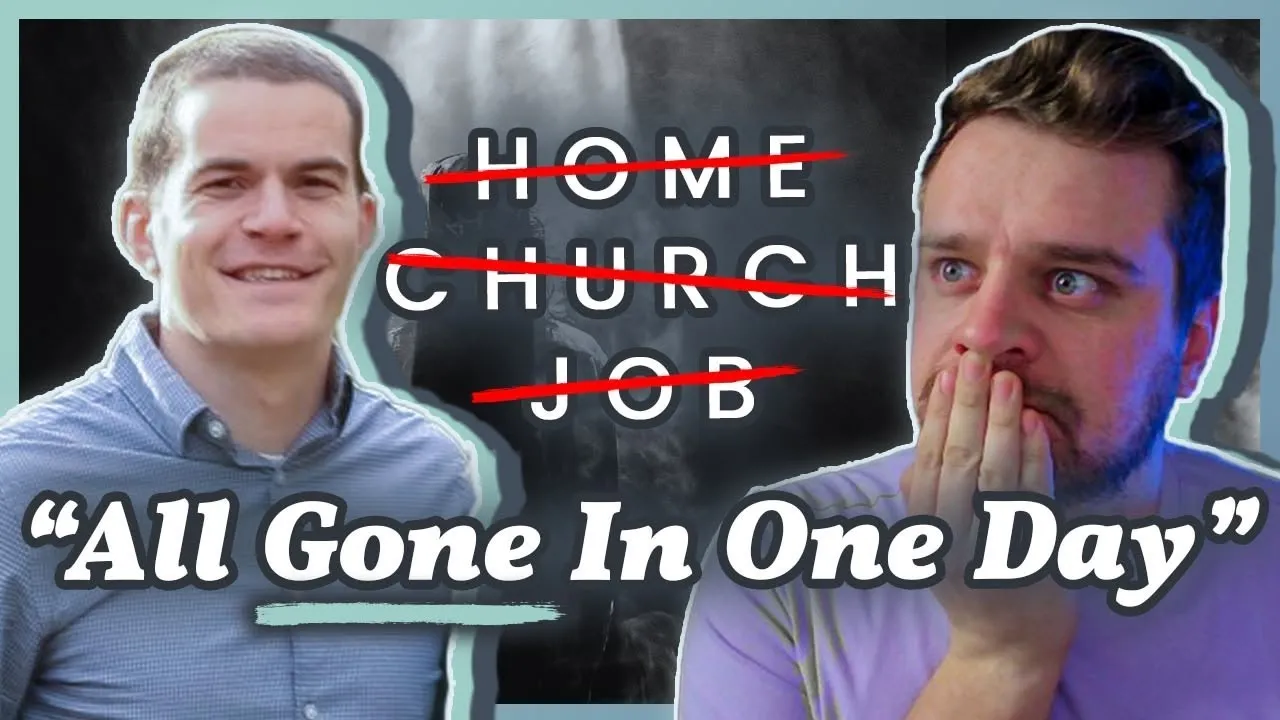
When Kirk Cameron recently came out as an annihilationist, the evangelical response was swift and uncharitable. Demands for repentance. Blocking dissenters. Silencing debate. But the controversy has exposed something troubling about how we handle theological disagreement in the church today.
The Problem: Gatekeeping Instead of Engagement
The response to Kirk Cameron wasn’t about careful Biblical exegesis. It was about conformity. “The church has always believed this, so you need to repent.” But that’s not theology—that’s conformity policing.
Where was the engagement with the actual Biblical arguments for annihilationism? Where was the wrestling with passages like Matthew 10:28, where Jesus says God will “destroy both soul and body in hell”? Where was the discussion about what Greek words like apollumi (destroy) and aionios (eternal/age-lasting) actually mean in their first-century Jewish context?
It wasn’t there. And that’s the problem.
Theological Triage: Which Hills Are Worth Dying On?
Gavin Ortlund, in his book Finding the Right Hills to Die On, gives us a helpful framework called theological triage. He breaks doctrines into three categories:
First-order doctrines are essential to the gospel itself. The deity of Christ. The resurrection. Salvation by grace through faith. The Trinity. The authority of Scripture. If you deny these, you’ve left Christian orthodoxy.
Second-order doctrines are important enough to create boundaries between different church traditions, but they don’t determine whether someone is a Christian. Baptism. Church governance. These matter, but a Presbyterian and a Baptist can both love Jesus and be saved.
Third-order doctrines are issues where Christians can disagree within the same local church and still have meaningful unity. The timing of the rapture. Views on the millennium. These are real theological questions, but they’re not worth dividing over.
The nature of hell? It’s not a first-order issue. Faithful, Bible-believing Christians disagree on this. John Stott was an annihilationist. So is N.T. Wright (in a qualified way). These aren’t liberals denying Scripture—they’re evangelical scholars who have come to different conclusions about what the Bible actually teaches.
When the Majority Is Wrong
John Stackhouse makes a crucial distinction between traditional views, historical views, and Biblical views. Sometimes these three categories align. But sometimes they don’t. And when they conflict, which one wins?
For Protestants, the answer should be obvious: Scripture wins. Every time. That’s what Sola Scriptura means.
The majority has been catastrophically wrong before. For over 1,800 years, most Christians believed slavery was Biblical. They quoted Scripture to defend it. And they were utterly, horrifically wrong.
The abolitionists were the minority. They were accused of being unbiblical, of letting cultural trends influence their theology, of abandoning what “the church has always believed.” Sound familiar?
The fact that the majority has been wrong before doesn’t mean the majority is always wrong. But it does mean we need to be Bereans—examining the Scriptures daily to see if what we’ve been taught is true (Acts 17:11).
Unity Without Uniformity
Jesus prayed in John 17:21, “I pray that they may all be one.” Unity. Not uniformity.
Unity is grounded in the essentials—the first-order doctrines. We’re united because we all confess Jesus as Lord, believe in His death and resurrection, trust in Scripture as God’s Word.
But uniformity demands that everyone believe exactly the same thing on every theological question. And that’s not Biblical unity. That’s tribalism.
Paul says in Ephesians 4:2-3, “Be completely humble and gentle; be patient, bearing with one another in love. Make every effort to keep the unity of the Spirit through the bond of peace.”
Bearing with one another. That means making space for disagreement on secondary issues. That means practicing theological triage—knowing which doctrines are essential and which ones allow for charitable disagreement.
Watch the Full Video
This controversy is a mirror showing us that we have a unity problem. We’ve made conformity the test of orthodoxy. We’ve confused unity with uniformity. And we’ve forgotten how to charitably disagree while staying committed to Scripture.
Watch the full video to dive deeper into theological triage, what we do when the majority is Biblically wrong, and how we can practice unity without sacrificing truth.
Transcript
[0:00] I'm tired. I'm tired of watching Christians tear each other apart over secondary theological issues. Kirk Cameron about a month ago said that he is an annihilationist and instead of engaging his biblical arguments, the evangelical machine demanded repentance. They blocked dissenters. They silenced debate. [music] They said conform or be gone. And I'm tired of it. The problem I'm seeing is that we're not doing exesus. We're not carefully handling scripture. We're just appealing to tradition and majority belief. The church has always believed this, so you need to repent. But that's not how this thing [music] works. Are we Protestants or are we Protestants? In my case, I don't even like that label. But are we not allowed to protest if we believe that scripture is the final authority, not church tradition? Then why are we acting like the majority view is
[0:47] automatically the biblical view? I want you to take a good long look at this screenshot right here. This is a response from Michelle de Leslie where this kind of thing is just full-on gatekeeping. She says, "Fair warning, if you comment on this thread arguing for something that conflicts with what the Bible teaches, i.e. a literal 6-day creation, your comment will be hidden and you will be blocked. I don't allow people to argue for false doctrine on any of my platforms. I've had this policy for years. Furthermore, if you believe some man-made theory of creation that doesn't align with the plain reading of Genesis 1:3, you need to repent of your unbelief and submit to the authority of scripture." No discussion allowed and this was obviously a separate issue but no discussion allowed full-on gatekeeping conformity policing tribalism dressed up as discernment. Uh and there were other ones where conversations have been had and this one has to do with Kirk Cameron
[1:34] himself. But this Kirk Cameron controversy is not an isolated thing. Uh it is a [music] mirror. It's showing us that we have a unity problem. It seems that we've made conformity the test of true orthodoxy and we've forgotten how to charitably disagree while staying committed to the scriptures. So, I've taken some time to really think about this. [music] And in this video, I want to talk about theological triage, which disagreements actually matter. I want to talk about what we do when the majority is biblically wrong. And I want to challenge us to recover something that we've lost. The [music] ability to disagree on secondary issues and still call each other brothers and sisters in Christ because ultimately if we can't do that, we're not following Jesus. We're just protecting our tribe. So let's let's get at this from a little bit of a
[2:21] different angle. When Kirk Cameron came out and said that he no longer believes in eternal conscious torment, that he's now an annihilationist, the evangelical response was immediate and it was not pretty. Again, just look at this screenshot again. Michelle Leslie, who runs a discernment ministry, posted this warning. If you comment on this thread arguing for something that conflicts with what the Bible teaches, your comment will be hidden and you will be blocked. Now, what strikes me about that statement is that she says what the Bible teaches, but what she really means is what the majority of Christians have historically believed. Because the actual biblical debate about annihilationism versus eternal conscious torment is a real one. Faithful Bible believing Christians disagree on this issue and you get stuff like repent or be blocked. What's deeply ironic about this whole situation, of course, is that Paul warned the Galatians about that
[3:09] exact kind of behavior. In Galatians 5:20, and if we're biblicists, if we say we're into the Bible, then buddy, we'd better be into the Bible. Of this list of things, he says, "The acts of the flesh are obvious. Sexual immorality, impurity, and debauchery, idolatry, and witchcraft, hatred, discord, jealousy, fits of rage, selfish ambition, dissensions, factions, and envy, drunkenness, orgies, and the like. I warn you, as I did before, that those who live like this will not inherit the kingdom of God. But Tim, I hear you say, what does that have to do with anything? Why are we making such a big deal out of that list? It doesn't even sound relevant to the topic at hand. It's because this little word right here for factions is this ace. The root word of course is hyesus. If we go to the and this is Strongs. I don't love Strongs, but it is what it is. Sect, factions, heresies, a choice, a preference, disunityity, party, sect, denomination.
[3:58] So some of us think that we when we hear the word heresy, we think that it means false doctrine. It actually means divisiveness. It means creating factions. It means drawing lines and demanding conformity to your particular interpretation. The word literally means to choose a side. And here it is right in the middle of this passage where Paul is listing all these awful things that most of us would agree, oh gosh, this is terrible. We hate these things. This this should not characterize Christians. And yet smack in the middle of that list is being a divisive person. And you can be divisive with the truth. It's not about whether you're right or wrong doctrinally speaking. It's about the posture that you take into a discussion or into a disagreement. So when we respond to theological disagreements
[4:47] just by blocking people, by memoryhulling them, by throwing them out of the kingdom, demanding repentance, and then refusing all along to engage scripture, uh to engage good faith arguments from the other side, we're doing exactly what Paul warned against. We're choosing sides. We're creating factions, and we're being divisive. So my question was ultimately, where where was the biblical engagement? Where is the ex Jesus? Where's the careful handling of scripture? Where's the charitable interaction with people with whom you disagree with the actual biblical arguments for annihilationism? In large part, it wasn't there, and that's the problem. And so, I I get it. Ultimately, annihilationism is a minority view. It feels dangerous to some people. It challenges what almost all of us were taught growing up. But the response to theological disagreement should never be shut up and conform. It
[5:34] should be, let's look at the scriptures together, and if I'm right, then I'm right, and we can both learn something. If you're right, then you're right, and we can both learn something. Paul says in 2 Timothy 2:es 24 and 25 something along the lines of the Lord's servant must not be quarrelome but must be kind to everyone able to teach not resentful opponents must be gently instructed in the hope that God will grant them repentance leading them to a knowledge of the truth gentle instruction not canning a person and then kicking them out of the kingdom when they no longer meet your preference for what you think others should also believe so yeah this the response was swift uncharitable And unfortunately, and it was very scripturally hollow. It was all about tradition and majority belief, not about doing the hard work of biblical interpretation. We treated Kirk Cameron like an opponent who needed to be silenced instead of a brother in Christ
[6:22] who deserves gentle instruction and charitable engagement if he's wrong. So when someone expresses a minority theological view, we shouldn't simply engage their biblical arguments with by saying, "Let's look at history and say the church has always believed X, so you're wrong." That's circular reasoning, and it completely sidesteps the question, what does the Bible actually say? I want you to think about something that's very important for you to know. If historical majority belief is our standard for truth, then we should all be Catholic. The majority of Christians, people who have claimed the name of Christ throughout history, have been Catholic. The majority of Christians throughout history have believed in transubstantiation. The majority of Christians throughout history have prayed to Mary. Does that make any of those things biblical? Of course not. Look at the posts we looked at earlier. The arguments against Kurt Cameron aren't here's why annihilationism fails exeetically. They
[7:09] were, "This is the traditional view, so anyone who disagrees needs to repent." The Bereans in Acts 17:11 are commended because they examined the scriptures every day to see if what Paul said was true. They didn't just accept Paul's teaching cart blanch because he was an apostle. They tested it against scripture. That's the standard and that's what we're supposed to do. So why are we acting like majority belief is automatically biblical truth? Why are we demanding conformity to tradition instead of doing the hard work of exesus? Why aren't we being Bereans? The Kirk Cameron situation has exposed something troubling. When someone challenges the majority view, even with biblical arguments, we don't engage. We're silencing. We're blocking. We're demanding repentance. We practice hyresis. We choose sides and create division instead of pursuing unity through charitable disagreement and careful exesus. Can you have charitable disagreement with people? That is a
[8:00] measure of your Christian maturity. That was my goal going into my debate back in 2024 with James White. I love the man. I still love the man. But the question now is, is it possible for us to have major disagreements on secondary issues while still recognizing that we're face to face with a brother or sister in Christ? That's the real problem here. It's not about whether Kirk Cameron's annihilationism is true or false. It's about how we handle disagreement. And right now, we're broadly handling it terribly. We're acting like Pharisees protecting our traditions instead of being like the Bereans and examining the scriptures. Another thing to take into this account is not all disagreements are created equal. This is about theological triage. And I'm going to be borrowing a lot from Gavin Ortland, another person, by the way, with whom I have a ton of disagreements. Many of you have asked me to respond to his most
[8:49] recent Calvinism video. I may, I may not. But if we if we can't just appeal to tradition and majority belief, how do we figure out which theological disagreements actually matter? How do we know which hills are worth dying on and which ones allow for some charitable disagreement? Gavin's book was finding the right hills to die on, I believe. And it gives us a pretty helpful framework for thinking about theological disagreement. He calls it theological triage, borrowing the medical term for how doctors prioritize which patients deserve the most urgent care in an emergency room. We're going to break doctrine into three categories. First order doctrines are essential to Christianity itself. We would call them non-negotiable. the deity of Christ, the resurrection, salvation by grace through faith, the authority of scripture. These are things Paul says in Galatians 1:8-9. Even if we or an angel from heaven should preach a gospel other than the
[9:38] one we preached to you, let them be under God's curse. If you're denying a first order doctrine, you've left Christian orthodoxy. You're preaching something of a different gospel. Second order doctrines are important enough to create some boundaries between us and other people with whom we can and can't reasonably serve, but they don't determine whether someone's a Christian or not. And therefore, they don't determine whether we're supposed to treat them as a brother or sister in Christ or not. Baptism is a really great example. Should we baptize infants or only believers? Again, by the way, if majority belief were the way forward, then we would all be baby baptizers. We would all be pedo baptists. I'm not one of those on scriptural grounds. So, here we go. The overwhelming majority of Christians throughout history have baptized children regardless of whether there's faith present or not. And
[10:25] Augustine's writings on all this stuff give us the idea that he thought that baptism was salvific. So, all the different ways we could disagree about this. Should we baptize infants or only believers? Should it be by sprinkling or immersion? Christians have disagreed on this for centuries. And while it matters, it shapes how we take up space in the church, how we treat one another, it doesn't determine your salvation. A Presbyterian and a Baptist can both love Jesus and be saved, even though they disagree on this idea of baptism and how it works. Church governance is another one of those. Should churches be led by elders, bishops, or congregational vote? Should it just be led by Jesus and all of God's people are equally on one trajectory and on one level together? where there are some who there's no hierarchy but there are some who are natural leaders and elders who have lived in the faith for longer who can guide and bring along others in a
[11:13] disciplehip relationship again majority view is that the whole church should be governed by bishops that's been the historical view I don't see that in the scriptures but again other people disagree they have their reasons for disagreeing can I punt that person out of the kingdom simply because they disagree with me absolutely not but we don't say someone's not a because I'm this restorationist person and the person over there is a desperately high churchman. They're in their Catholic, they're in their Orthodox or even you know something like Presbyterian. I can't kick them out of the kingdom and they can't kick me out either. [snorts] Third order doctrines are where Christians can disagree within the same local church community and still have meaningful unity. Stuff like the rapture, whether there is one, whether there isn't one, and if there is, what
[12:00] the timing of it would be depending on how you answer certain questions. whether Christians should or should not drink alcohol. Views on the millennium. These are real theological questions, but they're not worth dividing over. Paul addresses this kind of thing in Romans 14:es 1-4. Let's go there together. So, he's talking about these disputable matters, and he says, "Except the one whose faith is weak without quarreling over disputable matters. Who are you to judge someone else's servant? To their own master servants stand or fall, and they will stand, for the Lord is able to make them stand." So, where does the nature of hell fit in this framework? The nature of hell, I've got good news and maybe it's bad news depending on where you come in on this, is genuinely debated. It's not a first order issue. It's somewhere between the second and third order because you can believe Jesus died for your sins, rose
[12:48] from the dead, is Lord and Savior, and that the scripture is the word of God, and still disagree about whether hell is eternal conscious torment or annihilation. And I'm not saying that the nature of hell doesn't matter. It absolutely matters. It shapes how we think about God's good world, his justice, his character, and the ultimate fate of the lost. But it's not a gospel issue. It's not something Jesus or the apostles made a test of fellowship. The early church had the nyine creed, the apostles creed, statements of essential Christian belief. And you know what's not in them? Eternal conscious torment. The creeds affirm that Jesus will return to judge the living and the dead. They affirm that heaven and hell exist, but they don't specify the nature of hell's punishment. And the reality is that bibleelving faithful Christians disagree on this too. John Sto, who a lot of people credit as being one of the greatest evangelists and teachers ever,
[13:36] was an annihilationist. So was Philip Hughes. So is Entr Wright in a qualified way. So is John Stackhouse, who I'll talk about more in a moment. These aren't liberals denying the authority of scripture. They're evangelical scholars who love Jesus, believe the Bible is God's word, and have come to different conclusions about what scripture actually teaches on this question. In fact, John Sto once said, "The hallmark of an authentic evangelicalism is not the uncritical repetition of old traditions, but the willingness to submit every tradition, however ancient, to fresh biblical scrutiny and if necessary, reform. The problem is we've treated this like a first order issue when it's built on tradition. We've acted like believing in annihilation disqualifies you from Christian fellowship, and we've demanded repentance. We've blocked people. We've said, "If you don't hold the traditional view, you're preaching a false gospel." But that's not proper theological
[14:24] triage. That's theological escalation. It's taking a second or third order issue and making it a first order one. And when we do that, we destroy even the possibility of unity. And I think that the reason for that is that we've confused unity with uniformity. It's killing our ability to disagree charitably. I've always been kind of mind blown by a particular prayer of Jesus back in John 17 when he says it's in the middle of the high priestly prayer but he says I pray that they may all be one father just as you are in me and I am in you may they also be in us so that the world may believe that you have sent me. Unity is the apologetic. It is the way that the world will know that the father sent Jesus if we are one in the same way that he and the father
[15:11] are one. Now, interestingly, he and the father are not one being in an indivisible way. They're two separate persons. And so, what he can't be talking about is uniformity where they are literally the same being and there's no distinction at all. It's that they are unified. Unity is grounded in the essentials, the first order things. We're unified and united because we all confess Jesus as Lord. Believe in his death and his resurrection. Trust in scripture as God's word. That's what makes us one. But uniformity demands that everyone believe exactly the same thing on every theological question. That's not biblical unity. Instead, that's tribalism that's going to fracture God's body further. Again, Paul addresses this. I believe it's in 1 Corinthians 1. He's criticizing the church leaders there and about dividing
[15:59] over leaders. I follow Paul. I follow Apollos. I follow Cathos. And Paul rebukes them. Is Christ divided? Was Paul crucified for you? Were you baptized in the name of Paul? His point is that unity is found in Christ, not in uniformity of opinion on secondary matters. Let's let's stop choosing sides. Let's stop creating factions. Let's stop demanding that everyone align with our particular leader or interpretation. And yet, that's exactly what we've done to Kirk. We're drawing tribal lines. We're saying, "You're either with us on eternal conscious torment or you're out." And we're practicing hyesis, choosing sides, creating factions, demanding informity. We're running a foul of Paul's instructions in Ephesians 4 to say, be completely humble and gentle. Be patient, bearing with one another in love. Make every effort, every effort to keep the unity of the spirit through the
[16:47] bond of peace. Bearing with one another, it means making space for disagreement or secondary issues that shouldn't break us apart. It means not treating every theological difference as a reason to divide and practicing theological triage. Which doctrines are essential and which ones allow for charitable disagreement. We don't seem to know how to bear with one another anymore. We don't know how to disagree on a second order issue and still call each other brothers and sisters in Christ. It's as though we've made uniformity the test of orthodoxy and in doing so we've violated the unity that Jesus himself was praying for. Now, if you want to find some things where most Christians should be in agreement, maybe we can talk about the Lord's Prayer. And if this conversation is challenging to you, I want to invite you into something. I've created a free resource called the Heaven on Earth Prayer Journal. It's designed to help you process theological questions like this with God. Not just
[17:35] intellectually, but in real relationship with him. Because honestly, these aren't just academic debates. They're about who God is, what he's like, and how we live in light of eternity. The prayer journal is designed to help you walk through scripture, get reflection questions, and have space to wrestle with God about things that matter most. And if we can do this sort of thing in community as well, it just changes everything. And it'll get you free access into my Facebook group as well. It's completely free. The link is in the description. Hopefully, this is something that we can find some unity on and jump into uh a collective enjoyment of Jesus's own prayer. Uh if we're looking for a place to be unified rather than talking about how we're divided all the time. So, if that's interesting to you, go ahead and grab your copy. It is completely free as my gift to you. But, uh, in the meantime, let's keep moving. So, the ultimate question that I come to is what
[18:23] do we do when the majority is biblically wrong? Because we've established that not all disagreements are created equal. We've talked about theological triage, but now we need to address what I think of as kind of the main elephant in the room here. What do we do when a historically majority view conflicts with what scripture actually seems to teach? Because the real issue underneath this entire controversy is that we've been operating under the assumption that if most Christians throughout history have believed something, it must be biblical. But is that assumption justified? This is where John Stackhouse again comes back. He's a Canadian theologian and scholar. He makes a distinction that's very very critical for this conversation. He differentiates between three categories. Traditional views, historical views, and biblical views. A traditional view is one that's been held consistently throughout church history by the vast majority of
[19:11] Christians. Transubstantiation would be an example for Catholics. Infant baptism for many Protestant traditions. A historical view is one that's been the majority position, but not universally held. There have always been dissenters, minority voices, faithful Christians who disagreed. I would even go so far as to say that a historical view could be defined as a view that has been held in history. It's present early on whether it's popular or not. And then there's we might call it the biblical view. It's a little bit of pride to assume that we have the biblical view. We just need to make a case for what scripture actually teaches when we do careful exesus. So there's the biblical view. We may only have 80% of our own views are biblical views. And the problem is we don't always know what the 20% are. But Stack House's point is that these three categories aren't always going to align. Sometimes the traditional or the historical majority view is also the biblical view. Sometimes it isn't. And
[20:00] when they conflict, the question is, well, which one should wins? For us as Protestants, the answer should be obvious. Scripture wins every time. And if we're honest about church history, the majority has been wrong. Catastrophically biblically wrong more times than we'd like to admit on the issues of slavery. For over 1,800 years, the majority of Christians believed that slavery as a category was good and biblical. They quoted scripture to defend it. Not simply citing its presence, but they built entire theological systems around it. the curse of Ham, Paul's instruction to slaves and masters, the fact that the Old Testament regulated slavery rather than abolished it. And they were wrong, utterly and horrifically wrong. The abolitionists were the minority. People like William Wilberforce, the Quakers, John Wesley, they were the dissenters. They were accused of being unbiblical, of letting cultural trends influence their theology
[20:48] or abandoning what the church has always believed. Sound familiar? But they went back to scripture. They did the hard work of exesus. They asked, "What does the Bible actually teach about the image of God, about human dignity, about the gospel's implications for how we treat one another?" And they concluded that slavery ultimately was incompatible with the vision of humanity that biblical Christianity lays out. They were right. The majority was wrong. The historical view was wrong. The traditions were wrong. I'll lay another card on the table here. Let's take the role of women. For most of church history, women were barred from teaching, from ministry leadership, from public theological engagement. The majority believed that was biblical. They quoted 1 Timothy 2:12, 1 Corinthians 14:34, the household codes. Case closed. Then people started doing better exesus. And then weirdos
[21:36] like me started looking into, well, what is the church anyway? When we say teaching, does that mean a hierarchical authority structure? Doesn't really seem like that's in view when we're talking about these passages. Huh? We started asking questions. What was Paul actually addressing in those specific contexts? What about Priscilla who explicitly taught Apollos and is praised for doing so in the pages of scripture? What about Phoebe who was a deaconist? What about Junia who was outstanding amongst the apostles in Romans 16:7? What about the women prophets in Acts 2 fulfilling Joel's prophecy that in the last days God would pour out his spirit on all people, sons and daughters alike? What about all the other gospel co-workers that Paul mentions and thanks at the end of his letters who are explicitly female? And the more they looked at scripture, really looked with fresh eyes without just assuming traditional view was correct, the more we began to realize that traditional interpretation might be missing something, maybe even
[22:23] getting something badly wrong. Now, I'm not here to just debate slavery or women in ministry. My point is simpler. The majority has been wrong before on issues that seemed absolutely clear to them, on issues they were willing to fight and divide over. So, how do we navigate this? This is where I would say we need wisdom. Because the fact that the majority has been wrong before doesn't mean the majority is always wrong. That would be just as silly as saying the majority is always right. We need to find a way to navigate theological disagreements when the traditional or historical view might conflict with the biblical view. Again, my stance, and I would make a case for this, is that we first go back to scripture always. I would say it's non-negotiable, and we do it humbly, carefully with the best exogetical tools we have. We learn the original languages. We study the historical and cultural context. We pay attention to literary genre, to the flow of the argument, to how the passage fits
[23:10] into the larger narrative of scripture. Again, I believe that's what the Bereans did in Acts 17. Paul shows up preaching the gospel and they don't just accept it because an apostle said it. They examine the scriptures daily to see if what Paul said was true. That's the model. Second, we listen to the church views throughout history, but we don't just submit to them cart blanch. There's a difference. Church history is a conversation partner, not the final authority. When most Christians throughout history have believed something, that's worth taking seriously. It should make us pause. It should make us doublech checkck our ex Jesus, but it's not the final word. Scripture is. Hebrews 4:12 says, "The word of God is alive and active, sharper than any double-edged sword. It penetrates even to dividing the soul and spirit, joints and marrow. It judges the thoughts and attitudes of the heart." Not tradition that doesn't have that
[23:57] power. Historical consensus doesn't have that power. The word of God has that power. And then third, we need to hold our secondary issue convictions with some humility and charity and an open hand. If something is genuinely debated among faithful bible-belving Christians. If godly, exoggetically careful scholars disagree, then we should be slow to make it a test of orthodoxy. We should be quick to extend grace. We should practice the kind of theological triage we talked about earlier. And we should love our neighbors the way we would hope to be loved. In James 3, James describes the wisdom that comes from heaven. It's first of all pure, then peaceloving, considerate, submissive, full of mercy and good fruit, impartial and sincere. considerate, full of mercy. That's how we're supposed to handle this agreement. But the real question is always scripture. But ultimately, I think what frustrates me most about the Kirk
[24:43] Cameron situation is that nobody's talking about the actual biblical arguments. We're not engaging the exesus. It's all the church has always believed this and you need to repent. But where where's the careful interaction with the texts? Where's the wrestling with the passages like Matthew 10:28 where Jesus says God will destroy both soul and body in hell? Where's the conversation about what Greek words like apalumi and Ionio actually mean in their first century Jewish context? Where's the engagement with the Old Testament background? Gehenna, the valley of Henome, the imagery of fire that consumes. Where's the discussion about whether the metaphors of hell and revelation should be taken as literal descriptions of conscious experience or symbolic representations of final judgment and exclusion from God's presence? These are real exogetical questions. Faithful Christians disagree on them and instead of doing theology, instead of being Bereans, we're just appealing to tradition and demanding conformity. And I just don't think
[25:30] that's good enough. Jesus rebuked the Pharisees in Mark 7:8 and9 with these words. You have let go of the commands of God and are holding on to human traditions. You have a fine way of setting aside the commands of God in order to observe your own traditions. He says that the the commands and the traditions of men nullify the word of God. And we need to be very careful we're not doing the same thing. We need to make sure we're submitting to scripture, not to just our theological tribe, not to what we were taught in seminary, not to what most Christians have believed, but to the word of God itself. If we're not willing to do that, if we're more committed to defending tradition than we are to carefully handling scripture, then I think we've lost something essential. So where does that leave us? The Kirk Cameron controversy is a mirror. It's showing us something we need to see about ourselves, and it's that we have a unity problem. The good news is we can do better. We can practice theological triage. We can distinguish between first
[26:18] order issues that define the gospel and secondary issues where faithful Christians can disagree. We can be Bans instead of Pharisees, examining the scriptures to see what's true instead of just defending our traditions. We can extend the kind of grace that Paul talks about in Romans 14. We can bear with one another in love like he says in Ephesians 4. We can make every effort to keep the unity of the spirit through the bond of peace. And we can do all of that while still being deeply committed to scripture. We can hold our convictions with both confidence and humility. We can engage each other's arguments instead of just silencing all disscent. and we can have real theological conversations rather than simply demanding for repentance. That's what I want for the church. That's what I think based on his prayer Jesus wants for us. So, let me ask you, are you willing to do the hard work? Are you willing to examine scripture instead of just appealing to tradition? Are you willing to extend grace to brothers and sisters
[27:05] who disagree with you on secondary issues? If you are, I want to help you. I want to be a part of that. We can help each other. We can pray for each other. Um, and I've created a free resource, like I said earlier, called the Heaven on Earth Prayer Journal. It's designed to help you process these kinds of questions with God, not just intellectually, but relationally. Because the goal ultimately isn't just to win theological arguments. The goal is to know God better, to love him more, to love his word more, to love one another more, and to live every second in light of eternity. Not being fractious [music] and divisive, but keeping our eyes fixed on him and on how we can love one another in [music] him. The prayer journal is completely free. Link is in the description. Download it, use it, let it help you wrestle with God about things that matter most. And if this conversation has been helpful to you, you could also check out my book, The Overlap Life. That is an exercise in
[27:54] my time spent really studying the scriptures and really taking the words for what they actually mean, especially used in their original context. And it led me in some pretty interesting directions around [music] the whole idea of what's eternity like, how do we live in light of eternity? And it is the best news that you may never have heard. Link is also in the description. God bless you. May you [music] be unifying and may you be a non- anxious presence that helps other people to live in light of the Bible itself and in light of the God that it reveals rather than kicking people out of [music] the kingdom because they don't agree in the same interpretive frame that you have. Thanks for watching further up and further in. And oh, by the way, if you want to know a little bit more about my view on hell, which is similar to Kirks, I did a whole response video to Alan Parr here that you can go watch. God bless you.
Tagskirk cameronannihilationismtheological triagechurch unityhell