
The Most Dangerous Prayer in The Bible – What Paul Prayed For in Ephesians 1
Paul prayed one thing from a prison cell: that people would finally see.
By Tim Barber··Video·Updated
Chapters
- 0:00Introduction
- 0:37Paul's Unexpected Prayer Focus
- 1:33Personal Reflection on Prayer
- 2:28Paul's Prayer for Wisdom and Revelation
- 7:49The Hope of His Calling
- 12:33God's Treasured Possession
- 16:08The Surpassing Greatness of His Power
- 17:12Redefining Power
- 17:36The True Power of Resurrection
- 18:31A New Way to Pray
- 18:53Introducing the Heaven on Earth Prayer Journal
- 19:46Paul's Definition of Power
- 21:55Jesus' Cosmic Authority
- 26:23The Church as Christ's Body
- 30:20Paul's Audacious Prayer
- 34:34Invitation to Transformative Prayer
The Most Dangerous Prayer in the Bible: What Paul Actually Prayed For in Ephesians 1
Paul sat in a Roman prison cell, chained to a guard, and wrote nine verses that contain the most audacious claims about power in the entire New Testament. He asked God to open people’s eyes. Nine verses. Zero requests about circumstances.
A Prayer That Rewrites Everything
Ephesians 1:15-23 is one of the most theologically dense prayers in Scripture. Paul hears that the churches he helped start are thriving — their faith is genuine, their love is growing — and his response is to pray harder. Because for Paul, prayer was fuel for a fire already burning. He treated it as oxygen for spiritual growth.
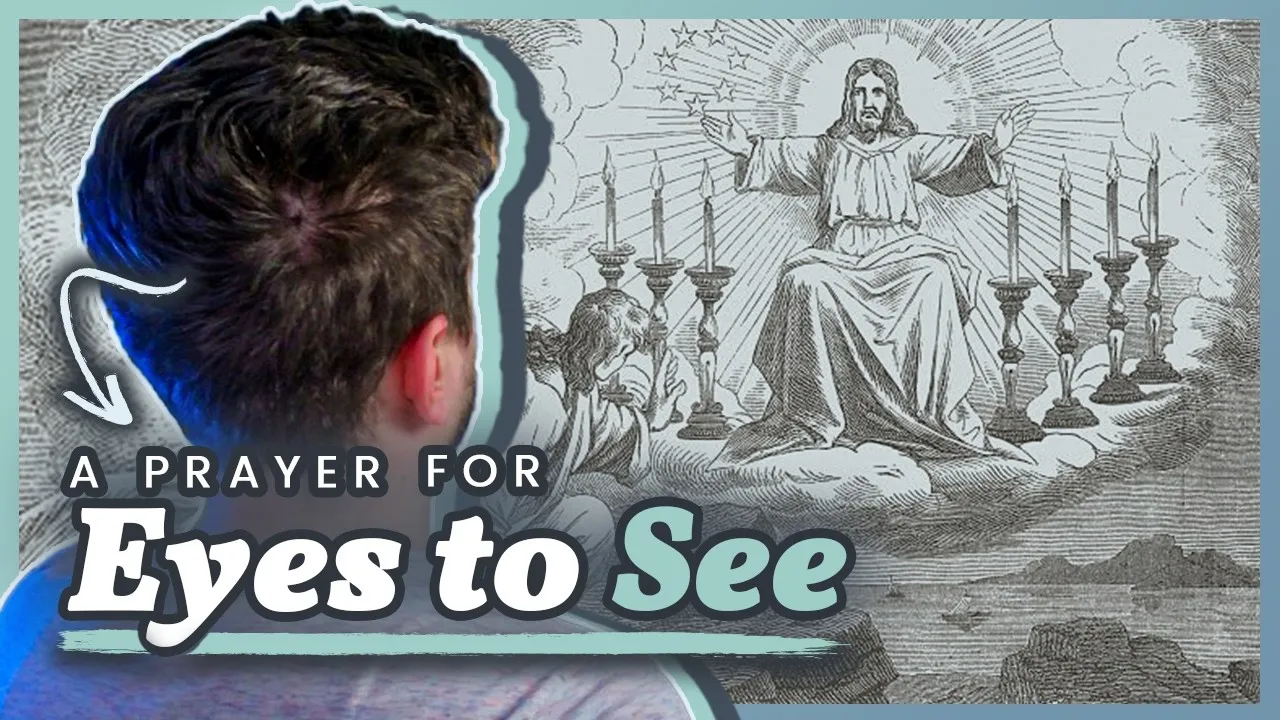
What he asks God for is striking: “a spirit of wisdom and revelation” to know God personally. The Greek word is epignosis — relational, experiential knowing. And then he asks for the eyes of their hearts to be illuminated. An apocalypse prayer. A request for God to pull back the curtain on invisible realities.
Three Realities Paul Wants You to See
1. Hope
Biblical hope is a settled confidence in a future God has already set in motion. Paul draws on the Exodus — four hundred years of silence in Egypt, and God split the sea anyway. That’s the DNA of the hope he’s describing.
2. Identity
Most Christians read “the riches of his glorious inheritance” and assume it means our inheritance from God. Paul means the opposite. He’s echoing Deuteronomy, where God calls Israel his segullah — a king’s private treasure. The jewels kept in his own chamber. We are God’s treasured possession. That identity changes everything about how you approach God in prayer.
3. Power
Paul stacks four Greek words for power into a single sentence because one word can’t contain what he’s describing. And he says this power is aimed directly at those who believe. The same force that raised Jesus from the dead and enthroned him above every ruler, authority, and dominion in the cosmos.
Why This Prayer Is Dangerous
Paul then unfolds what this power looks like. He draws on Psalm 110, Psalm 8, and Daniel 7 to show that the crucified Jesus now sits on the throne of the universe. Every title Caesar claimed — kyrios (lord), soter (savior), divi filius (son of God) — Paul hands to a crucified Jew from Nazareth. While chained to one of Caesar’s soldiers.
And the place where this cosmic lordship shows up in the real world? The ekklesia. A political word Paul fills with resurrection. A living, breathing community where the kingship of Jesus is acknowledged and lived out in real time. They met in homes, shared meals across ethnic lines, pooled their resources, and prayed for boldness when they got arrested.
What This Means For You
This prayer is dangerous because once you see what Paul wants you to see, you can’t go back.
- You can’t go back to treating prayer like a crisis hotline.
- You can’t go back to approaching God as if you still need to earn your place.
A prisoner already told you: you are treasured, you carry resurrection power, and the hope you’ve been called into outlasts every circumstance you’ll ever face.
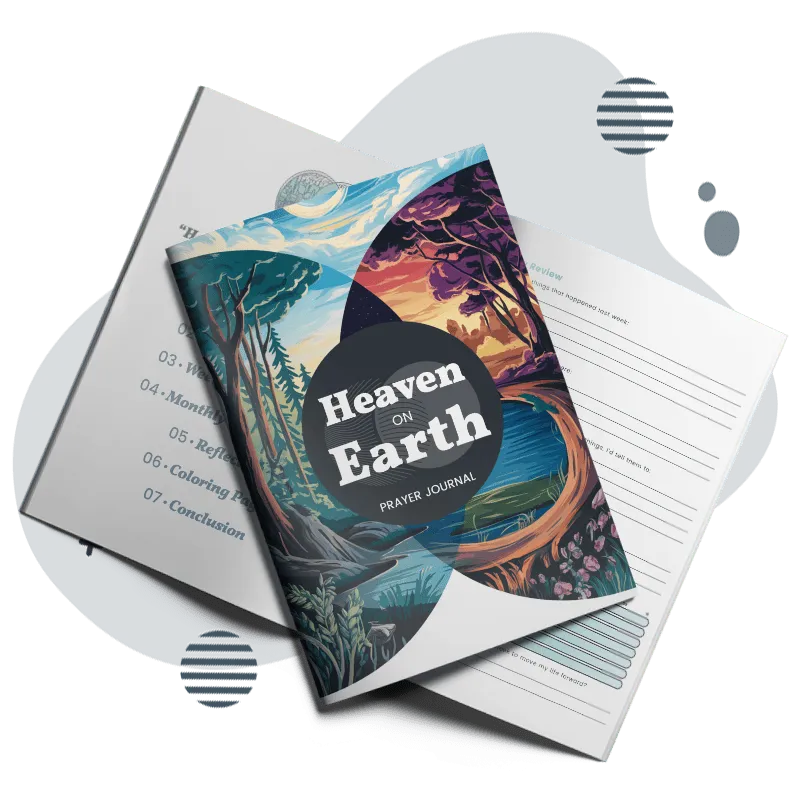
Want to start praying like Paul? I created a free resource to help — the Heaven on Earth Prayer Journal. It’s designed to help you pray from the identity Paul describes, with daily, weekly, and monthly prompts. Grab it free here.
📺 Watch the full video for the complete line-by-line walk through Ephesians 1:15-23 →
Transcript
[0:00] Picture this. A man sits in a Roman prison cell. He's chained to a guard. He has no freedom, no platform, no influence by any measure that his culture would recognize. And from that cell, he writes a letter containing nine verses that are just about the most audacious claims about power in the entire New Testament. The man with, you might even say, the least power, the way that we think about it in the whole room, is about to redefine what power even means. His name is the Apostle Paul. And the prayer he writes in Ephesians chapter 1 is, I think, potentially the most dangerous prayer in the entire Bible. Because he really does not pray for what you would expect. He doesn't ask God to get him out of prison. He doesn't ask God to bless the churches with growth, or protection, or comfort, or ease. He doesn't mention anybody's circumstances. What he prays
[0:49] for is eyes. He asks God to illuminate the hearts of those believers so that they could see three things that are already true, but invisible. He wants to give them a hope that reframes their entire experience of life, their entire existence. An identity that most Christians have completely backwards. And a power so immense that Paul has to stack four Greek words on top of each other just to describe it. And oh boy, once you see what Paul wants you to see in this prayer, it could change everything that you ask God for. It could change the way you even understand every second of your existence. This might sound hyperbolic, but I I hope you'll give me a chance to prove it to you. This is the prayer at the end of Ephesians chapter 1. Let's walk through it line by line. Now, I want to be honest with you about something. For years, I prayed a certain
[1:37] way. I prayed for God to fix things, to provide things, just to change my circumstances, to make hard situations easier. And there's there's nothing wrong with asking God for help. But at some point, I realized that uh almost every prayer I prayed was basically the same request wearing different clothes. God, make my life better the way I want. Uh and then I found this prayer in Ephesians 1 and decided to do a real deep dive on it and it wrecked me. Cuz the the irony is that Paul is writing this prayer from a prison cell. And yet he's praying for people whose lives are going well by all accounts. Their faith is strong. Their love for God and one another is growing. They're thriving. And Paul's response is to pray harder [snorts] because I think he knows something that most of us miss. He doesn't operate as though he thinks that prayer was supposed to be crisis management. He
[2:24] thinks of it as fuel. It's oxygen for a fire that is already burning. And what Paul asks God to give them has nothing to do with their circumstances. He asks God for a spirit of wisdom and revelation. For the eyes of their hearts to be illuminated so that they can see three invisible realities that once you see them, change everything about how you relate to God. So let's set the scene. Verse 15. Paul, chained to a Roman guard, in prison, receives word about these churches scattered across Asia Minor. And the report is good. Their faith in Jesus is genuine. Their love for each other crosses every social boundary that the ancient world said was uncrossable. Jew and Gentile, slave and free, rich and poor, all eating at the same table in the name of Messiah Jesus. And Paul's response? Well, rather than saying, "Oh, great. My work here is done." he doubles down. Listen to what he says. "For this reason I too, having
[3:12] heard of the faith in the Lord Jesus which exists among you all." Again, that's a plural you. "And you all's love for all the holy ones, I do not cease giving thanks for you while making mention of you in my prayers." Think about that for a second. Everything is going right and the prisoner prays harder for them. I think most of us treat prayer like a 911 call. Something breaks, we dial God, we describe the emergency, we ask for help, and when the crisis passes, so does the prayer. Honestly, we hang up until the next thing falls apart. Paul treats prayer like it's oxygen, the air he breathes. It's fuel for a fire that's already burning. He doesn't wait for something to go wrong. He sees something going right and then it says, "God, give them more. Open their eyes wider. Take them deeper." Now, let's look at what the what the prisoner asks for. This is what he prays
[4:01] for when he makes mention of them giving thanks to them to God in his prayers. He says, "That the God, or we might say, so that the God of our Lord Jesus Christ, the Father of glory, may give you a spirit of wisdom and of revelation in the knowledge of him." It's a lot of Bible language stacked up all at once if you're not kind of parsing through it closely and carefully. So, let's slow down for a moment. Paul doesn't pray for knowledge about God, information about him. In the original Greek, this is epignosis, and it's personal, relational, experiential. It's the difference between reading a person's biography and sitting across the table from them and getting to know them on an intimate personal basis. And there's a there's a couple of other things to double-click on here. Notice the phrase "the Father of glory." Again, this is more temple language. In Israel's story, the kavod, the glory of God, was the visible weight of God's presence that
[4:50] filled the tabernacle and later the temple. So, when Paul calls God the Father of glory, he's placing this prayer inside a temple's context. He's saying that the God whose presence once filled a building in Jerusalem now wants to fill you all. And to receive that, you need something specific. Paul calls it a spirit of wisdom and of revelation. Now, again, let's kind of double-click on some of these words. Wisdom has a whole storyline in the Bible. It starts in Genesis, where the tree of the knowledge of good and evil offered a shortcut to wisdom apart from God, and it runs all the way through Proverbs, where wisdom is personified as a woman calling out in the streets offering life to anyone who would listen. Solomon asked God for wisdom and received a hearing heart. Paul is praying in that same tradition for the recipients of his letter and for all believers everywhere who are doing well. He's asking God to give these believers a heart that can
[5:37] hear, a mind that can perceive, a spirit that is tuned to God's own messages and his own way of being in heaven. And And verse 18, uh just really drops a line that's going to hold the whole prayer together. I pray that the eyes of your heart may be enlightened or illuminated so that you will know what is the hope of his calling, what are the riches of the glory of his inheritance in the saints, and what is the boundless greatness of his power toward us who believe. These are in accordance with the working of the strength of his might, which he brought about in Christ when he raised him from the dead and seated him at his right hand in the heavenly places, far above all rule and authority and power and dominion, and every name that is named, not only in this age, but also in the one to come. We're going to double back over all of that again, but the heart in Hebrew thought is the seat of your will, your intellect, the deepest core of who you
[6:25] are, your personhood. Paul is praying that the command center of their inner life would be flooded with light. This is a a revelatory prayer, an apocalypse prayer. Apocalypsis is the idea, from which we get apocalypse, by the way, is the idea of something being revealed. Let's imagine you can you can imagine a a Norman Rockwell painting with a turkey dinner under the big metal dome, and then you take the metal dome off and you've um you've taken away the calupto. Apa means away, calupsis is something covering. It's like uncovering the turkey that's there. It reveals something that was there the whole time, but was hidden from view. So, Paul is asking God to do for these believers what God did for him on the road to Damascus. To kind of rip open the fabric between heaven and earth and let them see clearly. And what he wants them to see comes in three layers, three invisible realities that once you grasp them, could rewire your entire
[7:12] understanding of your relationship with God and the way that you manage your Christian walk on a day-to-day basis. Uh it's as if the man in chains is about to tell free people what freedom actually looks like. Okay, so how about these three invisible realities? So, Paul's asked God to flood their inner being with light, give them eyes that can see heaven's reality breaking through into earth, and now he tells us exactly what he wants them to see, what they need the power to see. Each one is probably going to challenge something you had already been assuming was true. So, that God would give you a spirit of wisdom and of revelation in the knowledge of him. I pray that the eyes of your heart may be enlightened so that you will know what is Here's the first one, the hope of his calling. Now, if you're new to the channel, uh hope is a very big theme in my videos. So, let's talk about it a little bit. We need to be careful with the word hope. In English, hope is flimsy. I hope it
[8:00] doesn't rain. I hope I get the job. It carries a sense of wishing for something that you're not sure is going to happen. That is not what Paul means. Biblical hope is a settled confidence in a future that God has already set in motion. It's the confident expectation of goodness coming to you. It can't be reduced to wishful thinking or it's it's not flimsy in that same way. It's forward-looking certainty rooted in what God has already done. God raised Jesus from the dead. That happened. And because it happened, everything that flows from it is guaranteed and the hoping is less in doubt and less uh or is it going to come up come to pass and more waiting. So, when Paul says, "The hope of his calling," he's talking about the future that God has called you into. And that future reframes everything about your present. That is basically what my entire book was about when I wrote it. Whatever your
[8:48] life looks like right now, it does not get the final word on who you are or where this is all going. Your diagnosis doesn't get the final word. Your bank account doesn't have the final word. Your grief doesn't get the final word. The God who brings life out of death has a future for you beyond our ability to describe it. And your present circumstances don't get to overrule it, either. And remember, Paul was writing this thing from prison. Paul is a second temple Jew. When he says hope, there's a founding story behind that word. And it's the Exodus. Let's come out for a moment and talk about that. Think about Israel in Egypt. 400 years of slavery. No prophets, no miracles, no visible sign that God was paying attention. If you were an Israelite in generation 300, you had zero evidence that rescue was coming. And God showed up anyway. He split the sea. He led them out. He brought life out of what looked like
[9:36] death. That story is just woven into so much biblical thought that it is almost beyond description. It's the DNA of biblical hope. It It doesn't require visible evidence. It's rooted in what God has done, and it trusts that the God who acted before will act again. Paul himself says it elsewhere. In Romans chapter 8, he writes, "I consider that the sufferings of this present time are not worth comparing with the glory about to be revealed in us." Same man, same logic. The future God has set in motion through the resurrection outweighs anything your present can throw at you. So, when Paul [clears throat] writes the hope of his calling from a prison cell, he's drawing on the oldest story his people know, the the founding origin story of their whole background, the Exodus. Exodus hope, resurrection hope, the kind that doesn't flinch when
[10:24] circumstances are terrible because it remembers what God did last time and looks for him to do it again. And if Paul can see this hope from behind iron bars, the then hope that only works when things are going well was never really hope at all. And he wants us to know it. Let's get back into that phrase. It isn't enough for him to say that you may have hope in his calling, but that you may know what it is. He wants you to be enlightened by the spirit of wisdom and revelation in the knowledge of God that is given to you to know how beautiful it is that what you've been called to is ahead of you. It's the restoration of all things. It's not this vague cloud strumming on a harp or an eternal worship service in the sky. It is God hard at work in creating a new world, restoring and healing and redeeming
[11:13] everything that's broken about this one, judging all that will refuse that, and bringing it out of existence such that all that remains everywhere is God's own presence manifest in the whole world, remade and healed and restored. And Paul says that the glory of that future that will be revealed in us or to us. Again, the Greek isn't actually clear there. Paul says that the sufferings of this present time are not worth comparing with the glory that is about to be revealed in us or about to be revealed to us. He wants you to know what it is. So, if you've ever had a conversation with somebody well, says, "I don't know really what's coming. Uh you know, I trust God." That's fine, but he wants you to know. He wants you to know that there will be waterfalls again. He wants you to know that the good things that we enjoy in this world are going to be restored and healed and redeemed and
[12:01] given back to you. And again, I wrote a whole book on this. It was a passion project. It was a a labor of love. If it's something at all that you're interested in learning about, I do go into it in quite a bit more detail in that book. If it's something you want to double click on and and get some more depth on. Paul wants God to give you a spirit of wisdom and revelation in the knowledge of him so that you could know the hope of his calling. What is your eternal future going to look like? That's the first ingredient that Paul seems to think that they need to know in order to continue on faithfully in their journey. Now, verse 18, of course, continues on. What is the richness of the glory of his inheritance among the saints or among the holy ones? Again, there's a lot of Bible language stop, you know, right after each other. Glory, inheritance, saints. Okay, but once we
[12:49] kind of look at it carefully and tease it apart, this and this might flip something upside down for a lot of people. Because most Christians read that and then think, "Okay, ah, this is about the inheritance we receive from God. Heaven, eternal life, the good stuff waiting for us." No, that was the previous thing. That's not what Paul's saying here. Let's look at the phrase carefully. His inheritance. And this is in Greek, it's literally en. E N basically. Among the holy ones. The inheritance belongs to God and the holy ones are his people, which is where the inheritance is to be found. Paul is saying that we are God's inheritance. We are the treasure for him. And actually, this is also coming straight out of Torah. Let's go and find it. Listen to what Moses told Israel in Deuteronomy chapter 7. The Lord your God has chosen you to be a people for his personal possession out of all the peoples who
[13:38] are on the face of the earth. We might translate it as treasured possession. The Lord did not make you his beloved or choose you because you were greater in number than any of the peoples since you were the fewest of all peoples, but because the Lord loved you and kept the oath which he swore to your forefathers, Yahweh brought you out by a mighty hand and redeemed you from the house of slavery from the hand of Pharaoh king of Egypt. Deuteronomy 4 said the same thing earlier. Deuteronomy 14 says it again. And the original source for all that language is Exodus 19:5. We're this deep, we may as well go there, too. Work out speaks to Israel at Mount Sinai. You shall be my segulah. There we are. Segulah, special treasure. That's a pretty important Hebrew word, actually. A segulah was a king's private treasure. Not the national treasury that funds the army and pays the bills, the personal collection, the jewels a king keeps in his own chamber because they mean
[14:25] something to him beyond their monetary value. Out of everything God made, and he made everything, he looks at his people and says, "You are the thing I keep closest." Over and over God looks at his people and says, "You are mine. You are my inheritance." Paul is taking that Deuteronomy language and applying it to everyone who trusts in Israel's Messiah. Jew and Gentile, slave and free. Every person who has put their trust in Jesus now carries this identity. You are the treasured possession of the God who made everything. I I I feel as though I need to say that again so that it lands properly. God God doesn't look at you and see a project. He doesn't look at you and see a problem to fix. He looks at you the way a father looks at a child who has just been placed in his arms for the first time. That's the identity that
[15:13] Paul is desperate for you to see. Something you, and by extension the entirety of the community of God's people, is so valuable to him that he would endure great pain and pay great cost to redeem you and keep you safe and keep you treasured as his own possession. I think I think this is probably at the root of why so many of us pray the wrong kinds of prayers. We come to God like beggars hoping that he'll throw us some scraps. Paul says God already has. He chose you. He treasures you. He calls you his own. Because you are in Christ, you are one of God's most treasured possessions in all the world. Prayer that starts from that identity sounds completely different than prayer that's trying to earn that identity or forgetting that that's the truth and the baseline level
[16:00] of what we understand. And then Paul gets to the third one, which is ah gosh, just crazy. It's a it's a lit fuse. And what is the surpassing greatness or the boundless greatness of his power toward us who believe? These are in accordance with the working of the strength of his might, which he brought about in Christ. I don't know if you got that. Paul just stacked four different Greek words for power into one sentence. The surpassing greatness, the huperballon megathos, of his power, dunamis, in accordance with the working, energeia, of the power, kratos, of his might, ischus. It's not an It's not an accident. Paul is piling word on top of word because the thing he's trying to describe keeps bursting through every container he tries to put it in. He reaches for one word, it's not enough. He grabs another, still not enough. He stacks a third and a fourth
[16:47] on because human language can't contain what he's trying to say. And the power the the power that he just described that essentially defies description is aimed at you and for your benefit. Paul doesn't say this power exists somewhere out in the cosmos. He doesn't just say that it belongs to God in some sort of abstract, distant way. He says it is toward those who believe. It has a direction, a target, and you're in the crosshairs. Paul knows something that our culture seems to have forgotten or if it ever knew it at all, really. Power in our world means the ability to impose your will on others, to dominate, to control, to win. And Paul is about to completely redefine the word for us, because in the next verses, he's going to tell you exactly what kind of power he's talking about, and it looks like nothing at all the way that our world thinks about power. Rome had its
[17:35] legions, Washington has legislation, Silicon Valley has algorithms, celebrities have influence. Every seat of power humans have ever built runs on the same operating system. The ability to impose your will on the world around you, to control outcomes, to dominate. And the power Paul describes doesn't look anything like that. It looks like an empty tomb. The proof that the power is real is that within three centuries of Paul writing these words, a movement that started with a handful of fishermen, a tax collector, and a tent maker had outlasted the empire that tried to destroy it. Not by raising up armies, or even winning elections, or building an institution with political leverage. The early church grew because ordinary people loved their neighbors during plagues, shared their food across ethnic lines, and died singing hymns while getting torn to shreds by lions in the arena. That's what resurrection
[18:23] power looks like when it gets loose in a community. The prisoner who has no power is about to describe the most powerful event in the history of the universe. Now, if you're watching this and something is clicking inside of you, and you're feeling yourself wanting to pray, you're realizing maybe that your prayer life has been stuck in crisis mode, and God is essentially just a cosmic vending machine to you where you go and you pray for things to get fixed, and pray for so-and-so's surgery or whatever, and that's all you've been doing, then I made something that can probably be of a lot of use to you. It's a free prayer journal called the Heaven on Earth Prayer Journal. It's built around the Lord's Prayer, but the whole design is meant to help you pray from the identity we've been talking about today. You are not a beggar. You are not someone trying to get God's attention. You're someone who already has it, someone who is already treasured, someone who is
[19:10] already seated with Christ in the heavenly places. I designed it with daily, weekly, and monthly reflection prompts, coloring pages, and teaching resources. It's completely free. The link is in the description below. I want this to be a resource that you can use to pray the way Paul prayed and then live according to the kinds of things that Paul prayed for. I echo Paul's prayer that God would give you a spirit of knowledge and of wisdom and of revelation and the knowledge of him so that you may understand the things he wants you to understand so that you may live accordingly. And if this tool can be of any use to you, it is yours with my compliments. I made it with a lot of love. The link is in the description below. It's completely free. All right, now back to it because Paul is about to define the most maybe the most misunderstood word in the entire Bible. All right, Paul has prayed for opened eyes. He's laid out three invisible realities, a hope that reframes your
[19:59] present, an identity that says you are God's treasured possession, and a power that is aimed directly at you. Now he's going to tell you what kind of power he means. And if we allow it to, this prayer could become a theological earthquake. Here we go. Which he brought about or worked for in the Messiah, having raised him from the dead ones and having seated him at his right hand in the heavenly realm or in the heavenly places. And there it is. The power Paul has been building toward for four verses is resurrection power. God took a man who had been publicly executed by the most powerful empire on earth, who was beaten, mocked, stripped, nailed to a cross, and buried in a borrowed tomb. And God reached into that tomb and reversed death itself. He filled that crucified body with indestructible life. That is the power that Paul is talking about. The capacity to take the worst
[20:47] thing that has ever happened and turn it into the doorway for the best thing that has ever happened. To take death and make it the raw material for eternal, unending, flourishing, thriving life. And that power, Paul says again, is aimed at you. Not just at the cosmos in general, although it's included. Not at the universe as some abstract concept, but at y'all, the people of God, and you individually as part of it. The same force that raised Jesus from the dead is available to those who trust in him. That's what Paul wants you to see when you receive the power to open your eyes. But he doesn't stop at the resurrection. He immediately moves to the next stage, which was enthronement. Verse 20 continues, "And having seated him at his right hand in the heavenly places." Now, seated at the right hand is a very specific image. Paul's drawing from probably lots of different places, but
[21:35] we know at least one of them has to be Psalm 110, which was the most quoted Psalm in the early church. It opens with God saying to the Messiah, "Sit at my right hand until I make your enemies a footstool for your feet." This was Israel's ancient hope for a king who would rule the world on Yahweh's behalf. And you have to understand what this [clears throat] claim would have sounded like in the first century. Paul is writing in a world where one man that everyone knew about already claimed all those titles, and his name was Caesar, or Caesar by the way, if you're speaking technically. But it's fine. We'll call him Caesar. Roman coins were inscribed with the words kurios, lord, and soter, savior. Caesar was called divi filius, son of God. The emperor's birthday was announced as euangelion, gospel, good news. Every single one of those titles Paul hands to a crucified Jew from
[22:22] Nazareth. And he's writing this while chained to one of Caesar's own soldiers. Paul is not engaging in some sort of abstract theology, at least it can't be reduced to that. This is political dynamite wrapped in a prayer. Verse 21 continues to uh to heighten the the authority here, heighten the power. Above all rule and authority and power and dominion and every name that is named not only in this age, but also in the one to come. Every ruler, every authority, every power structure, every dominion, every name with influence, whether it's a government, an empire, an ideology, a cultural system, a celebrity, or a spiritual force operating behind the scenes, all of it placed under the authority of the crucified and risen Jesus. And again, not only in this age, but also in the one to come. Paul's making a claim about right now. Jesus isn't waiting to become
[23:10] kings, he already is. But the world doesn't fully reflect that yet. The church lives in that gap. The already of Jesus' enthronement and the not yet of the world catching up. That's a tension where we live every single day. And learning to hold it is one of the hardest and most important things about following Jesus. And then verse 22 brings in Psalm 8. Paul quotes it almost directly. He puts all things in subjection under his feet. Psalm 8 is a meditation on Genesis 1. We may as well dig it up. We're already this deep, right? We may as well just go all the way here. "Yahweh, our Lord, how majestic is your name in all the earth? You who have displayed your splendor above the heavens. From the mouths of infants and nursing babies, you have established strength because of your enemies to do away with the enemy and the revengeful. When I consider your heavens, the work of your fingers, the moon and the stars which you have set in
[23:58] place, what is man that you think of him and a son of man that you are concerned about him?" Not necessarily the son of man from uh Daniel 7, by the way. A son of man is just sort of a uh an exemplar of a thing, biblically speaking. Son of anything, right? Or one of a category. So, what is what is the human that you think of him? And and what is humanity that you're concerned about them? "Yet you have made him again, not necessarily the son of man, although of course they apply this later in the New Testament as well, but you have made humanity a little lower than God or spiritually spiritual beings, Elohim, and you crown him with glory and majesty. You have him rule over the works of your hands. You have put everything under his feet. All sheep and oxen and also the animals of the field, the birds of the sky and the fish of the sea, whatever passes through the paths of the seas. Yahweh, our Lord, how majestic is your name in all the earth?" This Psalm alone is worth just a
[24:45] long walk and a nice cup of coffee or tea or something stronger. It's just incredible, absolutely incredible. But Psalm 8 asks, "What are human beings that you're mindful of them?" And it answers, "You made them a little lower than the heavenly beings and crowned them with glory. You gave them rule over the works of your hands. You put all things under their feet. That was humanity's original calling to rule creation in the love and power of God, and we forfeited it. We grabbed for power on our own terms, and we've been living with the consequences ever since. Paul is saying that Jesus, again, the crucified carpenter from Nazareth, has fulfilled that calling. He is the faithful human who now sits on the throne that was always meant for us. He's the true Adam, the one who rules not by domination, but by his own self-giving love. And his enthronement is something that it has a present tense cast to it. It can't be limited to only
[25:33] the future. It's happening right So, we have Psalm 110, Psalm 8, all of these other passages woven together into one stunning claim. The man who died on a Roman cross now occupies the throne of the universe. And the powers that put him there have been placed under his feet now. And again, remember, Paul is writing this from a prison cell. He's chained to a representative of that Roman Empire, and he's calmly explaining that the man Rome executed is now the ruler of everything Rome thought that it controlled. The audacity of that claim from that location, from that person, in those circumstances is breathtaking. But Paul isn't finished, because now he's going to tell you where this cosmic lordship actually shows up in the real world. The second part of verse 22 says this, "He put all things in subjection under his feet and made him head over all things to the church, which is his
[26:21] body, the fullness of him who fills all in all." Jesus is king over the entire cosmos. Every corner of creation belongs to him. But there's one specific place where that kingship is acknowledged and lived out today in real time, and that's the church. Now, I know what you might be thinking. Again, if you have ever been to my channel, you know kind of where I stand on these things. I know you might hear, if you've not been around, then this is going to be mini soapbox time. Sorry, but because when most of us hear church, uh think of a building or a Sunday morning or a worship service or a potluck or some kind of event or a movement or a nonprofit. But Paul doesn't mean that. The Greek word is ekklesia, and in a Roman colony, that word already had a meaning. It was the civic assembly, the official gathering of citizens who made decisions for the city. It wasn't often a political word.
[27:09] It also just referred generically to a crowd or to a gathering or throng, right? But Paul is taking that word with its political nuance, and he's filling it with the resurrection power. He's saying the real assembly of the real king is not meeting in Rome or in any Senate chamber. Uh it's not down here. It's not an earthly thing. It's meeting wherever two or three people gather around the risen Jesus. The ekklesia is a community of people who have been called out of the old order and into the new one. A group of humans who have decided to live under a different king. And notice what Paul does not say here. He's very careful. He doesn't say the church is a literal building. He doesn't say it's an institution. He doesn't say it's a religious service that you attend on a Sunday morning. He doesn't describe a hierarchy or an org chart. Says that it is his body, the fullness of him who fills all in all, a living, breathing,
[27:58] interconnected organism. Every member functioning, every part contributing, life flowing from the head through every joint and ligament. This is what the early church actually looked like. Read Acts chapters 2 through 4. You'll see it. They met in each other's homes. They shared meals together. They pooled their resources so that no one among them had need. They crossed every ethnic and socio-economic boundary their culture said was permanent. Jew and Gentile eating at the same table as brother and sister. Rich and poor sharing from the same pot. They healed people. They got arrested. And when Peter and John were released from prison in Acts chapter 4, the community gathered and prayed. And what did they ask God for? Not safety, not comfort, not God keep us out of trouble and underwrite our dreams. They prayed, "God grant your servants to speak your word with all boldness." And that's It's who's had their eyes opened.
[28:47] That's the ecclesia. It can't be contained in a 501c3 nonprofit. It's not limited to the walls of a building somewhere. It's It's It's not even a meeting you attend or even a movement that you join. It's a family you belong to. It's an organism you're part of. It's Christ himself as his body operating as his hands and feet in the world wherever his name is praised and wherever his kingship is honored. And he calls this community, Paul does, the fullness of him who fills all in all. The God who fills the entire universe, every galaxy, every atom, every dimension we can and cannot perceive, chooses to make his fullness visible in a community of ordinary people who trust in his son. Could you see maybe why it would be so silly to try to limit this to a cathedral or some hierarchy or an institution with a budget and a board of directors? It's a living, breathing
[29:34] family of Christ followers sharing life together in real time. They are the place where heaven and earth overlap. A little outpost of the new creation planted right in the middle of the old one. The prisoner in the cell is telling you that the most powerful reality in the cosmos is not the Roman Empire. It's not Rome's legions arrayed in phalanx to come and take you down. It's not some kind of an institution. It's a community of people who've had their eyes opened, who know the hope that they've been called to, who know their identity and their worth in God's eyes as his own deeply treasured possession, and who carry resurrection power into every room they walk into. That's what Paul wants you to see. That's the apocalypse that he's praying for. That's the revelation he wants the spirit to give you in wisdom. So, let's come back to where we started this thing. You have a man in a prison cell, chained to a guard, no
[30:23] freedom, no platform, no power by any measure his world would recognize. And from that cell, he wrote these nine verses that contain the most audacious prayer in the entire New Testament. He doesn't ask God to change his circumstances. He doesn't ask God to bless the churches with easier lives. He doesn't mention a single problem, a single setback, a single difficult circumstance, he would probably consider those things all baked into the pie of life as a follower of Jesus. Suffering is not something to be avoided. Suffering is something that identifies you as marked off as one who follows the one who suffered for all that all might live if they place their faith in him. He doesn't mention a single problem, a single need, or a single crisis. He asks God to open their eyes because Paul understood something that most of us are still learning, even those of us who
[31:12] have been followers of Christ for many years. If we're being honest, the biggest problem in our lives probably are not our circumstances. It's our sight. It's what we can and cannot see. And what Paul wants you to see are the three realities that change everything. A hope, Exodus hope, the kind that doesn't need visible evidence because it remembers what God did last time, but it looks forward in the same way that 400 years of silence in Egypt, God split the sea anyway. He came through for his people in the end. A sealed tomb on a Friday and God filled it with life on Sunday morning. Whatever your present looks like, it does not get the final word. The new heavens and the new earth is your eternal state. And the day it begins, it goes on forever and ever and ever, and it can never again be taken away from you. God wants to restore and redeem and heal and return to you everything that was broken or lost cuz
[32:01] that's the way that he is. He wants you to understand your identity, that you are God's segulah, his private treasure, the jewel the king of the universe keeps closest, not because you earned it or because you're super impressive or because he he picked you from all the people in the world or anything like that, but just because he loves you in Christ. And prayer that starts from that identity doesn't sound anything like a prayer that's trying to earn it. He wants you to understand the power, the same force that reached into a sealed tomb and reversed death itself. The power that took the crucified carpenter from Nazareth and enthroned him above every name Caesar ever claimed for himself. It's a power that rather than conquering through domination and pushing down the hobnail boot on someone else's neck, gives of itself and sacrifices for others. That power is aimed directly at you, and it's at work and operating in your life if you're a
[32:48] follower of his. This prayer, I think, is dangerous because once you start to see these things, you can't unsee them. And once you can't unsee them, you can't go back to praying the way that you used to. Paul is almost saying that if we had these things, our circumstances wouldn't matter. If we understood what we're called to, if we really understood, way down deep in our bones, how valuable we are to God, if we really understood that the power that raised Jesus from the dead is aimed at us for our benefit, for God's glory, and that one day all these things that have been put under Christ's feet in subjection will be brought to heel, will be brought to answer, will be brought to give an account, what what weight then are our circumstances? Of what pain? Again, I quoted this in the last video. Paul said in Romans 8, "It's like the light and momentary sufferings that we deal with in this present time
[33:37] are nothing to be compared with the glory that is going to be revealed in and to us." And so, once you realize what really matters and take on that eternal perspective, we can't go back to treating prayer like a 911 call. We can't go back to approaching God like a beggar who has no relationship with this wealthy person who's just hoping for a scrap of his generosity. We can't go back to thinking that the powers running this world have the final word, because they don't. And a prisoner who ought to know is the one who told you so. And the early church proved it. In Acts chapter 4, Peter and John got released from prison. The community gathers and they pray. And what do they ask God for? Instead of protection and safety, they pray, "Grant your servants to speak your word with all boldness." When a community has had its eyes opened, that's the kind of prayer that comes out of them. They stop asking God to make life safe and easy and fun and
[34:25] pleasurable and enjoyable, and they start asking God to make them dangerous. So, here's my question, and if I'm pointing it at you, there's three fingers pointing right back at me. What if we prayed Paul's prayer every morning for 30 days? Not asking God to fix a single thing. Just asking for the eyes to see. God, show me the hope that's coming for me. Show me the identity that I have, the value that I carry in your eyes. Show me the power that is at work in my life. The same power that raised Jesus from the dead. What would What would shift? What would change? That's my invitation. So, let's let's try it. This week, why don't we open up, not in some kind of a wrote, repetitive, um, you know, rule-keeping kind of a way, but what if we opened up Ephesians 1:15-23 and then read it out loud as our own prayer? What if we asked God for a
[35:14] spirit of wisdom and revelation in the knowledge of him? For the eyes of our heart to be illuminated to see the hope, the identity, and the power that are already ours in Christ. [music] And if If you want a tool to help you try to do something like that every single day, again, I made the Heaven on Earth Prayer Journal to do this same thing in the Lord's Prayer. Frankly, we could probably talk a lot about how this worldview [music] is shaped by the very worldview claims that Jesus is making in his own model prayer he gave to his disciples. But maybe that's a subject for another day. It comes with daily prompts, weekly reflections, monthly reviews, all built around the reality that you are already seated with Christ in the heavenly places. And how to live [music] in this world in such a way that God's will is done here on Earth as it is [music] in heaven. And that his kingdom is brought further and further into this world. The invasion of the kingdom of God has its borders expanded by our life
[36:02] and our behavior and our choices and the things that we see in the world. And if God grants us the power to see it, then we can see it more clearly and live it out more clearly. So, thank you for watching. If If this opened something up for you, share it with someone who needs to hear it. And if you want to go deeper into Ephesians, check the rest of the series out. We've walked through the entire letter. Every video builds on what we've covered today. I may someday return to Ephesians. It's an incredible master work of Paul's. And there's probably a lot more to cover. But for now, I'm going to set this to one side and take a look at some other topics, including next week where my plan is to walk you through the art and science of biblical words. So, keep your eyes open for that one. I'll see you then. Further [music] up and further in.
Tagsephesiansprayerpaulidentity in christreading the bible