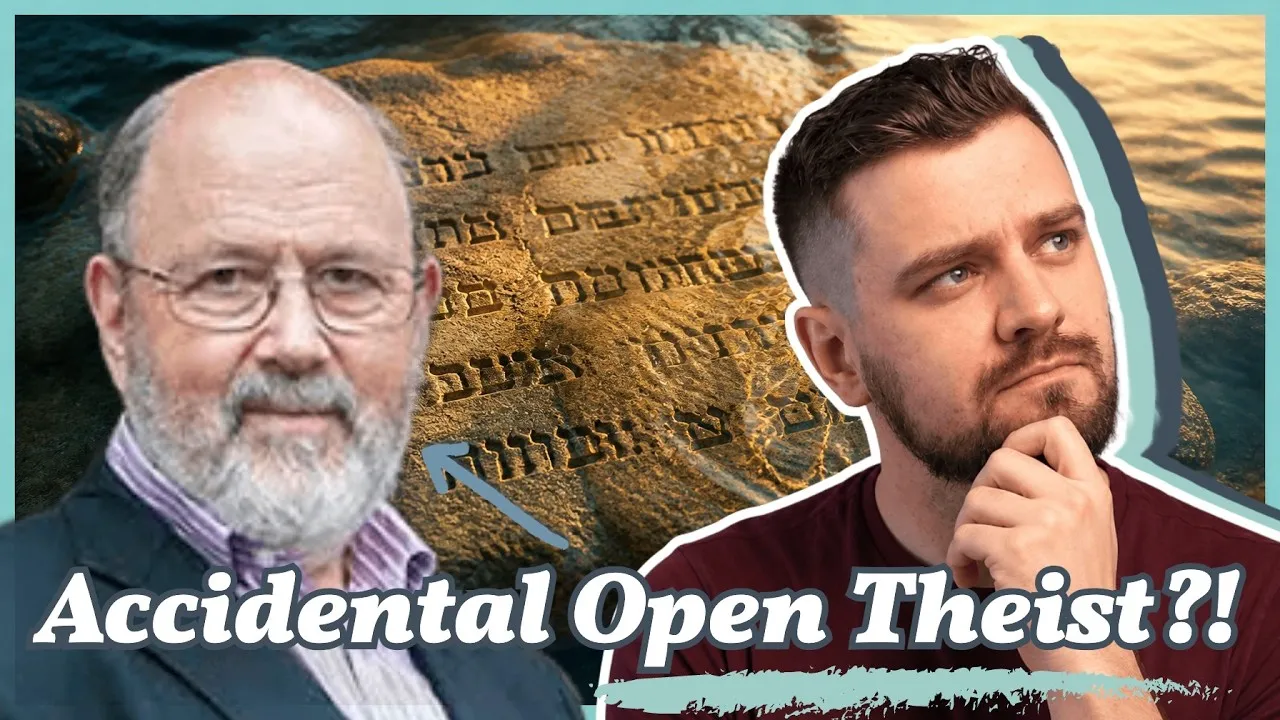

Sam Shamoun ADMITS the Bible Teaches Open Theism (But STILL Won’t Believe It)
A Catholic apologist admits Scripture backs open theism, then picks tradition over the text anyway.
By Tim Barber··Video·Updated
The Confession That Changes Everything
Catholic apologist Sam Shamoun recently made one of the most refreshingly honest admissions I’ve heard from a traditional theist in years. During what appeared to be a casual conversation, Shamoun stated flatly that “if you follow sola scriptura, tota scriptura, you cannot refute open theism.”
This wasn’t a momentary slip or taken out of context. Shamoun doubled down, explaining that open theists “will appeal to grammar” and “syntax” and “look at context, historical context, cultural context” while traditional theologians resort to “explaining passages away as simply anthropomorphic.”
But here’s where it gets really interesting: despite acknowledging that Scripture clearly teaches open theism, Shamoun maintains that Catholics shouldn’t believe it. Why? Because the Catholic Church has erected what he calls “fences” and “walls” – institutional boundaries that prevent believers from following biblical interpretation wherever it might lead.
What Open Theism Actually Teaches
Before diving deeper into Shamoun’s admission, let’s clarify what open theism actually proposes:
Core Tenets of Open Theism
- God experiences genuine relationship with creation, not predetermined outcomes
- The future remains genuinely open until choices are made
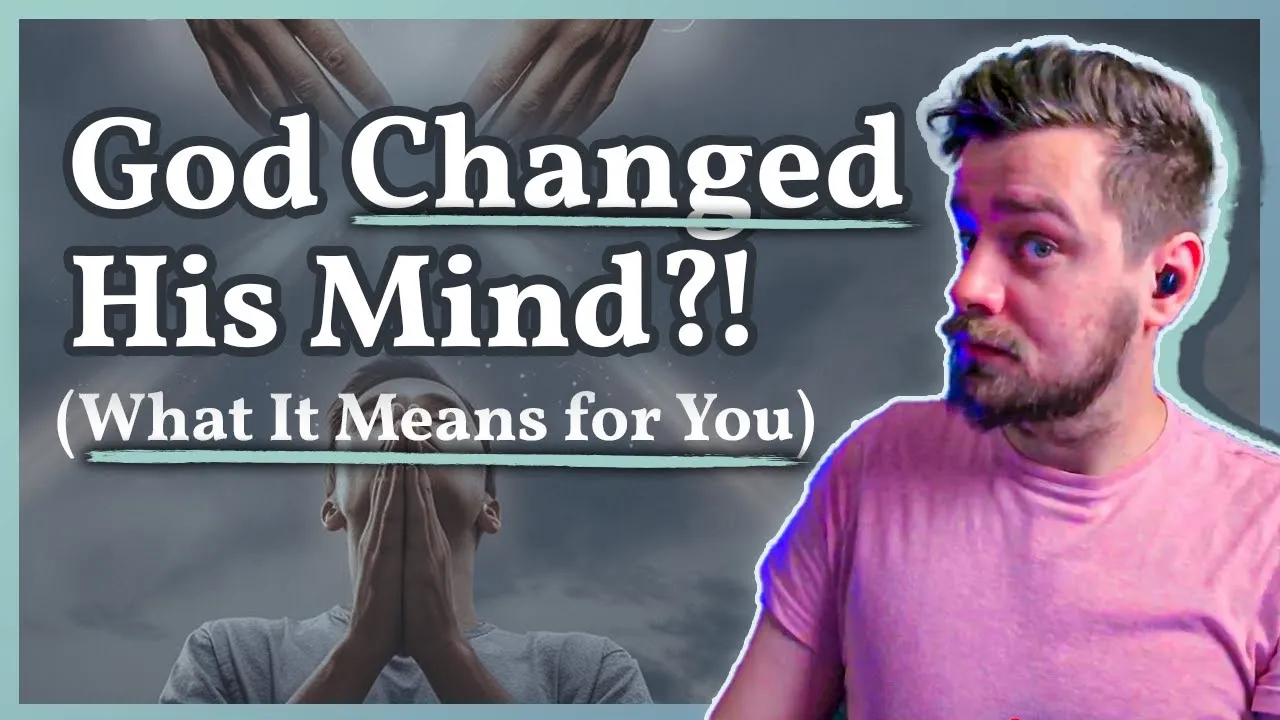
- Prayer and intercession can genuinely change God’s mind and course of action
- God’s knowledge is perfect but includes knowledge of possibilities rather than fixed certainties
- Scripture should be interpreted naturally without explaining away relational language
Biblical Evidence Open Theists Cite
Open theists point to numerous passages where:
- God changes His mind (Exodus 32:14, Genesis 6:6-7, 1 Samuel 15:11)
- God tests people to learn outcomes (Deuteronomy 8:2, Genesis 22:12)
- Prophecies are conditional (Jeremiah 18:7-10, Jonah 3:4-10)
- God expresses genuine emotions in response to human actions
- Intercession actually influences divine decisions (Abraham pleading for Sodom, Moses interceding for Israel)
The Devastating Honesty of Shamoun’s Admission
What He Actually Said
Shamoun’s comments reveal several stunning acknowledgments:
- “You cannot refute open theism scripturally” when using proper grammatical-historical interpretation
- Open theists have “powerful arguments” because they engage the text directly
- Traditional theists must “explain away” clear biblical passages as mere anthropomorphisms
- Catholics must stay within institutional “fences” that prevent following Scripture wherever it leads
The Implications Are Staggering
Think about what Shamoun is actually saying:
- The Bible clearly teaches open theism when interpreted properly
- Church tradition trumps biblical teaching in Catholic methodology
- Institutional boundaries matter more than scriptural clarity
- Honest exegesis leads to conclusions the church rejects
Why This Matters for Every Bible-Believing Christian
The Authority Question
Shamoun’s admission forces us to confront a fundamental question: When clear biblical interpretation conflicts with traditional doctrine, which authority wins?
For those committed to sola scriptura, the answer should be obvious. If Scripture clearly teaches something through proper grammatical, historical, and contextual interpretation, shouldn’t that settle the matter?
The Anthropomorphism Problem
Traditional theists often dismiss challenging passages as “anthropomorphic” – God merely speaking as if He were human. But consider the problems with this approach:
When Everything Becomes Anthropomorphic
- God’s emotions become mere appearances
- Divine-human dialogue loses genuine meaning
- Prayer and intercession become elaborate charades
- Conditional prophecies make no real sense
- Biblical narrative loses relational authenticity
The Consistency Challenge
If we can explain away any uncomfortable passage as anthropomorphic, what prevents us from doing the same with:
- God’s love and mercy?
- Divine justice and wrath?
- The incarnation itself?
- Resurrection accounts?
The Exegetical Evidence
Let’s examine some of the “knockout” passages Shamoun referenced:
Genesis 6:6-7 – Divine Regret
“The Lord regretted that he had made human beings on the earth, and his heart was deeply troubled. So the Lord said, ‘I will wipe from the face of the earth the human race I have created.'”
Traditional interpretation: God doesn’t actually regret anything; this is just anthropomorphic language.
Open theist response: The Hebrew word nacham genuinely indicates emotional change and regret. Why would Scripture use such specific emotional language if it means nothing?
Hezekiah’s Healing – A Changed Divine Decision
When God told Hezekiah to prepare for death, then granted him fifteen additional years after his prayer, we see:
- Clear divine pronouncement of impending death
- Human intercession and petition
- Explicit divine mind-change in response
- Concrete evidence through miraculous sign
How do we explain this away as mere anthropomorphism when the historical consequences were so real?
The Judas Problem
Jesus promised the twelve disciples they would sit on twelve thrones judging Israel. Yet Judas betrayed Christ and never occupied such a throne. This suggests:
- Divine predictions can be conditional on human response
- Future outcomes aren’t always fixed in advance
- Even divine foreknowledge may involve possibilities rather than certainties
The Catholic Dilemma: Fences vs. Scripture
Institutional Boundaries
Shamoun describes Catholic theology as having “fences” and “walls” – institutional boundaries that keep believers from pursuing biblical interpretation too far. He argues this allows for vigorous debate within prescribed limits while preventing “heretical” conclusions.
But this raises profound questions:
The Authority Hierarchy
- Scripture (God’s revealed word)
- Church tradition (human interpretation over time)
- Institutional authority (current church leadership)
Question: Should human tradition and institutional authority override clear scriptural teaching?
The Development Problem
If church tradition can legitimately restrict biblical interpretation, how do we account for:
- Doctrinal developments over time that contradict earlier tradition?
- Disagreements between Orthodox, Catholic, and Protestant traditions?
- Internal Catholic debates on numerous theological issues?
- Historical errors in church teaching later corrected?
The Protestant Response
For Protestant Christians committed to sola scriptura, Shamoun’s admission actually strengthens the case for biblical authority:
- If Scripture clearly teaches something through proper interpretation
- And church tradition contradicts that teaching
- Then Scripture must take precedence over tradition
This doesn’t mean tradition has no value, but it cannot override clear biblical teaching.
Practical Implications for Faith and Practice
For Biblical Interpretation
Shamoun’s honesty suggests we should:
- Take Scripture seriously in its natural sense
- Avoid explaining away difficult passages too quickly
- Consider grammatical and contextual evidence carefully
- Allow Scripture to shape our theology rather than forcing theology onto Scripture
For Understanding God
If open theism accurately reflects biblical teaching, it suggests:
- God genuinely desires relationship rather than predetermined control
- Prayer and intercession matter because they can influence outcomes
- Human choices carry real weight in God’s unfolding purposes
- Divine love involves genuine risk and vulnerability
For Christian Living
An open theistic understanding might encourage:
- More earnest prayer knowing it can genuinely influence God
- Greater sense of responsibility for our choices and their consequences
- Deeper appreciation for God’s relational nature
- Less fatalism about predetermined outcomes
The Broader Theological Landscape
Where Open Theism Fits
Open theism occupies unique theological space:
Compared to Calvinism
- Rejects divine determinism while maintaining divine sovereignty
- Affirms genuine human freedom within God’s purposes
- Sees prayer as influential rather than merely submissive
Compared to Arminianism
- Questions exhaustive foreknowledge while maintaining divine wisdom
- Emphasizes genuine openness in divine-human relationship
- Focuses more on relational than transactional dynamics
Compared to Process Theology
- Maintains classical divine attributes like omnipotence and omniscience
- Affirms creation ex nihilo and divine transcendence
- Preserves biblical authority rather than subordinating it to philosophy
The Growing Movement
Open theism continues gaining attention because it addresses real biblical and theological concerns:
- Scriptural fidelity in interpretation
- Coherent explanation of prayer and intercession
- Meaningful understanding of divine-human relationship
- Honest engagement with difficult passages
Responding to Common Objections
“Open Theism Limits God”
Objection: Open theism makes God less than omniscient.
Response: Open theists maintain God knows all that can be known, including every possibility and probability. Perfect knowledge of an open future is different from perfect knowledge of a closed future.
“It Undermines Biblical Prophecy”
Objection: If the future is open, how can prophecy be reliable?
Response: Biblical prophecy often contains conditional elements. God can fulfill prophecies through His sovereign ability to work within and through human choices, not despite them.
“It Creates Uncertainty”
Objection: Open theism makes the future uncertain and threatens assurance.
Response: Our security rests in God’s character and commitment, not His control of every detail. A God who chooses to love and remain faithful despite uncertainty demonstrates greater love than one who controls everything.
What This Means Moving Forward
For Individual Believers
Shamoun’s admission challenges every Christian to consider:
- How seriously do we take Scripture when it conflicts with tradition?
- What does honest biblical interpretation require of us?
- Are we willing to follow where careful exegesis leads?
- How do we balance respect for tradition with biblical fidelity?
For Church Communities
This conversation raises important questions about:
- Teaching and preaching that honestly engages difficult texts
- Creating space for theological dialogue and disagreement
- Balancing tradition with ongoing biblical study
- Preparing people to think carefully about Scripture
For Theological Education
Seminaries and Bible colleges might need to:
- Present open theism as a legitimate biblical option
- Teach students to engage rather than dismiss challenging interpretations
- Develop skills in careful grammatical-historical exegesis
- Foster environments where difficult questions receive honest attention
Conclusion: The Call to Biblical Honesty
Sam Shamoun’s remarkable admission deserves serious consideration from all Christians committed to biblical authority. His honesty about Scripture’s clarity regarding open theism, combined with his appeal to institutional boundaries, perfectly illustrates the tension many believers face.
The question becomes: Will we have the courage to follow biblical interpretation wherever it leads, even when it challenges our theological comfort zones?
This conversation goes to the heart of biblical authority and honest interpretation. Whether you ultimately embrace open theism or not, Shamoun’s admission demands we wrestle seriously with what Scripture actually teaches about God’s relationship with time, prayer, and human choices.
The stakes are high. Our understanding of prayer, divine sovereignty, human responsibility, and the nature of God Himself all hang in the balance.
Transcript
[0:00] I'm just letting you know, you're going to get destroyed at a debate with an open thesis. Warren McGru, Chris Fischer will annihilate. >> Brilliant. Both of them. Yeah, >> I'm not lying. In fact, James White being arrogant, debated, an open theist that he didn't know much about. >> He thought he was going to steam all him got so obliterated, humiliated in a Calvinist church by this open the prepared that he swore he won't debate this guy again, he started whining and complaining. >> No. >> What were you saying? >> Yeah. No, nothing. I was I wonder if it was on YouTube. >> Yeah, it is. You didn't watch it? >> No. No. No. James God came out of nowhere. this. Here it is. Got Okay. Oh, right. I I was not expecting this. There I am with my Oh gosh. with my haircut and my red tie. Oh dear. Okay. Uh I did I did not know. Maybe this is why they sent it to me now that I'm thinking about it to
[0:47] respond. But um that was unexpected. We are going in blind for this one. We're taking a short break from your regularly scheduled Ephesians programming that we've been going through on this channel because a friend of mine that I respect very much sent me a video and just asked me to respond to it. Word to the rest of you, this does mean that if you have a good enough idea and you send me something you want me to respond to, there's a good chance I might make a video out of it. You know, just in case that's of interest to any of you. But anyway, my understanding is that the video in question regards Sam Shamoon. He's a pretty interesting figure. He can have some uh kind of polarizing things. A lot of people don't like his demeanor. I think there's a lot to like about Sam. Of course, we're not in agreement about everything. And I think that's probably part of what's going on in this video, but I I was asked to give my take or my opinion and my view. And so, what I'm going to do first foremost is to say, "Hey, I don't know if any of this is even Sam. We live
[1:34] in such crazy times. This could be an AI avatar of Sam talking." And I would have no I can't say that I would have no way of knowing, but there's a possibility that it's not even him talking. And so, I want to just say first and foremost, and it's possible he's gotten taken taken out of context. People get taken out of context all the time in videos. So, all I'm going to say is that there may be caveats. I'm happy if I get anything wrong to uh kind of amend my statements later. My understanding is that Sam Shamoon has some really interesting things to say about open theism in particular and a lot of you have been asking more about you know my views on open theism more recently. I know even in my own church community people are are wanting to know more and so I'm going to tell you everything that I've told them. Number one, I am not going to try to convince you to become an open theist. If anything, I simply want you to engage more with your scriptures. If that means that you eventually become an open theist, then you'll be in good company with me
[2:21] because I'll be right there alongside you. But be a better student of the scriptures is really my number one goal for you. And then number two, don't make yourself a follower of any one person other than Jesus Christ himself. I don't know. I'm getting kind of rambly already. But in any case, what I thought I would do is just pull up this video and we would stop and actually look through it together and see kind of where we land. I have again no idea what's coming. Sam's a pretty fast talker, so I'm going to only put him at 1.25 25 speed because I know some of you guys had a real hard time when I sped things up in the uh Steve Greg videos. So, we're only going to do 1.25 for Sam, not 1.5. I listen to people as high as like 3x speed. So, I'll I'll spare you my craziness, but we'll just we'll see what he has to say and then I'll pause every once in a while offer commentary. So, let's see. Okay, you're asking me a good question on the principles of Solomon scripter to scriptura. If you just go with the Bible as a sole infallible rule of faith and you don't look at church history and how they
[3:09] understood the Bible and interpreted the Bible, open theism is the hardest position to refute scripturally. You can't do it. >> That's funny. >> You cannot refute the open theist position. >> Now, he keeps saying the solos scriptor to scriptor and scripturally um because he's actually he doesn't adhere to those things. He's a Catholic. Uh, which again, I love my Catholic brothers and sisters, but yeah, that means that he he feels and believes as though there are other sources of truth, which I'm inclined to agree for the most part. Um, but he he sets those sources of truth alongside scripture. Um, particularly the kind of the magisterium, as we might call it, the Catholic uh ruling body, leading body, teaching authority. Um, and then, you know, tradition. So, we can kind of keep going from there. Uh the the reason he's saying that is because it is convinced biblically, scripturally speaking, there's no way to
[3:57] refute open theism, which kind of makes me wonder like, well then why not become an open theist? But we'll see what he does. >> If you just go with scripture, you go with the grammar, the syntax, context, >> the amount of verses, the passages that the open theists appeal to, which is why they're open theist because they follow sonoscriper to scripture. They just apply the Protestant principle. Let's just go by the Bible. Let's just and actually, you know, I really do want to say something about this because it's very important. Um, this is not simply a Protestant idea. I thought about this a lot like why why I don't claim to be a Protestant. I don't like the phrase Protestant because I think it's allowing or it's conceding too much ground to other people to define my position for me. What do I mean by that? Ultimately, I think that a lot comes down to how you define terms. So, for example, Catholic means universal. So for the Catholic
[4:47] Church to claim that they are the Catholic Church and that others are not the Catholic Church is to claim that they are the entirety of the universal church and that people outside of the Catholic Church are not part of the universal church or at least it allows them to say that. It's like it's like a branding play. It's like First Baptist probably was not the first Baptist church in your area or um I don't know it's kind of a dumb example but from Parks and Wreck Ron's Ron Swanson's uh very good construction company. He's letting you know what he thinks he's about based on the name that he chooses. Orthodox, too. Orthodox means like correct doctrine or correct opinions. So to say like, "Hey, we're the Orthodox Church." It's like we're the church that has the correct opinions. And that's kind of the branding they're giving you. Um reformers, the Reformation was an attempt to reform the Catholic Church. So it's like they're they're granting by
[5:34] the name that they gave that they're sort of an offshoot of Catholicism. And to call myself a Protestant would be to say that I I think what I'm doing is protesting the Catholic Church. But my my beliefs and the frame of reference that I utilize to arrive at them has very little to do with Catholicism at all. I'm much more interested in what the very earliest believers thought. And the earliest believers were the ones who wrote the Bible. So perhaps the scriptures themselves are written in such a way that they can be intelligible and that they can grant to us knowledge about what they believed they were saying. what sorts of design patterns and repeated motifs and themes show up from the first pages all the way through to the end and what kind of a worldview and what sort of a uh guiding principles does that give us and it's going to be very different I think from what later theologians and philosophers did when they laid their own thoughts on top of it. So I don't think of and I'm not a solura at least not the way that it's
[6:23] popularly derived. So if I say that I believe in solos scriptor it would be to say that I think that the bible is the only infallible authority for for life and practice for the believer. I don't think that the Bible is. I think God is and I think that the Bible reveals God and his ways and his word and his will, but it's not the same thing as saying that the Bible is the authority. God is the authority. And I think he's I think that he's spoken authoritatively through the scriptures. To scripure, my understanding is that that's more of an inspiration discussion where all of scripture is is God breathed, which would be another conversation entirely. I think I think I've heard before the concept of prima scriptura put out and that might be you know accurately described as the idea that I think the scripture is above all else again aside from God himself if I heard a direct word from God and it was verifiable I probably would take that at the same level of authority as the Bible because again the point of the claim is that the
[7:10] Bible is God breathed anyway I think you guys get me the point is that he's bringing in these categories as sort of giving a way of giving himself an out to say that he doesn't he doesn't necessarily believe in the same things that we do which is fine again people come the different modes of agreement and modes of views on this thing. And that's all fine. We're all still part of the kingdom of God. At least under my view. I don't know how he I don't know if he thinks I'm a believer or not, but we'll see. We're only >> analyze the Bible. Look at the Hebrew, the Greek Aramaic, the grammar, the context, the syntax, the cultural background. You cannot exogetically refute open theism. I'm just telling you honestly. And even when I was a Calvinist and I affirm solos scriptor to scriptor when I used to listen or read or view the arguments of poptheists their arguments were very powerful and troublesome to me because they based it on grammar and syntax as opposed to explaining passages away as simply
[8:00] anthropomorphic or anthro what they would say popathism anthropopathic. >> I appreciate his honesty. >> So if you want to go solos scripture to script you should be an open theist. >> Okay. Yeah. Were there any church fathers that taught it? Or is it more reason? >> Yeah. When you say the church fathers taught it, no, they would not have taught opentheism, they would not have taught, >> man. Oh, and this one's so hard and I'm not going to go. We're only like, oh man, we're not even two minutes into this thing and we're already stopping. Uh, this is so difficult because, um, church fathers is a really mushy, nebulous kind of term. Um there were a lot of people who believed a lot of things in the first century uh and the first two centuries I would say even after the after the the resurrection of Jesus where some of them believed some pretty wild stuff that we would look at and say ah I don't think that has that's certainly not scriptural. It's like man
[8:46] that's really weird. Um it's it's much like today where the the witness of the earliest church fathers was not unified on doctrine things. And then of course those those writings are preserved in the future. There were people who handled writings of the church fathers that you know may have had reasons to discredit or discount the words of other people who said things that weren't in agreement with their part particular or preferred view. There were already you know people kind of being called heretics that were maybe you know it's like there's some there's some weirdness to what happened with the church fathers that maybe would kind of warrant its own video. Um but unfortunately this is the church fathers and their witness and their views is actually not necessarily going to lead you to a single unified cannon of truth because they were in disagreement about a lot of things even
[9:35] from the very earliest days of the Jesus movement and the earliest days of the Christian church even in the Bible itself Paul and Peter had sharp disputes even between the two of them about how we were supposed to treat the Gentiles. So there's there's not this monolithic view, this univocal view where everyone was on the same page about everything. Um, so unfortunately recourse to the church fathers isn't always going to give you uh an answer that's going to help you ascertain the truth. That's just unfortunate unfortunately that's the truth about it. thought that God knows all future possibilities but the future is not fixed or settled until it comes to pass because that has an understanding of time that time is unfolding even for God to hold to the open theist view is to mean that is to also believe >> he looks pretty uncomfortable >> how do I explain this even among philosophers you have varied concepts of
[10:23] time how god relates to time the open theist view of time means that time is not something that is simply linear in that you have beginning middle and end and transcends it so that beginning, middle, end are all present reality to him. >> Okay. Well, we're already kind of off on the wrong foot here. Again, love Sam in a lot of ways. Again, we don't agree about about a lot of things or about everything. Um, but I do agree that time sort of is a line in that way where it heads in one direction. It's about it's not so much the nature of time in that way as it is about the nature of what is possible to trans to to take place during that time. So I think that the future will be a line. What will happen is what will happen in that sense. It's just that the truth values for what will happen aren't set yet. Those things are
[11:11] uh those things come to pass as a result of agents making choices and God is included in that whole equation. God himself is temporal. He's not aemporal. If you say that God is amporal, that is timeless, which is what the outside of time claim really is. He does not have time in that way is what a temporal means. uh it means he has no se has no sequence and no duration. So it wouldn't be appropriate to say that he's from everlasting to everlasting on that scheme because he does not have any temporal relationships or temporal experience. To say that he's ever from everlasting to everlasting is a description of his eternal duration through time and his eternal temporal experience. He eternally experiences sequence. So this claim needs a lot more scrutiny. The idea that God is somehow outside of time such that he has no
[11:58] temporal experience but all of time past, present and future is visible to him and known to him and and and he can interact with it in that way. um seems to me when I read the scriptures that the timeline of heaven and of God's experience runs parallel to the timeline of events transpiring on earth and that God sees from heaven something happening on the earth and then he has a council of divine beings with whom he takes consult and he gathers a court and kind of strategizes and brainstorms things that he's going to bring to pass or that he wants to how he wants to respond to the situation on the ground on earth and then he enacts that plan and then it happens. the the biblical witness doesn't give us any of this idea that God is somehow a temporal. He doesn't have a temporal experience. So, I'm curious how Sam would ground this and I guess which thinkers he would go to uh
[12:46] as his main way of of advancing that idea. But let's let's let him cook for a minute. I'm going to try my hardest to not pause for at least another 3 minutes and see what happens. >> So, the future and the past and the present are God's eternal now. It's present right now before him cuz he's outside of time and overtime, right? Open theism would teach that God is interacting with time engaged with time and time is unfolding even with God. So it's not like you have a timeline, >> right? So this timeline contains all events. So now I can see the timeline, right? Imagine right here. You see what's in between my hands? >> Yes. >> That's time. Correct. >> Yes. >> But I see all of it, right? >> If you grant the premises >> and it's all present to me, right? >> He's a B theorist. >> So let's say this is the beginning. This is the end. So the beginning and the end are present to me now. Yes. >> But if you live in between, >> so you have here in between that which
[13:35] exists between the two beginning and end, they perceive time differently. because they're not seeing it from my vantage point. Look, I'm seeing it. Look, there's the beginning, there's the end, and everything in between is present reality to me. >> He's not making a case really. And I don't think he's trying. >> Does not hold to that view of time and God's relationship to time. >> That's that's true. We don't um and again, I want to be charitable to Sam. It seems like this is an authentic video. It's not an AI video or something. Um looks like it's a clip from a Zoom call. It's just not on his channel, I don't think. Let me make sure I've got that right. Essence of Faith. I don't think that's Sam's channel. He's got quite a few more followers than that. Hey, congratulations on getting 1.8K to this person. That's awesome. Um, we're both chasing Sam as far as as view counts and follower counts and all that stuff. But, um, I guess the point being that like it seems like this is actually Sam, but he's not in a context where
[14:21] he's trying to like advance a case. He's not trying to form a syllogism or make some kind of a cumulative case for his view of time. I'm just curious how he gets to this idea of the kind of B theory entailments because um seems really counterintuitive even from a biblical but again there's that there's that problem of solota prima scripture or whatever you got um seems counterintuitive to say that that B theory is the is the way forward I'd need to see a case made um I definitely don't assume it or take it for granted >> for the open theist perspective God and time interact so that time is unfolding before God moment by moment it's Not that time is something fixed and God sees all of it as a present reality. You see the difference now when I see it this way guys. Imagine you guys watching me. Let me go full screen. >> Beginning end and everything between. See we all see it. It's all present now.
[15:09] See the beginning is present. The end is present. Everything in between is present now before my eyes. That's how many people view God's knowledge of time. The open theist comes and challenges that view of time and says that's not biblical. >> Correct. >> So that the end and the beginning are not both a present reality to God because the end doesn't exist yet. So time is unfolding before God's eyes. >> Yeah. Okay. >> Right. >> Right. That makes sense. >> Yeah. So if you follow they'll say it doesn't matter what your understanding is. It's what you can prove exoggetically, contextually, grammatically. So if you follow scriptura, Torah scriptor, you cannot refute open theism. So I'm letting Catholics and Orthodox know. I'm letting you know because as a Protestant who was a Calvinist who believed in scriptura, I saw how difficult it was to refute the open the because they will appeal to grammar. They'll appeal to syntax. They'll look at context. the historical context, the cultural context, the
[15:57] context of the writing itself. >> I know. I'll try anyway, Sam. I mean, gosh, you know, you're so complimentary to us open theists. We will definitely try. That's our goal. We we want to be faithful to the scriptures. We want to be good Bereans. So, uh I appreciate him at least giving us props for this even if he ends up disagreeing with us. >> Hebrew words mean, you know, these Greek terms mean they were a nightmare for the traditional view. Traditional view meaning like Armenians or Calvinists. But if you don't scripture, but try to see how the church that was entrusted with revelation understood these verses and God's relationship to time, then that's a different story. So in other words, what I'm trying to get at for the Catholics and Orthodox, you cannot meet an opist on his or or her own terms by simply going to scripture. You're going to lose that one. But that shouldn't disappoint you or alarm you because you don't affirm solos scripture. That's not
[16:44] your paradigm of truth. That's not your epistemology. Solos scriptor is not your epistemology. Do you does he want to have said that? Okay. Like I don't know. Maybe this is this is just me. Maybe I'm not being entirely generous here, but it does feel like he's sort of saying the quiet part out loud a little bit where I'm not really in the habit of quoting John Owen. Uh again, famous Calvinist. Or maybe it wasn't John Owen himself, but Packer citing Owen. I think it might be more like that. Anyway, the idea is if private revelations agree with the scriptures, they are needless. And if they disagree, they are false. That's kind of where I'm at with this where it's like, okay, sure, sure, the Bible says that, but isn't that enough? Like, if you're a Catholic, tell tell me what your opinion of the Bible is. Is the Bible at least? And of course, you've got other books in there, which is fine. And I I actually wish we had we had a better understanding of kind of like the
[17:33] pseudapigrapha and the second temple books and all this different thing. But like don't isn't it important to you if the Bible seems to teach that and if it's if it's you know taking the context and it's exoggetically clear and Paul seemed to think it and these authors seem to think it and the Old Testament seem to view it this way and like don't isn't that an important data point for you at the very least? So, like what what do you do when your I I guess I'll I'll punt this out to my Catholic friends in the comments. This is something I've never really been able to get a satisfactory answer for, but like if your teachers in the Catholic Church disagree with scripture, like how do you parse that out? How do you hash that out? Because there are a lot of things that are taught. Now again being charitable there have not been that that many like ex cathedra from the throne pope pronunciations of doctrine there
[18:22] have only I think to this to my knowledge there have only been a couple and they've both had to do with Mary. So they don't do this often to their credit but it's like well why don't they do it that often if they think that they've got this teaching authority and this ability to like if they think that they're God's mouthpiece on earth it's like man why don't we do that? So but how what do you do if it disagrees with scripture? It's clearly like in disagreement with scripture. How do we manage that? Seems like most Catholics can't even agree on things. So being like in the in the Catholic Church doesn't really seem to be a safe place where there's now no argument. We're all on the same page about things. It's like there's a lot of disagreement amongst the Catholics as well on what XYZ thing means. So for me, it's a little bit like, well, if we're going to be arguing about these things anyway, then why do we have to be Catholics and then talk about this or that thing? I don't know. It doesn't make a lot of sense to me open theism because like a it's not
[19:10] really taught church history. Christians disagree with it. >> I if I believe that the ancient churches have been preserved and that would be the orthodox church and the Catholic church. My commitment would be to submit my thinking to the collective minds of Christian theologians throughout centuries as they debate it as they argue as they were perfected because iron sharpens iron and then I accept whatever the church that I believe God wants me to be be in states. And if it gives freedom to have an opinion contrary to another view because again within even these churches there is freedom wiggle room to even argue about God's knowledge and preacherly choices. So I stay within those bounds. So open theism is not an option for a Catholic. >> No. Okay. So this clar this clarifies a little but it's still clear as mud to me kind of where Sam's coming from. Bible teaches it. Super clear. There's no way around it. Exoggetically you read your Bible buddy. It's teaching open theism, but it's not an option for the Catholic
[19:59] because Catholics the way that the development of the rhetoric and the teaching over the centuries and all of those things has strayed from what the Bible taught. So clearly it is not an option for the Catholic. I want to be constrained by what the theologians tell me I can believe. Odd what what value does the Bible have then? I don't know. It's an honest question. What value does the Bible have then? If it's like ah well no why not just you know go follow some other philosophy, follow some other theologian. Just reminds me of like, you know, what does the uh what does the new age person in 2025 do when they go to the Bible and they find that one verse where Jesus says, "Oh, but the the you know, the kingdom of God is is in you, man." Like, and they just like rip that verse still, you know, still bleeding, screaming out of its context and hold it out and say, "See, the Bible supports my thing, too." It's like, that's kind of
[20:45] the same thing here where doesn't really matter what the Bible says. Doesn't matter if the Bible agrees with my Catholic theologians, then, hey, sweet. the Bible agrees with us. We're going to borrow that and use that and because people still believe the Bible for some reason. It still has some authority somewhere. So, we're going to use that as our authority. But, but really the theologians are the guys who have it right. I don't like Bible doesn't seem like a very reliable guide then. >> Actually, prophecies are an argument against yours. I'll explain why. Because there are prophecies that God relented of and changed his mind. >> Uhhuh. >> And that's the word used, changes mind. So, they'll say, "No, that actually proves the opposite point. It proves that God's prophecies are not always unconditional, but are contingent depending on how creatures move and act and react. >> I mean, if the Bible's important to you, >> they'll say, "No, it's not." Doesn't refute open theism at all. You want me to guys give you examples of this? So, here we go. You guys asked for this. Don't blame me for what you asked me to
[21:33] show you. Now, your duty is going to be to find a way of harmonizing these statements in such a manner that they're faithful to what the scriptures teach as a whole and faithful to how the church has understood the scriptures. But you don't want to pervert, butcher, twist either scripture or the teaching of Christians for the last 2,000 years. >> Impossible challenge >> to you too many that you may not like. >> Best of luck. >> Let me let me go to the classic passage, man. Shoot. What? Say what? >> All right. There's a lot of them, brethren. A lot of them that Yahweh said to Moses, Exodus 32 7-14. Go down at once for your people whom you brought up from the land of Egypt have corrupted themselves. They have quit and turned aside from the way which I commanded them. They have made for themselves a molten calf and have worshiped it and have sacrificed to it and said, "These are your gods, oh God of Israel, I'm sorry, oh Israel, who brought you up from the land of Egypt." And Yahweh said to Moses, "I have seen this people, and behold, they are stiff necked people.
[22:20] Now then, let me alone that my anger may burn against them, and that I may consume them, and I'll make you a great nation." Okay, so notice, "Leave me alone to wipe them out, and I'll make you the progenitor of all the physical descendants of Abraham, Isaac, and Jacob." Now, I don't have time to unpack the heart of Moses here and the power of intercession and how agree the prayers of a righteous man whom God loves and adors can move God to do impossible things for you. What's impossible for you but which is possible for God. I that's not my point. I just want to show you here the impact that Moses's intercession has that it says he made God change his mind. Then Moses entreated the favor of Yahweh as God and said, "Oh Yahweh, why does your anger burn against your people? We have brought out of the land of Egypt with great power and with strong hand. Why should the Egyptians speak saying with evil intent he brought them out to kill them in the mountains and to consume them from the face of the earth. Turn from your a burning anger and relent
[23:07] concerning doing harm to your people. Remember Abraham, Isaac, and Israel, your servants to whom you swore by yourself. And you said to them, I will multiply your seed as the stars of the heavens. And all this land of which I have spoken, I will give to your seed. They shall inherit it forever. So now Moses did not leave God alone. He bothered God, pleaded with God and made God change his life >> because he didn't assume his his own relationship with Yahweh was such that he did not assume that these things were fixed to happen in a certain way. Um either in the sense that God decreed it to happen this way or in the sense that maybe as a Mullenist would say that of all possible worlds this was the one where it had to happen in this way for God's purposes or in the simple fornowledge view way where this was simply fornown by God to be transpiring exactly the way that it transpired. Moses seemed to believe that if he interceded, then different things would
[23:55] happen. Stuff would be different. That God seemed to want to go in this direction and that God was somehow in Moses's mind open to him, available to him and and able to be interceded with that he could step in front of God as a king and make an intreaty to him to make a different decision and to choose a different course of action. That's what Moses assumed which is not going to be intelligible on any view where the future is settled beforehand either by God knowing it and what it will be or by God decreeing it to be that way that it has to be open. So Yahweh relented. Now if you guys don't know what relented means it means Yahweh repented. Yeah. >> Repent means to have a change of mind, a change of action, a change of heart, a change of decision. Wait, let's see how it's rendered. >> But he doesn't believe that >> the Lord repented. The Lord changed his mind. The Lord repented of the evil which he was going to do. The Lord
[24:42] changed his mind. Complete Jewish Bible. Adonai then changed his mind. CV he changed his mind and let them live. You guys get the point? >> Maximal confusion for me. >> So you're guys going to have to wrestle and struggle with understanding these passages in such a manner where you don't overwrite scripture, pervert scripture, and at the same time show how the church's understanding is faithful to scripture. That's why the beauty of for example the Catholic Church is it gives you a fence. Let me just again remind you. It gives you a fence, a wall. These are the limits. Don't go beyond them. Now go ahead and duke it out. So within that fence, within those walls, you can now have heated, passionate debates as long as you stay within the core doctrines that have been defined and don't exceed them. And hence why you can have a Robert Senis arguing differently from Tomists and still be a faithful son of the Catholic Church. Get it? But he just said that open theism in
[25:31] spite of being very clearly taught in the Bible in its context is apparently outside of that bounds, outside of those bounds, outside of that fence. That's kind of interesting. Did I hear him right? Am I Am I wrong here, guys? Or did he not say that earlier in this video? >> Let's go back here. >> Was he like deceptively edited here or something? Because the entire commandment that I'm commanding you today, by the way, do you remember when Chris Fischer brought this up against Matt Lick? I'll match discombob sounded like an idiot about answers. >> Yeah, that was rough. >> Yeah, I remember. Yeah. >> Okay. The entire commandment that I am commanding you today, you shall be careful to do that you may live and multiply and go in and possess the land which Yahweh swore to give to your fathers. And you shall remember all the way which Yahweh your God has led you in the wilderness these 40 days that he might humble you. Here is the key. testing you to know what was in your heart would keep his commandments or not. See the open the is now going to tell you. >> God is saying I brought you into the wilderness because I wanted to test you
[26:19] so I could see whether you'd obey me or not. See the language. See the language. >> So this right here guys. So my position is more towards I am not completely persuaded by the way the to explain these texts because it almost sounds like we're begging the question and doing a lot of explaining away because there are too many of these passages. I Okay, now my curiosity is peaked. I'm gonna go do a little bit of Googling on this Robert Sugenis guy. Wait, I think I've heard his name before. Isn't he like a geocentrist? Oh, buddy. That's a that's going to be a whole rabbit trail I follow here to see where that guy stands on things. But that's kind of interesting that he's Sam's convinced by that dude. Let's see what he has to say. >> I don't know if you can read a book, especially in the Old Testament, where you won't find dozens of such examples of God speaking this way. >> Right? >> So, if you keep telling someone like an openist, oh, that's anthropomorphic. That's simply God speaking as if you're a man or that's anthropathic or
[27:06] anthropathism. God speaking as if he's a man with human emotions. Yeah. Then the open theist looks at you and say, "Dude, then it doesn't matter what scripture says, right?" >> Because you'll always explain it away and make it agree with what you want God to look like. And that sounds like what Muslims do. You see the problem? At least in Jennis is really trying to struggle with the text and be honest with the text and faithful to the Catholic Church. So I appreciate him in this area. Okay, but wait, let's go over here. >> Verse six is the knockout. >> What What do people do with verse six is the knockout? That's going to be fun to get to. What do what do people do with his geocentrism? What do people do with his other views that I don't think most Catholics hold too? Um, again, why is it that amongst Catholics there's all this disagreement and stuff if they're supposed to have this kind of monolithic this is what the church teaches? It's not really a reliable guide to get you to centralized agreement unfortunately doesn't doesn't >> Genesis 6 5-7 verse 6 is a knockout. Rumble rag, are you enjoying this? All
[27:54] right, >> I am. >> Then Yahweh saw that the evil of man was great on the earth and that every intent of the thought of his heart was only evil continually. And Yahweh regretted that he had made man alone. He was weaving in his heart. Yahweh said, "I will blow out man whom I've created from the face of the land, from man to animals, to creeping things into birds of the sky. For I regret that I have made none." >> I am sorry I ever did this thing. He says, >> "If he knows the end from the beginning, then he already knows the outcome. So why does he regret?" >> Okay, misquing Isaiah. Not not a great look from Sam. Darn it. Just like I said in my debate, it is not knowing the end from the beginning, declaring the end from the beginning and from ancient times things not yet done, saying, "My counsel shall stand and I will accomplish all my purpose." The context of all of Isaiah 40-48 is that he is trying to convince Jewish people to
[28:43] continue to follow him instead of whoring themselves after other gods. And they don't obey him. He's trying to convince them. He's building them a case. And he does not say from the beginning of all things to the end of all things. I see the end of all things from the beginning of all things. He says no, I declare an end or the end of a matter in which he is involved from the beginning of that matter on a time horizon short enough that the people to whom he is speaking and whom he is trying to convince to follow him that they'll be able to see the matter from beginning to end and then be able to follow him and see that he can make things happen. It's an apologetic case that God is making to them to follow him and they don't listen. That's the kind of bonkers part. So it's not hey how does he if he knows the end from the beginning. That's not how that goes. That's not what that passage says. >> Now I'll give you a way of understanding this. Just to let you know it's not just
[29:30] an isolated passage here or there. Watch. >> It's not it's the entire new old New Testament. That one's good. 1 Samuel 15. >> For I regret that I made man. Genesis 6. Let's see. >> Doesn't All right. Repentth. Repent. Regret makes me regretful that I've made man. It grieves me. >> Yeah. that that passage is is the one he was trying to pull up and we'll see if he gets it here, but it's it's about God regretting that God made Saul king. He says it twice. Book ends that chapter with it and it's in the middle of that chapter Samuel himself says, "He who is the glory of Israel does not lie or change his mind for he is not a human being that he should change his mind." And that's Samuel, but that's framed and bookended by two statements of God to Samuel that he changed his mind and regretted making Saul king. So, I don't know. We'll see if he pulls that one up. >> It makes me regretful, right? For I regret that I made him. For I regret that I made him. Regret. Let's see. I'm sorry I ever made them. Because I am
[30:19] sorry that I made them. I'm sorry that I made them. Let me give you one more example of a difficult passage for those who have not encountered such examples from scripture where your actions in creation will impact God's choice and will even make God change his course of action. >> I mean, if you care about the Bible. Yeah. >> Right. Yeah. >> In those days, Hezekiah became ill to the point of death. And Isaiah the prophet, the son of Amos came to him and said to him, "Thus says Yahweh, set your house in order, for you shall die and not live." Then Hezekiah turned his face to the wall and prayed to Yahweh and said, "Remember now, oh Yahweh, I beseech you. I have walked before you in truth with a whole heart and have done what is good in your sight." And Hezekiah wept greatly. So notice God said, "Put your house in order. Let your family know. Get your will ready. You're about to die. You're not going to recover." Then the word of Yahweh came to Isaiah saying, "Go and say to Hezekiah, thus says Yahweh, the God of your father, David, I've heard your prayer. I've seen your tears. Behold, I
[31:06] will add 15 years to your life." Hm. God changed his mind and I will deliver you in this city from the hand of the king of Issrael and I'll defend the city. What are you guys going to do with that? >> What's worse is that actually later in this same passage, he basically bends over backwards to confirm to Hezekiah that the sign that would be most convincing to him is the one that God picks to prove to him that he actually did mean what he said. And then actually the results of this go very poorly because then Hezekiah shows off all the all the riches of the treasury of his kingdom. And then the the kingdom in the next chapter gets gets ransacked and Manasseh gets set up as king and it's all kinds of things go very poorly because God decided to listen to Hezekiah which would that have happened if I mean it seems like God listened. Is that a good thing that God listened or you know seems God regrets that too. >> What are you guys going to do then? Indeed.
[31:53] >> God said set your house in order. Get set your house in order. You're going to die. This illness will result in your death. When he cried to God and went bitterly, he goes, "You're not going to die. I'm going to add 15 years to your life." >> Did God lie? >> Okay. All right. Still not still not convinced. You guys bored yet? Look what Jesus says to Judas. Cuz the original 12 disciples who were the original apostles included Judas. And here, just let you know who's talking. Yeah. Matthew 1927 28. Then Peter answered and said to him, "Behold, we have left everything and followed you. What then will there be for us?" And Jesus said to them, "Truly I say to you that you have followed me in the regeneration, when the Son of Man will sit on his glorious throne, you also shall sit upon 12 thrones judging the 12 tribes of Israel." Judas never sat on one of the 12 thrones. What's going on here? >> Fascinating. I never even thought about that. >> But he just said, >> on another note, I love that passage because the that word there at the regeneration is, you know, the
[32:40] restoration of all things, the palenessa. Very important to the rest of the mission on my channel talking about the new heavens and new earth and all that. Um, but I've never really thought about this passage. I would say, you know, you could maybe have an out in the way that the passage is written because it says, "You who have followed me," it's possible that we say that ultimately Judas did not follow him to the end. So maybe he doesn't count. Uh but it is it is an interesting question. There is a question there. There's a case to be made. >> You 12, that's Judas. He's one of the 12. When I come and renew and restore the earth, the renewal, regeneration of this age, and I manifest my glory and sit on a throne, you who follow me will sit on 12 thrones judging the 12 tribes of Israel. Well, isn't this a prophecy that did not come to pass? Exactly. So when someone says, "Does a prophecy falsify theism?" They'll say, "No." The Bible shows you prophetic statements that God altered and changed due to the choices, the decisions of his creatures. >> Yeah. >> Okay. Now, let me show you one more example. This one
[33:27] >> among other things. >> Watch here. Amos 76. >> Yeah. >> Thus Lord Yahweh showed me and behold his he was forming a locust swarm. Watch this guys. When the spring crop began to come up and behold the spring crop was after the king's mowing and it happened when it had completed eating the vegetation of land that I said, "Lord Yahweh, please pardon. How can Jacob rise up for he is small?" Yahweh relented concerning this. It shall not be, said Yahweh. Thus, Lord Yahweh showed me, and behold, Lord Yahweh was called to contend with them by fire, and it consumed the great deep and began to consume the farmland. Then I said, Lord Yahweh, please stop. How can Jacob rise up for you small? Yahweh relented concerning this. Amos is making God change his mind and destroying >> well, he's Israel. >> I would soften the language. Even as an open theist, he's not making God do anything. He is expressing his point of view to a God that he believes to be open and willing to listen to him. And then God chooses to take his words on
[34:14] board and change his own course of action considering and maybe even you might say condescending to the state of his creatures which is I think a much more compassionate you know Amos isn't making God do anything. Yahweh himself is compassionate and righteous and just and good. And so he chooses to take on board the complaints of his people the worries the fears of his people and to to accommodate them in the same way that I as a grown-up would accommodate my child. My child has a question. My child has a complaint. My child has an idea and if I want to have a good relationship with my child, then I'm going to take on their questions and I'm going to not just steamroll over them because I know more than them, which is objectively true. I'm still going to in the interest of relationship, I'm going to be open to them in a in a two-directional relational way. And that's going to mean that I don't do everything at my own speed. I don't do
[35:02] everything according to my own wisdom. And I don't do everything according to my own preferences. I take on board the the concerns and the questions and the the attitudes and the problems and the weaknesses and the foibless of the people that I am choosing to be in relationship with who are smaller than me and no less. God does that for us too as his children. >> See it. Please stop. Please pardon. Don't do this. Stop. Yeah. So, let's see how it's rendering. You guys see it? I'm telling you, it's all throughout the Bible this language. So, what does it mean? Y >> the Lord repented. The Lord revoked. The Lord repented. Lord Adonai changed his mind. >> Then the Lord felt sorry. The Lord had right. It shall not be me. No, I won't do The Lord changes mind. Is it clear? The Lord changes this. The Lord decided not to do it. The Lord changes mine. Lord changes mind. Lord, you guys see how clear it is. It's right there, right? And why? Because Amos, please God, stop. Don't do it. All right. For your sake, I am going to do it. By the way, these are powerful cases of
[35:49] intercession of saints. Again, let's look at this. And then, >> which doesn't make sense if everything was fornown ahead of time exhaustively. It doesn't make sense if he's not actually relationally open and things don't change according to what people do. It just doesn't make sense. It's unintelligible. You've seen my video on the evidence. But again, I I'll give you just two lines of evidence and I got to go to center right now. Yes, sir. >> Oh, 76. The Lord repented. Did I change his mind? The Lord had pity. Lord changes mind. The Lord decided not to do it. The Lord changes decree. Change his mind. Change his plan. Change his mind. I mean, come on, man. Open theist butcher you folks. If you follow Soloscript to scripture, I'm just letting you know. >> If you trust in the Bible, >> if you follow Solos scriptor to scriptura, you're going to get destroyed at a debate with an open theist. Warren McGru, Chris Fischer will annihilate. >> Brilliant. Both of them. >> I'm not lying. In fact, James White being arrogant, debated an open theist that he didn't know much about. >> He thought he was going to steamroll him
[36:37] got so obliterated, humiliated in a Calvinist church by this open the prepared that he swore he won't debate this guy again. He started whining and complaining. >> No. >> What are you saying? >> Yeah. No, nothing. I was wondering if it was on YouTube. >> Yeah, it is. You didn't watch it? >> No. No. Not with James White. >> God came out of nowhere. Here this guy. >> Okay. All right. I I was not expecting this. There I am with my Oh gosh. with my haircut and my red tie. Oh dear. Okay. Uh I did I did not know. Maybe this is why they sent it to me now that I'm thinking about it to respond. But um that was unexpected. So let's let's see what he has to say. I I am I'm sure that this will be eventful if nothing else. We'll just kind of see where it goes. But uh Wow, that's funny. Let's see >> here. Okay. Don, does God know the
[37:26] future? He annihilated James White so badly and he did it so lovingly and smilingly. James White got so flustered that get flustered he whined and complained saying he won't debate it because he blamed it on his supposedly debate preparation. >> That's how >> Oh jeez. Okay. Well, u Sam, I'm honored. Thank you. Your your words are very kind. Um and yeah, lovingly and smilingly. I've I've gotten a lot of remarks lately where people will disagree with me, which is completely fine. I think that there's room for disagreement in the kingdom of God and that we all, you know, none of us says any of our doctrine more than 80% correct. Problem is, we don't know what the 20% is. Um, but I genuinely appreciate his words here. But, but what I'm what I'm most grateful for is that people have noticed that my goal was to to tear down what I thought was a very destructive ideology while preserving
[38:13] genuine love for the person who holds it. Um, and that my my desire in all of my interactions is to be very charitable with people and to be very um to be very ruthless in taking down a view that I I believe to be false while having compassion on the person that holds it. So lovingly and and smilingly was definitely uh my my desire and I'm I'm grateful that he views it that way. >> He did. It was an annihilation. Here it is in private check. There it is. So now real quickly I'm going to give you two lines of evidence and obviously I've done sessions on these so I can't believe the point because I want to take son of his right hand before his left hand gets jealous and we got to go watch the debate William >> Alre here's the link go watch the open theist use solos scriptor to scriptor just solar to scripture Hebrew Greek syntax to bury James White and his Calvinism that's why Calvinist had open theist and demonized them do you know that Anthony Rogers ran from war because
[39:01] he got scared >> Anthony Rogers ran from Warren McGru they had the debate set the date set last minute Anthony ran because it got you know No. >> So when was lying saying we ran from him, we have the receipts. He ran. >> They want to show it to you. >> And then and you know redeems. He's a Calvinist. I saw him call him as well. >> Yeah. Because they hate >> ran at the last minute. Here you go. See, we have the receipts. We documented Anthony Rogers quoting forgeries secondary sources that turn out to be lies. >> Receipts that he ran and here Warren Mcgru the date was set and he ran from Warren McGru. >> I cannot verify that by the way. So I don't know. Uh I don't know about Anthony. >> Calvinists know they can't refute them. I'm not lying. I used to be a Calvinist and I used to see them as a nightmare. man these guys. But that softened me towards them. That make me dislike them or demonize them. Why? >> Man, would would that it would have the same result on everybody? Because um yeah, man, if if I don't want to make
[39:49] anybody my enemy, lots of people want to make me their enemy. Uh I I'm not going to have issues with any other person. Uh I I don't have like rancorous problematic relationships like that. I love I love people, even people that I disagree with, and it's very important to me. Um, but yeah, I've I've received some comments, you guys. I've received some comments from Calvinists in my in my comments, um, finding me on Facebook and friending me and stuff like that. I've I've received some uh some unsavory comments for sure. And I don't know what what in what spirit that sort of thing has done, but it's uh it's always a little surprising honestly for someone who claims the name of Christ to the way that they act. Now, there's people on my side, too, who are pretty unsavory folks. I don't know. I think we could use to be careful with how we speak. But um yeah, if I don't know I don't even
[40:37] know where I'm going with this, but uh I definitely think that we would be it's more convincing to the rank and file. It's more convincing to people if you're loving and if you're kind with your view. Uh simply just smashing people to bits and mistreating people. Um frankly, that kind of thing convinces the kind of person I'm not trying to convince. And I don't think that the the the the wrath of man does not produce the righteousness of God. And so mistreating people with with vile speech or with foul words is not going to bring the spirit to bear on that person's life. And it's not going to bring them under conviction. It might convince them, but it's flimsy. That's just man's logic and man's reasoning. It's not going to be something that has the power of the spirit behind it. And so I want to I want to conduct myself in a different way. I think that that's very important for believers. >> What I saw, they're appealing to scripture. >> Smoon's video.
[41:24] >> They're giving me grammar. They're giving me Hebrew Greek. that how can I say that they're perverting scripture? They're going to scripture and doing their best to understand the language of the text and not bringing a foreign alien tradition to explain these texts away. See this what happens scripture and told us the open theists are a nightmare and I knew it when I was a Calvinist. I'm not guys I'm not lying to you. When I was a Calvinist I'm like man these guys have some strong arguments. Their arguments are powerful but Catholics can I shock you? I'm going to shock you Catholics. Do you know who holds to a form? It's not open theism. He doesn't deny that God knows the future exhaustively. But you know who holds to a form akin to open theism where he says that as a Catholic a Catholic is free to accept this view of God's relationship to time and that God part of his unchangeable character is to remain constant in the way he reacts to the actions of preachers. So God does
[42:12] get angry. It's not just from our perception or God does delight and the actions of preachers not just from our perception. >> But those are changes in state. Those are actual changes in state. There's no way you can kind of linguistically move around the fact that that's a change in God's state. And a change in God's relational orientation towards a person based on what sort of a situation they find themselves in. To do otherwise would be to be I think it's doing I think that is doing violence to the text. I think that is perverting the text. So if he if he uses the word immutability, I'm going to have problems here. >> Do you know who's championing that view and wrote a book on it which you can read online for free? Robertson Jennis. >> There's that guy again. >> He actually has a book that he wrote. a book that he wrote right on the immutable god that changes. It's now online for free. >> Head in hand. The immutable god that changes. The unchanging changing God.
[43:02] You can't make it up, dude. Um, this is equivocation hard and fast. Like, I can agree that God's character is unchanging, but that's not all that the claim of immutability helps itself to. That's especially not all that the Catholic or classical theist claim of immutability helps itself to. If God is absolutely unchanging, then there is no sense in which you can say that he changes in any of these ways. God's wrath is uh it's got to be explained and abstracted onto something else. It doesn't make sense to include it and describe it in those terms. >> Let me get you the link to it. Let me find it. I have to find it now. I don't know if I can find it. One second. I have to find this. One second. Mr. >> Gonna have to read it to you, brother. >> Darn it. >> So, can I You're a disciple of Mike Winger. Don't forget, let me get your book. >> Okay. >> Yeah. The The immutable God who can change his mind. Here it is. This is his book that he's now made available free of charge. The immutable God who can
[43:49] change his mind. He's a Catholic. He's a devout Catholic. He's not a heretic. So don't demonize him. And he does believe that God knows the future. But he also says that Catholic theology allows for a view that is not anti-atholic where you affirm God interacts with his creatures in time in such a manner where he exhibits genuine emotions and that you don't simply explain these away as anthropomorphic depictions of God. >> But you have to >> here's the arc. Let show it to you. >> To preserve immutability you have to to preserve classical you have to defending this position and Alfred critiques of Thomas Aquinus. My goodness. You guys didn't know that. You're like shocked. Robert Valer the immutable god who can change his mind. and the impossible who can show emotion. I showed this to Warren McGru and he was amazed because he uses the same passages open theist use. He appeals to the same Hebrew terms, Greek terms open theist do to prove his case. >> And if I know Warren, amazed is maybe
[44:37] not the right term. Maybe flabbergasted, maybe uh uh deeply confused because this doesn't make a lick of sense. Uh and I think I feel >> it says that this is thoroughly acceptable within Catholic theology. Remember I talked about the borders, the border lines, the fence that the Catholic Church has erected by spiritual spirit so that you don't transgress those limits and fall into damnable heresy. But within that border, know those limits, you are free to argue and debate as long as you don't exceed the bounds of those limits. Download it before it disappears. >> Okay. Well, so that certainly was a video that I watched on the internet in 2025. Um, yeah, I have a lot of thoughts. Um, the bottom line is seems like he believes that the Bible teaches open theism. Seems like you'd have to go away from the Bible and sort of jettison the Bible in order to get to a view that
[45:24] does not comport with open theistic views about things. Whether that's God's relationship to time or God's openness to influence and two-way relationship with his creation or whether that's about the openness of the future and the future being open to possibility where things could go one way or the other based on the choices of humans and those knowledge that knowledge is not set ahead of time no matter what my you know Calvinist Mullenist and friends might say. Seems like Sam is pretty convinced that the Bible is totally completely in agreement with the open theist position, that passages like this are all over the place, but that you'd have to find some way of explaining it away because you have other commitments to things that other theologians have said on top of the Bible, which means that we're essentially making the Bible subservient to the views of other theologians and philosophers. This is just what it
[46:12] sounds like to me. And I appreciate his honesty. I wonder how long he can sustain that without succumbing to some cognitive dissonance. I don't really know what to make of that to be honest. He had very complimentary words for me in my debate of which of course again Sam thanks that's awesome but um yeah maybe I need to do more uh more stuff interacting with Catholic people because I don't really see how that makes a lick of sense. It sounds like the Bible is pretty much optional at that point. It's like the way I was saying earlier like if your private revelation is in agreement with scripture it's unnecessary and if it disagrees with scripture it's false. I could just as easily say that their view sounds like, well, if if your Bible passage disagrees with my preferred theologian, then your Bible passage is false. At least that's what it sounds like to me. Maybe that's uncharitable. I really don't want to be. That's what it sounded like he's saying more or less in terms of how he cashes this stuff out. So, yeah. Uh, thank you
[47:00] to the person who sent this to me. Um, that was an enjoyable listen. uh my brain hurts because I don't think I'm able to fit into my mind the things that sound like clear contradictions to me. But um I pray for the people who disagree with me. I I want to see them continue to grow in their in the grace and knowledge of the Lord Jesus Christ. And so I will continue to do that for Sam. Um but yeah, this might open up an interesting conversation. What do you guys think is going on here? Tell me if I'm way off in my views of what Sam said, cuz I I want to know if I'm being uncharitable or unkind to him in the way that he was looking at this. But uh I don't see any any other way of parsing what was just said. seems that he thinks the Bible teaches open theism, but uh Catholics shouldn't believe it. So, help help me figure that one out. Help me square that circle, guys, because I want to I want to be charitable. In any case, that'll do. God bless you all. Thank you so much for being here uh further up and further in.
Tagsopen theismsola scripturasam shamounbiblical interpretationgod and time