
“OUCH… Rebutting BAD Open Theism arguments from a GREAT teacher.”
Tim pushes back on Steve Gregg's open theism critique, part one of a series responding point by point.
By Tim Barber··Video·Updated
Chapters
- 0:00Introduction and Context
- 1:04Introducing Steve Gregg
- 1:19Video Overview and Structure
- 1:44Starting the Discussion
- 4:20Open Theism Explained
- 5:24Philosophical and Theological Implications
- 5:57Biblical Prophecies and Predictions
- 13:37Jesus Predicts Peter's Denial
- 16:28Nature of God's Knowledge
- 17:52God's Dynamic Involvement
- 20:00Scriptural Examples of God's Knowledge
- 21:50Interpreting Texts on God's Mind Change
- 23:00God's Will and Human Perception
- 23:25Examining Biblical Texts on God's Will
- 23:56Anthropomorphism in Scripture
- 25:14Testing Motifs in the Bible
- 28:45God's Emotionality and Human Interaction
- 32:16Intercession and Conditionality in God's Actions
- 34:57God's Policy on Responding to Prayer
- 38:43God's Promises and Human Actions
- 40:21Clarifying God's Intentions
- 41:27Concluding Thoughts on God's Will
- 41:32Appreciation for Steve Gregg
- 42:46Final Remarks and Next Steps
Reflecting on Theological Debates: Responding to Steve Gregg, Part 1
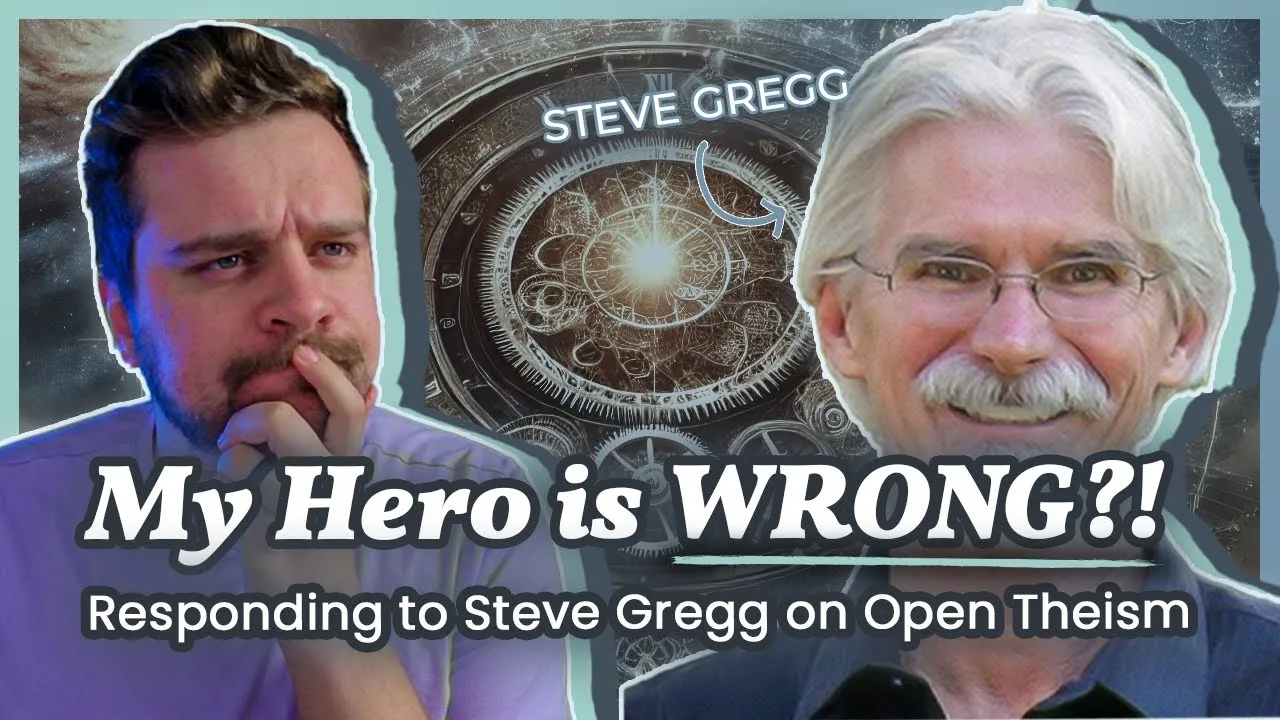
In this post, I’ll be sharing my reflections on a recent video discussion where I engage with the teachings and interpretations of one of my theological heroes, Steve Gregg. While he and I share many fundamental views, there’s one critical theological area where we diverge significantly: open theism. As someone who is a well-known open theist, I found myself in an intriguing and necessary position of having to respond to Gregg’s assessments of this doctrine and his interpretations of relevant biblical texts.
Introduction and Context
Steve Gregg is undoubtedly among the most gifted Bible teachers today. His commitment to following evidence wherever it might lead in biblical interpretation is truly commendable, and I regard him as a genius with a high caliber of character. His itinerant teaching career, built on the generosity of supporters rather than fund solicitation, speaks volumes about his integrity and commitment. As a fellow amillennialist and advocate of the organic church model, we often find common ground.
However, our paths diverge when it comes to open theism. Gregg holds an opposing view to my stance on this matter, which I have thoroughly examined, particularly through my debate with James White. Our differing views became apparent as I engaged with Gregg’s discussion about 40 open theist proof text answers in his video.
Video Overview and Structure
The video is a lengthy exploration—an hour and 40 minutes long—yet its depth demands careful consideration. My attempt to navigate through this comprehensive analysis illustrates that it will likely require several parts to cover thoroughly. In doing so, I aim to honor the discussions around these crucial theological texts and open theism adequately.
I encourage everyone to watch the full video on YouTube, where I walk through the intricacies of these theological arguments, pausing frequently to delve into the nuances and offer responses to Gregg’s points. While the video quality may have its moments, I’ve tried my best to maintain clarity through post-production efforts.
Key Discussion Points
In the video, I jump right into examining open theism—a viewpoint proposing that not all future events are exhaustively determined or foreknown by God, especially those influenced by human free will. Gregg articulates the traditional concerns that arise with open theism, addressing the implications for God’s omniscience and the nature of prophecy. He carefully dissects these issues with reference to scriptural evidence and philosophical reasoning.
I find myself both challenged and compelled to respond. When Steve Gregg brings up prophetic texts and God’s supposed knowledge of future moral choices, I explore alternative interpretations aligned with open theism, offering insights into a more dynamic, relational understanding of God’s knowledge.
Throughout the discourse, we touch upon theological perspectives about time, prophecy, and God’s interaction with human agents. I reflect on whether certain scriptural narratives truly denote changes in God’s mind and explore the possibility of anthropomorphism in divine descriptions.
Appreciation for Steve Gregg
Despite our disagreements, I maintain the utmost respect and admiration for Steve Gregg and his contributions to theological education. While I find some areas of his reasoning unconvincing, his overall impact remains undeniable, and our shared mission to advance God’s kingdom prevails over doctrinal differences.
Conclusion and Invitation
As we continue to explore these topics, I invite you to engage with the rich content of the video, offering your perspectives and insights. I cherish these dialogues as a means to deepen our faith and understanding. You can watch the full discussion on YouTube to grasp the full breadth of these theological debates.
Thank you for your interest and engagement. We’ll reconvene in the next part to delve further into these pivotal themes. Stay tuned, and see you next time!
Transcript
[0:00] I'm in something of an awkward position today because I'm going to review a video done by one of my theological heroes in which I stridently disagree with him Steve Greg in my estimation is one of the most gifted Bible teachers in the entire world today is one of the few people I know who is really vigorously committed to following the evidence wherever it leads when it comes to interpreting the biblical text and frankly I think he's a genius he's a man of High character he's not a platform Chaser he's not somebody who's Holden to some denominational group and wanting to Curry favor with powerful people in order to establish his own Ministry and his own family and his own finances in fact he's been an itinerant teacher who has let people pay him without asking for funds at all and just trusted on the generosity of God for his entire
[0:47] Ministry and he and I agree about a lot of stuff we're both am Millennial we both prefer the organic Church model we both see a lot of eschatological things the same way but one major area of disagreement is that I am an open theist and at this point after my debate with James White I would say I'm a pretty well-known open theist and Steve Greg is not now Steve is also a part-time professor at the Trinity Theological Seminary at which my good friend now Braxton Hunter and Jonathan pritchet and Leighton flowers are all professors for faculty or staff or however that cashes out and they similarly have a very high opinion of Steve Greg and so this video is an hour and 40 minutes long and it's 40 plus open theeast proof text answers with Steve Greg I'm not likely to be able to get through this entire thing in one go you can probably tell just by the length of the video whatever it has ended up at that I've needed to pause frequently uh and this will probably end
[1:35] up being a two or three parter but I love Steve I love Braxton Hunter I love the word of God and I also want to see these things answered the best way that I possibly can so I'm just going to jump right in and start from the beginning and see if we can get some stuff to respond to I have put it at 1.5 speed and Steve's audio is a little bit choppy so please forgive me if it comes through in kind of a weird way I'll try to clean it up and post let's Jump Right In welcome Trinity radio I'm Brax Hunter and along with me today I have my good friend and someone I consider to be a mentor whether he wants that label or not and that is my friend Steve Greg from the ministry The Narrow Path and you can easily access the Narrow Path and get access to a verse by verse through the entire Bible as well as topical lectures on almost everything to do with Theology and a church history course that I think is fantastic and so Steve we were together about this time a little before this last year in Australia and I'm so pleased to have you here even if it's virtually welcome to
[2:22] the show it's always great to talk to you wish we can see for more yeah I do too I'm sure we'll get that opportunity at some point now we have a lot to get through today if you're not familiar with this series that we're in we're taking different theological positions and having someone who is an opponent I don't mean that in any kind of bitter sense but an opponent of those positions does not hold those positions and responding to those theological doctrines the proof texts that they use we had l flowers on to respond to texts that calvinist often used then we had Chris dayon to respond to text that non Calvinists of certain sorts often use I love that they do this by the way this is one of those things that is just such a wonderful heart posture and attitude about Trinity Seminary where it's really good to have we're going to bring on people to discuss their views and other people's views in a way that I think is irenic some of the people in my Camp have a fraught complicated relationship with Chris date but being being an annihilationist myself I also happen to really love Chris State I happen to really love his work and so having this sort of irenic caring back and forth conversation is something I think is desperately needed in the body of Christ
[3:10] so I I think Steve Greg definitely fits that bill perfectly we've done this with egalitarianism and Jehovah's Witnesses and typically I want get people from both sides to respond The Only Exception will be with the case of something like the Jehovah's Witnesses or another non-Christian cult we're not going to have proponents of those views come on and take over our show for that but for these inh house debates I find it be really helpful hopefully helpful with Biblical Systematic Theology today we're talking about open theism I know that I right now have several open theists in the chat and ready to hear what Steve has to say I have say Steve some of those people if all those people have expressed their deep love for your ministry and how much it's meant to them so what we're going to do here and by the way if I didn't tell you the neopath Doom is that right Steve that's correct theath a book on Hell two books on the kingdom of God which which are really Steve Greg's entire life bound up in two one of the things I love about Steve Greg that I think bear is mentioning here when he writes a book he often does these things like four views on blank four views on the Millennium and he'll give however many views there are and he writes his books so well that you often cannot tell which view he holds by the time you get to the end of the book
[3:58] They're that evenly present it he'll present every view for its warts and for its strengths and then he sticks to what these views hold and he doesn't necessarily he's not so strident an interlocutor that he wants to just force his view on people that's not how he is and it's one of the things I appreciate about him with that I'm gonna let C go ahead and say some introductory remarks about the topic today and then as quickly as we can we're GNA jump right into the text and get to work Steve the floor is yours all right when we talk about open theism the reason it's called open is because the say that God has not determined everything about the future particularly those things that are going to be decided by the fre moral choices of human beings God has determined of course whatever things he has determined to do for example things changes in nature things that have no relevance to man's he definitely sounds like he's listening to my debate which I know he has one of the great honors of my Ministry career thus far was Steve Greg did comment on the fact that I had a debate with James White he also has had debates with James White in the past about Calvinism and he commented and said that I I handled I defeated him
[4:47] soundly I think is what he said something that was a great honor but yes God is free to determine what he has chosen to determine he can bring about by his wisdom and his power anything that he sees fit to bring about there are powers opposed to his and he's right in that we think that the future is in some ways open when I say some ways there's a lethally open where the truth value of all possible statements is not yet set there is an openness to this is my stance there's an openness to those things being a different value in the future and Steve is right to say that we believe it's open but there are nuances even to the word open but we'll see if he pulls some of those out contingent moral choices but that because man is free man can choose things that God has not for ordained and and because they're not forain they're not even forn this is the controversy of open theism God doesn't know the future but the open theists feel that this is a necessary consequence they say God knows certainly that I'm going to sin tomorrow do but if God knows certainly I'm going to do it then I am am and I'm not free to do
[5:33] anything else because if I did something else i' go against what God knows I'm going to do that's by definition possible so so they would say very implications of Free Will eliminate the possibility of total Forge about those things now those who are against open theism I'm not an open myself I don't consider myself an opponent of it because I do not get I'm not alarmed by it or implications but there was my first back in the late I debated in I was pretty alarmed guess like many Christians I assume this is a denial of God's omn when we believe God knows all things we assume that means all things future too apparent confirmation for that in multiple prophetic passages about where God tells the future and so we feel like okay his omnition includ knowledge I would simply push back and say that the prophetic text don't just say that God tells the future God is declaring something that he plans to bring about in which he will be involved and those are things that it's very different for me to try to predict what's going to happen to the stock market because I'm not involved in the stock market I don't bring anything to pass in the stock market I'm making a prediction it's based on a prognostication for things that are outside of me but if I declare that I plan to go on vacation with my family in
[6:23] the month of July that's very different I'm explaining my plans and my intentions to bring things about with my limited power in my limited range of circumstances that I can have say so over God having infinitely more power than me and infinitely more purview has the ability to involve himself in things that are much more wide ranging than that but I like where he's going and I want to let him finish openness people God does know a lot of future things because he has plans to do certain things which he'll carry out what he doesn't necessarily know is the free choices that people make and he doesn't very often pry those and and therefore we be open to the idea that God doesn't know what I'm going to do tomor who's going to be saved because that's a moral choice too you and therefore they would say omnition does things that don't exist necessarily CL for example I thought Recon said when we say God is omnipotent it doesn't mean he can make too much to equal five he can make a square circles very Comm very Comm illustration God can do anything he can't do the ridiculous he can't do the Absurd he can't do what is not true and likewise they say when we say God knows everything we only mean he knows
[7:09] everything that there is to know but the future is not there it has happened yet there's no information content there's nothing there to know and to say that God doesn't know a future moral choice that someone's going to make simply because it doesn't exist yet and could go more than one way they say that's just same he doesn't know about any the dark side of the mo and again this is a really helpful reframe because we're not limiting God's knowledge we're it's I've said this this is a phrase that I bored from Greg Boyd it's not a discussion about the nature of God's knowledge God's knowledge is total and complete it's more a nature of the reality that God exhaustively and perfectly knows and so yeah we're not making limitations on God we're making we're explaining that we believe that there are limitations on reality as God designed it God is still able to do all that he plans to do I don't react like I used to about this I used to have a problem withm much worse than I would today I'm not sure have a problem with I'm not persuaded and we're here course to talk about the script that they used to prove it TR I think they can be answered I'm not sure that they have to be answered but they can be
[7:56] and that's the point I want to make and I'm say this whereas many people think open theism challenges the nature of I don't think it does now that I understand it better I have understood it the past few decades but I think what it challenges is the nature of time which is more maybe a philosophical quasi scientific question which the Bible doesn't necessarily tell us anything about CS speaks for oh goodness oh goodness yeah just go back and watch my interviews with both Ryan Mullins and with Dr alen Roa doctors Alan Roa and Ryan Mullins fantastic discussion on time and I agree this is more of a question about the nature of time than it is about God's knowledge the majority ofical in saying that God lives in Eternal now that past present and future are all B outside of time that needs to be posited and proven that's one of those things that we just assume but you can assume a lot and you know what they say about assumptions but anyway therefore he can see the future without causing it as easily as we can see the present and now this may be true I think most accept this view I think I might accept this VI I do believe God knows all things future I'm not sure how he knows this is an explanation the Bible doesn't actually say that God Liv
[8:42] outside but this is a philosophical point it seems to me that Christians are at Liberty to see the matter of time different God is in time or not because say time is a created thing like space b began time they would say and there's no time before that which in my mind is there's nothing before that if that happened then something before that but I'm a great philosopher I'm just a Bible student and in my opinion there's yes he's pointing out what I think are some of the inconsistencies and the philosophical nonsense that comes around from when we assume certain things about the nature of time Christians are at Liberty to believe any number of things about time but yeah to call God Timeless or to exist in an eternal now that is a handwavy it's not a very rigorous thing to State and sure it's I love Steve's humility to say it's above his pay grade that's all well and good but it is a claim that's being made in some sense and we need to go rigorously through the different pieces of that claim to make sure that we understand what the implications are or we get into trouble so I think that we itively have gotten
[9:30] ourselves into trouble by wishy-washy weak thinking about time not that I'm calling Steve Greg wishy-washy but it's really problem that all Christendom is suffering from right now information there suggest that God does know future moral choices that individuals will make and that these are not moral choices that he compels them to make there are things that the Bible predicts that are going to happen which God says I'm going to do this and I I think this is something that we have to take into consideration in Isaiah 41 God makes it clear that the very fact that he can tell the future is the he's God but it's not a simple telling of the future he just said and I think accurately that what God is doing in those passages is declaring the end of a matter it's this whole Isaiah 40-4 that gets referred to he's not a calvinist Steve is also not a calvinist but that gets referred to as a god telling the future passage they'll use you'll look at phrases like for I declare the end from the beginning and then what people hear is I am telling you what will happen before it happens but what he is saying is I am telling
[10:18] you the result of a thing that will happen in which I'm involved on a Time Horizon short enough where you'll be able to see and acknowledge and recognize my involvement and that's very very different because what he's trying to do in those passages is convince a wayward people to follow him and to turn back to him from worshiping all of their erroneous gods and that's a very different discussion around telling the future cuz he's not simply making future predictions he's saying look pay attention I'm going to tell you what will happen ahead of time because I'm going to go do it and then you'll be able to see that I did it again it's my children they want to know that I have power as their father to do something and I say look guys it'd be like if there was some other guy that they were wanting to follow after and be treat like their dad or something that's not the situation that we're in but just imagine with me this crazy scenario so because I want to win back the affection
[11:07] of my own children I say look I'm going to drive to the grocery store and get all the ingredients to cook your favorite dinner so I do that I go to the store I get the ingredients I come back and I cook the dinner and I say see I did this thing I told you I was going to do this thing this dead beat dad that you're following after isn't doing anything for you whatever it is again this is a weird example but I think you get the point he's not just simply telling the future he is involved he is bringing something about in the future and that's the whole point of this passage so I just I'm interested in seeing where he takes it he challenges the false god show the things that are to come herea that we may know that you're God tell us what coming so you really got and by application he said I am and I I'm really but he also says I num of times I predict it I speak it and then I'll bring it to pass and Cyrus and these kinds of things in history he's saying I told you about it beforehand and the fact that I can that I can call it and say three ball in the cor pocket and hit it there it doesn't prove that I had some exhausted future I knew what I was going to do I did it and but there are a couple of cases anyway if not more where I think God predicts future moral
[11:53] choices I'll give you these and we go scripes that you want me to answer one case is in Deuter 3129 where Moses speaking I believe prophetically he says for I know that after my death you will become utterly corrupt and turn away from the way which I have commanded you and evil will befall you in the latter days because you will do evil in the sight of the Lord provoke him to anger through now he's saying I know that you're going to do this and you're not they did he predicted it now we say meses doeses there's some good conjecture here if he says that he's speaking prophetically that's all fine but it's also one of those that is not a very specific prophecy I know that you people will be stiff necked and turned from God and disobey him and you'll fall into trouble in the latter days just means later in later days than the ones you're currently existing in in down the road that's not a very specific prophecy even if Moses was speaking prophetically and again I think that it can really easily be answered from our side that God has if we believe that God has exhaustive knowledge of the present which I do and not all open theists do
[12:40] and I'll grant that but if I believe that God has exhaustive knowledge of the present moment then his ability to know the future choices of a person can be grounded in his exhaustive knowledge of their present State I know what my children will do today and tomorrow in large part because I know them well enough it's if a football team knows the tendencies the play calls and the strengths of the other team they know what the other team is going to do in a general plan and I don't think that what Moses said is anything more than just a general they will be disobedient in later days and you'll run into trouble because of it maybe I need to do a whole video on Deuteronomy 31 but that's what comes to mind for me that's a pretty simple one just knew these had this tendency to do bad things and so he just knew they do it again just like I know that if you offer a child candy or almost chose candy but that's not the same thing as KN the fut however we have to remember if the argument is if God certainly knows the future then there's no opportunity for people to God
[13:27] certainly knows going to happen and if go I know you going return from God you make then that sounds like the thing is true God's knowledge of it means it's unid then then these people are appar destined to do that because once it is prophesied it can't happen any other way than that without making prop FAL and I see the same thing about Jesus predicting that Peter would deny him three times before the cockro that's talk about something people Happ the next 12 hours it's very specific actually says before the cockro why she'll deny him three times and then when you repent stly so there's four moral choices here in the next 12 hours he's gonna S three times and he's gonna repent how did Jesus know Peter Would S four times and then repent I think that again this whole thing is really easy to answer too because sure God can make roosters crow he knows Peter is going to deny him maybe he can see the present thoughts and intentions of everybody in that day in that time per period he knows Peter really well and he knows that there's going to be pressure on the people who had been seen with Jesus to recant and then he do we believe that God has the ability within his omnipotence as we would call it does God have the ability to make a rooster crow I think so there's a character in a book that I really love there's a whole book
[14:14] series that I just fell in love with over the course of the past few years and it's called The Cradle series and there's a character in there who's enormously powerful and I will avoid spoiling as much as I possibly can but he's a character who has the ability through what is called like a perception web to see the things that are happening within an effective radius of a few miles it takes an enormous mental capacity for him to be able to see things that are happening to extend out his perception to perceive the present moment around him he takes in all this information people's present physical state and how they're feeling he can take in something of their thoughts it's not always exactly what they're thinking but he can tell what they're thinking based on his perception and there's a scene where he is in a fight and as a combatant he only ever uses things like a broom and a pair of fabric scissors he's an incredibly hilarious character but he is always winning fights he does not lose fights because he has this
[15:01] incredible ability to see the present in fact one of the characters sees him in a fighting context a avoiding all of these different attacks and seemingly able to predict what's coming and move right out of the way in the most incredible way possible one of the characters asks him can you see the future and his response is no even better I can see the present and it's such a good line but it's exactly what I think that God is doing if God acts with his infinite wisdom and his power in the moment then there are things that he can do that are Indescribable to us we make decisions the same way we bear the image of our creator the way that we think about things is we make decisions based on our present observation of the facts and so some of the most unbelievable predictions of Jesus that one's not very far in advance it's literally in the moment Jesus tells Peter that something will happen and just based on his own present observation of the circumstances
[15:48] it seems really obvious to me that God should be able to see what's coming to be able to tell what's coming and then to make pronouncements based on what's coming in the next half hour hour you'll have to forgive me but I don't find that when all that mindblowing and yes he does have the ability to make a rooster crow not rep at all obviously these are four moral choices and Jesus said they would happen and he said in what time frame do have now unless we say that God made Peter sin and made him rep and okay that I'm not sure not then say that Jesus knew it and again open of course Peter was overconfident Jesus knew Peter well he knew that in certain circumstances people would do this inly if free choice and that's the point whether Jesus knew it because he could calculate the trajectory of circumstances correlated with Peter's character and things like that and knew that this happen in C circumstances whatever reason Jesus knew it when he predicted it couldn't happen any other way without Jesus false prophet this is the issue that Jesus didn't predict future moral choices of an individual and if we say not because he lives in the Eternal now and things pres okay maybe not that Jesus know somehow the future being open doesn't mean that it's open 100% again this is a point I tried to make in my debate if the future is open even just a little bit then it's an
[16:36] open future if the future is 99.9% determined or 99.9% forn or 99.99% whatever knowledge mechanism you think that God has of what will happen either because he determined it to be that way or he simply forn knows it or whatever it is but there's one thing anywhere in the universe that happens that God did not foresee coming did not Forno did not say this is something that I I have clear for knowledge of happening 100% if there's even one thing then the future is open at least to the degree of that one thing so the open theist claim is that God knows nothing about the future I know things about the future the Earth will continue to rotate around its own access at the rate of about 24 hours for a full rotation and that it'll take about 365 of those 24-hour rotations to make an entire trip around its orbit around the Sun and I can know that with a remarkable degree of specificity I
[17:23] could even measure it if I wanted to but me knowing something about the future doesn't mean I know everything about the future it doesn't mean that the future is closed in that regard and it's the same way for God again God infinitely higher knowledge infinitely higher wisdom infinitely higher power than mine nevertheless the nature of reality is that the Future Has Not happened yet God can make better predictions than I can but that doesn't mean that God sees everything that's coming and that he know it ahead of time certainly not before eternity passed because I would argue that the simple forn knowledge God simply knows everything that's coming but really is not able to change any of it and not able to respond dynamically to changing circumstances is like like a god with his hands tied behind his back letting things go however they'll go he's more of an observing deist God who winds things up and simply perceives the passage of time and the transpiration of events rather than a God who is actually
[18:12] dynamically involved because that's what simple for knowledge essentially reduces him to and again this knowledge arrives to him way late for it to be providentially useful to him he simply creates the world and then knows what will happen and he knows how he will get involved and how he will intervene at certain points but that doesn't mean that he has power to change it which I think again on the simple forn knowledge view is something of a tacit admission that this is exactly how he wanted it to look and that might sound charitable but I think it's true but I'll let Steve keep going by calculating circumstances and trajectories and pet weakness like that okay but if he could accurately predict the moral choice of hour4 hours how about 48 how 72 how about in a week and a half how about in a year where's the limits of God ability to calculate these things and if he can calculate them and predict them accurately in the same way that the further away you go from a moment the more fuzzy your predictions become the more fuzzy God's predictions become because there are more possibilities between now and 24
[19:00] hours from now than there are between now and 24 seconds from now there are more possibilities of things that could happen between now and years from now there's more a thousand years from now than 10 years from now so the further out you go the fuzzier it gets because that's just the nature of possibilities but again this goes back to the discussion about time and how time works because it's not about God's ability to know things all that is knowable God knows which means there's a lot that God knows about tomorrow and what will transpire tomorrow that he knows with an extreme degree of certainty but there are also things that he knows with less degrees of certainty and the further out you go the smaller the probability judgment are so this is him stating his disagreements but not really substantiating his disagreements then does the individual have any other choice than to do them once they predicted Jesus can't be wrong so this is the problem we face it's not that the openness doesn't solve it there is a difficult philosophic problem and that is if God does know future retain our freedom and I have some suggested that
[19:47] get into the course vers but I'm saying that openness doesn't solve that philosophical because God does predict future moral choices that people will make whether he can do so for all moral in the future we don't know the prediction ful after his death so was years later and it happen M times I just cannot take a theological position that future Mor somehow he does all right Steve thank you for the Preamble and explanation I think that's actually really helpful and I want to tell people that we have all of these videos in the series in a playlist so if you'll just go to youtube.com/ Hunter the main channel for this and go to the playlist it should be right there and you won't miss them going forward and you can find them easily also all of them have chapters for each verse so you can just go right to the verse you're looking for on whatever subject and that will be true of this one too this is great I again love Braxton too I want to just answer that really quick does God know some future moral choices yeah easily he points out his knowledge of some future moral choices in the pages of scripture but then also in the pages of scripture he clearly points out his lack of anticipation for certain moral choices he says it did not ever enter into my mind that you would do this thing he said I did not decree or command that
[20:35] you do this thing nor that it ever enter my mind to do so it's either that he doesn't know that never enter entered into his mind that they would do it or it never entered into his mind to decree it I favor the former but regardless he's clearly shocked and dismayed at the choices of these people he says that I in Isaiah which is hilarious because Isaiah again is the place that a lot of these settled futurists go to when they want to set up a plan where God knows everything that will happen God says says to Isaiah look at my Vineyard I set it up perfectly I did everything I I gave it this I put walls around it I put a watchtower I set a guard I did all this amazing stuff and yet look my Vineyard still brought me wild grapes I expected good grapes but it brought me wild grapes instead again can you I said this in the debate can you regret something that turns out exactly how you knew that it would can you really be dismayed at something happening exactly
[21:24] the way that either you a determined or fornew that it would all along and then why set up the test in the first first place right why give them such a a wonderful and Rich hedge of protection and relationship with himself and proximity to him and blessings if he knew that it would get squandered I just again I take it at face value when it says that he expected a good outcome and then didn't receive it so that turned out in a way that it was pretty clear he did not anticipate it turning out at least that's how it reads to me okay let's jump into these texts then Steve and let's see how you handle them given what you've said so far the first group of texts that we're going to look at are those that picture God as seemingly changing his mind about something and people who have been in church for long read the Bible can probably think okay he says seemingly changing his mind about something I don't want to go I think that sometimes when we get to these texts when we sometimes get to this part of the discussion we go in with a bagag assumption already that God doesn't actually change his mind I think that what we need to do instead is be
[22:12] more humble to go to the text and read the text for what it actually says I don't want to import my presuppositions and you shouldn't import your presuppositions we should both go to the text for what it says and then we should let the text speak and see what the text can sustain for what it's actually saying if at any point in this discussion we break the normal rules of reading comprehension as my friend Chris fiser would say or at any point during this discussion we are trying to make the text say the opposite of what it says then we should consider that we're probably in trouble interpretively I just had this discussion with a dear friend of mine who was talking to me about that God is not willing that any should perish and he forward me he forwarded me an article from lioner Ministries written by RC Sproul himself in which he said people perish and so that must mean that God in some sense is willing that they perish because nothing happens if God doesn't will it and it's you just put yourself in a position
[22:58] where you said the exact opposite of what the scripture says God is not willing it's not about his decretive will and his perceptive will he does not will he does not desire that people perish and then people perish which should tell you that God doesn't get everything he wants it's like God does not will that any should perish no well we know God does desire that some people perish you just made the passage either a lie or irrelevant or you're playing fast and loose with things where you can just import your own metaphysics and your own assumptions and then make the text say whatever you wanted to say right so anyway where it says seemingly out of Braxton's mouth where God seemingly changes his mind let's examine the texts themselves and then see if text sustains that God changes his mind or doesn't but let's not privilege one view over the other before we even get to the text let's see what text sustains some of these and I have to admit as a person who's not an open theist sometimes when you run these passages you think yeah I don't know quite how to take that so we're going to look at those together Exodus chap 32 and 14 will be the first one we're going to
[23:45] look at it won't be on the screen but the reference is on the screen so people can find it I'll read it for you now it says in ex 14 so the Lord changed his mind about the harm which he said he would do to his people what more you want right there it is Steve how responded this it's a very classic and predictable response that people like me always give because it's a good one and it's a correct and that is that the old test historical narratives are not written to be part of a Systematic Theology they're written as the story of God's interaction with human beings the Old Testament and the new are about God's relationship with man and therefore they're written in relational terms hold on uh I actually didn't anticipate this no I'm I'm going to hear him out I want to be generous and hear him out first since man is human God often describes his behavior or someone else describes his behavior in terms that we could relate to as human being obviously the word for that is anthropomorphic this is anthropomorphic narrative God is treated in most cases in narratives as if he is a person do we not think that God is a person is he not a person is he an impersonal Force isn't he three persons if you're a trinitarian it's not just one person he's three persons are we not persons because we're Made In His Image and we are given and
[24:34] personality are you saying he's not actually a character in the biblical story I don't think Steve would say that so that's confusing but I think that the story is written as if he's a person because a the three persons of the Trinity intended for it to be written that way and B because it reflects reality I think he is a person I think he is a being who has an identity and relationships okay let's see where it goes and therefore he shifts his policy here because he just told why not the isites for making the golden C and make a better Nation out of Moses himself now this I believe he did that to test Moses so the say he did it to test Moses but to give Moses the opportunity so the text doesn't sustain he did that to test Moses the text tells you what when God is testing someone it tells you when God is testing them and in fact that testing Motif shows up in all kinds of places and there are very clear signals when it's happening there's the obedience to God and Disobedience to God there's the motif of the way back in the Garden of Eden with the tree of the knowledge of
[25:21] Good and Evil Oren raw good and bad really is a better way to put it and the the way that the Bible project people frame this up is really helpful the challenge there the test there was am I going to trust God's instructions to me and Trust God's wisdom or am I going to try to seize autonomy for myself and choose to follow my own path and do things my own way and that was the first test and every time the testing Motif shows up that is exactly what is happening in the passage the test in the Abraham and Isaac story was God is asking to sacrifice my own son the son of Promise mind you the one that God gave to me as a way of fulfilling his promises and God is demanding him back so am I going to trust God's wisdom and follow through on this thing or am I going to seize autonomy for myself and try to keep possession of my own child and not do what God is asking now God ultimately obviously Abraham passes this
[26:09] particular test he chooses the trusting in God's wisdom path and then God does not actually cause him to follow through on this thing but it was the the willingness to trust God was what was at stake in the Abraham story and God again I've pointed this out in the debate he very straightforwardly gives both the reason and the timing for a change in his knowledge he says now I know because you would not spare your only son there was a test to see what's happening inside of Abraham and in this situation let's just go back and talk about Moses if he's doing it to test Moses what is he testing Moses for if he's testing Moses and again this passage doesn't have that same language and doesn't have that same motif of trusting God's wisdom or doing this thing to sees autonomy for yourself he's in a conversation with Moses it's not a test Motif in that passage really at all why the test if he's testing him is he testing Moses for Moses's sake and if so where is that in the text it's not in
[26:57] the text so this is a lot of assumption and conjecture but if he is testing Moses when God tests people it's testing so that he knows what they're going to do so that they've proven their character when under duress and then he knows that's a person that I can rely on that I can count on because they've been put through a trial they've been put through a test and now I have the ability to have confidence in that person because before the test there was a possibility that it would go one way or the other and if you fail the test then God looks for someone else as is often the case the whole king of Saul is filled with this test language and the kingship of David is filled with this test language and these test motifs and the kingdom was given to Saul God later came to regret it because it didn't turn out the way that he thought it would Saul fails test after test despite being what all the people thought was like the archetypal King perfect and he fails all these tests because he keeps trying to seize autonomy and do things his own way
[27:44] and then David to the degree that David is successful it's because in his early life he's very serious about passing God's tests and following and being obedient in the moment and it's later in his life as King when he starts to get full of himself a little bit that he begins to make those choices when in a moment of testing or when in a moment of Temptation when in a moment of trial where he fails the test and he seizes autonomy he wants be Sheba and so he orchestrates this awful situation in which Uriah gets killed so he can take her as his wife that was a moral test that he failed I know this testing motive is not present in that passage as the long answer here inter for the people of God unselfish and put God's interest ahead and because mes did intercede God was pleased with it okay I'm not going to do that now to say God didn't know that Moses was going to intercede and that God didn't know that he was going to turn and do something different than for said is to suggest that God is giving us an example of his actual limitations he didn't know things
[28:31] but God can act like he doesn't know and respond as if he didn't know for a number of reasons but one thing absolutely it's not some this is also interesting because it's not so much about God's knowing what he would do or not God isn't just reducible to propositional truth statements and knowledge about facts God is also an emotional being we bear emotions because we reflect his emotionality and in that moment the people that God has just gone through a lot of trouble to rescue and bring through the Wilderness and bring into the foot of Mount Si and he intends to form a covenant with these people these people that he's just gone through grace even in order to rescue and bring out safely having gone to war with Egypt and Egypt's Gods they're behaving like Egyptians they brought the Egyptian with them they brought the warship of statues that they made themselves they brought that whole thing with them from Egypt
[29:18] and so what I think is happening there is that God desired both to get the people out of Egypt but also to get the Egypt out of the people and when it was clear that the Egypt was still lodged in the people people's hearts and they still went and and did this thing that was detestable that his anger burned hot and the reason that I say that by the way is that the scriptures say that his anger burned hot I don't see that and say that can't mean what it means there's no way that they meant that the spirit inspired scripture meant for Moses to write it that way that's we we got to It's Kind it's it's true it's true from our perspective but it can't really reflect reality how far do we take that thinking how far do we go before we start to run into problems with what it says the devil himself say has God not said and then what he said was not what God Said and then Eve said no he said this even the devil when he's tempting Jesus doesn't he say do the scriptures say isn't it written and then
[30:07] he actually quotes the passage accurately but out of context that Jesus says it is also written this so we don't want to get into the habit of twisting scripture to make it fit our presuppositions it's a very dangerous game if the scripture says that God's anger burned hot and that he changed his mind and that he changed his plan then by golly I think God changed his mind and changed his plan but that's maybe that's just me maybe I'm being overly simplistic any examples of comes in the garden after where are you as if he didn't know not question that's a known answer question if my child broke a vase and then hid behind the couch I know she likes to hide behind the couch and I'm saying where are you not in the sense of I don't know where you are but asking her and giving her prompting her for a chance to come speak to me no answer questions are different the Pres of the time when he says to Kane where's your brother God knew where his brother when God actually says to Abraham in Genesis 18 I've heard that the things I'm gonna go down there and see if it's as bad as I've heard now it's like God's acting like he's not of the future but what's going on down the street from where he's
[30:53] standing in Genesis 11 go down and see this thing that they're doing this doesn't have to move geographically upward or across down the road something but he talks to people as if he's one of them many times not many times in context of he actually appears as human form he wrestled with Jacob and apparently couldn't beat him the B say who wrestled the man wrest saw that he didn't Prevail against him he tou God can't be can't beat wrestl when God reveals himself man he obvious what the passage says so maybe what it said but okay reduces his the manifestation much man life and of course the timate example this is Jesus becoming in which isn't exactly the same thing because he became act human being but certainly God was taking on human limitation being in one place at one time not knowing everything getting tired and God doesn't weary those kinds of things that Jesus did he was God In the Flesh God manifest himself a man he do so in a way that actually takes on limitations and I think God Chang his mind say he changed his policy or changed his prediction but to say he literally changed he didn't know he knew that and that's what the all these cases Chang mind I think not all of them just some of them so I'm not making an absolute claim again I just feel like I'm rehashing my debate prep but yet I'm I'm not making an absolute
[31:40] claim no open theist is making an absolute claim that God knows nothing about the future at all that it's all open and that there's nothing that is certain there's nothing that's coming and God is just helplessly sitting around waiting for the future to come to him that's not what I believe that's not what any open theist believes just that it's partially open that there are things that God does not know that there are things that God does not know and again the reason I take that stance is because I think that the scriptures tell us that there are things that God does not know I'm gonna give him about five more minutes here and then I'm going to probably wrap up part one and we'll see where we land all right and for some of these answers folks you may hear Steve say give the same basic answer because it's the same type of question we go through them and he may just reference back to what he's already said that's fine but I like to have the entries here so next we're gonna go to numbers chap 14 verse 11 and in it it says rhetorical question Steve's going to say it's a rhetorical question I am almost certain but it's a rhetorical question and God can use rhetorical questions so he's asking question as though he doesn't know the
[32:26] answer I think this one got plac category because it appears later on this also because there's no changing about mind here it's just basically he talks if he's of course I think it doesn't take Jus to these are rhetorical questions he not asking for information how long are these people sper me how many times I have to tell you such and such those kinds of roral questions are not looking for information and he's certainly not asking Moses how long it's going to take because if there is a how long it's going to take God would know it even if Moses doesn't they don't even profess lack information they are more of a they're more State spoken in a rical question yeah it's like an exasperation about things how long exasperation though exasperation can you be exasperated by something that's going to take exactly as long as you already knew it was going to take I have a 3D printer now and I have a an app that allows me to send something that I want to have the 3D printer make off to the 3D printer and then it says it's going to take 2 hours and 5 minutes and 36 seconds and I know that is what it's going to be like going in and I don't have perfectly formed character but I know it's going to take 2 hours 5 minutes and 36 seconds so when I get to
[33:14] the hour and a half mark I'm like if I were if I were to be like oh why is it taking so long H how long is it going to take that would reflect emotional immaturity on my part if I knew that it was going to take 2 hours 5 minutes and 36 seconds but if I put it to print and it says 15 minutes and I expected it to go 15 minutes and I expected it to last this only this long and then it takes 2 hours 5 minutes and 36 seconds then some exasperation would be warranted so is it possible that if God's exasperated then it's gone longer than he would like for it to have gone longer than he had anticipated it would go I understand it's a rhetorical question but if you're going to say God's exasperated then can you be exasperated by something that takes exactly as long as you knew it would okay then let's take the next two and the next two are close together so we're going to take them together omy 9: 13- 14 says the Lord spoke further to me saying I have seen this people and indeed it is a stubborn people let me alone that I may destroy them and blot
[34:01] out their name from under Heaven I will make of you a nation mightier and greater than they and then Deuteronomy 918 through2 says I fell down before the Lord as at the first 40 days and nights I Nei ate bread nor drank water because of all your sin which you had committed in doing what was evil inside of the Lord to provoke him to anger for I was afraid of the anger and hot pleasure with which the Lord was wrathful against you in order to destroy you but the Lord listen to me that time also the Lord was angry enough with a to destroy him so I also pray for Aaron at the same time the same story as we talked about in Exodus 324 it's just Mo Moses the story to the second generation after The Exodus Dey it's again it's this God said to Moses get out of my way I'm going wipe these people out so he's predicting he's going to do something Moses interes and God doesn't do it I'm sorry anyway this is a God have it's going to come up later in another passage jiia 18 where God says whenever I going to destroy people if they repent I'll repent of course I do saying to build people up they they didn't repent in this there's another Factor there's intersection the Bible does indicate if means uncertainty if there is an if it means that it's not certain it means it could go this way or it could go that way and if this happens then this will happen and if this happens instead then this will happen and there's an uncertainty there that is
[34:48] just the word that is what the word means it's a conditionality we'd have to go out of our way to say it's not conditional and I don't think the word if allows that but if God answers prayer this is a case of resp this is a policy God has I agree with the language as spoken I agree that God has a policy of responding to prayer sometimes it's yes sometimes it's no sometimes it's not yet and sometimes the know is based in love because he has knowledge of our character and knowledge of what's coming that we don't and God says no to things that sound good even if they might even if they might be perceived as good by the person who is asking for it if it'll have bad outcomes that he can see coming again just like my own relationship with my children if my child asks me for something that is good for him that I know once I give it to him will have good effects in the long term I will give him that good thing I will say yes because I'm a good father who knows how
[35:35] to give good gifts to his children I don't give Stones instead of bread I don't give serpents instead of fish but likewise if my son asks for something that seems good and maybe even is good in and of itself but that will have bad long-term effects like a new video game which in giving him a new video game and not having him go back and beat the other ones or giving him a new book series rather than having him finish the existing books I'm training him to become the kind of person who who doesn't finish what he starts that would be a good gift that has bad consequences so God can say no to those things as well but yeah God has a policy of responding to prayer but if you're saying the word responding and you mean it with any kind of seriousness or sincerity or rigor it means that he's in the moment taking in a request and then responding to it it's obvious that there's an apparent change something is happening why apparent though why say an apparent change there is something that's happening it's going this direction and then it's going this
[36:22] direction and that's a change that's not an apparent change you don't even have to qualify that at all you have to say that it's a change because that's a change you would simply have to say I think Steve would have to say that it's a change that God always knew that he would make or that was going to happen one way or the other no matter what because it was something God forne and again we' get back into this weird Loop where we're talking about how the knowledge is not causitive but if the Eternal truth value of a statement about the future is set in eternity past well in advance of the thing ever happening then it can never be different it can never be any other way I guess that's why he has to say apparent change somebody intercedes and God says okay that works no I'll grant you that but God isn't changing his mind he's following a universal policy that he said always God answers intercessory prayer God responds to repentance on people's part these are the times that we God changed his mind what he did changed Direction in fact the very word often used in the text is sh turned around repent God repented repented um yeah to turn around you're heading One
[37:08] Direction and then something happens and then you turn to go a different direction did God are you simply saying that God eternally fornew that he would repent where's that in the text again I don't think the text sustains that certainly not this passage and Moses literally says and God listened to me God listened to me at that time do we actually believe that God listened to Moses we certainly can believe that Moses believed that God listened to him in that moment and then when he was recounting the story again what I would say is under the inspiration of the spirit in the writing of scripture he says and God listened to me that's the explanation he gives on the pages of scripture for why the thing went a different way God listened to me but it's not but to turn around he reversed direction so it's not so much that he got new information oh I never bra but now you do difference God I believe was goting Moses to intered so that God could respond remember God has interacted with us and whether he knows in advance what's going to Happ if he
[37:55] does if he didn't or if he does it matter it does no good let the man know what's going to happen God in order to get Moses has to inform Moses that there's a threat of something that's going to happen to get into pray this is just in the nature of God's interaction he talks sometimes as if he's going to do because there's always the subtext but you don't believe that there is an if not in any real sense right if they would have done this then God would have done this and you can speak in that sort of subjunctive sit sense where if circumstances were different then it would go a different way but you don't think that those circumstances are real you don't think that's ever going to happen God simply will do what God has always determined that he would do and God decided what would happen and what he would do based on a set of know that he gains too late for him to providentially do anything about it I'm going to do such and such and the well unless repent and we see that in the John repent that's God's Universal policy according to Jah 18 ver yeah in fact before you used the word interaction I remembered from one of your lectures you said he's an interactive God and he wants us to be interactive with him and this is part of
[38:41] relationship and he's fostering that that makes sense to me all right Samuel 2 and verse 29 through3 says why do you kick at my sacrifice and at my offering which I have commanded in my dwelling and honor your sons Above Me by making yourselves fat with the choice of every offering of My People Israel therefore the Lord God of Israel declares I did indeed say that your house and the house of your father should walk before me forever but now the Lord declares far be it from me for those who honor me I willon and those who desp me will be lightly esteemed yeah this is a very different kind of statement I don't think God is changing his mind I think he's clarifying his his intentions when he makes promises he's talk Eli Eli the priest of the generation and God says I said that I would allow your family your father's house the Levites to walk before me means as priest he doesn't say anything about the Levites there actually he says your family your house Eli and his sons again that's going beyond what the text can sustain and the text also says but now it's a very clear changing of the circumstances I did indeed say that I would let you and your family in your house go in and out before me forever but now and again let's look back at the installation of
[39:29] Eli and his sons let's just say that you're CEO of a company something far less weighty than the actual moral governance of God's Own chosen people and the intercessory relationship that a priest has between God and his people something far less weighty than that but you're the CEO of a company and you hire someone full on knowing that he's going to bring in his nepo children and that they're going to get themselves in all kinds of like sexual misconduct allegations and lawsuits that are going to throw your company into crazy turmoil and you hire that guy for a sea Suite level position and you just knew that was going to happen you would not be a very wise company owner no one would call you a wise company owner if you knew yeah this guy and his kids like to get a little grabby and they get go ahead and hire him anyway no one would say that you're a good owner of a
[40:17] company in the same way God must have seen something very different in Eli and his family and his sons that they then catastrophically drifted away from and turned from and they took took on an approach to life and an approach to obedience to him such as it might be called that was completely contrary to what he desired from them in the beginning and he made a promise to them that he then turns away from based on their responses and based on their actions and the way that they choose to live in the present moment that's just what the text says we're going to let him finish off this verse and then we're going to probably call it there okay he's not changing that God didn't abolish the here he said but now I need to clarify this far wasn't talking about the levitical priesthood was talking about Eli and his sons for me to honor people who to honor me I will although I will a priest in office I'm going to choose among those available and I will hon me and I who don't sometimes talking about the whole isra because God makes promises to Israel makes it clear in
[41:04] many places he's talk about the remnant of is not everyone in is promises the promises are made to Israel and then Israel breaks Covenant With God all of the time and then he Narrows the scope of who he is considering Israel it's almost as though he removes the rest of them from even being considered Israel and he Narrows the scope down to those who are faithful to him in a generic sense many times in isra are Fai this a generic prise to the house of Levi they'll be the but faithful among them that he's going fulfill this what he saying he's not really changing his mind all right so then we move on to 2 Kings 20: 1 through and that is where we will pick it up next time I want to make it as clear as I possibly can one more time that I absolutely love Steve Greg I love his work I love his teaching I love his thinking generally speaking are there ways in which I think that Steve was a little bit sloppy in his thinking today in this video yes are there ways in which I would say that the responses of anthropomorphism and the text not really
[41:52] meaning what it says as it's written I just don't find convincing at all yes I think that view held consistently allows you to pay play fast and loose with God's word all over the place it allows us to redefine terms however we want it allows us to pick and choose this thing and that thing and to just simply Say by policy that it can't mean this really a priori before we go into actually observe those texts and see what the texts themselves sustain is a pretty dangerous practice and I think it can lead us down some pretty bad roads Steve I love you would love to still have you on the channel you're still on my theological Mount Rushmore and it's not the most fun I've ever had to butt heads with you but I'm not convinced and I suppose you're not convinced by my stuff either but thankfully I think that we're both the kind of person who would say thank God for you and for your ministry and for the fact that God is advancing his kingdom in and through you and through the people that are in your circle of influence and may he be
[42:39] praised for anywhere that he has loved and accurately presented and I certainly would say on the whole your ministry is among my absolute favorites in the world so we'll Circle back around to this one next time and start from that 2 Kings 20 passage and we'll see if we can get this done in two or three parts regardless I appreciate you guys thanks for sticking around and see you next time
Tagsopen theismsteve greggforeknowledgeprophecybiblical debate