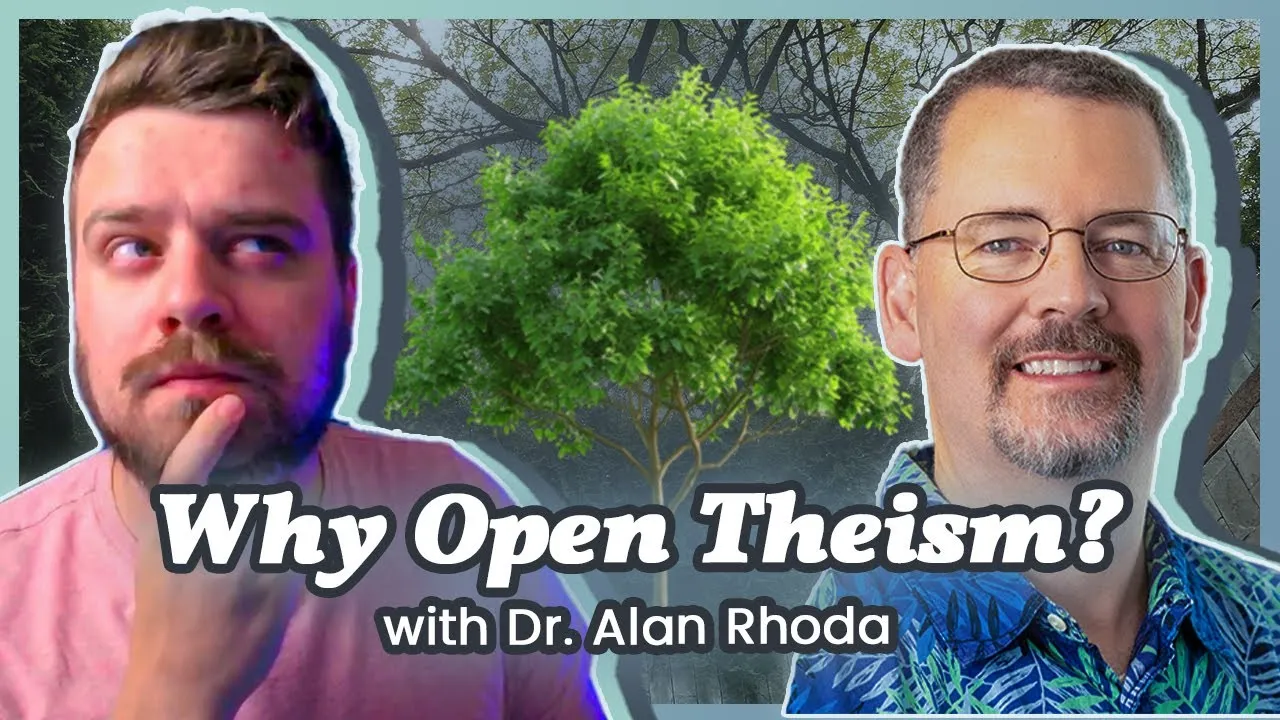
God and His Creation: An EPIC Talk with Dr. Alan Rhoda
Tim sits down with Dr. Alan Rhoda to talk Open Theism, free will, and God's relationship with time.
By Tim Barber··Video·Updated
Chapters
- 0:00Introduction and Guest Introduction
- 0:18Overview of Open Theism
- 0:48Philosophy and Biblical Interpretation
- 3:09Discussion on Divine Providence
- 11:34Models of Divine Providence
- 32:55Truthmaker Theory and Correspondence
- 46:29A Fun Thought Experiment: God & "Hypertime"
- 48:03God's Rewind Mechanism: A Divine Video Game Analogy
- 49:30Philosophical Coherence vs. Scriptural Evidence
- 51:00The Concept of Divine Providence and Groundhog Day
- 55:07Open Theism: A Non-Technical Overview
- 57:16God's Delegation and Free Will in Open Theism
- 58:50Divine Temporality and Passibility in Open Theism
- 1:02:48Scriptural Evidence for Open Theism
- 1:11:17Greek Philosophy's Influence on Biblical Interpretation
- 1:13:03Theological Implications of Greek Philosophical Assumptions
- 1:20:35Free Will in the Eschaton: A Philosophical Exploration
- 1:29:02Final Thoughts and Future Projects
I recently had the pleasure of engaging in an enlightening conversation with Dr. Alan Rhoda about various theological and philosophical topics, especially focusing on Open Theism and its implications on Divine Providence. As someone deeply interested in these concepts, it was a joy to dive deep into these discussions and explore the nuances they bring to our understanding of God, free will, and the future.
Highlights from My Conversation with Dr. Alan Rhoda
Introduction and Guest Overview
- I expressed my anticipation for this conversation, emphasizing Dr. Alan Rhoda’s remarkable intelligence and philosophical rigor.
- Dr. Rhoda is the author of a concise yet impactful book called “Open Theism” under Cambridge Elements.
Discussion on Open Theism and Its Philosophical Foundations
- We explored Dr. Rhoda’s philosophical underpinnings as articulated in his book.
- Dr. Rhoda discussed the importance of free will in understanding God’s relationship with creation.
- Open Theism posits that God is not a micromanager but delegates meaningful freedom to His creatures, which fundamentally changes our view of Divine Providence.
- This delegation means that while God sets up the initial conditions and possibilities, He allows human beings significant freedom to shape the future.
Divine Temporality and Passibility in Open Theism
- Open Theism suggests that God adopts a “wait and see” approach, reacting to human decisions in real-time, as illustrated by God bringing animals to Adam to name.
- This interaction implies a sequence of before and after for God, challenging the notion of God’s timelessness.
- Dr. Rhoda highlighted that scripture often depicts God with human-like emotional responses, signaling His active engagement and reactions to the unfolding of creation.
- This view contrasts significantly with deterministic models where God’s will is meticulously preordained.
The Influence of Greek Philosophy on Christian Thought
- Dr. Rhoda and I delved into how Greek philosophical assumptions, such as absolute immutability and simplicity, influenced early Christian theology.
- Major Christological heresies arose partly from trying to reconcile these Greek philosophical views with the story of Jesus.
- Over time, while the church de-Hellenized its theology regarding Christology, the doctrine of God in Western Christianity remained heavily influenced by these philosophical assumptions, primarily due to Augustine’s impact.
The Concept of Free Will in the Eschaton
- We pondered whether free will exists in heaven or the eschaton, considering various theological models.
- Dr. Rhoda proposed that, from an Open Theistic perspective, we could have libertarian freedom in heaven, allowing us to choose between competing goods rather than between good and evil.
- This dynamic, communal interaction with God would continue in the eschaton, embodying a journey of ongoing, open-ended love and creation.
- Dr. Rhoda brilliantly tied this back to C.S. Lewis’s notion of “further up and further in,” emphasizing an endless exploration of God’s glory.
Alan Rhoda’s Work and Future Projects
- Dr. Rhoda shared his current and forthcoming projects, including an expanded book on Open Theism and another on fatalism’s philosophical angles.
- He invites readers to explore his work on his website, alanrhoda.net. There, you’ll find his book “Open Theism”, which I highly recommend for those interested in a rigorous, philosophical exploration of these topics.
Closing Thoughts
- Our conversation affirmed the richness of engaging deeply with theological and philosophical ideas, especially those that challenge and expand our understanding of God’s nature and our relationship with Him.
- It was particularly encouraging to see Dr. Rhoda share similar frustrations and interests concerning the de-Hellenization of Christian thought.
Reflection and Invitation
In summary, my conversation with Dr. Alan Rhoda offered profound insights into Open Theism, Divine Providence, and free will, while also questioning the impact of Greek philosophy on Christian theology. I encourage you to watch this deeply engaging discussion to gain a fuller understanding of these crucial topics.
Please check out the full video on YouTube and join the conversation by leaving your thoughts in the comments section. Until next time!
Transcript
[0:00] I have been looking forward to this one for a very long time Dr alen Rhoda is one of the three or four most intelligent people I know and that is not an exaggeration his philosophical rigor and knowledge and facility is what I would call unparalleled in short you've got to be pretty dang smart to disagree with Alan Roa he's written a short little book for Cambridge elements called open theism that if you're a follower of my channel and you've spent any time following any of my content you'll know that's my stance on God's relationship to the future I actually don't think I can recommend any resource aside from this one more heartily if your brain is sort of tuned more on the logic frequency than on the scriptural interpretation frequency but he's no slouch in biblical interpretation either and it turns out that we have a lot more in common in terms of our mutual interests than you might think of at
[0:47] first blush this conversation does not only stay within the bounds of open theism we sort of talk about the four models of God's relationship to the future we talk about God's relationship to the creation we talk about philosophy in general and towards the end of this conversation we even talk about what our similarities are when it comes to our views on God's plan for eternity and the Eternal State we even get to use the Greek word escaton which is really exciting for me because the number of people I know who know that word ahead of time before I talk to them I can count on one hand again just like my conversation with Dr Ryan Mullins this one's going to be a little bit more headyy it's going to be a little bit more philosophical but if you dig deep and you do the work and if you ask questions in the comments section then I think that you're going to be handsomely rewarded for the time that you spend looking through what we have to say say and I think if even if you disagree with us you'll have plenty to think about afterwards also a special shout out goes
[1:35] to my good friend Harris bamp for the wonderful shirt that he gave me just as a kind and loving gift you'll see me wearing it in the interview it actually has the heaven on Earth logo that I put together recently totally unsolicited gift totally sweet you should check out his material as well it's great I'll link him down in the description below but without further Ado here's my conversation with Dr alen Roa Dr Alan Roa thank you so much for jumping onto my channel we have been trying to coordinate this where you and I would be able to have an opportunity to talk for some time and you've been very patient with me as I navigate all the stuff after the debate and in between other commitments I'm just really excited to finally have a chance to have you on and talk because there's just so many interesting things that we could talk about how are you doing today I'm doing quite well I'm I'm happy to be able to interact with you thank you
[2:24] that's it's great it's an honor it's really an honor your material on open theism certainly when we're talking about the philosophical case because I think many people undertake to look at open theism let's say in the biblical approach and I think you know to varying degrees of success whatever you might say but I think that Chris fiser puts himself in that group I think that Greg Boyd would probably put himself in that group where it's really it's an attempt to to build a Theology of God's openness from the Bible up and of course you're comfortable with the Bible and you're comfortable doing these things but you have a philosophical facility a philosophical skill that I think is necessary to help us counterbalance ideas we might think we're interpreting from the Bible so I guess the first thing I'd like to ask is what is it
[3:14] about the philosophical part of this discussion that you would say makes it a necessary component of if somebody says I'm just reading the Bible why does that phrase not necessarily work how does philosophy work with Biblical interpretation as we all know if we've engaged much with other Christians online there's a whole lot of diversity of opinion and one person can say here's what the Bible says and immediately they'll get challenged by a dozen other people each with each with their own perspective and if you look of course down through the history of Christianity there's been a lots of major debates particular in the early church lots of debates about christology and The
[4:01] Trinity and stuff and and then we had the Reformation happen on all sorts of you know debates between Protestants and Roman Catholics and Roman Catholics and Eastern Orthodox and and so forth and uh all the different Protestant sects arguing with each other almost everybody wants to say our view is the biblical view I mean of course one way to address that is to sit down with the Bible and whatever study tools you have and to walk very carefully through the all the relevant texts and to try to make your case in that way and that's valuable and that's great but sometimes what's at issue is the background assumptions that people bring to the text and that those
[4:51] assumptions aren't brought to the surface then it can make it almost impossible for somebody to consider a different B iCal interpretation and yeah and what philosophy as a discipline specializes in it is really just trying to bring perhaps unrecognized unspoken assumptions to the surface so we can think about them carefully and maybe there are ideas that can be addressed through scripture but maybe they're not you know like questions about the relation of God and time you're not going to get a metaphysics of time out of the Bible you can get a bunch data points that you can uh synthesize together and try to come up with a an overall world viiew that makes sense of
[5:40] what you're hearing from the scientists and what you're hearing from scripture and your own lived experience and all this stuff but there's just a lot of questions that just can't be answered just at least not in a thorough and systematic way just by turning to scripture this is something that I have this conversation with people a lot and it's I think what I'm trying to do often I think that some people bulk at the term philosophy they when you're talking about the Bible specifically they uh just have a particular translation of the Apostle Paul in their mind talking about man's Wisdom and man's philosophy and saying that's that it's suspect that's suspicious in these things and therefore they think erroneously that they're uing philosophy and they're sloughing off doing philosophical work
[6:29] in faor of what they view as just reading reading the Bible and that's not how that that's not how that functions so that's one of the things that I want to surface for people and help them see is that when you're going to interpret scripture the very Act of interpretation is a philosophical act and then what sort of tools you bring into that interpretive discussion are based on philosophical underpinnings that you might know you have but you might also not know that you have and so philosophy and Theological discussion philosophy and interpretation of the Bible aren't aren't uh opposites or they aren't halves of a whole they aren't separate things necessarily or rather maybe they are philosophy is its own discipline but it is part and parcel with the process of trying to interpret scripture and
[7:17] understanding what is going on the pages of scripture and even just the claim that scripture itself is uh an accurate gauge of Truth or is is is something that presents Truth for us to be able to to as Ain and understand is itself a philosophical claim I think that we shoot ourselves in the foot if we if we try to divorce ourselves from explicitly doing philosophy when we are reading the scriptures yeah I I agree with that uh one one way to think about philosophy and and this was uh a quote from a prominent philosopher in the 20th century the name of Wilfred sellers he said that the aim of philosophy abstractly formulated is to to uh understand how things in the the broadest possible sense of that term
[8:07] hang together in the broadest possible sense of that term to put that more simply all philosophy is really just trying to make sense out of everything as best we can and the only option to not the understand understood in that broad way the only real alternative to not doing philosophy at some level is simply not thinking about the world and your place in it as soon as you start trying to figure things out at some level you are doing philosophy yeah I I always think of a a CS Lewis quote which is cheeky and it wasn't meant in any way to be rigorous but he just says that good philosophy must exist if only to give an answer for bad philosophy and
[8:55] unfortunately what we do when we try to get rid of philosophy or what we think of philosophy because again if if philosophy is just the discipline of of trying to make sense of things or trying to make sense of everything and we jettison you know if we we you can't I don't think you can jettison that but if you jettison what you think of as philosophy you're not jettisoning philosophy so much as you are just committing yourself to bad philosophy or committing yourself to undisciplined philosophy because everybody's going to be doing some thinking about the the way things are especially again for our conversation we're talking about God and his relationship to the creation and the way that he relates to things and the ontological shape of reality what is reality actually like you're you have no option but to be talking in philosophical terms I I see people sometimes making those distinctions and
[9:42] I think that they are I I don't think that's fair I think it's just bad bad rhetoric to try to separate biblical biblical interpretation from philosophies with that said um one of the things that I'm most excited about I I grabbed your copy of uh open theism uh the elements book it was it was short it was very densely packed it was really well reasoned and the philosophical work under underpinning everything that you're saying was very clearly clearly articulated and very helpful it it served me a lot in my debate with James White but what I wanted to do is there are so many different ways in which these things cash out we're talking about philosophy being the discipline of understand understanding anything or understanding everything um there's lots of things that we could talk about but I
[10:30] think the you're going to have to borrow you're to have to forgive sort of the pun here but the overlap of our interests what you're working on and what you're thinking through and what is interesting to you and what you've studied at length and then what I have studied to considerably less degree a lesser degree of length but it's still interesting and something I'm deeply passionate about I think it's really important for the both of us for both of our hobby horses disciplines what we're really engaged in studying to get a very clear understanding of what God is like and really having a biblically reasoned philosophically sound case for what that must mean for what God's actual attributes are like the way that he's revealed them in scripture but also what they must be like in order to fit a metaphysical model of reality around the
[11:17] way that he seems to have revealed himself so understanding God and who he is and the relationship of God to the creation those are things that are um deeply personally important to me I think really they are to everybody whether they understand it or not but that's what I'm that's what I'm hoping we can talk about today yeah a lot the way you phrase it there it's rather broad but one place to go with that question is to compare and contrast some different models of Divine Providence these are would be theories about how God manages creation and implicit within each of them is going to be a view about how God interacts with that creation you know is that where you're thinking of going or yeah let's go go to that so yeah we're talking about models of Providence people might not know them by that name that you and I are using when
[12:05] we discuss this but what are some examples of models of Providence and then like a spark notes version of the sorts of things that people have in mind when they are defining broadly what those systems of Understanding God's relationship to the Future God's relationship to the Future and all that how does that yeah there's okay first just to Define what I mean by Divine Providence the simplest way to to think of it is it everything or all the ways in which God provides for creation that includes creating stuff in the first place it includes interacting with any sort of guidance or influence or intervention or on some some metaphysical systems you have a a thing called called Divine
[12:53] concurrence that happens or God's sustaining of creation anything God does that is toward creation is going to be wrapped up in the overall idea of Divine Providence the the major models of Providence are usually the four main ones I like to look at usually when I are what I call theistic determinism which is exemplified in today by Calvinism and then you have molinism and then open theism and process theism I like to look at those four because they're all fairly well defined and um they do a pretty good job of covering the broad spectrum of
[13:42] possibilities so you get a fair sense of what major options are are available there are other views that people can slot in there and there to certainly ways to Nuance any of those views to try to you know get different results or to deal with different problems but those are the I generally like to focus on it's fascinating so one thing is one thing that stands out to me I have in my mind a a simple for knowledge friend saying but what about me where do I fit in those in that yeah would you like interesting because it affirms free will I would like to yeah it affirms free will on the one hand right or it seems to but then it also affirms an exhaustively settled future so there's some ways it could relate to multiple of
[14:31] those different models you laid out but I'm I'm interested in seeing where you'd see it being most naturally located yeah okay so the reason I didn't mention the simple kind of forn knowledge view uh in listing those the four models that I did was because I think it's at least as far as Providence goes I think it winds up being equivalent to open theism this is because on every version of this of the simple form knowledge View and this would also go for the boethian or the Timeless knowledge view any view that says that the future is causally open other words not causally determined by God and and God does not have middle knowledge and there yet there is a unique actual future that God knows is
[15:20] going to have the same problem all of those views ground God's knowledge of the unique actual future or at least any future contingencies the actual occurrences of the events so supposedly on on the simple typ for knowledge you to use that as my example if I am free in a Libertarian sense in some situation to go say to the left or to the right and it's really up to me then at the moment I make my choice somehow that actual choice that I make causes it to have always been true that I was going to make that choice and that's why God knows what I do so it's my choice brings
[16:08] about God's having all known it always known it okay but if that's right then because the actual Choice the actual occurrences of these events is what grounds God's knowledge then in the order of explanation that knowledge comes to too late for God to do anything about it so hence the extra knowledge that the simple forn knowledge view tributes to God that open theists Don't winds up being useless for God it's not like God can say oh that's gonna happen I better stop that event from happening because that would be really bad no you can't stop it from happening because the reason you God knew it was going to happen in the first place is because it
[16:57] in the future happened happens it's the actual occurrence you can't head off something once it's already real right and the the knowledge of this thing and and and it's only because the claim is that is what will happen yeah right the claim being that it is what will happen and then God knows it ahead of time because that's what will happen means that's where this issue comes from right if it was a molinist direction where it would be like God knows what would happen give any number of inputs what output will result from any number of inputs that's different because it's in the subjunctive kind of it's a subjunctive sort of knowledge that he has ahead of time yeah yeah but the commitment on the other side is that when it comes to the simple forn
[17:43] knowledge view is that he knows it because it's what will happen it's not that his knowledge is causitive it's not causitive in fact his the contents of his knowledge is caused in some senses by the contents of the future that was certain before God knew it somehow yeah it's the actual occurrences of the event that brings about God's having the knowledge of those very events on those which is why that knowledge becomes providentially useless you know the only way that a simple for knowledge could potentially offer God some providential utility would be if it were oh I had a crystal ball that magically gave me insight into say like five years from now so I can see exactly say how the economy me is going to be five years
[18:30] from now what what sports teams are winning and stuff okay then I can say okay I can't change anything up to that point but knowing what's how the world's going to be at that point now I can start planning for after it so I can say okay because the economy start betting on the Super Bowl yeah and but on on the simple four knowledge view it's not like God's knowledge has a has a finite time window and then he can use that knowledge to prepare for stuff after it God etern has always known how things play out there is this and always has been this unique actual future ever since the beginning of creation so that kind of crystal ball type sort of knowledge just actually it doesn't work
[19:20] in the system maybe propose a kind of hybrid between open theism and a simple for knowledge view and say okay actually God does just have this sort of limited for knowledge it goes ahead say five years and then after that it's like open theism for God you know God can't be sure how it's going to go after that point but they can know but that would be really weird why draw the line at five years why not at five seconds or 500 years it's arbitrary and that for me is okay now we're now we're in a discussion where I think that surfacing some of the biblical data is important if we being Christians think that the Bible is the way that I've been phrasing this and you can maybe even help me firm up my language around this but if it's close to our axiomatic base of things
[20:10] that we assume to be true or assume to be able to get us access to truth if it's something I'm not saying that it in itself is in some way an axiom although I suppose I could axiomatically say that I believe that scripture is true which would be something I'm committed to I could maybe come up with proofs for that but if it's something I'm just assuming as a basic bottom level thing as a Christian that the scriptures are true then I would be looking to them for some indication in this example we just kind of surfaced that there would be like a five-year time Horizon after which it becomes an open Future and I wouldn't see any evidence for that and so that would be for me that sounds like evidence against a view that would kind of be and this kind of gets into you know open Future open theism versus limited forn knowledge open theism we could talk I'm sure at length about the different all four of the different
[20:59] models and that would be interesting I just wanted to Riff on simple for knowledge for my own curiosity really at that point you like me to R you and I both prefer the open view yeah we could sure yeah I would like to hear what you have to say yeah okay I'll try to keep this as simple as I can be mindful that I'm describing these views at a high level of generality when I describe the theist determinism I'm not describing Calvinism okay most Calvinists are theistic determinists but you don't the inference doesn't have to go the other way okay all right so the theistic determinist says that God is the ultimate sufficient cause of everything that ever happens right God not only ordains everything that ever comes to pass but God is the ultimate cause of it and by ultimate out there God's like
[21:47] directly causing it he's the one who pushes over the first sort of domino in the chain or whatever but that that he's either the one who initiates Say by creating things in the first place with the built-in laws of nature and stuff or and then that would be like an instance of his primary type causation he's doing it directly or he's doing it indirectly as calvinist Li the means as well as the ends yeah so God's indirectly engineering the exact uh results he wants so on that view the causal or explanatory eror runs strictly from God from God to Creation it doesn't go the other way right so you're going to have a God who is who is impassible right not receptive to
[22:38] creation and stuff like that there's just no reason for it and this is something I'd like to surface before we keep going on I just want to point out something briefly that I think is going to be good for folks to listen for it's how one philosophical commitment in one place causes or creates philosophical commitments in other places just by its the nature of its second and third order Downstream implications right so if you're presupposing or if you're supposing or you're asserting that God is that he is the ultimate cause of all things that come to pass and as you said the arrow of causation flows from God to the creation and it does not go the other direction then as a result of that you're going to have a certain view of
[23:25] God's emotional landscape you're going to then have a certain view of God's Not Just his relationship to Creation but his relationship even maybe with if you think of God as a trinity that's going to shape how you how you view the relationship of the three persons of the Trinity and those things are going to have implications that go out like Ripple effects that again if you're not careful or you haven't thought through one commitment in one place is going to affect it's going to affect most other things yeah but you might not even know yet how it's affecting them until you start to do the work of susing those things out but I just wanted to surface that before we continue on to I'm imagining molinism the open theism process theism okay yeah you said one direct implication of theistic determinism is you get a God who is impassible cannot respond to us cannot
[24:14] actually respond to petitionary prayers and the like it's all because the arrow is always going from God from God to creation molinism is similar in that regard while God isn't causing everything that comes to pass on molinism God is specifically ordaining everything that comes to pass now you might wonder how God can pull that off how does God get to specify exactly how creation goes every little particular without causing it well the molist has a very interesting uh proposal to make and it's the idea that there's this body of information that just exists it's independent of God it's just out
[25:01] there floating in space it's I think the molist has to say that this information is metaphysically fundamental in the same way that God is it's just there and because it's fundamental it constrains what God can do but it also helps God because it informs God's creation how what choices God makes and so what this information consists in according to the moldiness U is it's it's true information about EV every me conceivable or the logically possible indeterministic scenario imagine every such scenario that is even conceivable right and it's going to specify for every such scenario exactly
[25:51] what would happen were that scenario to obtain and with this knowledge in hand God can say Okay I want a world that's I'm not determining everything it's got some Freedom some indeterminism in it but with this knowledge in hand I can say okay if I Engineer to bring about uh uh a certain uh collection of scenarios I will also know exactly how those scenarios are going to develop and so I don't have to cause it all I can just rest assured because this knowledge I have is absolutely true and fundamental and can't uh be undermined in any way how it's all going to play out and that that's the gist of molinism there again you don't really get any
[26:44] kind of divine passibility on that view because once God's made his decision it's all Downstream from God's decree from there yes creatures do like sometimes make their free choice on this view but that's not giving God any new information or new insight into reality I think the only sense in which I could see any kind of passibility being described it wouldn't be it wouldn't be due to new information but it may be the case on a molist scheme and you can correct me if I'm wrong it may be the case that it's possible for God to be sad that this thing that's happening is a necessary feature of the possible world that he chose in which he gets the the optimized version of whatever his
[27:31] goal is so it could be possible for him to be sad that a 5-year-old girl must die of of brain cancer as a necessary feature of the world that produces the circumstances that produce the subjunctive counterfactual truth maximize his optimized goal right yeah I don't know that's just a thought I've had maybe I I have a hard time making sense of how there it could be a genuine sadness that God might feel a certain have a sense of chagrin over the fact that his middle knowledge information wasn't ideally the way he would have liked it so that he didn't have he he didn't have certain options
[28:19] that he would have preferred that's interesting to me too I'm sorry to continue to to just cut in here but that is something that I I don't think I've had someone with whom I could speak that could really set my mind straight on this that's something that has never made sense to be about molinism I'm a former molinist I preferred that yeah it was my way out of the Calvinism arminianism debate which itself is this small corner of the theological world but it just was framed as this dichot it's a false dichotomy I know now but it was framed as either you're one of these or the other and anybody who's a non-calvinist is an Armenian and it's this whole thing and even those terms are so fuzzy as to be useless but when I broke out of that the first thing the person who broke me out of that was William Lane Craig and William Lane Craig for a Time convinced me of
[29:06] molinism but as I started to really look at molinism I thought this is really making claims that I don't think that the molinist wants to have made about God's omnipotence as well where the claim that it seems it's making is that really God is just a vict he's he is himself a victim in some ways of what is possible and he's choosing from I look out at the world today and I don't know maybe it's just me being maybe I haven't thought this through clearly enough but I would be shocked if this was exactly the way that he wanted it yeah and so on a but on a molinist scheme this is as good as it gets if you think this world is bad you should have seen the other ones that he had available to choose from and I just find it so interesting because I I was so disturbed by the fact that it seems that on a molist scheme
[29:55] God is just picking which trolley problem to run and picking which which set of issues that he's just going to have to tolerate in order to get whatever maximally expressed goal whether it's the maximum number of people who freely choose faith in him or relationship with him whatever it is it just seems like he's he himself is bound by that which I don't think the molist would want to affirm but I think it's an un unavoidable entailment yeah me run some other other implications uh of molinism so P you contrast with theistic determinism which can say God is absolutely Sovereign right God is Sovereign over everything that happens in creation and there is nothing other than God that constrains what God can do it's God and God Alone is what we start with in molinism that's
[30:45] not the case God plus middle knowledge and the middle knowledge is completely independent of God right it's not based on God's nature it's not based on God's will it's just there it's like this eternal metaphysically type fundamental fact so God is Sovereign over what he does with creation but he has no say about that middle knowledge information in that respect God is more like a demiurge right he's not sovereign over everything he's only Sovereign over things that are Downstream of his his will right stuff that's post volutional another weirdness of molinism is this middle knowledge information is explicit ly said to be contingent it's and it has to be because we're describing these indeterministic
[31:35] scenarios right so the antecedent of the conditional you like if this scenario were realized then this result would happen the antient doesn't entail which conditional occurs because if it did then the information would be it would just be a necessary truth it'd be just like a logical truth and then it would be natural knowledge not midle knowledge so the S to be contingent but then how do you get contingent information being as metaphysically fundamental as God himself is yeah and how does this information possibly constrain what an omnipotent God can do uh W yeah goodness I don't get it and of course then you have the grounding problem what secures the truth of this
[32:24] information why is it the case that if this circumstance will realize that it would develop in this way and not that way when it's perfectly possible it's causally possible that it go in the other way what and the molinist just say it's just that's just how it is and bottom you still land on a mystery I find that a unsatisfying answer and no amount of carping at truth maker objections is going to get you out of that it's this was something that surfaced in my conversation with uh Dr Mullen that I wanted to bring up with you as well okay um because I know that you disagreed vehemently and I actually I had done some study on the other side of this too and I agree there are we can maybe say some really toxic ideas around truth maker where the concept of
[33:13] something no longer being true means it's not true yeah but I don't think that's necess that's not a necessary entailment so let's talk a little bit about that about how we come to see something is true and what is it that makes a statement true about it might not be a statement necessarily even about the future but how do you make a statement true okay me just say a word about we generally at least most people except with the exception of some philosophers thinks about truth as a matter of Correspondence there's a an idea or a statement or belief is true if it corresponds to or agrees with the way things are yeah correspondence theory of Truth yeah and of course with a correspondence
[34:04] theory you have a distinction between a truth Bearer which is the idea or proposition or belief whatever that we say that is true and then you have the thing that it corresponds to which we which is the truth maker right it's the thing that explains why this idea is in fact true rather than not now now the main reason why some people like to bulk at truth maker theory is because they I think conflate the truth maker idea something that it's not really supposed to be right so uh in a book written I I think it was in 2010 by philosopher the name of Ted
[34:52] cider uh well actually might have been a little earlier than that but he proposed the idea that the truthmaker maxim right the idea that truths need truthmakers uh was uh that the whole purpose of that was to to be able to catch to be able to catch people who are metaphysical cheaters right and and that idea was picked up by Trent and mirik in his book truth and ontology and he it's a broadside attack on Truth maker theory on untruth supervenes onbeing and other related principles but I think cider's wrong and I think Merck is wrong as well the truthmaker is not about catching cheaters uh all the truth maker idea is about it it it's simply a corer of the
[35:42] idea that of Truth is correspondence what the correspondence view of Truth gives you it just says it gives you a asymmetrical principle right no truth without something that in reality that it agree these two right so these two things they're corresponding right and correspondence goes both ways right the the truth maker is simply adding to that is that the reality term is the more fundamental one it's the one that's doing the explaining the fact that it's true that the cat is on the mat doesn't bring it about that reality is such the cat is on the mat rather it's reality being that way that is exp allows that way yeah so so it's just saying
[36:32] that the explanatory order puts reality first and or beliefs or thoughts about reality uh their truth is dependent upon how reality is the idea that that truth making is about trying to catch ontological cheaters is I think confusing that idea with I'm this way to meet the truth making idea all you got to be willing to do it's really easy is you just got to posit something in reality that suffices to ground whatever truths you want and you can posit whatever the heck you want the truthmaker principle can't complain at that point if people want to complain now they're moving beyond the truthmaker principle and they're pressing various
[37:20] metaphysical objections they're saying no that posit is not good enough that's that's not an acceptable truthmaker okay perhaps then the issue isn't with the truthmaker principle it's with our metaphysical assumptions about what counts as an adequate truth maker so there's explanatory assumptions that are coming into play here and I think what cider and what Merricks do and a lot of other people who like to bag on truthmaker Theory they are are wrapping up the truthmaker idea with these various explanatory assumptions and saying that oh it's a truthmaker the person who's in favor of truthmakers who's trying to impose their explanatory view on the rest of us and we're bulking at that and say no I don't need to
[38:10] accept your strictures on what counts as a good truth maker but that's going beyond the truthmaker principle right in substantive metaphysics at that point so that's is my general Spiel I like the truthmaker principle because I think it it requires us to ground whatever truth claims you make in the real world if you drop that principle I think you've implicitly have given up the correspondence theory of Truth and you've got truths just floating free of any reality unmowed um okay that's helpful to me because I I actually agree with that and I had I had done a lot of reading of JP Morin's more popular level work on this kind of an idea when you're talking about correspondence theory of truth and the idea of a truth maker and a truth Bearer this is intuitive to me there is
[38:58] a sense in which I could see maybe some negative inferences once you start to factor in a presst ontology of time which was where this went I don't want to say off the rails this it was a delightful conversation with Dr Ryan Mullin but there's maybe a set of assumptions that people make that isn't necessary for example the example he used was the statement Abraham Lincoln was the 16th president of the United States okay seems like a benign enough statement it's a statement about the past which I now if I'm a presentist or a strict presentist and not for example a growing block theorist when it comes to time if I and certainly not a b Theory I don't find B Theory all that coherent but if I'm if I'm a strict presentist the past in some sense does not exist so there's a sense in which there is no longer it is no longer true
[39:50] that Abraham Lincoln is the 16th president of the United States but we can still make statements about present moments that were simply true well it does has a truth Bearer yeah uh right so in say 1861 before his assassination we could point to the circumstances that were then so present and say this is what makes it true that Abraham Lincoln is the president of the US 1861 whatever right subsequently if we're pres this and we don't think past events hang around in our onology then those same events can't continue to be truth makers but that doesn't mean that that there
[40:38] isn't anything that sticks around that continues to ground it so in in my I wrote a paper back in I think 2008 where I argued that God's memories are perfectly adequate it's a perfectly adequate way to provide truth makers for it other people have proposed other things I think most of these other proposals are not terribly plausible but that's not a strike against the truthmaker idea it's simply a question of what sort of metaphysics is adequate to provide kind of defensible like truth makers right right and incoherent to say that a past moment or a past State of Affairs existed in which that was true and we now live in a present moment that
[41:29] is the product of lots of things that happened in past present moments I mean I I don't find it that incoherent to say but I'm not I might not be understanding the you might say not want to engage in the project of developing a systematic type metaphysics of Truth makers of the past you might just want to say I don't really want to do that right now I just I'm confident that these claims about the past are true whatever the he in virtue of what they're true I don't you know that's not an issue that I find pressing I I I still think you're if you're GNA defend a correspondence theory of truth you're committed to their being a truth maker you may not want to develop a theory that's that gives you a you know a particular
[42:16] account of that but you might say but there is something nothing else we can just say call it the present fact of uh Lincoln's having been the president of the US okay I'm not in I'm not going to try to say is that a like one of God's memories or is it just some property of the universe or I'm just not going to go into the metaphysics of that question I'm just going to say there is this thing I'll just call it a fact and be done with it yeah I think that's F and it's you know I think that's fine too I I like your concept of it being God's God's memory being a perfect accurate record I I I've sometimes said that the past is itself an accurate record of of past pres the P the yeah the past being
[43:06] something that you in God's memory right because God's relationship to the past I think is very different from his relationship to the Future and again I would want to appeal to the scriptures for that statement but there's philosophical stuff that I'd like to unpack with you in probably the next second we could maybe set aside the discussion about um open theism and process theism for we'll just zoom in on open theism and talk about the those different things but I see how it goes we'll see how it goes it's interesting to me I think that the the important part for me is it's when we say that something was true in a past moment I just find it so strange when I'm then talking to people about their theories of time and the their ontology of time to then say that means the past is still in some way real and when I hear real I mean it's interactable I think it's
[43:54] something with which you could interact it's something that you could access and I don't think certainly I don't have that ability all I can access about the past is my memory of it and maybe the the fact that today today's State of Affairs is in some ways a result of what transpired in past moments is super inuitive to me but that doesn't mean that the past is a real thing that is still in existence that I can go back to and access in some way and I think that those are all different claims but that's the interesting thing when I'm talking to people about this I had a I had an interview with it was me and Warren went on to JP uncut's Channel and he brought on several interlocutors to come and press us on our open views and they were talking about a theory and B Theory and replications of that and I just posed the question do you think
[44:41] that God can go back in time to change the past and they really didn't know what to make of that question and they started to try to answer it as why would he but I said that's not what I asked I didn't ask why would he go back and change the past do you think that the past is a thing that in some ways exists still now for him to go back and modify in some way can he go back and change what happened not this present moment but can he go and change what happened and I would say no to that because I don't think that the past exists think that the past exists in some way that's still real and accessible I think he would have to say yes he could and I don't think that's coherent yeah I guess a couple thoughts about that one I agree with you that there's no sense to in
[45:28] going back to the past to change it there are there are however views that speculate on what's called hyper and I could imagine somebody proposing an idea in fact I wrote up a little post about this I put put up on Facebook a couple months ago just just throwing the idea out there not endorsing it but I call it hypert temporalism and you could get a view that's somewhere between molinism and open ISM uh if you're willing to countenance a metaphysics of hyper time in other words it could give God much at least okay me describe the model and we then you can tell me why it's all wrong because I'm sure it's certainly wrong but on a hypertime view you've got two
[46:16] levels of time you've got sort of God's time that God's keeping track of things okay and now we imagine that God creates this subtime right that of creation is so you have God's time up here creation time down here okay and now suppose that creation time is like this linear block like on the B Theory okay where no let's make it more Dynamic let's make it like yeah I don't think we actually need a block view here but just say that that events throughout creation time is like a present test View and then God's Got his own sequence where he's monitoring right and if things go a certain way down here on the creation level sorry I
[47:06] got keep my hand in the view yeah uh you're great um then uh God says okay I'm going to start over and so what he does is he rewinds the clock say a few seconds or even a few years that need be and says okay we're going to undo uh uh a portion of creation time just like rewind the tape so God restores the condition to how it was say a few seconds or or longer ago and then plays It Forward again with the world being exactly how it then was so so time up here continues to move at a steady rate but down here at creation time you have these Cycles where God is is
[47:55] rewinding again and again right and that's the hypertime like the time and Hyper time thing and so God could just continue it would be like if you're playing a computer game and you have a safe point in your game and then you say oh I just died okay let me load up from my last save point and now I'll play it again and try to get try to get a better result if this makes any sense then God God could continue replaying portions of creation history until he gets exactly the result he wants so he could get a specific future if he's patient enough to to replay things ,000 times or could just say okay I finally got it good
[48:44] enough all right we'll lock that in continue from there and yeah that that's intuitive when you make the video game analogy there only only in the sense that I can understand how this idea works because I in some sense have that same kind of relationship to the video game right I'm I'm iterating I'm I'm going back to a certain point at which you know everything before this was good and then I'm gonna continue to iterate and run and rerun my time has continued on my experience of temporality like it's still 3:16 p.m. mountain time right now but I could go back and and run the thing over and over again for the next five minutes in my time and then in the experience of the game it would still be starting off at this Point here or in video editing or things like that where you're dealing with a timeline so that's a fascinating concept but that's another
[49:33] one of those things I could see how you could posit a structure to reality where that could be the case but then my again my in my my instinct is to then turn from that and go read the scriptures and say do I am I finding something where this is giving me any sort of a claim that it takes that shape so I could conceive of that being a coherent way for it all to fit together in a purely philosophical system but like does that seem to be the way that if I again if I believe the scriptures are in themselves helping me access truth do I think that they're positing a system that looks anything like that yeah I don't see any evidence for that it would be an argument from Silence I think of course the hypert yeah but the only one who would ever know that we've been going have gone through all these cycles and replays and stuff would be God the the
[50:22] creatures because their state is always being reset to whenever and wouldn't have any memory of all those cycles and so they would look back on history as one uninterrupted process of moving from creation to escaton they would never know any better expect the Bible to recount all that unless God wanted to spill the beans as to how he's been playing the game from behind the scenes now I don't like that view but I think it's an intriguing sci-fi type uh way of of thinking about Divine Providence I'm thinking about movies like Groundhog Day where what it sounds like to me it's Groundhog Day is positing a story where the Bill Murray character suddenly becomes aware of this system that's
[51:10] operating in this way and the entire iterative mechanism surrounds his life and it's getting rewound to the same morning over and over and over again and it's all centered on his life and he becomes aware of it such that he has he does have past experiences of past iterations of this day and he's almost operating on that hypertemporal yeah right and then at the end he drops back down to the regular temporal experience and nothing gets repeated it doesn't mean to say that it doesn't continue to repeat in that way it's just that his he's no longer having an experience of anything like that that's fascinating it's again I don't think it's a a model I would say Mak sense of reality again this is again where scripture is important to me I don't think scripture is positing a system
[51:57] like that but it's a coherent system at least in being able to explain a possible shape reality could have taken and it's fun to think about for sure yeah yeah it's fascinating I think strictly at the level of logic it's a coherent I don't know that it's theologically or metaphysically plausible though it's not a view I really want to defend as a correct model it gives me worries about one worry among others you could think is about problem of of moral luck suppose that we tempted in some serious way and struggled but you finally did the right thing for some wholly unrelated reason God decides oh this a creation as a whole has gone off the rails I need to rewind it now your sort
[52:46] of virtuous choice is undone and you find yourself back in that tempting situation and the next time you struggle and struggle and you wind up doing the wrong thing and God doesn't rewind that he says okay this is overall good enough now you wind up kind of stuck with blame for something that initial time you were confronted with that Temptation you didn't fall into it and it's feels almost like a double jeopardy type thing or or is that fair like I we could say that you just got unlucky that God chose to rewind your good stuff and keep your bad stuff over right so I worry that model would undermine the sort of moral Integrity of the system yes yeah it
[53:36] would certainly cause you to uh I I go back to again the just the question of a trolley problem that I surfaced with molinism it's almost as if God is now in some ways because a trolley problem is a is a closed loop Universe of moral implications with just a few characters involved right there's the person managing the trolley track changer right and then people tied to the tracks and however whatever version of a trolley problem you're putting together but fact of the universe being at any given moment why pause it now and Rewind now and for this set of Affairs that he wants to redo and not for this one and if he's again I think this would maybe put him in the same situation where he is uh he is in some ways we could call him a victim of just the way things are
[54:24] in the same way that the molinist would be where he has to make judgment calls about when he's going to pull back and iterate and what he's going to tolerate that's happening concurrent with this thing he wants to replay but not these other things so that's it's interesting that it would surface some of those same issues this is awesome and it's actually fun just it is fun to just talk in those kind of philosophical terms for a while and not have necessarily trying to make it a rigorous study about the way reality works for a bit but I think might want to set this one aside as fun as it is and as I think you've probably seen like a a visible Joy on my face just chewing on this I think at this point what I would like to do is again you're known really well I'd like to P pivot into uh open theism specifically so you're obviously know you're known
[55:12] very well for your work in open theism and in your work espousing open theism as again open theism is another one of these broad terms we could be talking about the model of Providence that is open theism we could talk about the openness of the future we could talk about God's openness to relationality with his creation when I say open theism how would you prefer to Define that term for yourself for your purposes and then as we were talking about some implications and second and third order consequences of that view what are some things that you think follow along after the I don't want to say the presupposition but the assertion of an open whatever open theism is what are some things that follow along behind that that um might also be reasons we should maybe it would be further reasons
[56:00] for us to view that it's true or what results from that more broadly yeah okay uh let me just try to uh start with a uh description of what I take open theism to be I'll keep it non-technical remember uh what we said before about theistic determinism right you have God unilaterally uh deciding everything ahead of time and being the ultimate sufficient cause of everything the molinist is going to agree with part of that and say yeah God does decide everything ahead of time God that's meticulous Providence God on either of those two views is a thoroughgoing micromanager all the details God's mapped it out ahead of time right open theism starts out the same way as the determinism does in the beginning you've
[56:48] got God and God Alone God is Not constrained by this mysterious sort middle knowledge information floating out there in the void can do whatever the heck God wants of course it's going to be consistent with God's nature one if God is all loving he's not going of just throw creatures into hell just for the heck of it but unlike the theist determinist God the open theist God says I don't want to be a thoroughgoing micromanager I want to a world in which there are meaningfully free creatures and they get to fill in a lot of the of the details I'm not going to just just script the whole story ahead of time and and create these creatures who are just
[57:35] like can do nothing but act out the script I have pre-written I'm I'm going to set up the initial conditions I'm going to decide what the what's causally possible in this system I'll set up the laws of nature uh I'll I'll Define the creaturely natures they you know can do you know uh so what's what's within scope for them is defined and I'm going to decide how and when and under under what conditions I'm going to intervene in the system maybe to guide my creatures along or to become incarnate or to maybe just stop somebody from doing something or Smite somebody or whatever uh God go God has a lot of control over the system but he's
[58:25] deliberately decided not to be a thoroughgoing micromanager and once decided to delegate significant aspects of the system to his creatures so here's issues I'm not going to decide it for you guys I want you to decide it and we're going to work with that that's the general model of Providence that you have in open theism God is a delegator not a micromanager one of the immediate implications of this is related to Divine temporality and divine passibility because God has delegated to creatures that means with whatever aspects of reality he's left up to creatures God has adopted a kind of weight and see posture in Genesis chapter 2 it says God
[59:15] brought the animals to Adam to see what he would name them God's just hey Adam whatever you called them that's fine with me I just it's your call not mine I'm seeding that decision to you I delegate that to you so at that point God's adopting a kind of weight and see posture which means that in God's mind there's got to be a before after sequence right before the creature makes the relevant decision and then after right after Adam has named some random animal I'm going to call it I know like a hippopotamus or whatever platypus yeah you know then God says okay now God has some information that God didn't have before right if Adam was genuinely free with respect to what he was going to
[1:00:02] call them then you know it's before there's an open question I wonder what he's going to call this and then afterwards okay we'll work with that so there's gonna be before after sequences as God is allowing creatures to fill in details that were not already filled in you know that were open ended there's also going to be a degree of divine passibility because as a result of this open-endedness built into the system by God when God's knowledge is going to be informed by creatures so that's a kind of passibility in knowledge it makes perfect sense on open theism that there would be a kind of emotional passibility of sorts so you have to be careful how you cat that out but lots of instances
[1:00:51] in scripture where you know the Israelites or other nations off and worship the golden calf and stuff and the way it's written in scripture God gets intensely angry or there's times where you know like in the New Testament like you have Jesus weeping over Jerusalem and stuff and got mads and sad or sometimes glad you know like this story of the the when the Prodigal Returns home was Joy let's throw a party and either theistic determinism or molinism you wouldn't expect those those kind of emotional reactions from God because whatever happens in creation God is getting exactly what he ordered right exactly what he ordained from the outset but if if God has left significant
[1:01:41] decisions up to creatures and had given them the Free Will in some cases to do choose good versus evil then the the as as that that has been said by Dr Mullins who you've had on defines an emotion as a oh I think how they say a it's a felt response to a situation right I think that's the word he uses if a bad situation develops then you would naturally expect one that God hasn't specifically pre-planned from the from the correct right you would expect God to feel sad about that or mad or something guys like Gosh guys why did you you know you had every opportunity to do the right thing here and you
[1:02:29] screwed it up I'm pissed right that kind of reaction makes perfect sense on an open view in response to what creatures do and and that's exactly how it's depicted in the Bible God those emotional terms that's right so I think that's a a big plus for open theism at least in terms of these of the scriptural evidence G give given the Bible right given the Bible if you again maybe help me firm out my language I don't know if this makes sense the way that I say it but if you place the scriptures anywhere near your axiomatic base for ascertaining and discovering truth right whether that's a useful phrase or not that's how I've tried to express this if the scriptures are anywhere near the
[1:03:17] base of things where I I feel like I will gain truth from studying this and it's if it's not properly basic then it's very close to the the way the underg guring nature of reality is that I think again we'll go back to correspondence theory that nature if I believe the Bible to be true what I'm saying is that I think that the nature of reality in some way corresponds with what I think the Bible is teaching and affirming right now that leaves room for things like metaphor it leaves room for other kinds of figurative language it does leave room for those things and that's where the interpretive discussion starts right but biblically speaking the character Yahweh in the Bible in the Old and New Testaments just seems to express frustration yeah at at states of Affairs that transpire in the creation and it's
[1:04:07] it seems to be worded in the Hebrew and in the Greek in ways that properly read without I would say properly read others would probably of course disagree with this and this is already interpretation comes back but it just seems to me the natural reading of the text is that God did not get what he wanted in that state of affairs and it's something about which he is feeling a negative emotion that he then verbally expresses somehow don't think that's controversial to say about the biblical data itself the controversial thing might be to say I take that seriously on its face that might be controversial to some yeah but I think the biblical data is clear yeah if you hold a view that God is say Timeless or you hold one of these models
[1:04:56] of Providence that we've talked about the Chism or molinism you're going to be I I think put in the position of having to explain away the what the primeasia sort of reading of the text is at those points you're going to want to say this is an anthropomorphic or the more precise term perhaps would be anthropopathic God being presented as if God had human like emotions but for theoretical reasons or you could point to other passages there's a few like Malachi 3: 6 you know say you know I the Lord change not what people from these systems often will do is they'll take those little passages out of their
[1:05:44] context direct direct them into metaphysical axioms and then use those to say the Bible says God repented that he had made man like he was was sad that things had gone the way he did and maybe wished that it really hadn't gone that way that was disappointed with with creation uh at that point that that it can't mean what it says on the surface because we've got these few proof texts and our metaphysical system that says it can't mean that right and so then we're going to say when God is depicted as being mad or angry or sad over sin or something that this this is that's how we we as creatures perceive God's God in relation to us so when we do something
[1:06:33] bad we incur the just not in the sense of you know you know because because these views are technically impassible you can't say we brought God's wrath upon us but we did something that had as a natural consequence us having or maybe a pre-planned thing on God's part God God always planned to that we would fall into sin and then he would Smite us and so we are reaping consequences for our actions and we interpret that as God's being intensely angry with us but there's no real anger on God's part that's the sort of thing you have to say right uh right whereas the open theist can just look at the past and say I don't have to do those mental gymnastics to get around the uh at least the most
[1:07:23] natural reading of the text and that's generally a plus whenever you have uh uh a competing type views on something should we read it this way or that way usually the side that just gives some more natural reading has has the edge it taken into context with the rest of the data available as well um not not the places at which we begin a passage and end a passage to cut off possible counter counter interpretations and things like that yeah I is ultimately I think what led me to because I came to this view from a Biblical interpretive route where opening up the Bible and reading it if I really just became absolutely convinced that if this thing is what I believe to be revealing the
[1:08:11] true nature of reality from God's perspective then in so doing I couldn't avoid those passages I couldn't avoid and again I would read the paragraph before and after the verse that seemed to say that God had a negative emotion I would read the flow of the narrative after God has a NE expresses a negative emotion and then seems to act on that negative emotion and what transpires it turns out that most of the time God's negative emotion has a direct impact on the flow of the story what God what happens what he then goes on to do and then the way that the human people respond to God's action all of that is narratively centralized it's foregrounded it's important the whole way and I would read the the chapter before and after to see if maybe I was missing something there and I couldn't see those things and then I went and found the passages that did say something like God does not change God
[1:08:59] is not a man that like that that he should change his mind and passages like that and then I I did the same exercise and I would clearly see every time I did it oh it's not really in the context it really isn't saying that as woodenly literal is it seems to say if you just clip the verse just by itself and read it it would always be that's all well and good that Samuel said that but actually at the beginning and the end of this chapter God himself expresses his own frustration he's expressing his own repentance his own irritation at the result that he got by making Saul King as an example just the context informed me in my weighing out okay which of these if I'm going to privilege the verses that seem to say this why am I doing that on what basis and if I'm going to privilege these verses on what basis and I found that it was the broadening of the context that
[1:09:47] made the decision for me yeah yeah I I with that way of looking at things I all of the passages that people press into service to try to show that God must is absolutely immutable or Timeless or something in if you look at it in context the most you can really securely get out of the passage is the idea that God is faithful that God is faithful to his promises his covenants that his moral character is unchanging you're not going to get this idea that God is absolutely immutable absolutely Ely unchanging Timeless or anything like that you just you have to read that into the text in order to get it out of it it just and you've got to bring your
[1:10:34] metaphysics to the text in order to or just not be paying attention to the context to make those leaps and end those leaps it's a little bit like what we were discussing earlier where what you would be expecting to produce that what you would be expect if you make a commitment in one area it makes impacts in other areas where it closes off possible roots of interpretation that you could take or possible lines of reasoning you could use because of Prior So when you say now this is my one of my hobby horses okay I am routinely trying to I I should say communicate with relate with people who don't agree with me about this I'm not sure which one you are and that is totally fine by me but I found personally this is my way of understanding it at this point that one
[1:11:24] of the things broadly speaking because what I'm about to refer to is an enormously broad discipline of thought but one of the things that leads to a lot of those I would say foreign interpretations that don't seem to rise naturally from the text of the Bible is the importation specifically of some category of Greek philosophy onto the and Greek world view really Greek on ontological categories that came to us from the same worldview that produced Aristotelian platonic even Socratic and then and manikan and all of those kind of different worldviews that were operating at the time and it's when I say at the time again this is hundreds of years but something that is a a product of those kinds of thought that
[1:12:12] have shaped Western thought for a long time importing some of that into a a book that I think is not dealing in those same categories that's where I've personally seen I'm I'm not diagnosing this necessarily but I think that's that produces the the highest number of things about which I'm really frustrated yeah when I'm reading the text is that people assume this metaphysical claim from Aristotelian worldview or this worldview of a neoplatonic by way of platinus or whoever those things being then superimposed onto the Bible I think is where I get the most the highest number of things about which I'm frustrated in the landscape of biblical one thing I've I've learned over the last couple years since I've been doing
[1:13:01] a fair amount of reading on and the early church fathers and in the development of christology in particular and and one of of the things that I find really interesting is uh all of the major christological heresies were driven in no small part uh Greek philosophical assumptions use just one example uh um arianism um one of his big Hang-Ups was he beli God had to be absolutely immutable then he looks at the life of Jesus and Jesus is and things like this and well that can't be true of God so therefore Jesus can't be God just to use
[1:13:50] one example all of the major like christological heresies that's if you start from this idea that God is absolutely simple where that means the this idea that God is identical to his Essence and is identical to his attributes and as identical to his actions then what you do is you collapse all of these theological typ categories between Essence and energies and nature and person it all gets smushed together what it took the church to work out of these various sort of the the christological heresies would they was they had to nail down their terminology and to make these distinctions and so over the course of from like the 3
[1:14:40] Century to the 7th Century what you have is is a gradual what you have is a DEH heliz of Christianity when it comes to christology now that happened in matters of christology and like what we think about Jesus and who he is but in and once the councils had had declared on this like against nestorianism against monophysitism and apollinarianism and all these things maranis yeah those became those things became out of bounds for for discussion but when it came to the doctrine of God at least in the west especially and to some extent still in the East because he had influences that were still there but but specifically in
[1:15:31] the west with Augustine he picks up with his doctrine of God going right back to this idea of absolute Divine Simplicity which leads directly into absolute immutability absolute impassibility and collapsing all those distinctions nature energy Essence the person and while he couldn't affect the stuff in christology that had already been settled by ecumenical councils the seeds of his to Hellenism when he went right back to this absolutely sort of simple notion of God reverberated down through all of Western sort of Christianity it it even to the reformers who were augustinians the the Roman Church I think I haven't traced
[1:16:20] this historically but I sus I I strongly suspect that the eventual debate that the East and West had about the fio Clause was rooted in no small part in the western commitment after Augustine to Absolute Divine Simplicity and so again on the on issues on issues of christology the church after a lot of discussion and debate was able to DEH heliz itself to a certain degree but then you have an influential guy like Augustine steps in and be sets the the the Baseline guy for all of Western
[1:17:08] Christianity and he just reh helenes our thinking about God he just brings all that stuff right back in and it stays there all through the Middle Ages and in through the reformation and it's still with us this is actually enormously encouraging to me that someone as studied and as intelligent as yourself is seeing the same kinds of thing that I'm so deeply frustrated by and that I'm so deeply unsettled by because I just I don't see especially natively to the Old Testament I would say firstly and I I think that there was a long time in which the New Testament was usually interpreted against a back backdrop of Western thought and a backdrop of
[1:17:59] Western heniz underpinnings and worldview assumptions and a lot of the scholarly work to say nothing about goodness the Thousand Years between Augustine and Calvin and on through them and reformers and all all of that but even just in the United States let's just say let's just limit it to our context I think a lot of the work that had been done on a scholarly level was still interpreting it against that backdrop rather than interpreting the New Testament against and maybe it's not a dichotomy maybe it's not so cut and dry amongst those two but I think that there wasn't enough preference let's say or enough careful category distinction between the Western heniz maybe even in some cases
[1:18:47] there's some Enlightenment in there thinking and then the Jewish worldview that produced the Old Testament which was the story the story line which Jesus seemed to think he came along to fulfill and it was the worldview assumptions and the world view assertions we could say that the Old Testament seems to be making the way that the Universe seems to operate the way that God's character is in reality at least the claims the old testament's making it's that storyline with which Jesus seems to be interacting and not the unmoved Mover uh of an Aristotelian system or the absolutely divine divinely simple just ter Terminator to an infinite regress the way that Warren mcru says ethereal fate machine the concept of God and I think that's one of the things that I'm
[1:19:35] most passionate about and it's an enormous task of course and I'm over only ever going to make a tiny dent but in doing my best to continue DEH heliz this thing yeah I guess is what I'm after it's just very interesting so I'm mindful of time I think we've gone over probably the time that you had and I'm really grateful for every second of it it's been enormously fun conversation I want to tie I want to tie a b with two last things again one of the things that I'm talking about most on this this channel is living in light of what the bible really says about eternity and when we talk about that what I really what I don't mean is like all the eschatological stuff that we argue about like the Millennium and the Rapture and all that that's all well and good lots of good people have good reasons for believing different things and that's all well and good but I do want to talk about the escaton okay the Eternal state so to speak and we surfaced something in
[1:20:24] a brief conversation before I started this thing up and in here record and we actually started talking where you were you just floated out the idea maybe we could ask the con the question of is there free will in heaven or is there free will in the escaton and I I want to lay something out there there was a thought I had recently it was at like two in the morning I was having a theological conversation with our friends with open Bibles until two in the morning and the concept that came to mind was I could Envision a kind of comp catabolism making sense in the escaton but that would be the only place in which it would make any sense because the people who are there have willingly surrendered themselves to God and have willingly said I want to be remade in exact accordance with your will and I
[1:21:12] only want to do what you want me to do so there's almost a I could Envision a sense in which the escaton involves people willingly surrendering the freedom of the will that I think is a necessary prerequisite for dis obedience yeah interesting thought I just wanted to lay that out there and see okay how do you answer that question how do you feel about that question how do you think Free Will and the escaton cashes out okay let me let me say something that that'll hopefully tie this back to our discussion about models of Providence on the on the uh theistic determinism and molinist models they they affirm a kind of meticulous Providence God's micromanaging everything on these models you have the sense that God God is Tim ultimately the one who's deciding everything so if you want to know what is God's will God's
[1:22:01] got this exactly specified will and if you're going to surrender your will to God's will then you are committed to following this exactly specified will God's every step you take is mapped out right that's what it means to be in the center of God's will on that sort of thinking I would think in the escaton the most you could hope for would be some kind of compatibilised freedom because if we're working with this idea that God's will for creation is meticulously specified then if if we are at that State totally a surrender to God's will then it stands to reason that whatever we do in heaven is we're just going to be doing specifically whatever
[1:22:51] God wants on the other hand if you take a sort of an open theistic view where God doesn't need to specify everything God can is perfectly comfortable just giving his creatures some degree of free reign and just say hey then I could imagine a heaven where we still do have kind of degree of libertarian Freedom uh except it's not a freedom to to choose between good and evil but a freedom to choose between competing Goods like a Heavenly State and perhaps it's it's still open-ended at that point because God doesn't perhaps is you know decided I want this ongoing conversation with you I don't want it to just up to heaven and then
[1:23:39] all of a sudden you're just are like robots who are just doing exactly what I want Yes master kind of thing but I want it to be an ongoing open-ended personal interaction with you but now that you're characters perfected you you live and walk in perfect love for me and for everyone else you're not going to do anything sinful that's not that's not the table but there may be lots of competing Goods because we're finite beings we can't be everywhere who once so maybe you know like maybe God I don't know just just speculatively here maybe once once we're once everything's done on Earth maybe God creates a new Earth Maybe maybe he creates several new Earths why not God
[1:24:27] can do that yeah other planets other worlds other things explore and maybe God says you know what hey go explore I've got this place over here in in the Andromeda type type of galaxy you can serve me well over there or you can go over here to this other Galaxy and I've got things that you can serve me there your pick and this is so beautiful to me because this I think that's a much different picture that's a much different picture of Heaven that I think is endlessly fascinating and endlessly exciting and I think it intuitively presents I don't know this has been my experience when I've talked to people about this I think most this is going to be out of scope I think this be a whole other conversation but I I think that people have a concept of what they think heaven will be like
[1:25:18] that is so truncated or maybe just half true or maybe even just inaccurate it's just inaccurate that I think diminishes how wonderful the bible really does share God's plan seems to be and again I'm looking at Genesis 1 and two he creates Humanity in the first place it seems so that he can have delegated Partners to whom he hands some of his own authority to operate as co-rulers to take the good thing that he made and direct it into some greater and greater possible it's this endlessly possible project of things that improve and get better and that's that seems what he wants in the beginning and he delegates this partnership to them and then in the end after a long difficult battle with evil that I think he ultimately wins and
[1:26:07] and does away with all evil then from there what we're discussing is the get the getting that project back on track part but now the partners that he has while I think they had the opportunity to be and this is another biblical question right but while I think they had the opportunity to be glorified in the the first state had not that had not yet happened but then in the end being glorified and being formed into Jesus's exact character and having now no desire to sin neither desire to desire sin then re-engaging in a project to take the universe someplace beautiful as God's partners with Sayo over how it gets fleshed out and governed and and ruled as a delegated authority that God wants to partner with in the same way that he
[1:26:57] asks Adam what he's going to he's he's curious to wait and see what Adam is going to name the animals that same weit and see posture of interesting I wonder how long it will take them to discover blank waiting to see what we do I think that gets spun up again but now this time with glorified people the really it's a much more interesting view I think so yeah it fits in with uh uh uh uh it fits in well with a line from CS Lewis at the end of his little book the last battle where he talks about uh that you're invited to go further inur and further in yeah and and that is actually a a saying around here that on my channel that exploration uh of God's God's glory and
[1:27:46] love and creation when it speaks of the new heavens and the new Earth I don't get the sense that it's just talking about the sky the atmosphere around the earth I'm thinking it's like a whole new creation that and that that will have the whole universe as our as our playground really as uh to explore and and continue to serve God in whatever ways I don't know what that's going to look like but I do know because the Bible says that it's going to be beyond anything we can ask or imagine it's going to blow our minds and that's wonderful see and this is I think that long periods of time spent just pondering that with a cup of tea
[1:28:35] and Silence has been one of the most fruitful Endeavors I've ever undertaken to heighten my excitement and my love for God my excitement about his plans and my love for God in terms of what he how good he has to me in ways that I don't deserve yeah I think that's been one of the most fruitful things for me to just meditate on and I recommend it to others so I like that let's tie a bow on this I again I'm just so grateful for the time that you did spend we're we're nearing two hours if we were to ask hey Dr Roa where can people find more of your work what is it you're currently engaged in and what are some projects you maybe have coming down the pike that we should keep an eye out for where can
[1:29:23] people go and engage with all those things and what should we be looking forward to yeah thanks you uh I too have really enjoyed this conversation I'll mention that I have a book out that came out this year might I don't know if it'll show up the right way uh the title is simply open theism it's a short little book it's uh mostly philosophical in nature uh uh if if you're inclined to think about things in a very careful and systematic way you may uh like like the book I explore open theism in particular but other models of Providence I compare and contrast I look at the objections that are typically raised against open theism and argue that they're not as strong as a lot of people think they are and I present what I think is a pretty
[1:30:12] strong argument for open theism both from the scripture and from from a philosophical angle and just a quick word on that it is phenomenal this is a phenomenal book it is for those that are more rigorously logically philosophically minded this is the ENT this is my preferred entry way into this discussion for that kind of person there are some people who need to come around to this view by by way of reshaping sort of their emotional Furniture in which case I'd probably suggest the god of the possible but then when it comes time to really dig deep and firm up what you think about this yours is the resource been recommending so it's phenomenal book I love it thank you I appreciate that I have a website that some of your
[1:31:01] listeners may find valuable it is Allen rod.net on there I have links to not quite all but most of my published papers and I have a Blog and I haven't done anything on for a couple months but I try to post on fairly regularly it's generally dealing with where where I look at issues related related to open theism and open futurism which is just the future is open-ended and I look at the metaphysical side of that or the philosophical side of it future projects in the not too distant future I do hope to write an expanded book on open theism something because this was just a little thin thing I was I was limited to 30,000 words they would not let me go one word
[1:31:50] over and so I had to be really parimon and try to pack in what I could so it's fairly dense a long group book would allow me the freedom to just elaborate more give more examples just ease the reader into things and and consider more issues and objections and implications and things like that so that's one thing I'd like to do hopefully sometime within the next I'm also thinking about trying to do another a very small book of the same size perhaps just on the topic of fatalism in general would be from a philosophical angle but be looking at all the different types of ways that people have historically and presently argued for fatalism which I take to be essentially uh ways of arguing for a
[1:32:41] deterministic worldview right there are logical arguments there's theological arguments people give based on Divine omniscience and principal B veillance and things like this and and I have an analysis of fatalism that I'd like to develop I want to say that there's a systematic way that you can respond to every possible argument for fatalism and it involves open futurism if you're an open futurist you have no have nothing to worry about from any conceivable argument from fatalism that might ever come down the pipe uh that's that would be a tremendously interesting resource to have on hand yeah goodness and I think that we talked briefly about the idea of christology in the early church as well being something you might
[1:33:27] want to create some resources around in the future but yeah wherever you go I'm excited to see whatever comes next I think that yeah go to Allen r.net to go and find other resources there's plenty there's a backlog it's fine that you haven't written in a couple of months I think actually that's that blog is where I saw the original post about the hypertime thing which was neat but it's it's a great resource the book that you put out through Cambridge elements is an amazing resource and I'm gonna enthusiastically recommend people go and give that a read again I'm just really honored by your time and I'm eagerly looking forward if you put out a fat the fatalism book whatever my whatever data point whatever weight my preference and my excitement would have I think that the book about an answers to fatalism
[1:34:15] would be pretty pretty interesting for those of us in the open Camp to be able to read and look at just in terms of being able have dis good answers for discussion questions and discussion points and arguments that other people would put out whatever weight that carries it's exciting all over the stuff that you're working on and I deeply appreciate your work you were a you were a silent partner behind the argumentation that I took into the debate with uh Dr James White whatever you thought of how I performed but I'm really grateful for your work did very well I thank you that's good enough for me yeah with all that said thank you Dr Roa it's been an absolute pleasure and of course you're welcome back on anytime I have still laundry appr questions right all right that's going to do it for today
[1:35:04] and go visit Dr roa's website check out his work and if you like this video let me know in the comments and we can try to see a time to bring him back but until next time thanks everyone
Tagsopen theismalan rhodafree willdivine providencegreek philosophy