
Exploring the HEART of Atonement: Beyond Penal Substitution
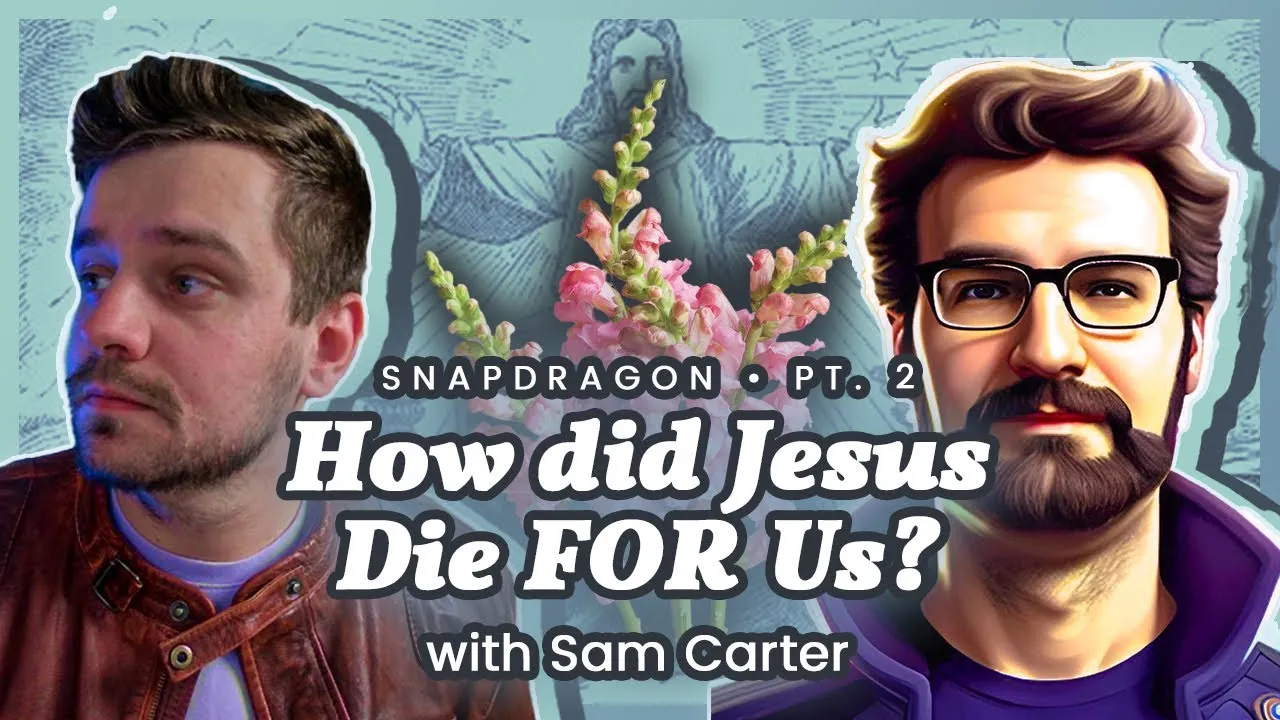
A conversation with Sam Carter on what it means that Jesus died for us.
By Tim Barber··Video·Updated
Chapters
- 0:00Introduction: Exploring the Atonement of Jesus Christ
- 0:18Welcoming Sam Carter: A Deep Dive into Atonement
- 2:12Recap and Snapdragon Acrostic Overview
- 7:18Early Church Perspectives on Substitution
- 14:54Understanding Sacrifice and Atonement
- 29:58Critiquing Modern Atonement Theories
- 51:40Critique of Governmental Theory
- 53:48Concessions to PSA Advocates
- 55:19Exploring the Concept of God's Wrath
- 58:46Defining Penal Substitutionary Atonement
- 1:03:41Levels of Penal Substitutionary Atonement
- 1:16:00Caricatures and Consequences of PSA
- 1:18:54Theological Implications and Contradictions
- 1:24:36The Role of Faith and Works
- 1:29:12Historical Perspectives on Atonement
- 1:32:23Addressing Objections and Future Discussions
- 1:33:44Encouragement for Further Study
- 1:35:20Concluding Thoughts and Farewell
How Did Jesus Die for Us? Exploring Atonement Theories with Sam Carter
In this enlightening conversation with my good friend Sam Carter, we delve into the complex topic of atonement, examining historical perspectives, common misconceptions, and contemporary critiques. Our goal is to explore what it truly means for Jesus to have died for us, and how this notion has been interpreted throughout Christian history. We also invite you to watch the full video on YouTube for a comprehensive understanding.
Understanding Atonement and Sacrifice
- Jesus’s death on our behalf is central to the Christian faith. We need clarity on what this sacrifice means.
- Sacrifice can be misunderstood, often seen through a transactional lens rather than as an offering of love.
- Historical and biblical contexts shape the notion of sacrifice differently than modern interpretations.
- In biblical tradition, sacrifices were gifts to God, not mere appeasements.
Early Church Perspectives
- Ignatius of Antioch and other early theologians grappled with the concept of substitution.
- Medicinal substitution emphasizes healing through Jesus’s life, death, and resurrection.
- Substitution is not solely a matter of punishment; it’s about transformational reconciliation.
- Early Christian models, like recapitulation, diverge significantly from later theories like Penal Substitutionary Atonement (PSA).
Critiquing Modern Atonement Theories
- Penal Substitutionary Atonement (PSA) is a widely held view but isn’t without its issues.
- PSA can be broken down into three levels: mild, moderate, and extreme, each with different implications.
- Extreme views of PSA can portray God as vengeful, undermining the relational aspects of the Gospel.
- Governmental theories and satisfaction models add layers of complexity and potential theological conflict.
Engaging with Criticism and Implications
- A central criticism of PSA is its portrayal of God and the notion of justice it entails.
- Caricatures such as endorsing violence or cosmic child abuse need careful examination.
- PSA might risk a view of God requiring action for forgiveness, contrary to biblical teachings.
- It’s crucial to engage in discussions, testing interpretations against scriptural truths.
Encouragement for Further Study
- We aim to foster understanding and invite respectful dialogue among differing views.
- The video’s purpose is to challenge assumptions and encourage a compassionate view of God’s nature.
- Readers and viewers are urged to explore a spectrum of atonement theories and develop a well-rounded perspective.
- Ultimately, the conversation is about finding common ground and appreciating the richness of Christian thought.
In summary, our conversation with Sam Carter underscores diverse interpretations of atonement while encouraging open-mindedness and deep engagement with scripture. Please watch the video for a more detailed discussion and feel free to join the conversation with your thoughts and questions in the comments. Let’s continue to explore these vital theological matters together.
Transcript
[0:00] what does it mean that Jesus died for us and in what sense can it be said that he died in our place these things are important articulations of the gospel and when we say them we mean things but are we always coming across with the message that we want to portray or are some things getting Lost in Translation today I'm excited to have back on my good friend Sam Carter to continue our discussion on the atonement of Jesus Christ and to explore with some more depth what he did and what he accomplished by his life his death his burial his resurrection and his Ascension I will warn you up front there is a high possibility that we say something that causes you to have some pause and maybe some concern there are very common articulations of the Gospel that Sam and I are both of the opinion based on our study and our research that
[0:48] don't actually have much to do with what is being described in the pages of scripture and in the early church you may disagree with us by the time all is said and done and you sit down and watch this video from beginning to end there's a good chance that there are things that you won't agree with that we said I welcome that as does Sam in fact it would be very helpful if you could voice your concerns and your questions down in the comments section below because Sam and I are both planning at the current moment something of a part three where we're going to go through objections to what we said we're going to go through questions that you guys had and really just take a little bit more time honestly looking at the biblical data for what the scriptures are saying Jesus came to accomplish so while this conversation may be challenging if you can extend Sam and my myself some Christian charity and some brotherly love and it's possible that you'll learn some things even if it's just what these
[1:36] two brothers in Christ believe about Jesus and with that warning out of the way here's my conversation with Sam Carter Sam thank you so much for coming back onto the channel it is extremely enjoyable for me to have you here there's a lot to talk about and not a whole lot of time how you feeling man I'm feeling good thanks for having me back um yeah just had a a half day at work and and decided to take a little time to come back on here with you and talk some more about the atonement thanks for having me on again it's a great thing my absolute genuine pleasure last time was great last time was really interesting so let's do a short recap okay for obviously we would recommend people go back and watch the other video first and then come join us here but uh once they get here you know maybe maybe it's been a long time maybe people don't
[2:23] want to go back and rewatch it who have watched it let's go over a little bit about what we talked about specifically regarding snap SN Dragon what on Earth is going on with Snap Dragon Sam that's right yeah so last time we introduced the snap dragon acrostic and it looked at the main seven ancient atonement models that are associated with each of the 10 points that you'll see on the acrostic um I actually now have a canva card that I made just for Hing out to people on the street or wherever if they feel like talking about nerdy stuff regarding what did what did Jesus actually do for us uh to take away sin so um um there is scapegoat New Covenant adamant restoration Passover Lamb descent to the dead Ransom archetypal example glorious conqueror offering to the father and New
[3:11] Creation are the the 10 different points and certainly go back to part one if you want to see uh scripture references for those and uh kind of a short description of what each of those are and uh I think that just paints what I would call the kaleidoscopic view of atonement to what Jesus did for us people monolithic yes sir yeah I I agree with you about about all of that what I think was the most important key here is that what we were trying to do is go first to the Old Testament right and the Old Testament world view into which Jesus stepped the story line that he saw himself fulfilling right and then also the New Testament concept context that itself gives us lots of data points to look at what Jesus and the apostles and his earliest disciples all felt like he
[4:00] was doing you know you can look at the writings of Paul and see how he describes certain things and you can get out a picture of what what they all thought Jesus accomplished not just on the cross um but in his his resurrection and his Ascension as well and then on the other side that you now have right his life exactly and you have also the first the earliest centuries uh we can even go back to the earliest decades after the resurrection for everything that we point we put in that Snapdragon acrostic it's not some theories and we're going to get to this as we go it's not theories that arose a thousand years later in a completely different context it's all kind of in that original context of what the Bible itself produced and then the first disciples that the Jesus movement itself produced
[4:49] after the resurrection and that's why it's so important as we're getting to what is originally on the mind of those who were first assessing and trying to make sense of what did Jesus come to do yeah very well said and you you gave a little nod there like it's not a thousand years later which you know times have changed and over time after a thousand or so years had passed yes there are other models that came afterward and I think at some point we're going to get into those um but yeah so uh basically re reframing the the question is how did Jesus die for us you and I spoke about that a little bit before we got on here um so that that word for like how did he how did he die for us that's the in Greek the word for is Hooper which means for the sake of or on behalf of or concerning us so by continuing to look at atonement we must
[5:37] answer both what is and what is not the function by which jesus takes away sin through his death and the events that followed um before we get too much into it I did just buy a book on this which I haven't read any of it yet but it's making some serious waves it's called the Lamb of the free oh yeah by um uh Andrew Remington rera am I pronouncing that right with a little Spanish Double L action there forward by Douglas a Campbell um and then I did read most of this which is atonement and Reconciliation by Kevin George I think he is taking a kind of more Unitarian perspective which I wouldn't say that I share that specifically but he has many really good thoughts in this one um as he attack uh attacks these subjects that
[6:26] we're going to get into yeah L and lamb of the free is fantastic riera's work on most things is really really good uh even if you don't agree with everything there's going to be a lot that you can pull from it and you have to be pretty smart to disagree with Andrew riera but yeah good resources I was surprised Will's book oh yeah Will Hass has got another absolute Banger coming out here soon so just stay tuned for that it sounds like he's got a little delay on on shipments for his early releases but uh but he's he's going to have a a big release here I think later on um for his main mean uh shouldn't say customers but happy uh I don't know just friends that are gonna beers was that supporters and readers supporters yes yeah just avoiding the word
[7:15] customer um so on this thought of atonement again in our last video together towards the end I brought up ignacius of Antioch and had a little time to look at him and uh he was a disciple of the apostle John he was a friend of polycarp and he wrote on some particular themes in the atonement some of what would be later identified as a kind of substitution so we're going to spend a little time talking about that today and and different ways of flushing that term out um but what kind of substitution did he have in mind versus some of the other kinds of substitution models so for Ignatius his view was later coined as medicinal substitution and the idea you can see in his writings is that Jesus death was to take on our mortality experience that as the natural consequence of Fallen humanity and then heal it and restore it to immortality as
[8:04] he himself was raised to True Life uh that's you know a bit of a quote taken from him um if you don't mind i' I've got a couple quotes of his pulled up here I can just read sure so we can see that uh idea mainly from a couple quotes one is the epistle to the Ephesians uh chapter 20 verse1 I think it reads this chapter verse similar to our Bibles so he wrote that our physician is the Lord Jesus Christ the only begotten son and word Before Time began but who afterward became also man of Mary the Virgin for the word was made flesh being incorporeal he was in the body being impassible he was in a passible body being Immortal he was in Immortal body being life he became subject to corruption that he might free our souls
[8:51] from death and Corruption and heal them and might restore them to health when they were diseased with ungodliness and wicked lust then secondarily in the epistle to the Ephesians 7:2 again this isn't scripture this is ignacius writings so he says there is only one physician who is both flesh and spirit both born and unborn God in Man true life and death both from Mary and from God first subject to suffering and then beyond it Jesus Christ Our Lord so what is what strikes you about any of that we just read to um part of it what's interesting about this and and this happens to me frequently as we read even the earliest Church um theologians and earliest Church uh I mean again we're talking about this person has a direct
[9:40] through line to the Apostle John um the first thing that I notice and this is my one of my hobby horses um I some of the words that he chose to use have a different cast now on the other side of 2,000 years of theological debate and development where I think that he probably didn't mean what it sounds like he means on a few of the phrases just sounding like uh let's say his Greek philosophical cousins down in the alexandrian schools for example so impassible impassible uh there are certainly more toxic ways of cashing out those phrases but what I'm I had to kind of look past that and happy to look past that for for Ignatius his work is fantastic but what he's what he's saying I think the rest of his language is It just strikes me as so biblical um
[10:30] talking about him um taking on a mortal body right he's he's even directly quoting the scripture of uh you know the word was made flesh he's talking about his desire and his plan being to to free us from death and Corruption and to heal us and that in his death we find Healing not necessarily in the ways that some of us might think if we just kind of follow the path of least resistance um in our and age talking about what people think the gospel means and so that's why I'm really thankful that we're having this second part of the conversation because the concept of substitution by itself the word doesn't doesn't get us far enough we need to understand the mechanism the under giring processes and the undergirding
[11:18] purposes that were at work in that sort of what does the substitution mean how does it function in order to get to I think what Jesus intended for us to understand his death burial resurrection and Ascension to be doing for us on our behalf yeah um but yeah Ignatius very interesting early data point here yeah very very early he is you know just barely going into the second century really um so yeah you can notice there there's there's some focus on the Incarnation which how often do we today give that our attention when we're talking about subjects like atonement it's it's so focused on the death but for him it's it's like his whole life um and coming into the flesh at all is a huge huge part of that as well as his death his resurrection and his Ascension as we mentioned there so um again that
[12:08] you know this idea of substitution he has is that Christ heals Humanity's Brokenness and corruption through his incarnations and suffering as well and it is focused on healing and restoration those are the the main motifs that I think are very important so um then there's also another type of substitution that we can move on into which I would call ontological substitution and we actually already covered something similar to this in their previous video when we talked about the idea of recapitulation or in our acrostic it's called adamant restoration so um so it's a bit later in Christian history around 190 ad and that's when you get to ireneus and he was a big proponent of this um so that's where one state of being is being replaced for another state of being and we're specifically talking about replacing the headship of Adam and his failure with
[12:56] Christ and his Triumph by living completely righteously In the Flesh then ultimately conquering death so you you have uh inherited you know some uh repercussions from being born of Adam and then when you're born again into Christ then there are repercussions and good consequences that you want to have uh from that I think it's interesting because it it's it's good to give credit to uh you said ireneus I like that too there's also you know ireneus half a dozen either of the other yeah see like the the thing again that I would point out is that this this particular thing that we're discussing is also not it didn't originate with him though I would still I would still point back to at least Romans five right where you've got um
[13:46] Paul contrasting you have in Adam and you have in Christ and and if you're in Adam then you are suffering the same kinds of things that Adam suffered and went through and you're bound to the same kind of Faith but in Christ being sort of rehead up having the the humanity that finds itself in Christ is now subject to very different things um so at least the early Furniture of this certainly I'd go as far back as Romans 5 but you could probably go back further so we talked about ontology for a second there um you'll notice when I was uh talking about this I was using the word replace replacing the headship of Adam his failure so I I sometimes prefer to use that word instead of substitute and um because it seems to indicate that the
[14:33] end goal is achieved but it doesn't necessarily get accomplished in the same way so substitute makes it sound like the function is identical or perhaps even inferior uh to what's trying to be achieved um so there are more modern more forms of substitution that I that can fall into that category and we can talk about those next um but I really want to ask a question before we get too far is what really is a sacrifice you know if Jesus died for us in a sacrificial sense what does that mean to you oh goodness yeah it's uh again these terms can be so loaded you can you can have completely different approaches to answering what a sacrifice is and on the one hand um if you think of a pagan sacrifice you might think of a sacrifice
[15:23] intended to sort of appease the anger uh to kind of to to please a a a petulant sort of a deity who is displeased with you um and who is standing by only only hoping to have the opportunity to Smite you and you do this thing in this sort of a graveling stance that turns away his his anger at you and his desire to destroy you um long enough to buy yourself some some time and some favor um that would be one way you could understand sacrifice um another way that you could understand sacrifice is that it is a for on on my behalf if I'm offering something and it's a sacrifice it is something that is precious and un and valuable to me that is something
[16:13] that I that I give or for you know another example that someone gives on my behalf or however this would work that is considered a an offering of love and a demonstration of real heartfelt concern and care and desire for the maximum well-being for another to create a new State of Affairs where something that was you know bad or dangerous was going to happen and now it creates a new set of opportunities on the other side by the offering up of something valuable that can't be that can't be gotten back that's and there's other ways to cash it out in between those two but even just in those two casts we're talking about something very different depending on how you define the term yeah I absolutely agree and I think that latter portion is the one you're going to find
[17:00] is is more more beautiful and certainly more biblical um I wonder if you got some of that from the parts of lame of the free that you read I think it gets into some of those themes a bit if I'm not mistaken all good books that I read go kind of onto the compost pit and so it's hard for me to give attribution backwards but lamb of the free certainly did help me kind of frame up my thinking around this so um if I may while we're talking about sacrifices there's there's some key words that probably deserve some ear time uh that you know when we're looking at a topic like this um I would go to the Book of Leviticus and ask these questions what what do these things mean so when you're talking about the word sacrifice you kind of got at this a little bit you're talking about offerings which I would say the main point is that they're gifts right um it's it's not so much about being a
[17:48] transaction in fact it seemed like at certain points in the Bible there were times I'm thinking of like Malachi where the people's mindset was to think of their their sacrifices more like a transaction action or something that was kind of just a rote exercise um because this is buying me something but um if you take the themes of what it was supposed to be like earlier on it really does seem like it's supposed to be a gift even though it's an expected gift it's kind of like when the holidays you know happen in the the year or a birthday or something like that you have an expectation to do something about that and to give a gift of some kind right and then if you neglect that or you just show that you weren't very thoughtful that's going to hurt the relationship and I think that's the idea um with sacrifices as it's gift giving
[18:37] you're you're giving God your best which is the idea so um what what happens when there's first of all uh a death of an animal you know some sometimes the sacrifice or the offering requires that not every time actually um and talking about our friend Spencer Owen who we mentioned last week he had this graphic which I can share later um that shows sometimes sacrifices offerings gifts aren't related to blood or death or things like that but sometimes they are um and in those cases we have to remember that um those animals are being given as a gift to God not as a Corps but as prepared food so they are being made into an edible State sometimes they would add salt to the sacrifices do things like that and it's giving God
[19:26] like a really rich expensive good piece of food to eat because that is the best that we would have um I think that's the idea of what uh killing an animal is for and you'll notice that that's usually how they're portrayed that is usually like I mean biblically speaking I can't think of an example of a death of an animal involved specifically in a sacrifice specifically in a temple or Tabernacle context that isn't that isn't cashed out that way it's explicitly called a pleasing Aroma to God yes and there's a reason for that that's right that's right um so their gifts to God uh you'll notice that the death itself of an animal is never really ritualized you'll maybe get at most just a a quick note
[20:15] about how their throats were slit and they were killed on the north side of the altar but that's about it um so if if death itself was super super important for a sacrifice um or it was as you talked about like in the Pagan sense of appeasing wrath and things like that you would expect to hear more descriptions about that you don't really um so there there's uh also a note about blood what is it we're talking about blood in these sacrifices and we need to remember that Leviticus spells out pretty clearly that the life of a creature is in its blood and it defines very concretely there this is what we're talking about when we're talking about blood so why would you you know put put Blood on the priests and on the people and on even Furniture in the temple um so I think
[21:07] this is where I'm kind of breaking into an idea I'm not sure how this all is going to uh result in my head once I've studied it more but it seems like there is an underlying spiritual reality um beneath all what we see or above all that we see and in this this reality um that's spiritual sin kind of leaves its Mark right um so even as we have geographical territory maybe some of that has uh the markings of sin and Death on it and so as Sin continues to be in the world um there needs to be a space opened up where there is life rather than the effects of death there's Holiness rather than the effects of sin and I think
[21:56] that's what's happening in the Tabernacle in the temple so blood has this power of life I want to I want to Riff on this because it is so personally important for me um we we we have overlapping again you have to forgive the term we overlapping hobby horses here yeah we have overlapping hobby horses because for me one of the things I'm most passionate about helping people see is the fact that God's plan in the beginning and his purpose in eternity is to make Heaven and Earth one again right to reunite them in the same if we use spatial terms for this that's fine I know some people use kind of dimensional terms it's not that important the point is that they are they were once perfectly together and then they were separated and then God was actively
[22:45] engaging in something a project over many thousands of years now to bring them back together again and you can see shades of this principally in the Tabernacle and the temple and then in Jesus himself and then in those who trust in Jesus and are then uh added into the church right and what God's plans are through all of those different all of those different structures and when we're talking about the the the the need for a geographical space in which there is life in which there's Holiness in which the the the overlap project can really continue on this is why it is so f fathomless important for me to articulate why what was happening here why it's not
[23:36] particularly some of the things that we might think and again we'll get into this we sort of been I don't want to say dancing around it but we will have to kind of face this a little bit more head on here in a little bit because if we ascribe lifegiving power to SI sinful dead things or things that then take on sin take our sin and then die and are now just something that was dead and corrupted if we ascribe that life-giving power to something like that then I think if that's how it would function it would be completely opposite to what the biblical record is saying yeah um it'll become clear why this is important in about 20 minutes so bear with us but this is why it's so important um because it's God's God's plan is to reunite Heaven and Earth in a
[24:26] holy space that's created by a gift of life not by sin and death yeah I guess I got to start the clock at 20 minutes now and if we don't reach it by then just shame on me right but um no thank you the Baptist preacher thing you can do the Baptist preacher thing where it's like okay you got through 40 minutes of sermon time and you say okay now here are my that was my introduction now here are my three points yeah that's that's the halfway point usually you know yeah yeah um I don't think that's specific to baptist I think that's all kinds of folks really it's just a Temptation when you're up there so yeah the the blood is the life and the idea is you have the power of an innocent and a spotless life that can drive out the effects of death I think is is a good way to say it and going to make another Shameless plug here uh my buddy Phil
[25:14] Bray who is actually a butcher in Sydney Australia he has a YouTube channel that's really just a bunch of short videos and um some of them under a minute and it's called Leviticus is fun and he does make it fun but he will talk about some things like this in and have almost little skits to kind of show how how it works out in the themes of Leviticus so we we need to think that way about the blood is it's the power of Life driving out death it is opening up a space for God where where life dwells and death doesn't um have its you know infestation in that area and that's why you would you would consecrate things you consecrate the priests you would consecrate the holy items in the temple and then you would consecrate the people but you have to do these things in a certain order order of consecrating so then God's presence would be there um
[26:03] and then you know ultimately you have on the day of atonement uh where that becomes a very uh final I shouldn't say final but a more comprehensive way of dealing with things um because it actually reaches the mercy seat on the Ark of the Covenant and there is a much more powerful cleansing effect from that in fact um if we have time to ever get into some new testament passages uh the word hilasmos or hilasterion is the word that's used yep for propitiation I think sometimes this word has been mistranslated or mishandled at least to talk about themes of like a legal framework or or something like that um but it is talking about experation cleansing and this idea of Mercy Seat whenever you read this
[26:52] word for propitiation or any theme similar to that you are forced to go back to the Book of Leviticus the book of Exodus look at ARC of the Covenant and ask yourself what is going on there you know this was one of those things this was one of those words that really um that really highlighted for me the challenge of biblical translation honestly because um it's difficult enough to translate you know i' kind of gotten on board with it's difficult enough to translate an idiom from one language to another and be able to understand without losing too much in in Translation um you know we can't literally translate that someone had a long nose from ancient Hebrew into Modern English and have it have the exact same cast and the exact same meaning we would translate it as they
[27:40] were patient because it took a long time for their nose to get hot and someone with a hot nose is an angry person in Hebrew right so those are the ways that they would describe something or someone having an evil eye was someone who was either greedy or stingy right it doesn't have that same cast in English so biblical interpret in biblical translation is hard enough already because you do have to you have to do some interpreting in order to do some translating but then you you run into issues like this one where I had read over and over and over the passages that do translate hilasmos as something like propitiation right and then I would go and read the definitions for that word in any other context and it was not that it's it's people people came into it with an understanding of what they thought it meant
[28:28] rather than taking the word at its value and I just feel like it was one of those things that really struck stuck out to me as saying dang this is harder than I thought because this word I just skipped I almost skipped over it because it's like I know what that means but it wasn't until I actually looked into the Greek for yeah as you said heas Arion and saw that in the sepagan it was explicitly connected the way that it translated the the Old Testament concepts of The Mercy Seat this was the word that was used yep you got it and also some other while I'm thinking about similar things to that um if you look at the lxx the septu agent um the word for sin hamartia if you go back in the Old Testament there it actually means a sin offering too so when we get to places like 2 Corinthians 5:21 that's a very
[29:17] possible rendering of that uh as well as talk about Jesus simply just coming into the condition of sin which is mortality uh rather than becoming sin itself who is that there there is like a preacher that that uh has some weird looking hair that decided to just get super emotional and talk about like Jesus became rap on the cross oh should I not say that word oh yeah no you're fine don't worry about that that was Todd White and oh boy yes yeah that was rough that guy that was really rough so you know there there's just ways you can mess with these these words and and take them way off on a rabbit Trail in ways that you wouldn't be doing if you just kind of looked into how how word usage happened uh in the rest of the scripture so we took a little pause there and we're just talking about a little bit little bit of Leviticus stuff um but we were talking about substitution before
[30:06] that so there's some early forms of substitution the medicinal the ontological um and now we're kind of moving into the second Millennium all the way into 1, about 1100 ad and and Beyond um there's some different types of ways of talk about substitution that have become popular since then um so you know just kind of uh picking up where we we left off on that um you know modern society needs to look at the scriptural data for atonement again it it has all the right dots but wrong and unhelpful ways to connect the dots and ordering of Concepts matter so if we're going to talk about something like substitution uh it needs to align with the early Christians instead of the much later Christians and again that's where he went through all the anti- nyine
[30:54] Christian quotes and and uh recapitulation was the model that won out for the most votes if you could say um and the rest of the between that between that and Chris's Victor I would even say in the biblical data we kind of surfaced that last time is that those are two that probably get the most biblical air time all of the other ones this is again very important to me because my main project is I've come to affectionately start calling this degreasing the church uh I don't want to have undo Greek philosophical influence swaying our are thinking one way or the other or other philosophical systems and beliefs that developed on top of Greek philosophical assumptions and Frameworks I just think that that's taken us really far a field from the Jewish worldview that produced the Old and New Testaments
[31:42] and the story into which Jesus was stepping and and believed that he seemed to believed that he fulfilled um so all everything in the snap dragon acrostic we surfaced last time is explicitly biblical you can point to it and you can say this is exactly what's happening here and guess what when you in the context to outside of those verses and those passages and those chapters the context doesn't do violence to any of the seven key um sort of facets to the diamond of atone of the atonement that we looked at in that last video that unfortunately cannot be said for much of what passes for descriptions of what people think Jesus did again I'm trying to be a little tender on this because it's not going to be a comfortable part of the conversation but I think it's
[32:31] extremely important that we articulate that there are certain things that we say almost thoughtlessly that are even repeated broadly that are not accurate to what the biblical record and the earliest Christians believed was happening in the death burial resurrection and Ascension of Jesus yeah certainly and we we start to break into this some more as we get into some of these critiques right so I think we've created unne necessary complications or deeply problematic implications uh on the way that we we look at substitution and that idea in modern times so for example if the type of payment that Jesus makes is rescue or Ransom you know there's other scriptures that'll clearly spell that out let's say we do that and we imply that the father was the one being paid by Jesus death
[33:19] specifically then what does that say about the father he would be the captor of mankind unto sin and death so there's a greater function than this in the process that doesn't raise these suspicious questions about God the Father we should have an uncomplicated view of the goodness of the father but these modern expressions of atonement kind of wrongly complicate this should I just go ahead and say the term that we're looking at here is is a penal substitution and I think that's uh G to have some uh due critique as we look into that yeah and this is what's so hard okay because I can already hear people um gasping in the comments section that we would dare speak against penal substitutionary atonement um I will put it this way in the words of the great n WR the gospel is in some ways penal and
[34:10] the gospel is in some ways substitutionary but that isn't the same thing as saying penal substitutionary atonement and I will simply say one more thing for the record what you mean not you Sam but you viewer watching me and Sam talk what you mean mean by penal substitution atonement could be very different from what someone else means by penal substitutionary atonement it's another one of these phrases that is so broadly defined for so many people or that you know you ask four people and there are five opinions about what it means that we need to we need to unpack some of these some of these underlying assumptions and some of what we find may be good may even reflect some of what we've seen in the early biblical record and the early record of the earliest Disciples of Jesus but there are going to be certain things that we look at
[34:58] that taken in that whole view with the rest of the scriptures that we do have are actually perversions and twisting of the message or outright inventions that came to us much much later than the the scriptural record did yeah you're right there are different scales of this so uh if you know you're a person who holds to some kind of penal substitution model you may be holding on in a very light kind of way that's you know not creating some of the the problems that we're probably going to get into and talk about here and if that's you and you just hold to a lighter view of it great you know that's not that big of a deal um I would say we're probably going to get to a point where we talk about the different levels and the most most extreme one is probably something that I read from uh JD Greer who's a calvinist and he starts saying language like you
[35:47] know Jesus became a lightning rod for God's Wrath and God just had to vent out all of his wrath onto some Target Jesus became that Target and then he's just thrown throwing down like Zeus lightning bolts on Jesus and that's the picture that you're left with like what is this is this really comporting with the scripture of the kind of character that we read about with God you you have these pictures and you read about God the father being one way and then you look at the character of Jesus and um just love and and gentleness not that Justice isn't part of it justice is huge for him but just to that extreme it doesn't comport with that and you have this almost cognitive dissonance when you're trying to understand who God the father is I'll tell you you know wasn't until uh I started going through these ideas that I I had a problem with loving the father I never really had a problem
[36:35] with loving Jesus but when I had this picture of him being so vindictive and things like that um it really does those types of views really lend themselves to just these these penal substitution descriptions that have been said by Calvinists and even just some regular everyday Christians too um that I'll either even just have like a moderate telling of it that that's enough to create this this picture in my head and if it can happen to me it can happen to you it can happen to people that you're evangelizing to on the street it can cause them to have this this uncomfortable dissonance in their head when they're trying to understand who the loving God is and there just isn't really a necessity for those things if we've already looked at all these other ways of talking about atonement that were existing beforehand that's right yeah it's there are I have heard articulations of the good news that
[37:24] sounded less like for God so loved the world that he gave his only son and more like for God so hated the world that he killed his only Goten begotten son and I think that it was it was something that I didn't really grasp how it was affecting my relationship with God the Father until I really started to to to look at what I was thinking underneath what I was thinking if that makes sense and start to really do try to perform some metacognition and try to really look at my own my own heart to see that I I came to a place where because I had kind of absorbed this this view unconsciously knowing by the way that I was not a calvinist at this time uh I used to be but knowing that I was not a calvinist at this
[38:12] time they've just been you know I don't think I don't want to ascribe anything nefarious to Calvinism or Calvinists but there has been a high degree of success at redefining terms by just kind of confidently restating things y the calvinist have gotten very good at and this is one of those things that they've gotten yeah free will just compl completely red defying those not start Sam yeah or God God's will or even love or faith or Grace sorry anyway that's a whole other conversation but I had just I had just unconsciously absorbed that definition of the Gospel that that you know my atheist friend down the street would I think now rightly call Cosmic child abuse and I would be doing some I would be doing some some introspection
[39:02] and some thinking about that and I would recogniz I recognized on this view God doesn't forgive anybody at all that's he's he's not forgiving he's exacting a a payment and he's exacting a sacrifice that's like the Pagan sacrifice it's not I'm rescuing you from something that's holding you captive because I love you it's you'd better you'd better accept this you know this gift I should I suppose you could say um of rescue that I'm going to give to you to rescue you from what I'm going to do to you if I yeah if you don't accept the gift yeah well um I think you you definitely hit at some of the you know extreme and even just some moderate takes on on PSA but just to be kind to our friends that are light on
[39:50] the Spectrum maybe sometimes they don't say things or even believe things quite the way you said it and they just want to give some Grace to them you know this is then for these types of people who are light on the Spectrum what we're getting into EUR hopefully it's just a challenge for them not to go deeper down this path because that's where these these things can happen that create the cognitive dissonance and problems so um I would also like to say I would like to I would like to caution most of what I just said is not something I think any Christian would affirm okay correct almost nobody that I know even even the most Ardent yeah thank God I don't think even the most Ardent proponent of of this view would affirm what I just said and said that's what I believe what I'm saying and I think that what we're going to get into now is that those become unavoidable
[40:40] implications of the view if you cash out what happened in the way that it often does in the penal substitution Frameworks it's just it's more of a I'm not saying this is what you believe I'm saying that this is what you would articulate if you were to clearly expand on The View that you hold um yeah but I know they would not affirm that because it's that's a that would be a beastly thing to say that other people actually believe right I would say that's a fair uh word of caution that you have there so thanks for saying that and still you know some of these expressions of penal substitutionary atonement are are damaging for those with family trauma is another point I wanted to say you know like let's say if someone had a father who could only sub his anger through
[41:28] meeting out severe punishment even if it landed on the innocent then the emotional scars left by that experience don't really comport well with these paintings of atonement in this way um so just imagine like a father lining up his kids to give severe punishment to one of his kids that crashed the family's Ferrari Enzo into the house and the father says somebody needs to be punished with this they're getting 40 Lashes then one kid admits that they're Innocent but they'll still take the punishment so that child could represent somebody like Jesus right uh which would be rightly viewed as loving but then the father would be viewed as cruel and even unjust that's a right intuition to have in this scenario but then you know that again leads to the complicated relationship with the father at best or just even to leave him at worst if you adopt this picture of them yeah it puts
[42:17] the it it puts the the you know if you're trinitarian it puts the first two members of the godhead at enmity with one another not as though they are they are partners in a mutually agreed upon Rescue Mission it makes them it makes Jesus the good guy and God the bad guy God the Father the bad guy that may be a strong wording of it I would at least say that it puts them on opposite sides of a transaction right so the interests of one party are primarily one way and the interests of another party are primarily one way and they're there's sometimes you know competing interests at least how they're representing themselves in that transaction it just doesn't look as much like Unity to have one goal being one thing one goal being another thing but much more fairly and carefully stated than I did thank you
[43:06] for that Sam no problem yeah so it needs to look something like a joint rescue mission right if and we know the character of the father through Jesus you really can just ask a question of would Jesus ever do this or think this or be like this if the answer is no then neither is the father if you've seen him you've seen the father so please if you have any any theological points that you're testing out at all do the Jesus test and ask yourself would Jesus do this if not father didn't do it either you know yeah so um just moving on with some notes that I prepared here you know there's the three intentionally missing atonement models from the snap dragon acrc are what I would call satisfaction models and penal substitution is one of them the first one that came before we
[43:54] were hinting at is ansom satisfaction and was around the year 1100 ad it was a short time after the Catholic Orthodox split and uh then this guy decided to uh kind of revamp some ideas and he didn't really like how origin explained his idea of Ransom because he even went as far to say that Satan the devil was being paid off in Ransom rather than you know something like death or you know the justice system which is actually still not something that was said in the first uh Millennium but people will sometimes point to that but death you know I think would be the most Fair way to say of of who was being paid off if anybody um were rescued from Death Ransom from Death so he he didn't like the idea of being ransomed from Satan as in he he's being paid off so then he
[44:44] came up with this idea that uh God is being paid something right it's not quite what Luther would come up with later which is the penal substitution system but God had his honor robbed and it takes the death of Jesus to restore his lost honor and that comes from his background and P's background in the feudal system that was very popular in that time and it kind of lends itself to that framing of mind now that's a that's a Catholic specific framing of uh you know a satisfaction kind of a sort of substitution model um I admit on this particular one I don't know very much I'm still trying to get into some conversations with people that I know who know this one a bit better but that's at least what I know about it and
[45:31] uh do you know anything to add to that Tim we're still talking about the anselmian model yes yeah it's it's really strongly motivated and strongly um referenced against even in his writings against the uh workings of his essentially medieval class politics right where someone who is on an objectively higher cast in a society um not receiving even the honor that they would be due from someone in a lower a lower rank a lower cast in that Society was seen as Dishonored right so this was another one of those things where um I don't know where you land on the hell debate right but this is it's not really material just to say that this was also
[46:20] some of the uh underg guring furniture that led to the framing up of the Eternal conscious torment defenses from even ainus later right where you'd have uh a a a finite sin against an infinite God is still an infinite dishonor to his infinite character and Glory right so it's what I'm what I'm trying to articulate there isn't necessarily saying hey if you you know your your belief here shifts then you should probably also shift your belief on Hell although I may think that that's true that's not what I'm trying to say what I'm trying to say is that it's fundamentally connected to a world viw assumption or a set of worldview ideas around hierarchical honor in a sort of a medieval cast system that again maybe has some similarities to you know
[47:10] ancient Old Testament and New Testament um categories but is just not what's happening in those passages it's it's um especially in an an selian uh con a con an idea of God's lost honor there um would have a corrective I think in a Jewish context where those who are in power have a responsibility to those who have less power um God the way that God's kingdom operates the way that God's law even in the Old Testament operated was that those who were land owners or those who were powerful or those who in an anselmian system would be higher on the hierarchy nevertheless have a responsibility to those lower than them um to where it's a mutual right relationships involves both both
[48:00] parties being in right relationship with one another whereas an anal model it was much more favoring the powerful yeah thank you you flushed that out beautifully and I think I even learned a little bit because that was one of my pending items was to learn more about it so good summary there yeah and thanks for giving the nod to a right relationships you know that's that's what I would call the the correct Hebrew understanding of justice is putting things in right relationship it's not putting everything in in you know a penal framework which actually I think that's a great segue into now let's actually talk about the next one that came up in the satisfaction theories which is the one that we already revealed we're kind of critiquing a lot today because it's so popular the penal substitu I could talk the penal substitutionary view uh I would say Luther was the first one to really
[48:47] articulate that very well and uh Calvin fleshed out even more it just became a really popular one among determinists really uh I would say if it weren't for determinism it wouldn't have the same kind of thrust uh that it has today so there's some things about it you know petal substitutionary atonement AKA PSA assumes that Justice must all must always ultimately require retribution or you know tit fortat or Lex talionis as a framework for itself and Lex talionis you know Jesus spoke out against that it's a little weird if that was actually the fundamental reality that governs all of justice and it's something that Jesus said don't think this way um so and it's this idea that every sin must be punished by God to a person not just sin
[49:36] itself being punished which I think does happen sin goes to the Grave through the body of Jesus and it's deposited there and that grave shol Hades will be thrown into Lake of Fire I I personally believe right now that the sin that Jesus bore when he was on the cross is sitting in the realm of the dead and it is going to be thrown in the Lake of Fire that seems to be a consistent um conclusion that I reach I could be a little wrong about that I'm willing for that but um sin does get punished it's just PSA is saying that it has to be punished to a person even if the innocent is killed so we know God is a Vindicator rather than a Punisher of the innocent if we're going to talk about how he see him biblically um there's a second point which is that it it assumes that God's Wrath must be satisfied specifically by
[50:24] meaning Out full punishment Jesus but rather from the Bible we know that full wrath and Punishment occurs when the devil and his angels are banished to the Lake of Fire along with sin itself that went down to shol as we just said that's when wrath is ultimately going to come in my opinion it sounds like that's more accurate to say it that way then the third thing is that PSA assumes that Jesus suffered the same punishment that we were due for our sin but we know that Jesus did not suffer in torment um or you know he didn't go to the Lake of Fire he wasn't annihilated he didn't have eternal conscious torment whichever way you fall in that Spectrum by the way I'm probably leaning conditional immortality at this point sure but he didn't have either one of those things happen to him so if he's really taking our punishment he just didn't so I've
[51:14] heard people say well he had the equivalent of it and because he's an eternal being then four hours on the cross you know is the equivalent to that that's just non secator that just that's just it doesn't it's an adoc it's an ad hoc solution to a problem that didn't need to be raised it's someone it's someone answering a question that no one was asking before they made us go in some other weird Direction well said and then if I can just give a nod to the satisfaction model that came after this which I think is backing off somewhat from Full fronted PSA I would call it governmental Theory or the moral government Theory and that just simply assumes you know kind of that the Optics of righteousness in IMM moral government are very large part of what's important that God needs to show Justice on some
[52:02] level by maybe have maybe having some retribution but not necessarily having it fully Meed out in a Lex talionis kind of way so one way that I've explained this before is um there is this King in way ancient Greece whose name is zukus and he passed this law that said uh if anyone commits adultery they're going to have both their eyes plucked out so then it was found out that his son actually committed adultery so what did he do well he changed the law a bit a little bit but he still wanted to satisfy the demands of the law in some sense so he actually plucked out one of his own eyes and then one of his own his son's own eyes and so it was an alteration of what was the the sentence but still to kind of send the same message that he is absolutely serious about about punishing
[52:52] sin or punishing this this crime that he uh made adultery crime so that one I think pulls back a little bit at least but it still has a lot of the the same problems that we're going to kind of critique as we go so what do you think about governmental though yeah it's uh again I what I would be looking for is biblical evidence to hold that view and I just again I've you know I'm not a I I don't know the scriptures perfectly I wouldn't say that I'm I've had have them memorized in Hebrew and Greek or something like that but I've studied them quite a bit and I would have to stretch a lot of passages and sort of rip them still bleeding out of their context and Frankenstein them together to find something that feels like that in the pages of scripture yeah quite a
[53:39] visually you gave there too sounds like a violence to the text I have a I have a way with words when it comes to that sort of yes yes you do so before going too far I want to say you know we're trying to be fair to our our PSA friends as we're talking about this and I I just want to give some concessions that we'll gladly make for PSA Advocates I would say most of us who have some critiques against it would still make some concessions that hopefully give us more of a sense of of commonality with each other so I think you and I would both agree that Jesus died for us he suffered for us he bore our sin he took a punishment at the hands of Lawless men so we wouldn't be punished as enemies of God God authorized and decreed Jesus to be crushed for us God had justice in mind when Jesus went to the Cross Jesus
[54:28] righteousness is substituted To Us by the gospel inaugurated with his death burial and Resurrection you could say substituted or or given to us whichever way uh and we partake of that gospel to receive it and then Jesus death was or a replacement for us being punished with death all those things you know within their semantic range are things that we can hopefully agree with correct we would need to we would need to define those words the way that the scriptures would define those words right for example decreed um or or uh substituted or righteousness again uh inaugurated was a good one I think there's some cool um ways we'd be talking about that there but everything in there is something that I would give a hearty Amen to given that we're talking about the biblical
[55:15] definitions for those terms but yeah every one of those things makes sense to me yeah then there's also another thing which is you know there's at least one sense you could make a case that Jesus received the wrath of of God and that would be I think in the Romans 1 sense where the wrath of God has been revealed against all ungodliness and God gave them up to that ungodliness so in that sense in the chapter it's their own sins but one could see that God gave Jesus up to Satan to be shamefully treated by the ungodly and this isn't really a punishment or smiting him but it's a willful withdrawal of protection from the evil one which Jesus did suffer from that willingly and that's interesting as I've as I've looked at you know challenging these Concepts and looking at the idea of the Cup of Wrath as it appeared in the Old Testament there's different ways it's handled it's not
[56:02] always a complete meeing out of punishment sometimes it's in instructive sometimes it is something that uh just has a different purpose but uh Jeremiah chapter 49 I think it was verse 12 or 15 or somewhere in there is where it has this idea I think it's talking about Edom and uh the cup passes from one who does not deserve it to who does and so that immediately kind of raises some suspicions if we're going to talk about Jesus receiving a cup from the father if F if first of all that is a cup of Wrath does that mean that he's having punishment fully Meed out on him well no not necessarily not if you look at the ways that this concept was handled in the in the Old Testament um so I just don't think that the PSA people have a
[56:50] really strong argument when they they look at this idea of receiving a a cup from the father also Jesus says that he's going to give that cup to his disciples so if the purpose of that is to meet out punishment why would it be for him and then his disciples I think he's just talking about simply the theme is always that God's kind of pouring out something that's like a decision he's making to withdraw protection and then you know Nations might come in and just batter Israel or whomever is receiving that that Cup of Wrath um but it's it's not always like the smiting idea you know well and this is a whole other conversation for a whole other day but if you just look up the concept of God's Wrath on the pages of scripture what is being articulated and what you then see
[57:39] to be the results in I think every case I would have to make sure of that by going back to look but I'm I I'm fairly certain in every case that what is being described is that withdrawal is God giving up is God receding and saying essentially you have so obstinately chosen to continue to to pursue your own sin that you can have it you can have it and you can have all that comes with it it's not you've done this thing and so now I'm G to cook up something that I'm going to do to you it is I I'm I'm fairly certain that every time I've read this concept in again principally in the Old Testament but then in the new reflecting the moral system of the Old Testament what transpires is God simply
[58:28] withdrawals he he pulls away and says essentially if this is what you're after then you can have it and all that comes with it and he's he's almost grieved often um by when these things transpire but that's what's happening I think that's absolutely right so at this point I want to maybe do what we said we're going to do and talk about the different tiers I would say of PSA and just to know that there are people on on different ends of the spectrum it's not always a monolithic way of of talking about in the same way and again I would say a lot of the Calvinists have the more Extreme Ways of telling it but there's people of different flavors that will tell it in different ways so um and first before we get into that like
[59:15] what's maybe more uh succinct way to define PSA I would say that number one it's saying that Christ voluntarily took the punishment for Humanity sins acting as a substitute and then it notes that the penalty for sin is death which Christ bore on behalf of Sinners this is where I think it gets to be more problematic is this third part the substitution satisfies the father's requirement for justice talk about retribution which allows for forgiveness which I don't think is real forgiveness and uh it frames the father as needing this death peed out to him in order to forgive so our main problem in this View is the father he is problem number one for us and that just doesn't sound like um it's setting up the character of God
[1:00:03] the way we understand him him understand him to be and forgiveness as we understand in everyday language is a cancellation of debt it is not demanding that be paid somewhere else um and then again just to recap what we said about governmental Theory it's similar to PSA but it states that Jesus Took on just part of that punishment or a punishment by God in lie of the punishment we deserve and that's kind of like when a law gives a reduced sentence based on the circumstance but considers Justice upheld so those are some hopeful working definitions yeah this is the and and it's really again there is a sense in which I could affirm Jesus Christ voluntarily took the punishment now again I would say that it's the sin being punished In the Flesh of Jesus that's how Paul talks about it right
[1:00:51] it's not you can you can get to really really bad versions of any Doctrine by removing key words so I remember years ago I was teaching the kids in the uh you know Sunday school context um my wife and I had an entire month to teach them about some stuff and I remembered talking to the kids about what salvation was and then one of them raised their hand really confidently and really excitedly and I I called them and they saidwell or like what the gospel is and they said it's when God Saves our sins yeah and I just stopped and I was like huh okay yeah I went and took a couple of other answers and I was like okay so let's come back to that one so it's like
[1:01:40] here's our sins and then God Saves them like so we can die but then our s our sins get to go to have it like uh and they recognized that what they' said was oh you know that's that's not really what it looks like but in English you remove what five letters or or or or nine letters saves us from our sins right nine letters changes the entire meaning of that sentence so I don't want to be flippant but we have to be very careful because when we say Jesus Christ voluntarily took the punishment for Humanity sins acting as a substitute again I would want to say he took on the punishment in the sense that he bore sin and then God punished sin in the flesh of Jesus do not it's not necessarily the same
[1:02:27] thing so we need to be very care he's a he is a vehicle for for punishment for that that temporary segment there that's not to say that God is punishing him in in some legal forensic way but sin is going to be given over to its destination where it needs to be and then uh part of the reason Jesus suffered was well according to Peter it's to teach us by a moral example in First Peter chapter 2 and it's also there to indict the powers that were condemning Jesus to death and treating him so shamefully and if that is part of the process then if the father is you know having his own personal vindictive motive in that then that's actually indictment against him and I I think that would really be a cause of backfiring if you're going to go that
[1:03:14] way especially if you know again the function one of the functions is Ransom this all just goes back on the father and the whole reason that we're talking about this is we're trying to protect the reputation of the father for who he really is if anyone wants to paint us in a different light and and say we just don't like how uncomfortable this is no it's like we're really trying to help people to see the goodness of the father and that he just isn't in the business of these kinds of things um but let's go and and do what I said we're going to do in a second and look at the the different levels here so uh level one of penal substitution I asked Chad GPT this time to help me out and and say you know how do I be fair and put this into different tiers uh of the penal substitutionary View and the answer that
[1:04:01] it gave me for the mild view is uh in a mild view of penal substitutionary atonement the focus is on God's justice being satisfied through Jesus sacrifice without emphasizing wrath or punishment the perspective sees Christ's death as a necessary means to uphold Divine Justice allowing God to forgive sins while maintaining Holiness it emphasizes the love and grace of God in providing a way for reconciliation highlighting the voluntary nature of Christ sacrifice as an act of Love rather than divine retribution so I would say that's mostly fine you know as long as we're defining terms like justice so that it's not primarily about rest uh retribution but it could be more about like restitution right the idea of setting things in right order relationship that's right restoring right relationship that's exactly right that's the larger view now
[1:04:49] in the justice system you can have things like retribution but how I see that and I think this is it's seen in in the Hebrew and uh in the Old Testament the whole bible really is just that it's a concession rather than the main goal if you're ever going to have retribution it's because for some other reason you weren't able to achieve that restoring things back to right order right relationship if you can't do that maybe it's time to start talking about punishment um but if you can sometimes those punishment and punishments involved okay that person who wronged you is now responsible to try and pay things back to bring things back to the way that they were and that should always be seen as the highest goal of Justice not retribution itself you know right yeah and all the passages in you know like the the levitical law or even
[1:05:39] the deuteronomic articulations of law right where what you're reading is God saying in your relationships you should behave with one another this way but if anyone does this they should blank right and it's that Fillin the blank is how they create peace where there was a Brokenness in the relationship right so the exacting restitution or getting you know retribution out of someone is is trying to make them do the right thing almost in those passages but what is expected and I guess what the standard is that's articulated there is that if you do something right or do something wrong you should be the one to make it right and it's it's expecting a voluntary response it's not exacting a punishment
[1:06:27] very well said back to this mild view of penal substitutionary atonement my thought is that you know maybe one could say that Jesus Took on responsibility for sins to deal with them through his death sentence as decreed by the father substituting our punishment with his death but without directly still saying something like God punished Jesus or God killed Jesus which is implying accountability you know in other words it could be said Jesus tasted death for us for multiple possible reasons as a substitute for our being punished and that would be an okay way of phrasing it but I wonder if that would still land in the territory at PSA who knows then the second level of this uh which is I think where a lot of people who have at least studied penal substitutionary T land right about here which is the moderate View and uh so
[1:07:16] again chat gbt being helpful like it is it defines moderate or level two PSA as a moderate stance on penal substitutionary atment holds that God God's Wrath against sin necessitates punishment which Jesus willingly takes upon himself this view underscores the legal in forensic aspects of atonement where Christ's death satisfies the demands of Justice allowing Believers to be declared righteous it balances the themes of justice and mercy portraying Jesus as the substitute who endures the penalty of sin thus reconciling Humanity with God so this is where you actually get the real robust framework where it's about a legal framework it's about penalty punishment forensics exactly that's where this comes clear into view and that's where I think you start to
[1:08:02] have the problems is you're you're now taking away what I would consider the fundamental ontological framework of sin and restoration where it's something that's in our being that needs to be you know addressed on a on a fundamental inner being level that's what I think Jesus does primarily and now this is about you know maybe a Divine ruse or a legal fiction as some have coined it um to give it this kind of legal framework so U then we'll go into level three which is Extreme penal substitution which is the high level Calvinism the JD Greer way of talking about it and so chbt describes that and says an extreme penal extreme view of penal substitutionary atonement emphasizes the intensity of God's Wrath
[1:08:51] and the ne necessity of punishment for sin portraying Jesus suffering as a direct appeasement of divine anger this perspective can be shocking as it presents the atonement as a transaction where God's justice is satisfied through violent retribution with Christ enduring the full extent of divine punishment critics of this view argue that it risks portraying God as vengeful and undermines the relational and restorative aspects of the gospel and I would agree with those critics it does undermine that something we're trying to avoid I would say that that's uh chat GPT being diplomatic yes it does sometimes uh get a little helpful in that way so again that's going back to JD Greer and it's the book is entitled The Gospel and he may have had a subtitle I'm forgetting um and that's the idea again that Jesus was a
[1:09:39] lightning rod for God's Wrath and anger and to me when you get to this level I think you hinted at this before something similar to it it it does kind of sound like Cosmic child abuse like maybe penal substitutionary atonement proper is not Cosmic child abuse but this kind of is so I would very much caution people to ever just not ever go this far even if they're pretty convinced still of penal substitutionary tment and it's kind of like an angry Aztec volcano God requiring an innocent sacrifice too isn't it ex I mean we look at something like that and we just know and two like oh man this is absolutely wrong no that's not how this should ever work but if you're taking PSA especially to this level let alone moderate level it's not that different so you really
[1:10:30] have to be careful and and recognize you can't actually critique the Aztecs for what they were doing if you're going to be talking about it to this level of intensity you know yeah yeah it's exactly right I and the thing that I think bothers me the most is again I don't know many people even people who would be would consider themselves sort of proud PSA proponents I don't know many people who would agree with that view as stated they are they definitely exist and many of them teach in seminaries or preach from pulpits but the Yes the real problematic part here is that that's what your atheist neighbor thinks you think that's what he thinks you believe and that's why he's calling it Cosmic child abuse and that's that's one of the things that is a stumbling block between him and being able to even view God as
[1:11:21] loving and therefore countenance the gospel that would put him in relationship with that God forever and ever um this is why it's so problematic and so important you absolutely nailed it so this this gets at the heart of why do I push back it's because of these exact SC eras we need to evangelize and we need to explain who God is in a way that you can really clearly uncomplicatedly see the goodness and the love of God because I I really feel like the Bible is not very complicated about that it's it's really easy to see his character and who he is this just completely messes with it so don't go so far down this road that you end up talking like somebody like JD Greer or RC Sproul and there's just really I'm just going to say the word disgusting ways of talking about this I absolutely do not agree with that I wouldn't ever want to hear one of my friends talking
[1:12:07] that way about God especially in evangelism let alone you know people who are struggling in their faith and you just start talking in this way and they just get deeper and deeper in doubt because we haven't found the more in my opinion ancient ways of talking about God that don't do any of this so I'll just say you know including as we're looking at these you know different levels of it of PSA uh PSA is more likely to be mild or tame if it's introduced at the end of studying all the other atonement models which is why I'm really glad we did part one so the problem is that people today are taught it first and foremost which makes it easier to develop these more extreme views of it if you're saying like start here at PSA and then all these other things are maybe tangential thoughts that you can have around atonement but PSA is the Center then you're probably
[1:12:56] going to end up talking like some of these high level Calvinists that take it way too far if you kind of tack it on at the end like okay we started with Ignatius we started with recapitulation we kind of moved on from there looked at looked at all these different flavors and then finally we get to PSA then you're probably end up at a more mild place do you think that makes sense I I do yeah it's it's such a how do I put this there is such an Impulse in modern Western Christian thought to say well it can only be this one way on a lot of different things and even to cast suspicion about the motives of people who see something differently right um so there's it's very unhelpful I think that's an unhelpful Impulse anyway just
[1:13:44] because eventually that's basically presuppositionalism that's basically just you presupposing that you're right and that you've got the truth and that everybody else is a heretic or at the very at the very best deceived um but the a good way to make friends oh yeah when whenn friends and influence people that way for sure but the the thing that I find sad here is um again when I'm looking at the penal substitution it's so much more about what what Luther believed and then what Luther pulled from anel and what anel pulled from the people immediately preceding him and what they pulled from a Augustin and what Augustin pulled from lots of different sources again uh that weren't necessarily all Christian um and
[1:14:34] it it ignores the scriptures or it goes it takes those things first and then goes back to the scriptures in search of support and then it's it's missing it's missing the heart of what Paul is trying to articulate it misses the heart of what Peter is trying doine in search of approv text I think I've heard Leon flowers say stuff like that that's right yeah well think he he probably holds to this view but I don't think he's gonna yeah he's not going to take it as far as a calvinist probably would though yeah he had a he had a video um with uh with some Calvinists recently where he was trying to build Bridges and he said that one of the things that they agreed on was was penal substitution but again it's such a plastic term you could have that really extreme Luther Lutheran sort of uh uh articulation that we just we just brought up or you could have that
[1:15:23] well you know Jesus died and he took punishment for sin you know and it's a much more mild formulation um it's almost like the word Evangelical like no one even knows what the word means anymore because it's just so flabby from all these loose associations that it's just gotten thrown into any number of conversations for good and bad purposes it's a useless term because nobody knows what it means anymore I think we're headed that way with PSA um where it's just hard to know what a person actually believes if they say that they hold to it yeah unfortunately you just have to ask the questions and see where they land right um so with probably about 15 minutes left I want to go into talking about the caricatures and the consequences of PSA before we get accused of straw Manning which maybe we already have been right so um I tried to
[1:16:14] you know make it clear that maybe some ways of talking about PSA are like a cosmic child abuser but to say that PSA proper altogether is where God is a cosmic child abuser I think that that would be a caricature view unless you get to that extreme level right also another caricature is uh that it's an endorsement of violence you know saying that PSA opens the doors for violent punishment by Christians and retribution becoming the only means of societal Justice I really don't think that the vast vast vast majority of people holding to PSA are ever going to think like that but maybe there are others who would caricature it as an endorsement of violence in general and I just would say no that's not what our PSA PSA friends are doing um but just to be fair to our friends who hold these views what other
[1:17:02] false caricatures can you think of or do you think I got the main ones those are the definitely the two main ones and I I surfaced them earlier just to to point out that this is what it sounds like to some people if you do go for the most extreme articulations of it and I would say uh again pushing back just a little bit that there is a sense in which consistently held these are maybe un kind articulations of the actual implications of the view but I would also go back to what I'd said earlier and say I don't think that anybody any Christian who knows God and knows his character and loves him and wants to defend his name in public and and and praise him for how good he is would affirm those articulations either so that's I think that's the those are the main ones I
[1:17:49] would say and yeah the endorsement of violence I think that one is kind of often levied as a sort of a SLI slippery slope policy more as a tactic against Christians based on what they think all Christians believe um because they're saying if that's if that's your God's idea of Justice then I don't want your God's idea of Justice anywhere near my government for example but so it's it's a it's a bit of it's certainly a bit of straw Manning um that I think is unhelpfully targeted at a segment of Christian belief that most Christians don't hold unless they are taught to but it's neither here nor there I do think those are caricatures and they're the main ones yeah well thank you for for making sure to point some of those out we we want to try to be fair if we can and I these are like probably a majority of my friends I want
[1:18:36] to want to keep the peace and just say you know I'm having some gentle push back here and saying please revisit this and think about it but we're going to continue to be friends and I don't want to mess that up in any sort of way um so I want to kind of go a little bit rapid fire here and and just look at what I have noticed are some consequences or like you mentioned entailments of this philosophy so number one right off the bat is I would consider this a historian philosophy which not that it matters to everybody but it would be considered a heresy according to the the councils of the early church that's and um yeah it creates a disunity between Christ Divinity and his his Humanity on the cross so that he could be condemned by God as a human but simultaneously Vindicated as Divine but alternatively you have the Divine punishing the Divine which is disunity and the godhead itself and that just doesn't agree with things
[1:19:24] like John 17 that that talk about he and the father are one you're really just complicating that to that point um so to that the first point though about you know disunity between Christ Divinity and Humanity um people often say Jesus was admitting separation from the father when he quot Psalm 22 but you really just have to read the rest of the psalm to know that's not really the case read so uh quoting the first line of a Psalm is like the same as bringing to mind the entire Psalm before there were chapter numbers you wouldn't shout Psalm 22 you would say the first line of it and then it brings to mind for yourself and to your hearers here's the beginning of this Psalm now think about the whole thing it's like when you sing any song at all you're not just thinking about one line of it you're thinking about the whole theme themes and narratives and motifs there are such a huge huge huge
[1:20:13] thing in the Bible especially in Hebrew culture and I I feel like the modern Western culture doesn't give that its proper weight but that is what's going on on the cross with Psalm 22 so then another thing that happens with a consequence is the consequence of transactional legalism we got to this somewhat and it's the idea that Justice is ultimately balancing a ledger of sin which uh balancing a ledger of sin committed to punishment Meed out on a person and this is against that Hebrew concept of justice of putting things back into right order and I would say see the Bible project for that one they have a video for examples of Hebrew Justice they did a really great job with that putting things back in right order um and then uh this idea though uh people often say this is what Colossians
[1:21:02] 214 argues that he's balancing out a ledger but it says like the debt was cancelled on the cross um the the record of debt was nailed to the cross there uh and that's a slave debt from sin keeping us in bondage to sin that's not a death debt that we owe God so if you look at Romans 6:23 uh as a contrast between two masters and what they pay out yeah that's that's the idea that's going on death isn't a debt death is a wage that's paid by the old master of sin so we owe God a righteousness debt instead as we talked about earlier which is what Jesus pays to the father and we can actually pee along with him as his body and that's the beautiful thing of it by transferring Masters the Lord holds back the wages of the old master and gives
[1:21:50] the free gift of eternal life simply for belonging to him that's it and then oh my gosh hold on because this is this is one of those things that it's prepositional phrases make a lot of this really hard it makes a lot of this really difficult because what's what's clearer in the Greek is often obfuscated in the English because it's difficult to um you don't necessarily have the same tenses and cases and things that allow you to kind of draw the diagram of what's modifying what in a sentence in Greek and one of the another example of this in a completely different and unrelated context appropo of nothing sorry about my ADHD is in um is in Ephesians 1 when Paul is doing his lengthy prayer at the end of the thing and he's praying for power for the if the recipients of the Ephesian
[1:22:39] circulatory letter to understand and he gives this list of things he wants them to understand and one of the things is the Glorious greatness of his riches in his inheritance in all the saints and people think okay we get an inheritance from God that's not what the passage is saying it's saying that he gets us as an inheritance yes so we just we feel like we get where this is going we just kind of skip over words and we just kind of blow past prepositional phrases and again I don't I don't admire I don't envy the biblical translators who are trying to cast these things into English in a way that makes sense but in this same way the wages of sin is death the the causitive direction there is Flowing
[1:23:27] the opposite direction that we've assumed it's just not it's it's not the same thing it's just quite it's quite interesting but God again we we owe God a righteousness debt instead which Jesus pays and then we continue to pay along with him as his body these are the the good works that God prepared for us beforehand that we might walk in them right and by by no longer being slave to sin but now slave to righteousness through Jesus Christ Our Lord the Lord is holding back the wages of the old Master like you said and then he gives us he gives us the free gift but our goal is still now to work and pay God to give him the the wages of righteousness that he's pull he wants us to to provide
[1:24:17] that that last thing's probably going to Rattle some people but yeah that's that's part of it we're we're paying God in the sense of a gift remember we're still talking we living sacrifices we're talking about sacrifices we're talking about offerings we're talking about gifts we are together with Christ a gift to God and the idea is to participate in his life that's really what what salvation truly is is participation in the Life of Christ and hear me very clearly hear me very clearly I'm not in any way saying that you earn salvation that way that's correct it has nothing at all to do with that it is a free gift that comes with I think a right and intuitive expectation of return right where if you give such a great gift it is it is only right for the person who has given such
[1:25:06] a great gift in in good faith in trust in love to return faithfulness and and loving action in return it's only right the person received a gift so lavish so great so wonderful as forgiveness and freedom when before they were they were guilty and they were condemned and they were under a curse of something that was going to lead to their destruction and their death to be redeemed out of that to be freed at Great cost I think only naturally leads to some reciprocity where now all that I can do in response is give my entire life as a gift in return and in in gratitude and thankfulness for how how much I had been given and I so yes it does not save you but the faith that saves comes with
[1:25:56] works that then follow naturally from it in gratitude and love and a life given back to the one who saved you in gratitude for what he's done I think you said that very well I would just say that faith is fundamentally something like heart loyalty you know you need to have that in order to say that you have faith and faith in biblical terms is something kind of like falty that you show toward a king you're you're rightfully recognizing Jesus has true king and your disposition is going to point to that but you're going to be imperfect about it it's not performance-based you're not earning a single thing but your life is pointing to this fact Jesus Christ is Lord and I'm going to give him my loyalty for my heart and I'm going to be imperfect the entire time but I'm just going to do that till the day I die that's what faith is so um I will just
[1:26:46] uh wrap up some things with with just a few more consequences and entailments we we talked about you know this negates the idea of true forgiveness which is to cancel penalty rather than demand it I think we gave that some ear time another thing that's important though is the idea that we become what we worship if I point back to our friend Spencer Owen he said this a number of times and I think it's true know would we want to become exacting of Vengeance would this be good of us why is it good for God to exact every bit of Vengeance possible these are things that we we need to wrestle with and realize that if we think of God this way we might have disp position to become like that and then um there's just so many contradictions with PSA in different passages like Ezekiel 18 Proverbs 17:15 Isaiah 5 20-23 the whole
[1:27:37] unmerciful servant Parable and uh forgive as God in Christ forgave you passages against humans harboring wrath all these things are very big problems if we're going to have PSA in our system it's it's really like God is asking us to act in a way that he couldn't he's he's acting us he's asking us to be better and more loving and more patient and more forgiving than he was and that's unconscionable to me right and so that goes to another point is that it you know it forces the idea that God must be acted upon in order to forgive instead of forgiving freely or even with repentance and you know that's God's expectation is that we're going to be free forgivers but somehow he's not that just doesn't really comport very well and most PSA Advocates also argue for
[1:28:26] impassibility which is a complete contradiction of terms if that's the case because why are you saying that God needs to be acted upon and also God can't be acted upon that's what impassibility means so they have a they have another layer of just absolute contradiction problems if you're going to claim impassibility which I have some very major Hang-Ups on that I don't think I fully I don't think I accept that as as it's articulated nowadays that term of impassibility so that keep deing the church Sam keep greasing the church that's right so you know that would mean that a PSA Advocate would need to borrow from open theism but open theism already has a theme that supports a more flexible and relational nature of God that does not comport with PSA so they're just having all kinds of problems if that's the case uh the last contradiction or uh the last uh I sorry
[1:29:16] consequence or entailment I wanted to bring up is in a letter from Justin Martyr who is about you know 150 160 ad if I'm remembering correctly he has this dialogue with this Jew named trifo and it's very interesting when you're reading this because it almost sounds similar to very heated Facebook post I've I've heard this exact rhetoric like in the past couple years I'm gonna read that quote and then I think we can start uh wrapping up and maybe look forward to a part three but um so he says to Trio but you are never shown to be possessed of friendship or love either towards God or towards the prophets or toward yourselves but as is evident you were ever found to be idolators and murderers of righteous men so that you laid hands even on Christ himself and to this very day you abide in your wickedness execrating those who
[1:30:04] prove that this man who is crucified by you is the Christ name more than this and this is the part we're talking about you suppose that he was crucified as hostile to and cursed by God which supposition is the product of your most irrational mind for though you have the means of understanding that this man is Christ from the signs given by Moses yet you will not but in addition fancying that we can have no arguments you put whatever question comes into your minds all you yourselves or at a loss for arguments whenever you meet with some firmly established Christian again it sounds like a a heated Facebook post but you get that point right in the middle he's not in favor of PSA yeah he's saying that it is a this is a product of your irrational mind that Jesus being crucified in in so experiencing he was
[1:30:56] going through it as someone a cursed by God and this to me the one of the things that I've heard that you know God God loved this man so thankful for him and his willingness to defend defend Jesus uh as he saw it and grateful that I I believe he is with our Lord now uh but RC Sproul really said some things here when he he said I won't even repeat the words but he said that there are senses in which you know we say God bless you right and then it's it's it's as if he's saying God and then I'm not even gonna say it um to Jesus we know what you're saying the d word right I find that so repugnant I find it so repugnant and my my moral intuition
[1:31:47] when I heard that the first time was just utter revulsion almost a almost a gag um and if we're not careful that's the kind of thing that comes out of our irrational mind um it's so important to get these things right y thank you for for kind of summing up with that point and and seeing yeah that's how far these things can go and so hopefully the work that we've done has been pointing to very healthy depictions of what God is like and specifically God the father and how he he deals with this plan to rescue Mankind from sin um so if we do have time to get into a part three at some point I would want to talk about you know what objections do we anticipate from our PSA friends and maybe in the inter room we're gonna get some of them and we can talk about them to a certain
[1:32:35] point put them in the comments in fact put them down in the comments next time that's going to just come pouring in and then we can walk through some of the key texts that they might propose like Isaiah 53 which I think the snap dragon acrostic actually sufficiently explains every verse that's going on and that text that they would say is a key text of theirs uh 2 Corinthians 5:21 I've talked very recently with people about that and let's actually zoom out and look at what what the whole chapter is talking about does it actually have this framework that you're supposing with PSA no it's an ontological framework and then we might ask some questions to our PSA Advocate friends to kind of challenge them and push back a little bit and then maybe sharing some insights that you know we've gained from books that we've read and uh looking at other materials that help us to get that that healthy
[1:33:24] framework of what what is this atonement as we bring it all together so that's why I'm envisioning if we're having a part three but yeah it's it's been wonderful walking through this with you and I know we're coming up against your time here and thanks for giving me a chance to come on it's it's absolutely been a blast it's this is the kind of thing that is very lifegiving for me um and I think that it's very helpful for these are the kinds of things that I want the people on my channel to be thinking about I want people to be studying this I want people to be thinking through this and exactly be a good Berean right but it's also this exercise of saying well there are good reasons just because a view is popular or widespread that doesn't make it right um it needs to be proven right from some other more fundamental basis
[1:34:14] other than simply being widely held um and I would say that that basis fundamentally is what scripture reveals to us that's where I go to look for truth and I don't find this uh this idea of the penal substitutionary atonement articulations in the scriptural record so again that's a contested statement you're you're welcome to disagree with Sam and I down in the comments in fact we welcome that because it's going to help us fill out another third episode here where we go and talk about but at the same time um I think we've tried even while pushing back maybe even pushing back fiercely against this view we neverthe I think have tried to express these people are believers these people are are lovers of Jesus they're people who want to to love and serve him
[1:35:01] and are passionate about getting people to see how good and and loving and gracious God is um so this is You can disagree and even disagree sharply with people that you still view as Brothers and Sisters in Christ with whom you'll be worshiping God forever and ever um I'm sure I'm going to be giving my I'm going to be giving my PSA friends a hug in the next few days here and and mean every every bit of it so and then uh just to recap again with I I do have a very Loosely constructed Ministry notion page that's set up and I've entitled that one Faith rewind Outreach and I have more material on there now than I did the last time so definitely go in and just look at basically it's a collage of my thoughts as I'm discovering things and you can look at that too and uh be a part of that so I I
[1:35:51] welcome you to do that and also please go check out Sam's stuff the link will be in the description absolutely go and check out his stuff if he gives you an opportunity to subscribe please do it's a worthwhile his stuff is a worthwhile read and his material is always thought-provoking thank you and then lastly I did do kind of a solo bit covering much of the things that we talked about and uh just where I was in front of a camera like this and and going through all my thoughts so uh you can see like the raw version of that it's not conversational but I I very much think this was Improvement actually with how far we got uh having it part two where it's a conversation between you and me so thanks again I really appreciated absolutely was a blast Sam I love it I love you I'm grateful to know you thanks for sharing sharing your
[1:36:39] heart and sharing of your mind that God's blessed you with and uh for bringing all of this for us to think about and and it was a lovely conversation and I am genuinely looking forward to a part three sweet thanks again you got it all right take care everyone take care
Tagsatonementpenal substitutionsam carterearly churchsacrifice