

Ephesians 4-6: Paul’s MASTERCLASS on Living in Heaven & Earth
Paul's practical instructions in Ephesians 4-6 flow from who God already made you to be in Christ.
By Tim Barber··Video·Updated
Chapters
- 0:00Ephesians 4-6 Overview
- 0:58Paul's Vision for a New Humanity
- 2:10The Call to Unity and Diversity
- 4:56Gifts from the Ascended Messiah
- 7:41Living as the New Humanity
- 13:34Transformation Through Christ
- 21:20Contrasting Old and New Humanity
- 24:42Invitation to Deeper Engagement
- 25:44Paul's Surprising Final Piece
- 26:15Wine and the Spirit
- 27:32Folly vs. Wisdom
- 29:09Mutual Submission in the Household
- 30:08Reimagining Power Structures
- 37:20The Armor of God
- 42:02Paul's Final Image and Closing
- 43:18The Bigger Picture of Ephesians
Modern Christians have often read Ephesians 4 through 6 as a grab bag of moral instructions. Be unified. Be good. Wives, submit. Put on the armor. And that reading misses almost everything Paul was doing.
Paul spent the first three chapters of Ephesians unveiling a cosmic reality: God is creating a brand new humanity in the Messiah. A Spirit-filled temple where heaven and earth overlap. A community so saturated with God’s presence that the hostile spiritual powers of the cosmos see it and realize their reign is ending.
Then Paul said: so live like it.
Chapters 4 through 6 are his answer. And the answer is a masterclass in becoming human.
The Mature Human (4:1-16)
Paul opens from a jail cell. A prisoner in the Lord. Everything he writes about power and maturity comes from a man in chains.
He stacks seven declarations of unity: one body, one Spirit, one hope, one Lord, one faith, one baptism, one God and Father of all. Seven — the number of completeness on page one of the Bible. Then he immediately pivots: “But to each one was given grace.” Unity requires diversity. Paul will not let us confuse the two.
He reaches for Psalm 68, a victory song about Yahweh as a divine warrior, and reads the crucified Jesus into the story. The Messiah descended to the lowest place, defeated the powers, ascended to the throne, and now pours out gifts on his people. And those gifts are people. Apostles, prophets, evangelists, shepherds, teachers. Given to the community for a purpose: building the body into a single mature human that reflects the fullness of Christ.
The Greek word for “head” in this passage, kephale, never meant “authority” in the ancient world. It meant source. Origin. The Messiah feeds the body, supplies its life, sustains its existence. Leadership in this community looks like the crucified king who descended before ascending.
Stripping Off the Old, Putting On the New (4:17-5:14)
Paul describes the old humanity as a spiral: futile thinking leads to darkened perception, which leads to distance from God, which leads to calloused hearts. It’s the Genesis story retold.
Then he says something remarkable: “You did not learn the Messiah in this way.” That phrase is unique in the entire New Testament. You learn a person, not a system. And the new human you put on has already been created. God already did it in the Messiah’s death and resurrection. Paul’s ethics flow from identity, not aspiration.
The section climaxes with a fragment of an early Christian hymn: “Awake, O sleeper! Rise from among the dead! And the Messiah will shine on you!” Paul’s ethics don’t end in morality. They end in resurrection. In a community singing its way out of the grave.
The New Humanity at Home and at War (5:15-6:20)
Paul describes four marks of Spirit-filled living: singing together, making melody, giving thanks, and submitting to one another. That last one swings the door open into the household code.
In the Greco-Roman world, household codes told patriarchs how to manage wives, children, and slaves. The subordinate parties were talked about, never talked to. Paul detonates the form from the inside. He speaks directly to wives, children, and slaves as dignified moral agents. He tells husbands to die like the Messiah died. He tells them to wash feet. He tells masters to serve their slaves the same way slaves serve them.
Then comes the armor of God. Every “you” in Ephesians 6:10-20 is plural. This armor was designed for a community, not a lone warrior. And every piece comes from Isaiah’s divine warrior. God put on his own armor when nobody else would fight. He came as Jesus. He won through the cross. And now he gives that armor to his people to protect their unity against the cosmic forces that want to tear them apart.
The Whole Picture
The letter starts with a single staggering claim in chapter 1 verse 10: God’s plan is to head up all things together in the Messiah. Things in heaven. Things on earth. Everything.
That’s the heartbeat. Everything else flows from it.
Your Monday morning matters. The way you speak to your spouse matters. The patience you show your kids, the generosity you extend to someone who wronged you. All of it is the overlap. All of it is heaven and earth meeting in the Christ-shaped space of your actual life.
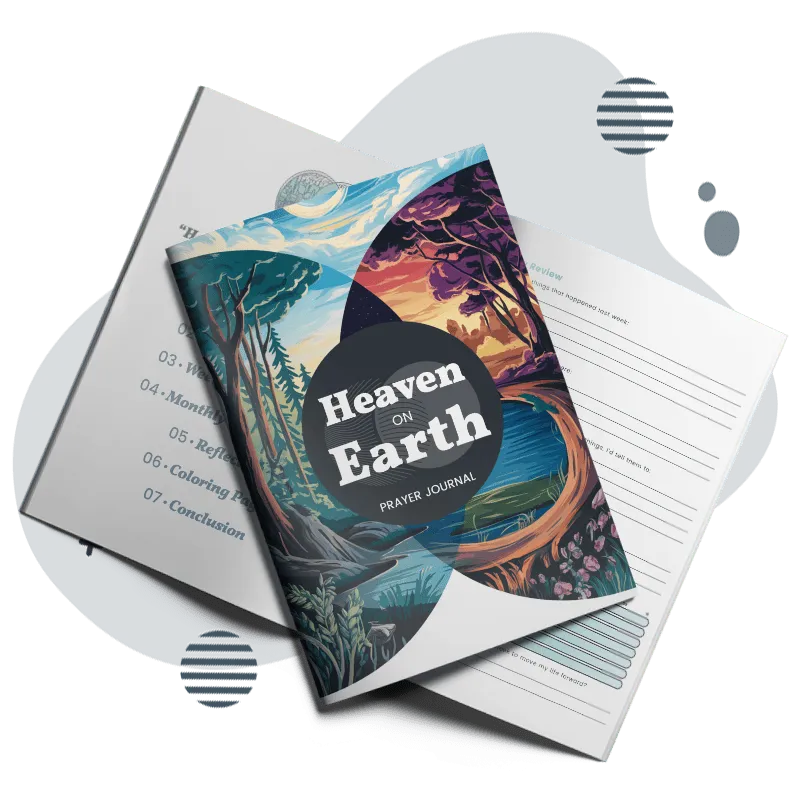
And if you want to go deeper with passages like these, I created a free prayer journal to help you slow down with Scripture and let it reshape how you pray.
Further up and further in,
Tim
Transcript
[0:00] What does it actually look like to be fully human? I know that might sound like a strange question, but just bear with me for a second. Cuz if you've been following along with this Ephesians series, you know that in the first three chapters, Paul unveiled something massive. He showed us that through Jesus, God is creating a brand new humanity, a spiritfilled temple where heaven and earth overlap. A community so saturated with God's presence that the hostile spiritual powers of the cosmos look at it and realize that God's plan is underway. and [music] their reign is over. It's hard for us to grasp, but that's what it says. And it's wild. And it raises another question, maybe an obvious follow-up question. So, Paul, how do we actually live like that? Because I don't know about you, but most of the time I wake up on a Monday morning and, you know, I don't feel like the living embodiment of God's new
[0:47] creation is necessarily happening all around me. And I think we all kind of feel the same way. We feel tired. We feel distracted. We feel like we are barely holding it together, let alone reflecting the fullness of Christ to the cosmos. And that's exactly where it gets really, really good because in Ephesians 4-6, the second half of the letter, Paul answers that question with one of the most carefully designed, theologically rich and practically grounded sections of the entire letter and really of anything that he ever wrote. And the answers he gives might surprise you. Uh, I know they did me. He doesn't give y'all a to-do list. He gives us a master class in what it looks like to be fully human. So today we're going to walk through the entire second half of Ephesians and watch Paul lay out his vision for what a mature, complete, fully alive human community looks like
[1:37] when heaven and earth overlap in real time in their midst. So let's get into it. All right, so here we go. Chapter 4, verse 1. Now, if you haven't seen my Ephesians 1:33 overview, I would probably recommend starting there first and even kind of the intro videos where I'm talking about what it even means for Paul to be writing a letter, how do we make sense of the letters, those kinds of things, because I don't want you to just be thrown into this thing uh blind, but I'm just going to assume that you're with me. We've been tracking along with each other up until this point. So, here we are now in Ephesians 4, starting in verse one. Paul opens the second half of his letter, and the very first thing that he does is is fascinating. He calls himself the prisoner in the Lord. Now, that's not really just a throwaway detail. He's been very careful about pointing all of this out. Paul has been writing from a Roman jail cell. A lot of
[2:25] his letters were written from that context. And he wants you to feel the weight of that because everything that he's about to say about power, maturity, and fullness comes from a man in chains. The upside down kingdom is baked into the messenger. And it's from that cell that Paul says, "Walk in a manner worthy of the calling with which you have been called." Now, again, if you've been following along, you know what the calling of God is. God is creating a brand new humanity, a spiritfilled temple in his people where heaven and earth overlap. A community so united in Messiah Jesus that the hostile spiritual powers of the cosmos look at it and realize their time is up. That's the calling. And Paul says, "Live now like that is true." But there's there's something that tends to if we if we even
[3:12] if we catch that story, it catches us off guard a little bit. Let's watch what he does next. He doesn't launch into a list of rules. He writes a poem and it's a little hard for us to see it in the English, but it very much is poetic language. He's he's um borrowing from ancient Hebrew and Greek structural things that you could see. It's a little easier to see in the Greek, but it really starts in like verse 4 through six. Paul stacks seven of course declarations of oneness and the structure is gorgeous. He builds from the spirit to the son to the father in a trinitarian crescendo. There is one body and one spirit just as you were called in one hope of your calling. One lord curios one faith one baptism one god and father of all who is over all and through all and in all. So seven the number of completeness on page one of the bible god creates in seven days. And here Paul uses seven unities to describe
[4:00] the complete new creation that God is building through the Messiah. This is his poetic summary of everything that he said in chapters 1 through3 compressed into essentially a single breath. And again, if you're paying attention, you can hear the echo of the ancient Jewish shama in the background all the way from back in Deuteronomy 6. Here, O Israel, the Lord our God, the Lord is one or the Lord alone. Yahweh is our God. Yahweh alone, however you want to structure it. Paul takes that foundational confession message and expands it through a trinitarian lens. One spirit holding the body together. One Lord who defines our loyalty and secures our hope. One God and Father who permeates everything. That's theological bedrock. And Paul wants it to feel like a maybe a creed that you could sing because the early church did sing their theology. They chanted it. They let it reshape their
[4:48] imagination from the inside out. And they really let it affect them even on an artistic and emotional level. Then something starts to move around. It starts to shift. So right after these seven declarations, which is again beautiful, Paul kind of pivots. So we get to verse seven. But to each one of us, grace was given according to the measure of Christ's gift or according to the gift of the Messiah. So we just had seven unity state seven statements of unity. And then immediately we get but to each one. Again, we're seeing a theme here. Unity requires diversity. Paul will not let us confuse the two. The community is one in the one who unifies it. But every person in it has been given something distinct, something that the rest of the body needs for them to uniquely contribute. And to make his point, Paul reaches for one of the wildest psalms in the entire Hebrew Bible. This is Psalm 68. Having ascended
[5:38] to the height, he took captive the captive forces. He gave gifts to people. So, this can be kind of confusing for people. So, here's what's happening. Psalm 68, if we were to go read it, it's a victory song. It tells the story of Yahweh as a divine warrior who marches out of the wilderness, defeats his enemies, leads the enslaved poor into freedom, and then ascends Mount Si to take his throne. Along the way, the psalm describes the enemies as wild animals and hostile spiritual forces. And then at the end of the poem, after the victory, after the enthronement, God gives strength and power to his people. Paul reads this psalm and sees Jesus, the crucified Messiah, descended into the grave. Again, not hell and not just the earth because hell is there a whole other conversation there. This isn't this is the grave, the place of the dead, not the place of punishment. I should probably do a more deep dive video on that, too. I've talked about it
[6:24] in the past, but it's it's worth a refresh. But he descended into the grave. He defeated the powers of sin and death. He rose and ascended to the right hand of God. And from that throne, he pours out gifts on his people. Now, there is kind of an interesting uh textual detail here because in the original Hebrew of Psalm 68, the line says that God received gifts from people, but Paul writes, "Gave." And scholars have spilled a lot of ink over that. Paul isn't misquing. He's reading the whole arc of the psalm. The final verses of Psalm 68 say explicitly that God gives strength and power to his people. So, Paul is capturing the movement of the whole poem. You should go back and read it, honestly. It's quite fruitful. Um but the divine warrior conquers, ascends, and then blesses his people from the throne. And the identity of this divine warrior is the crucified Jesus, the one who descended to the lowest place and then ascended above all things. The victory
[7:13] came through the cross. That's the pattern Paul keeps replaying throughout the letter. Everything from chapters 1 through 3 shows up again in chapters 4-6, but sort of transposed into a new key. The cosmic enthronement of chapter 1 becomes the practical giftgiving of chapter 4, or it flows into the practical giftgiving of chapter 4. The defeated powers of chapter 2 become the source of the community's gifts in chapter 4. The design again uh Paul Paul is uh just a literary genius we'll say. So what are these gifts? Let's get down to verse 11. Now this is gosh this is so interesting. He gave some as apostles, some as prophets, some as evangelists, some as shepherd teachers or shepherds and teachers. So the gifts are people. Paul doesn't say the Messiah gave prophecy or teaching or evangelism as abstract abilities. He gave apostles, sent out ones, prophets, people who
[8:02] boldly proclaim a word from the Lord, evangelists, the good news people who go about everywhere with the good news on their lips, shepherd teachers. The gift is the person specific humans equipped by the spirit given to the community for a purpose. And that purpose is crystal clear in verse 12. For the equipping of the holy ones, for the work of ministry, for the building up of the body of Messiah. Temple language building up is a construction metaphor. These gifted people exist to build the community up into something. And Paul tells us what in verse 13. Until we all attain to the unity of the faith and of the knowledge of the son of God, to a mature man to the measure of the stature which belongs to the fullness of Christ or which belongs to the fullness of the Messiah. A mature man, one complete human. That's the goal. Paul envisions the entire
[8:51] community of Jesus followers growing together into a single mature human being that reflects the fullness of who Jesus is. So this is not an individual project. No individual person can do this alone. You can't look at any one Christian and see the complete picture of Christ. But a diverse unified community, a a body where every part is working and contributing and connected, that community can reflect something that no solo act of devotion or faith ever could. And then Paul names what this is protecting against, what this maturity protects against. As a result, we are no longer to be children or babies tossed here and there by waves and carried about by every wind and wave of doctrine, by the trickery of people, by craftiness and deceitful scheming or a scheme of deception. The word scheme here is the Greek word from methoda. It
[9:38] shows up one other time in Ephesians that's going to be later in chapter 6 uh in verse 11 where Paul talks about the schemes of the slanderer. same word. Paul is drawing a straight line between immature communities that gets swept up in every cultural current and communities that are vulnerable to cosmic powers. Maturity is protection. Unity is armor and it's a collective armor. We'll come back to that again later. And then of course verses 15- 16, this is going to be where Paul introduces an image that will carry through really to the rest of the letter. But speaking the truth in love or doing truth in love, by the way, I wonder if their footnote here will have it too. Yeah. Or holding to or being truthful in right. speaking isn't necessarily the word there. So we could say doing truth or holding to the truth in love. Let us grow up in him. We are to grow up in all aspects into him who is the head that is the Messiah. From
[10:26] whom the entire body or the whole body being joined together and united together through every supporting joint according to the proper working of each individual part causes the growth of the body for the building up of itself in love. So there's the head, right? The Messiah is the head of the body. Now in English we hear head and we think boss. Who's the company head here, right? The person in charge. But that's not what the Greek word meant in its ancient context. The Greek word for head is keto. Almost never meant authority in Paul's world. Its primary meaning was source, origin, the place from which something flows. So ancient Greek medical writers like Hypocrates understood the head as the source of the body's nourishment, perception, and life. The head doesn't boss the body around. It feeds the body. It supplies what the rest of the body needs to function. And that's exactly how Paul's
[11:14] using it here. Let's just look at the description. From whom the entire body is joined together and united together through every supporting joint. The body grows from the head. The Messiah is the source of the community's life, identity, and cohesion. He's not a CEO barking orders from the corner office. He's the origin from which the whole organism draws its existence. Now, can we say that he's king and that he's ruler over this thing? Absolutely. But this is going to be important later because of this usage of the word. We don't want to draw false parallels in other instances where we might infer, oh, head of something else, meaning that it's the ruler, the king, the one over the top of it. Paul's using it very intentionally here to mean the source out of which everything grows. And we're going to get to that same point in in a later discussion. It's it's going to reframe everything. Leadership in this community flows from a crucified king who descended to the lowest place before
[12:04] ascending to the highest. So power in this kingdom looks like service. Authority looks like sacrifice. And the goal of it all is a body that builds itself up in love. Remember Jesus's own words to his disciples when they were trying to jockey for position and elevate themselves in the kingdom. And he said, "You know that the great ones among the Gentiles exercise authority over them and rule it over them. It's not going to be that way among you. If anyone wants to be great, they're going to make themselves the slave of everybody else." So that's Paul's opening move for the second half of Ephesians. And I I don't know, personally, I think it's breathtaking. Let's recap just a little bit. It seems like he takes every single cosmic reality from chapters 1 through 3 and then asks, "So, what does this look like in an actual community of real people? It looks like seven unities held together by radical diversity. It looks
[12:51] like a crucified divine warrior pouring out gifts from his throne after he ascends from the grave. And it looks like a community growing into a single mature human that reflects the fullness of Christ and of God's character to a fractured world, acting as the hands and feet of the one who's commissioned them for the task. That's the first piece of Paul's master class on what it means to be a human. Paul's laid this beautiful foundation. And now we're going to go into what the community does as one body fed by one source growing into one mature human. He's going to zoom in and get personal because if this community is going to reflect the fullness of Christ, the people in it need to undergo a transformation. And the way that Paul describes that transformation is one of the most powerful passages in the entire letter. And it starts here in chapter 17, sorry, verse 17. So I say this and I affirm in the Lord that y'all are to no
[13:41] longer walk just as the Gentiles or the nations walk in the futility of their minds being darkened in their understanding. The word for Gentiles here is just ethnon. And so it really is better to translate it as nations here because he's not saying, "Hey, let's dunk on Gentiles after he went through all this work of unifying them. He's saying it's the nations, the nations outside in the world." It's the same word, but it could have a different cast depending on how you present it. So the nations walk in this way in the futility of their mindset. And Paul stacks four phrases uh in quick succession as he's uh want to do right on top of each other. So let's let's see if we can find the progression here. the futility of their minds or the mindset being darkened in their understanding. Darkening in the mind excluded from the life of God because of the ignorance that is in them because of the hardness
[14:29] of their heart. Four layers each one going just one layer deeper. It starts with how you think. It moves to what you can perceive then to your relationship with God and then finally lands on the condition of your heart. He's describing a a downward spiral the nations are trapped in. Futile thinking leads to darkened perception which leads to distance from the source of life which leads to a heart so callous that it can't feel anything anymore. It's not a good place to be but that's where we were. And then verse 19 gives us the result of that. And they having become callous have given themselves up to indecent behavior for the practice of every kind of impurity with greediness. Now greediness there is really like insatiable desire. This is Paul's portrait of the old humanity, the old way of being human. And if you're familiar with Genesis 1 through3, you should be hearing an echo similar themes. Humans were made to image God to
[15:18] the world to represent him. But when they turned away to reflect only themselves and their own desires to seize the autonomy to define right and wrong for themselves on their own terms, they cut themselves off from the source of all life and then spiral down into death and destruction and chaos. Paul is telling this Genesis story again. The old humanity is the Adam and Eve postfall humanity. the one that chose its own wisdom over God's and then reaped the consequences. But now Paul makes a pretty remarkable turn. But y'all did not learn Christ in this way. If indeed y'all have heard him and have been taught in him, just as the truth is in Jesus, that in reference to your former way of life, you are to rid yourselves of the old self which is being corrupted in accordance with the lust of deceit. We're going to pause there. Y'all did not learn the Messiah that way. That phrase is unique in the
[16:06] entire New Testament. Paul doesn't say you learned a set of doctrines or you learned a moral code or you learned the rules of the Christian religion. He says you all learned a person. To learn a person is fundamentally different from learning a system. A system just gives you rules to follow. A person gives you a relationship to inhabit and reciprocate. Systems say do this. A person says walk with me. And then again verse 21 reinforces it. You know, if indeed y'all have heard of him and were taught in him as truth is in Jesus. The real truth of the Christian faith is not at its root found in a systematic arrangement of concepts. The truth is a person and you discover it by knowing and following that person. And then we we get to what's next. This is really where he puts the the heart of it on display here again. That in reference to your former way of life, y'all are to
[16:54] rid yall selves of the old self which is being corrupted in accordance with the lusts of deceit. and that you are to be renewed in the spirits of your minds and to put on the new self which in the likeness of God has been created in righteousness and holiness of the truth. Put off the old human, put on the new human. Now, the word that gets translated self in a lot of English Bibles here is actually the Greek word for human. Literally person, it says, again, I love sometimes we get these really good little notes here when you hover over it. So, put off of the old human and put on the new human. He's not talking about your individual personality. He's talking about a communal identity. The old human is the Adam version of humanity, the one spiraling through feudal thinking toward callous hearts and distance from God. And the new human is the one that has
[17:42] been created in accordance with God. Created again. More Genesis 1 and 2 language. Paul is saying that in the Messiah, God is doing Genesis 1 all over again. A new creation, a new humanity. And if we let this if we think about this clearly, this is going to be a a change in how we read everything about Paul's ethics. He's not just telling people to kind of white knuckle and and figure it out and try to become someone different. He's telling people to become who they already are in Christ. The new human has already been created. That's past tense. God already did it in the Messiah's death and resurrection. So now our job is to step into the reality that already exists, stripping off the old and putting on the new, acting as we truly are in him. And that's why Paul's ethical commands in the next several
[18:30] verses have such a different flavor than just a moral rule book or, you know, a devotional grabag. Watch. Having, you know, ridding yourselves of falsehood or having put off lying, speak truth each one of you with his neighbor. That's a direct quote from Zechariah 8:16. If you see this kind of like different text on bible.com, I I I like that they do this. This is a citation. You can tell it's a it's a quote. So that's Zechariah 8:16, which is addressed to the postexile community of Israel as they rebuild the temple. Paul's trying to say, "Y'all are the new temple community. Live like it." Some of you guys like doubt the temple call backs and I'm Paul's making it very clear by all the things he cites and the way that he's saying it. Trust me. Be angry and yet do not sin. Do not let the sun go down on your anger and do not give the devil an opportunity or a place. This be angry and yet do not sin
[19:18] is Psalms 4:4. Paul doesn't say never feel anger. He says don't let it fester. Because when anger sits overnight, it opens a door. And the word he uses for what walks through that door is diabolas, the slanderer, the accuser. Unresolved conflict in the community as a playground for the forces that want to tear apart. Remember again that this is communal discussion. The one who steals must no longer steal, but rather he must labor, producing with his own hands what is good so that he can have something to share with the one who has need. Notice another thing Paul's doing. He's not stopping at don't steal. He's replacing the old habit with a new one. Work hard and then give the surplus away. The antidote to taking is radical generosity. Let no unh wholesome words come out of y'all's mouths. But if there is any good word for building up or edification according to the need of the moment, say that so that it will give
[20:06] grace to those who hear. Do not grieve God's Holy Spirit by whom you were sealed for the day of redemption. That language comes from Isaiah 63:10 where Israel's rebellion grieved God's Holy Spirit and led to their exile. Paul is warning the new humanity. Don't replay the old story. The spirit has taken up residence in y'all's communal life. Don't push that presence away through the same patterns that sent Israel into exile in the first place. And uh you know be kind to one another, compassionate, forgiving each other just as God in Christ has also forgiven you. Now it's just kind of interesting because frankly they shouldn't have ended the chapter there. Uh chapter 5:es 1 and two are kind of a connected thought. Therefore, be imitators of God as beloved children and walk in love just as Christ also loved y'all and gave himself up for us an offering and a
[20:56] sacrifice to God as a fragrant aroma. Become imitators of God. And what does imitating God look like? It looks like the Messiah giving his life away. This self offering of Jesus on the cross is the template for what it means for us to be fully human. not glorying in power and authority, not self-preservation, self-giving love for the benefit of the other. Uh and then and then we get more uh more contrast. Holy cow. Verses 3 through 14 is kind of one unit. So if the first section was about old humanity versus new humanity, this section, you'll start to pick it up, but it's about darkness and light. Paul names three things that have no place at all in the new community. Sexual immorality, impurity, and greed. And then he repeats that triad three times in different forms across three verses. Three repetitions, three warnings, three
[21:45] assertions that these behaviors do not belong among the Messiah's people. And he links all three to the same root, idolatry. Let's going to see how he does it. For this you know with certainty that no sexually immoral or impure or greedy person which amounts to an idoltor has an inheritance in the kingdom of Christ and God. Greed is idolatry. Sexual exploitation is idolatry. Impurity is idolatry. All three elevate something created to the center of your life and worship it there and thus mistreat it. They take what God designed as a good thing as a gift and twist it and then turn it into a god. And Paul says that road leads to the same place it always has. The loss of inheritance, the loss of your place in God's future. Now that's uncomfortable, but that's Paul's point. They have no place. But then here we get to the contrast. Do not become partners with them. For you were once darkness, but
[22:33] now y'all are light in the Lord. Walk as children of light, for the fruit of the light consists in all goodness, righteousness, and truth. So notice the tense. Y'all were darkness. Y'all are light. Past and present. Paul's describing a change that has already happened. You've already crossed from one reality to the other. And now the task is to live accordingly. And he describes what the light does. It exposes. Do not participate in the useless deeds of darkness, but instead even expose them. So light does not avoid the darkness. It walks into it and everything that that light touches becomes visible for what it really is. All things become visible when they are exposed by the light. For everything that becomes visible is light. For this reason, it says, "Awake sleeper and arise from the dead and Christ will shine on you or and the Messiah will shine on you." More poetry. This is
[23:21] something the early church actually sang and the language draws from two texts in Isaiah. One is Isaiah 26:19 which says, "Your dead ones will live. Awake and shout for joy, O sleepers in the dust, for the dew of the light is your dw. And then Isaiah 60:1, arise, shine, for your light has come and the glory of Yahweh has risen over you. He's just kind of put them together like peanut butter and jelly. But both of those Isaiah texts are about resurrection, about God's people waking up from death and exile and stepping into the light of God's new world. And Paul takes those ancient promises pointing to the future and puts them in the mouths of Jesus's earliest followers as a song. The ethics of the new humanity don't end in morality. They begin in resurrection. It's a community singing its way out of the grave and into the light to live like that now on
[24:10] their way to living that way eternally in the future when they're glorified. Which is the second piece of our master class. Paul paints the old humanity in vivid descending lurid awful detail. futile thinking, darkened minds, callous hearts, and insatiable desires. And then he says, "That's not y'all anymore. Y'all learned a person. Y'all were created a new. Strip off the corpse clothes, put on the new human, walk out of the darkness, and when the Messiah's light hits you, start singing and live like what you were always made to be." Now, real quick before we get into the final section, if this kind of deep dive into the Bible stuff is clicking for you, if you're the kind of person who wants to see the literary design, the original languages, ancient context, and not just sort of skin the surface, I made something for you. It's a free prayer journal, and it's built around
[24:57] the same approach that we use in these videos. It walks you through how to read a passage slowly, how to sit with the text, and how to let it reshape how you actually pray. Because prayer ultimately was never just supposed to be a wish list or a punch list of things we're asking God for. It's supposed to be a conversation with the God who is over all and through all and in all. The link is in the description below. It's completely free. Grab it. Try it for a week and see if it changes the way you talk to God. I think it will. The Lord's Prayer is a treasure trove of all of these same phenomenal ideas. And the Lord's prayer is actually a very potent weapon in the war we're fighting and in the way that we are are designed to live as his followers here on the earth. There's even coloring pages if that's your kind of thing. Hopefully hopefully it's something that you you you get a lot of use out of. I made it with a lot of love and I hope it's a blessing to
[25:44] you. But let's now get into kind of the final piece of Paul's master class. And honestly, this might be the part that surprises you the most. It it certainly does most of the people I speak to. So Paul has shown us what a mature human looks like. He's described the transformation from the old humanity to the new and now he's going to bring it all home literally into the household into the places where life actually happens and then at the very end onto a battlefield. So this final section of Ephesians covers some of the most debated most misunderstood and most beautiful passages in the entire letter and it starts with wine. He introduces this whole section this way. So then be careful how y'all walk, not as unwise people, but as wise, making the most of your time, because the days are evil. Therefore, do not be foolish, but understand what the will of the Lord is. This whole thing kind of deserves its
[26:32] own video, I think, but we'll get to that later. And do not get drunk with wine, in which there is debauchery, but be filled with the spirit, speaking to one another in psalms and hymns and spiritual songs, singing and making melody with your hearts to the Lord, always giving thanks for all things in the name of our Lord Jesus Christ, to our God and Father. Let's pause for a minute. So, the wine thing, at first glance, this looks like a random prohibition. Don't drink too much. Again, the word I believe here is, which Paul uses elsewhere to tell Timothy, drink a little bit of that for the sake of your stomach. It's fermented. It'll help a little bit. It's also the thing that the good Samaritan puts in the in the wounds of the guy to disinfect them. You wouldn't put grape juice in there. It would need to be fermented. And it's also the thing that Jesus makes at the wedding of Kaa. So don't drink too much of that stuff or you'll get drunk. Doesn't say don't drink any of it, but don't get drunk on it cuz that's
[27:19] debauchery. But it's like again, is this sort of like a is this just like a random prohibition or or what's going on here? But of course not. It's Paul. He doesn't write that way. He's doing something a lot more intentional. He's going to set up the third and final contrast that structures this entire section. Old humanity versus new humanity, darkness versus light, and now folly versus wisdom. Remember, be careful how y'all walk, not as unwise, but as wise, making the most of the time because the days are evil. If you were to put yourself back into the wisdom literature and the wisdom tradition in the the Old Testament, the Hebrew Bible, um folly is living as though God doesn't exist, as though reality is only what you can see and touch. Wisdom is living. It's practic. It's a very practical word. l in tune with the actual structure of creation, the way God actually designed
[28:06] things to work. And Paul says the difference between the two shows up in what fills you. So wine fills you with recklessness. The spirit fills you with something else entirely. And then Paul lists the four results of being filled by the spirit. And they're very specific, oddly specific. Singing together, right? Making melody in your hearts to the Lord. giving thanks always for everything in the name of our Lord Jesus the Messiah, to God the Father. And then there's this one. Subject yourselves to one another in the fear of Christ. Being submissive to submit yourselves. These are the marks of a spiritfilled community. And notice what's not on that list. Dramatic spiritual experiences, individual power encounters. Paul's vision of the spirit's work is a lot more communal and surprisingly ordinary and maybe mundane.
[28:55] You sing together. You cultivate gratitude for everything. You yield to one another and consider one another more important than yourself. You treat the other person as though they matter more than you do. And if everybody does that, that's what it looks like when the spirit of the living God fills a whole group of people. Now, that fourth one, submitting to one another, is the hinge that swings open the door onto one of the most controversial sections of the whole letter. Here we go. Verse 22. Wives subject y'allselves to y'all's own husbands as to the Lord. So, we got to talk about it. you need to talk about what's happening here because this passage has been used to justify all kinds of things that I think Paul was not going for that he would not recognize that he'd probably have to write another letter to correct later. And the only way to understand what Paul's actually doing is to understand what he's responding to. The very first thing I want to point out, subject yourselves to one another in the fear of Christ, wives, to your own husbands as
[29:44] to the Lord. See where this is italicized? That means that those words aren't actually in the original writing document. It means they're inserted there to try to make sense of it. So the way it's actually written is just and subject yourselves to one another in the fear of Christ, wives to your own husbands as to the Lord. Now what's going on here? That means that that is a extension of the command that we're all given for how to treat one another. So that's interesting. But why why are we talking about family structure now? So in the Greco Roman world, there was a well-known literary form called household code. Philosophers like Aristotle wrote them. They were instructions for the male head of the household. Head, by the way, in the sense of leader over, not source. get into that in a minute on how to properly manage three relationships, wife, children, and slaves. And the whole thing was addressed to the patriarch. The subordinate parties were talked
[30:30] about but not talked to. They were objects to be managed rather than moral agents with any kind of dignity. So Paul is taking that form because it was something that was conversant to them. It was something they understood in his context and in their culture. And he is blowing it up from the inside. The first thing he does is address the wives, not the husbands about their wives. He talks to the wives themselves. So in a world where women were considered legal property of their fathers or husbands once they got married, once they were taken in marriage really, Paul addresses them as individuals capable of making their own moral choices. That alone would have raised some eyebrows. We often just kind of skip past it, not really giving it a second thought. And the instructions he gives them is to arrange themselves under their own husbands as to the Lord. The word here is not obey. It's the same word from
[31:19] verse 21, submit. Paul is taking the mutual submission he already established as the baseline for the entire community and applying it inside the household. This is not a new hierarchy. It's not a hierarchy at all. It's the same ethic of yielding that every member of the body practices toward every other member of the body. But then comes the part that really would have gotten attention. Husbands love y'all's wives just as Christ also loved the church and gave himself up for her in every other household code in the ancient world. The husband's section told him how to rule, how to exercise authority, how to keep order. Paul tells the husband to die. The model for the husband's love is the crucified Messiah, the one who emptied himself, the one who washed feet, the one who descended to the lowest place for his beloved. Paul is taking the most powerful figure in the ancient household and assigning him the posture of a
[32:06] servant just like Jesus is. And it gets more specific. So that he might sanctify her having cleansed her by the washing of water with the word. Washing again maybe we need to put ourselves in this ancient context but in the in the ancient world washing someone's body was the task of a household slave or a servant. Paul is telling husbands to take on the role of the domestic servant in the relationship. This is a complete inversion of the cultural expectation. The patriarch does not sit at the top issuing commands from on high. The patriarch in a in a household where Jesus is king gets on his knees with a basin of water just like his lord did. Again, Paul uses the word head again here or in verse 23, for the husband is the head of the wife as Christ also is the head of the church. He himself being the savior of the body. And we already
[32:53] covered this way earlier. The Greek word Kethlet means source, origin, the place from which life flows. Paul's point is consistent. The husband's role mirrors the Messiah's role and the Messiah's role is to give life, to nourish, and to sustain, not to dominate. Then Paul addresses children. Verse one of chapter 6. Again, I don't want to blow past this idea of for this reason a man shall leave his father and his mother and be joined to his wife. The mystery is great. I'm speaking with reference to Christ in the church. As for you individually, each husband is to love his own wife the same as himself, and the wife must see to it that she respects her husband. I don't mean to blow by that, but it's not as though he's done here. I guess that's the point. Children, obey y'all's parents in the Lord, and this is right. And he quotes the fifth commandment, so that it may turn out well for you and that you may live long on the earth. He's speaking directly to the children as moral agents. And then he turns to the
[33:41] fathers and says something remarkable. Honestly, fathers, do not provoke your children to anger, but bring them up in the discipline and instruction of the Lord. In a world where fathers had nearly absolute legal authority over their children and their fates, including the right of exposure, leaving an unwanted infant to die, Paul tells fathers to be careful with their power. Don't use it to crush, use it to nurture and serve and build up. It's remarkable. And then slaves. This is the hardest part of the passage for modern readers, and it should be. Paul addresses enslaved people directly, which was pretty radical. Now, again, slavery in this context isn't the same as the cattle slavery I think of as an American, for example, where uh this was not race-based. This was not uh an irrevocable status conferred upon a person that from which they could never escape. A person could sell themselves
[34:28] into slavery, meaning if you feed me and give me a roof, I'll work for you. Um and if you had saved up enough money or you'd earned enough money from other ways, you could buy your own freedom as a slave. And it wasn't race-based. Again, people you could if you could just lose a battle. You lose a battle and then you're taken as slaves. Very different world, very different circumstances. It's a little closer to like the employee um employer relationship we have now where you willingly sub submit yourself and put your schedule into the hands of another person who owns a business and is assigning you a job and they pay you for your work. We even have a concept of this. We have a phrase called wage slave where we're borrowing the same things. So that's more close to than what you and I hear when we hear slavery, but it's all in the same neighborhood. But he tells them that their work has dignity and meaning as to the Lord. Render service as to the Lord and not to people, knowing that whatever good thing
[35:16] each one does, he will receive this back from the Lord, whether slave or free. And he turns to the the masters and says, "Do the same things to them. Stop threatening, knowing that both their master and yours is in heaven and there is no partiality with him. Do the same things to them." Paul tells masters to serve their slaves the same way slaves serve their masters. And then he reminds them that in heaven, in the new creation, in God's world, there is no favoritism, no hierarchy. The master and the slaves stand before the same Lord on equal ground. Paul doesn't call for the immediate abolition of slavery in this passage. And that troubles us, as it should, but what he does do is plant a theological time bomb inside the institution. slaves operated the entire known world at that time in terms of its economy and how things functioned. It's a fact of history. It's a gross fact of history, but it's a fact of history. If Paul were to give the radical abolition
[36:05] statement, which I think is implied as part of the trajectory of what he's talking about, but if he were to give that radical abolition statement, it'd be akin to us saying, "Yeah, guys, look, no more machines, uh, no more electricity, no more fossil fuels, and no more automation of any kind, no technology really. We we're going to go back to the horse and buggy here. That would have gone over like a lead balloon. It literally would have undone everything. But if the master and the slave serve the same lord with no partiality, if the master must do the same things to the slave, then the entire foundation of the system has been undermined. The early church would eventually follow this logic to its conclusion. But the fuse was lit right there. And you can see more of this at work if you read Phileiman which is Paul's letter to Phileiman about an escaped slave of his Onesimus in which he exorts Phileiman to receive him as a brother as almost like an equal. It's incredible. So the household code of
[36:52] Ephesians 5:6 is Paul taking the most entrenched power structures of his world and reimagining every layer of them through the lens of a crucified king and a new humanity. Power flows downward. Authority looks like service. And every person in the household, regardless of their social status, regardless of what the culture around them says they are, is addressed as a dignified agent before God with their own value, their own worth, and their own moral agency. And now we come to the battle, the passage almost everybody knows, the passage almost everybody misreads. We touched on this a little bit in the uh 11 thorny issues video, but finally, be strengthened in the Lord and in the strength of his might, the armor of God. Again, let's just recap this briefly because we did cover it. Here's the first thing you need to know. Every single U in Ephesians 6:10 through20 is
[37:41] plural. Everyone, English doesn't have that distinction unless you're from the south or you're like me and you keep saying y'all. But Greek does. And Paul uses the plural form every time. This means the armor of God was never designed for a lone warrior in a private prayer closet. It was designed for a community, a body, a team standing shoulder-to-shoulder. Put on y'allselves the full armor of God so that y'all might be able to stand against the schemes of the slanderer. Remember the word from earlier, methodia, schemes. The same word from chapter 4:14 where Paul warned about immature communities being tossed around by the craftiness of a scheme of deception. Paul has been building toward this moment for two chapters. The forces that produce division, deception, and disunityity in the community are not merely human. They're cosmic. Our struggle is not against flesh and blood, but against the rulers, against the powers, against the world forces of this darkness, against
[38:29] the spiritual forces of wickedness in the heavenly places. The powers. We met them all the way back in chapter 1, didn't we? Where Paul said the Messiah was enthroned above every ruler and authority. We met them in chapter 2, where the ruler of the authority of the air held humanity captive. We met them in chapter 3, where the church's very existence announces God's wisdom to the rulers and authorities in the heavenly places. And now Paul says those powers are engaged in fighting back. They want to divide you. They want to tear apart the unity that announces their defeat. And the battle is real. So what does the community wear into this fight and what are we doing? Paul lists six pieces of armor. Every single one of them, as we said, comes from the book of Isaiah. The belt of truth. Isaiah 11:5. The coming king wears righteousness as the belt of his waist and faithfulness as the belt of his loins. The breastplate of righteousness. Isaiah 59:17. He put on righteousness as a breastplate. Feet
[39:17] fitted with the readiness of the gospel of peace. Isaiah 52:7. How beautiful on the mountains are the feet of the one who brings good news, who announces peace. The shield of faith. Isaiah's Isaiah's repeated calling to trust Yahweh against the fiery assaults of the nations. The helmet of salvation. Isaiah 59:17. Again, he put on the helmet of salvation on his head. The sword of the spirit, which is the word of God. Isaiah 49:2. He made my mouth like a sharp sword. You see the pattern? It's not just generic spiritual warfare language. Paul is taking the armor that Isaiah said God himself would wear when he came as the divine warrior to rescue his people and he's handing it to the community. In Isaiah 59, the context is devastating. God looks at the world and sees injustice everywhere. He looks for someone to intervene and no one steps up. So God puts on his own armor, his own righteousness and salvation and zeal
[40:04] and he goes to war himself. He becomes the warrior. Paul says that warrior has come. His name is Jesus. He fought the battle through the cross and won. And now he gives his own armor to his people. Remember the mature person from earlier to wear, not because they earned it, because it was given to them. And what it's protecting is their unity. Look at the pieces. Truth, righteousness, peace, faith, salvation, the word of God. These are the things that hold the community together. The powers attack through lies, injustice, conflict, doubt, despair, and distortion of God's word. And every piece of armor corresponds to a strategy of the enemy. The battle is for the integrity of the body. In verse 18, praying at all times in the spirit with every prayer and supplication and staying alert to this with all perseverance and supplication for all the saints or the holy ones. Prayer is the posture of the armed community. Not passive prayer, alert
[40:52] prayer, watchful prayer. The kind of prayer where you're looking around at the people standing next to you and saying, "I see you. I'm with you. I love you. We're holding the line together." Again, I can't emphasize this enough. We don't advance to win the war. We stand and God uses our standing having done everything to stand firm against the schemes of the devil. Resist on the evil day and having done everything to stand firm. Therefore, having belted ourselves with truth, right? Our standing, our holding the line, our not giving up. That's what warfare and battle looks like for us. It's not advancing the battle lines, but our standing is how God advances the battle lines. It's how God secures the defeat of his enemies is us standing. So God takes our defensive willingness to submit ourselves to one
[41:39] another, love one another, and prioritize truth and peace and love and the gospel and the word of God and the spirit and just hold on with all of that and live with that in mind and and be watchful not to let the schemes of the devil come in and divide us. And he uses that to advance the battle lines to victory because he ultimately was the warrior. It's just phenomenal. And then Paul closes uh the way he closes many of his letters with one final image. He says, ' And pray for me that a word might be given to me in the opening of my mouth to make known with boldness the mystery of the gospel for which I am an ambassador in chains. An ambassador in chains is something of an oxymoron. Ambassadors represent power. They wear fine clothes and they carry authority. Paul represents the king of the cosmos and he's writing this from a jail cell, but that's the point. That's been the point for basically the entire letter. The power of God works through what looks like divine weakness. The divine
[42:28] warrior conquers through a cross. The head of the body serves as its source of life, not its dictator. The husband leads by washing feet. And the apostle who announces freedom to the cosmos does it while chained to a Roman guard. So Paul wants you to reimagine his imprisonment rather than as a contradiction of his message as the final proof the upside down kingdom is real and it's working, which is the third and final piece of the masterass. The spirit fills a community with song, gratitude, and mutual submission. That community reimagines every power structure it touches from the household to the empire entirely. And when the cosmic powers push back, the community stands together in borrowed armor, praying for each other, holding the line, wearing the very outfit of God. So now we're going to step back, okay? Because we've covered a lot of ground
[43:16] today and we've covered a lot of ground in this whole series thus far. We've got at least one more video, but I want you to see the whole picture because this was the overview of Ephesians 4:6. And we did an earlier video that was an Ephesians overview for the whole letter and an overview of Ephesians 1:3. So I want you to see the whole picture. Ephesians is six chapters long. And in those six chapters, Paul does something that I honestly think is one of the most extraordinary things anyone has ever written. If the reformers had chosen Romans instead of Galatians and I would say very particular and motivated readings of Romans and Galatians as kind of like their flagship text or if they had chosen Ephesians instead of those then we would have had a very different uh resulting emphasis in the Christian world because Ephesians itself is kind of a it it's honestly something of a bizarre letter. It's a really really incredible. He starts with a song, one
[44:03] long breathless sentence of praise to the father and the son and the spirit for a plan that was set in motion before the foundation of the world. And at the center of that song is a single staggering claim that God's purpose, his eternal intention is to head up all things together in the Messiah. Things in heaven, things on earth, everything. That Greek word means to bring back into unity, to gather the scattered pieces and make them whole again. Paul is saying that the entire cosmos, every fractured relationship, every broken system, every estranged family, every divided community, every corrupted power structure, all of it is being drawn back together under one head. And that head is the crucified and risen Jesus. That's the heartbeat of the letter. Everything else flows from it. Now, of course, not everything will get to participate in that because God is also working against
[44:51] the forces of evil that are at work in this present darkness. And unfortunately, people are captive to those pieces of evil, captive to those beings, and they fall short all the time of the kind of life that's being described here. And they fall short of it because they're not attached to the source of it. But nevertheless, God's vision is clear. He's reunifying all things in heaven and on earth in Jesus Christ. So, in chapters 1 through 3, Paul opened our eyes to the scope of what God has done. He prayed that we would see it, really see it, with the eyes of our hearts. He showed us that the same power that raised Jesus from the dead and seated him above every ruler and authority in the cosmos is now aimed at us. He told us that we were dead, enslaved to forces we couldn't even name, and that God being rich in mercy, made us alive together with the Messiah. He showed us that the wall between Jew and Gentile, the deepest
[45:38] division imaginable in the ancient world, has been torn down. And in its place, God is building a new temple, not out of stone, but out of people. A community where heaven and earth overlap in real time, where the hostile spiritual powers look on and see the evidence that their reign is crumbling. And then Paul knelt down and prayed one of the most audacious prayers in the entire Bible. That we would be strengthened by the spirit. That the Messiah would take up residence in us. That we would somehow grasp the width and length and height and depth of a love that surpasses our ability to understand it. And that we would be filled with all the fullness of God. [snorts] Filled with the fullness of God. And that he couldn't contain himself. He broke into a doxology. To him who is able to do far more abundantly beyond all that we ask or think according to the power that works
[46:26] within us. To him be the glory in the church and in Messiah Jesus to all generations forever and ever. Amen. That was the first half. The unveiling the apocalypse. The moment you realize that the story that you're living inside of is infinitely bigger and more beautiful than you ever imagined. And then Paul said that's the story you're living in. Now let's talk about how to live it out. And that's what chapters 4 through six have been. the masterclass in becoming human. Paul showed us that unity requires radical diversity, not sameness. He gave us the image of the crucified divine warrior descending to the lowest place and then ascending and pouring out gifts from his throne. He painted the picture of a community growing into a single mature human being that reflects the fullness of Christ into the world. He told us to strip off the old humanity, the one spiraling from futile thinking down toward callous
[47:15] hearts with a a strange relationship with God, and then to put on instead the new humanity that God has already created in the Messiah. He said the truth is a person, not a system. And he showed us that ethics in this new world isn't just about moral behavior. It's about resurrection in a community singing its way out of the grave. We are to live as what we have already been destined to become in our present day. He took the most entrenched power structures of his world and reimagined every single one of them through the lens of a king who rules by dying and laying his life down for others and on their behalf. Husbands serve, fathers nurture, masters treat their slaves as equals before God. Every person in the household is addressed as a dignified agent with moral weight and cosmic significance. And then at the very end, he handed us the armor of God. Not
[48:02] individual armor again for some private battle against spiritual forces. Corporate armor that the person of the body of Christ is supposed to put on and stand against the schemes of the evil one and thus allow God to advance the battle lines toward victory. Isaiah's divine warrior outfit given to a community standing shouldertosh shoulder protecting their unity against the cosmic forces that want to tear them apart. And then the letter closes with an ambassador in chains, a man whose weakness is the final proof that the upside down kingdom actually works as intended. Paul's letter to the Ephesians. Now, here's what I want you to take with you. You are not a random believing individual floating through a meaningless universe trying to be moral enough to earn a ticket to heaven when you die. That story is too small, way too small, and has really nothing to do with the Bible. The story Paul tells is
[48:49] that the creator of everything that exists looked at a shattered universe and decided out of love to put it back together at his own expense. And the way he chose to do it was through a crucified Jewish carpenter from Nazareth and the ragtag community of broken people who trust in him. Heaven and earth being reunified in Jesus. That's the plan. That's what was revealed and you are a part of it. This this moment matters. Your Monday morning matters. Everything matters. The way you speak to your spouse matters. The way you treat your co-workers matters. If you're an employer, the way you treat your employees matters. The patience that you show to your kids. The generosity you extend to the person who wronged you, maybe especially the person who wronged you. The moment you choose truth over convenience and forgiveness over bitterness, all of that matters because that's the overlap life. All of it is
[49:37] heaven and earth meeting in the Christshaped space of your actual life. And if you're not aware of this, you're not doing that alone. You have a community. In fact, it can only be done in community. A all the believers in the whole world who have claimed the name of Christ form it up with you. But there must be people in your context in your immediate vicinity with whom you can do that life together. People who are [music] growing with you into a mature human that no single one of you could become on your own. And you've been given armor. Not armor you earned or built, but an armor that was given to you. The very outfit of the god who looked at a broken world and said, "I will go myself on their behalf." So we can wake up in the morning and remember who we are. We are part of a new humanity in him. You are a living stone in a temple where God's own spirit dwells. You're filled with the fullness
[50:24] of the one who fills all in all. And the plan that started before the foundation of the world, the plan to head up all things, unify all things, restore all things, sum up all things in the Messiah, things in heaven and things on earth. That plan is running right down the center of your life right now. It's it's mindblowing if we really think about it. And it's true. So ladies and gentlemen, the letter to the Ephesians. If you want to go deeper with this, if you want to take what we've talked about today and find ways to let it reshape how you actually pray, what's startling is that there are actually quite a few parallels between what we've talked about in Ephesians and Jesus's own prayer that he gave to his disciples as a model to follow. And I've put together a lot of those as a resource in my free prayer journal. It's designed to help you slow down with passages like the ones we've walked through today and let them become your own prayers the way Paul's prayers became his. The link is
[51:13] in the description. It's free. I'd love for you to try it. And if this video has been meaning something to you, I would really appreciate it if you'd do me a favor. Share it with someone. Send it to a friend. Leave a comment below and tell me what is hitting you the hardest. Is there anything in here that was a particularly interesting insight you had never noticed before. Trust me, I read every single one of these. [music] And again, if you haven't seen our video on Ephesians 1 through3, go watch that next. It covers the first half of the letter in the same kind of depth. And it if you're anything like this, if you've enjoyed this one at all, it'll blow your mind in the same way. I'll put a link in the description below. Thank you for being here. Thank you for caring about this book enough to spend this time with it. It's an honor to study with you further up and further in.
Tagsephesianspaul's lettersnew humanitychurch unityarmor of god