Ephesians 1-3 is WAY More Intricate Than You Imagined…
A hidden chiasm in Ephesians 1-3 reveals how praise, prayer, and story build toward the church as God's temple.
By Tim Barber··Video·Updated
Chapters
- 0:00Introduction to Ephesians 1-3
- 1:45Paul's Breathtaking Opening
- 2:35The Hymn of Praise
- 3:51The Trinitarian Harmony
- 5:06Paul's Prayer for Revelation
- 5:38The Chiasm Structure
- 6:04Paul's Thanksgiving and Intercession
- 8:18The Easter Enthronement
- 9:14The Church as the Body of Christ
- 11:50The Cosmic Exodus
- 12:30From Death to Life
- 17:21The New Humanity
- 22:02Paul's Imprisonment and Revelation
- 24:47The Multifaceted Wisdom of God
- 26:57Paul's Second Prayer
- 31:35Conclusion and Final Doxology
The Hidden Architecture of Ephesians That Changes Everything
Discovering the Breathtaking Blueprint Paul Designed to Reveal God’s Eternal Purpose
When most Christians sit down to read Ephesians 1-3, they see what appears to be random theology – a blessing here, a prayer there, some talk about Jews and Gentiles, and Paul mentioning his imprisonment. But what if I told you that these first three chapters are actually designed like a beautiful cathedral blueprint?
The Symphony Structure Most People Miss
Paul begins Ephesians not with a theological treatise, but with a worship song. Verses 3-14 of chapter one form one breathtaking sentence in the original Greek – an avalanche of praise that echoes the ancient Psalms but rewrites them around Jesus. This isn’t accidental; Paul knows that you can’t think your way into the apocalypse (the unveiling of God’s plan). You have to sing your way in.
The structure Paul creates is called a chiasm – a symmetrical pattern that unfolds like this:
- A – Song of Praise (1:3-14)
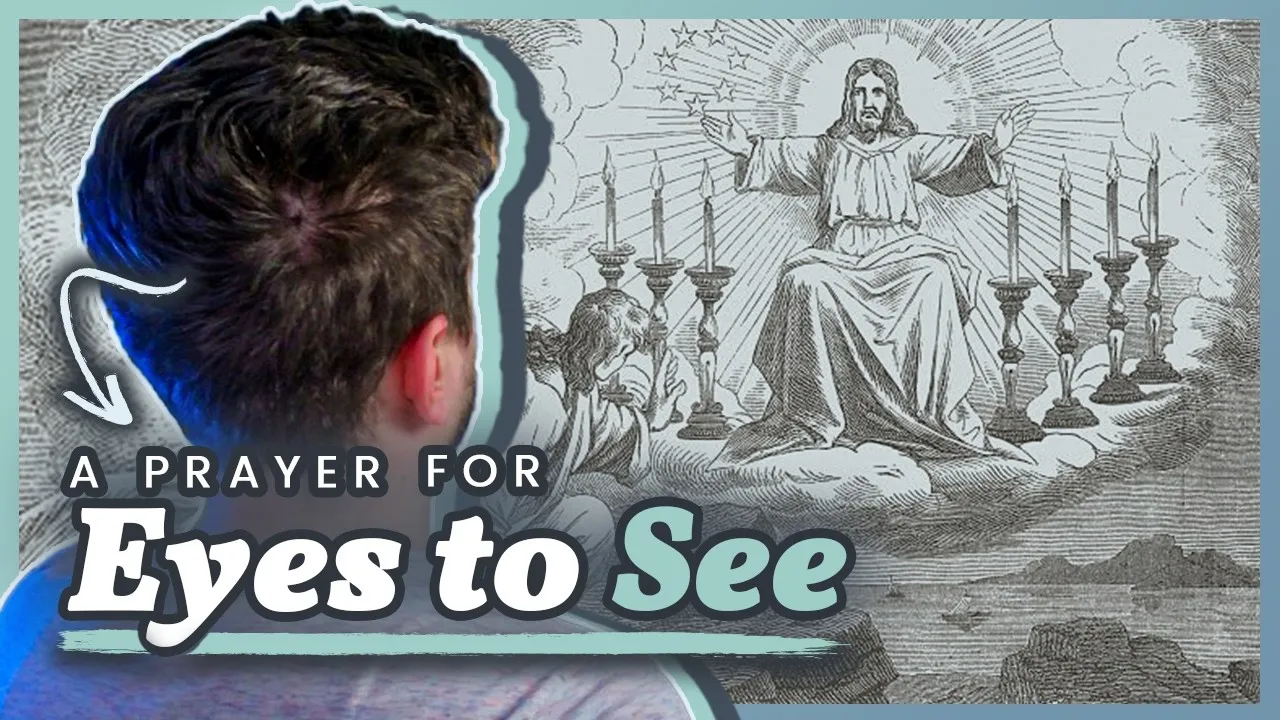
- B – Prayer for Sight (1:15-23)
- C – New Exodus: Death to Life (2:1-10)
- D – New Temple: Division to Unity (2:11-22)
- C’ – Paul’s Story: Living the Mystery (3:1-13)
- B’ – Prayer for Strength (3:14-19)
- A’ – Song of Praise (3:20-21)
The Center Panel That Changes Everything
At the heart of this structure lies one of the most revolutionary truths in Scripture: God is creating a new temple. Not a building made of stone, but a people – a community where heaven and earth overlap. The dividing wall between Jew and Gentile has been destroyed, creating “one new humanity” that serves as God’s dwelling place on earth.
This isn’t just about personal salvation or church growth metrics. Paul is unveiling the cosmic scope of God’s plan: to unite everything in heaven and on earth in Christ. And we – the Church – are the visible demonstration of this eternal purpose.
Why This Matters for Your Identity
Understanding this structure transforms how you see yourself. You’re not just an individual Christian hoping to go to heaven someday. You are part of a new humanity, a spirit-filled temple, the living fullness of God on earth. The same resurrection power that raised Jesus from the dead is now aimed at you and your faith community.
Paul front-loads this section with prayer because he knows you don’t reason your way into this reality – you kneel your way in. The architect of this cosmic plan wants our hearts and minds renewed to see what’s already true of us in Christ.
The Blueprint for Living
Once you see this design, everything changes. Paul’s prayers become your prayers. His songs of praise become your worship. The story he’s telling becomes your story. This is why the second half of Ephesians (chapters 4-6) focuses on practical living – because if this is who we are (a new humanity, God’s temple, His fullness on earth), then here’s how we live it out.
The beauty of Ephesians isn’t found in grabbing isolated inspirational verses. It’s discovered when we let Paul’s symmetrical masterpiece rewire our imagination and transform our identity.
Email Newsletter
Subject Line Option 1: The Ephesians blueprint that changed how I read the Bible Subject Line Option 2: Why Paul started with a SONG (not theology) Subject Line Option 3: This hidden structure will blow your mind
Headline: The Hidden Architecture That Reveals Your True Identity
Sub-Head: How Paul’s Blueprint in Ephesians 1-3 Shows You’re Part of God’s Cosmic Temple
Friend,
I’ve been studying Ephesians for years, but I recently discovered something that completely transformed how I understand both Scripture and my identity as a believer.
Hidden within the first three chapters of Ephesians is a breathtaking architectural blueprint. What looks like random theology is actually a carefully crafted symphony – complete with worship songs, prayers, and a stunning revelation about who we really are.
Paul doesn’t begin with systematic theology. He starts with a song – one explosive sentence of praise in the original Greek that echoes ancient worship but centers everything on Jesus. Why? Because you can’t think your way into God’s cosmic plan. You have to sing your way in.
The structure unfolds like a cathedral blueprint: Song of praise leads to prayer, which reveals a new exodus from death to life, climaxing in the construction of a new temple where heaven and earth overlap. Then it mirrors back – Paul’s own story, another prayer, and a final explosion of worship that echoes through all eternity.
At the center of it all is this revolutionary truth: We aren’t just individual Christians waiting for heaven someday. We are God’s new temple, a spirit-filled community where His presence dwells on earth. The same resurrection power that raised Jesus is now aimed at us.
This isn’t academic study – it’s discovering your place in the cosmic story of God uniting all things in Christ.
Transcript
[0:00] Most Christians that I talked to recognize that the scriptures themselves are really beautiful and well-designed. And most readers of Ephesians have clued in on the fact that there's sort of a symmetrical structure to the letter. There's first three chapters and then the last three chapters. It's usually presented as in the first three chapters are all theological and they give you all kinds of understanding about what's true of you positionally in Jesus. And then the last three chapters are the practicals. How do we live this out? And that's more or less true. But there's actually also a strong degree of organization, design, and really beauty in the chapters themselves. In fact, there's a structure to the first half, which is what we're going to focus on today, from chapters 1 through 3. But when most people sit down to read those chapters themselves, they see something
[0:48] like random theology. A blessing here, a prayer there, some talk about Jews and Gentiles, and then Paul's in prison. But what if I told you that the first three chapters are actually designed like a beautiful blueprint? A heavenly story laid out in perfect symmetry from death to life, from division to unity, climaxing in the creation of a new temple where heaven and earth meet. And again, all of this connected back to his idea that was introduced in our most recent video of the apocalypse. Not the end of the world so much as an unveiling of what God's plan has been all along. And my hunch is that once you see the design, you're never going to be reading Ephesians the same way again. So today, we're actually going to dive into the text itself and take ourselves
[1:35] a real deep look at what's happening there. And we're going to do a flyover from Ephesians 1 all the way through to the end of Ephesians 3. There's a lot to cover, so you're going to have to bear with me as we get into it. So Paul begins Ephesians with one of the most breathtaking passages in the entire New Testament, and most of us really miss what's happening here. Now, there's a few things that are just fathomlessly important as we get into this. The phrase in him, just check out how frequently that's repeated and recognize that all of the blessings and all of the choices and election and all of the the benefits are found in him. We can, you know, elaborate on that more on another day. That's an entire video by itself. But in Greek, verses 3 through, I believe it's 14. All of this, that is one sentence in the Greek. No periods, no pauses, just an avalanche of praise for how good God is and what he's done
[2:24] for us. It reads almost like a song, like a hymn, a song of praise to Jesus for how good he is and to the father for what he's done. And I'll tell you why I think this. So the third verse begins with this. Blessed be the God and father of our Lord Jesus Christ who has blessed us with every spiritual blessing in the heavenly places in Christ. That's three occurrences of the word bless. But think back to the psalms. Think back to how many psalms are written with a, you know, Israel singing blessed be the Lord. Paul seems to be taking an ancient rhythm of worship and praise to God and rewriting it around Jesus. And the reason why is because the apocalypse, the unveiling of what God has been doing all along is that every blessing of heaven and earth now comes in and through him. To comprehend the apocalypse of Jesus is to enter into worship. Now, what's taking place in this hymn is that God is lifting us into
[3:13] his own eternal plan such that we might say before creation, before God even began to make the world, his purpose was to unite everything in heaven and on earth in Christ, which is really highlighted here in verses 9 and 10. Notice the scope. It's not just personal salvation, not church growth metrics. The entire cosmos restored and unified in Jesus. I think this is why Paul starts with poetry with songwriting. Only poetry can hold that kind of weight. You don't explain the apocalypse to someone. They have to see it. And in seeing it, they're going to be singing about it. So the hymn unfolds in three movements. The father blesses and chooses those who are in Christ. The son redeems and rescues us through his blood, securing for us an inheritance. And then the spirit seals and guarantees
[4:04] that inheritance. It's a trinitarian harmony. The father's purpose, the son's work, the spirit's presence, all converging in one story. And the climax is that we should live for the praise of his glory. Now, I'm skipping over a lot. There's so many things I want to dive into even more deeply. For example, if we were to look into the who's the you, who's the we in in whom you also what's that about? We're just going to have to save it for another day. Right now, I want to do an overview of the whole structure. So this whole first section here is about a a hymn, a song to the Trinity for how good they are and how gracious they have been in creating all of this blessing for us. So Paul begins his letter with a worship song, not some long theological textbook treatise. And he's telling us right away, you can't think your way into this story. You have
[4:52] to sing your way into this story. This isn't reducible to facts on a page. This is something beautiful that deserves long contemplation and heartfelt praise. And that's going to set the stage for what comes next. Paul's prayer that the apocalypse of Jesus would actually be revealed in our hearts and minds. So, it's important for us to note a few structural things right off of the bat. Let's make note of this right away. Paul starts this whole thing with what we might call a song of praise. This is also known as a doxology depending on how comfortable you are with the Greek words. And to give you a little bit of a preview of where he's headed, the next thing that he does is he sets up a prayer. Now, I want to do a video entirely about just this prayer when we get there. But you can see we're starting to set up a structure. Now, the more perceptive of you can see that what
[5:40] I'm doing is setting up what's called a keym. And if you don't know what that is, it's basically all about the nested structure of something. So it goes A B C D C B A and kind of sets these things up in this order and then unpacks them in reverse order. Really, really common in your Bibles. And we'll get into all that fun nerdy stuff as we go. But for now, we're going to jump right back into Ephesians 1, looking at verse 15 here. So he says, "For this reason, I too having heard of the faith in the Lord Jesus which exists among y'all and y'all's love for all the saints." Remember that these are plural 's, not not singular. Do not cease giving thanks to you while making mention of you in my prayers. This is the next section and it's deliberately placed because it'll pair up with another prayer that comes later and we'll look at that. What's interesting is that both of them are making a lot of references and overtures
[6:27] to Exodus. So let's listen to the shape. He begins for this reason I do not cease giving thanks. Classic sort of Pauline Thanksgiving language. And then he moves into intercession that the father of glory may. What is he looking for? Give a spirit of wisdom. Interesting. And revelation so that they can truly know God. This is temple language, the father of glory. And it's apocalyptic language, revelation. You could hear it right in there. Apocalypse. He then lists three things he wants their eyes of the heart to grasp. So what he's praying for God to unveil, to enlighten them, to enable them to see. It's not new data. It's something that they need to see newly. Three. What requests follow? There's testine force in the Greek and all of these. There's the hope of his calling,
[7:15] the riches of his glory of his inheritance in the saints or among the holy ones, and then the surpassing greatness or boundless greatness of his power toward us who believe in order. the future to which God has summoned his people. How valuable his people are to him because they are his inheritance and then how great the power is toward us who believe the same power he goes on to say that raised Jesus from the dead and exalted him at the right hand and put all things in subjection under his feet. All three are explicitly communal us his people the holy ones and all three are meant to be seen with the heart. Just look at all these power words that are happening here. Variously he's used dunamis for power, energeta for working, catos for might, is for strength. He's
[8:04] just stacking synonyms to stress that this isn't just positivity. It's supposed to be a resurrection grade energy already aimed toward y'all who trust so that we might see these things. And that's phenomenal. So what does what does that power look like? Paul answers by narrating what's called the Easter enthronement. Here God raised the Messiah from the dead and seated him at his right hand in the heavenly realm far above every ar rule. Exusia which is authority, Dunamis which is power and curotes which is dominion and every name that can be named not only in this age but also in the one to come. If you're paying close attention, you could probably hear echoes of the Psalms with sit at my right hand and Daniel 7, the son of man receiving authority and Psalm 8 thrown in there, right? He placed all things under his feet. And there's
[8:51] there's no small measure of making fun of Artemis here as well because remember that this is Ephesians. It is written with Ephesus in at least partially in mind. It was a circulatory so it went to other places. But in the shadow of Artemis' vast temple, the civic, religious, and economic power center of Ephesus, Paul declares that Jesus actually is the true cosmic ruler to whom all those powers are accountable. And next, the actual beauty of the church is put on display. We've done all kinds of videos on this channel about the church and what it actually is and how valuable it is to God and the fact that it's not just some institution. It's the people of his kingdom. So, this takes sort of an ecclesial turn here at the end. God placed all things, put all things in subjection under his feet and gave him as head over all things to the church, which is his body the fullness
[9:41] of him who fills all in whole. So, let's jump into that for a second and really unpack it. The universal rule of the one who fills all in all. We might call it the sovereignty of the risen king is focused and made visible in a particular community. The people of the church are the people where the powers see God's wisdom enacted where heaven and earth overlap in worship and in unity. So if we were to go back to our macro structure of this letter, we would say that the earlier song of praise is met with another song of praise. And this one gets paired up with another prayer. This first prayer right here is praying for sight, wisdom, and and an unveiling to grasp hope, inheritance, and power. And the second one we will see involves strength. Strength to grasp the love that surpasses knowledge. And both of
[10:28] those things take place in the church and are intended to be enacted by the church. Paul frontloads prayer because the architect knows you don't reason your way into this incredible, incredible place. You kneel your way in as well. So, interestingly, Paul's point seems to be both pastoral and we might call it heavenly. The risen Jesus now rules above the powers. And that same resurrection energy is toward the people of God. The prayer is not that we'd get new blessings really, but that we'd perceive the reality already unleashed on us in Christ and embody it as a community, as his fullness on earth. It's really hard to overstate how important that is. Being in Christ places you into a kingdom. It places you into the people of God who form his body
[11:17] who are called the eklesia which is where we might say inside of that community inside of Christ is where all of the blessings are. And Paul prays for us prayers that we ought to model. And he writes songs of praise to God for his goodness and structures this entire letter with those as the book ends so that we begin with praise and return to it at the end. Man, we're not even out of Ephesians 1 yet. So, this is getting really good. This took a long time to set up. So, I hope that this is making sense. I really do. But, uh, we're going to jump into Ephesians 2 next and sort of see what the next steps in the story do. So, after Paul prays for the church's eyes to be opened to the apocalypse of Jesus, he launches into one of the most dramatic, brainmelting before and after pictures in all of scripture. And that's really this entire section of Ephesians 2:es 1-10. Again, it's designed like a mini Exodus story.
[12:07] humanity is enslaved and dead here at the beginning, then rescued and raised and then commissioned for good works. This is the the heartbeat of this whole section here is uh Paul of course being a Jewish person uh has the Exodus as just part of his own mental furniture and the way that he understands the world. But uh we start with some pretty bad news. Paul begins with a pretty brutal diagnosis. You were dead in your trespasses or your offenses in this translation and sins, walking according to the age of this world, according to the prince of the power of the air of the spirit that is now working in the sons of disobedience. You were necros dead, cut off from God's life. And there's three forces that if they were to be transposed over the Exodus story are enslaving humanity right now. There's the cosmos, the course of this
[12:55] world, the archon, the ruler. Most people would identify this as Satan. And then the flesh, the Sarkcs, which is not your physical body so much as it is your unredeemed humanness because Paul actually has really good things to say about your body when he calls it soma. It's a whole other thing. Your Sarks is like the part of you that still desires sin and still desires to rebel against God. This unholy triad, it echoes Israel's slavery under Pharaoh, we might say, the ruler, Egypt, the course of this age, and then their own hardened hearts. And Paul very helpfully, very pointedly includes himself. We too all once lived. Jews and Gentiles alike are enslaved to wrath. This is a universal condition. It's not something that he's simply saying was true only of the Jews or only of the Gentiles. This is a human
[13:43] thing. Then one of the one of the most incredible but God moments, right? this hinge right here. But God being rich in mercy because of his great love with which he loved us even when we were dead in our wrongdoings made us alive together with Christ. By grace you have been saved. The verb here actually let's get into the interlinear po. God co-made us alive with or co-made alive us with Christ. Paul's frequently just inventing whole compound verbs out of whole cloth to stress what happened to Jesus happened to us. He raised us up together with him. So, first he made us alive. He resurrected us with him. He raised us up with him. That might be ascension language you could say. And then he seated us together. That's enthronement language. Seated us with him in the heavenly places. And it's
[14:30] also Exodus language. Again, liberation, exaltation, and then enthronement. What God did for Israel at the Red Sea, he has now done in like a universewide way for Jew and Gentile in Jesus. Now Paul hammers home very helpfully that this deliverance is a gift. Twice he says by grace you have been saved. This is what's called a paraphrastic. It's a completed action with continuing results. We stand now as those who have been saved. Works of the Torah, ethnic privilege, human striving. They play no role. That's not the point. That's not the thing to emphasize. It's all mercy. All apocalypsis. The Exodus was not Israel's achievement. The resurrection is not ours. We participate. We can only find ourselves in this place if we accept the salvation that comes from Christ and place ourselves under him in
[15:19] allegiance to him. But let's not get it twisted. God is the one who secures all these things for us. There's nothing that we could have done to secure any of these things for ourselves because we were dead in our trespasses and sins. We were drowning and we needed to accept the offer of salvation and rescue. Now, we've been rescued without works to perform works on the back end. We are his workmanship, his poyma from which we get poem, artwork, craftsmanship created in Christ Jesus for good works which God prepared beforehand so that we would walk in them. Now how far beforehand? I can hear my uh Calvinist brothers and sisters saying, "Well, from eternity past." Well, could be that the text sustains any number of different times. It could have just been beforehand. God had things he would want us to do if we decided to choose salvation in Jesus and placing our faith in him and trusting him to rescue us. He prepares things
[16:06] ahead of time for us to go and and walk through them. But also notice that this is new creation language. The God who spoke light into darkness now speaks a new humanity into being in Jesus Christ. And the purpose is not a simple passive waiting for heaven like a lot of us think or I guess thought when we were younger believers. We are given a role of active participation in good works that are already prepared for us as part of the overlap of heaven and earth. Remember that unifying and summing up all things in heaven and on earth in Jesus creating that overlap seems to be the thing Paul is most emphasizing in this letter as what was revealed to him the apocalypse he was given. So notice this design so far honestly it has a similar structure 11-22 which I believe is the end of the chapter. It has a
[16:54] similar structure. God rescues dead humanity into new creation. He reconciles a divided humanity into one new temple. It goes from death to life, division to unity, and together they form sort of the center panels of of Paul's story here. So, Ephesians 2 1-10 is Paul's Exodus in miniature, from slavery to freedom, from death to resurrection, from wrath to grace, old creation to new, and it sets up the second movement. If God can raise the dead, can he also unite enemies? And that's where Paul's going to take us next. So Paul moves from the vertical reconciliation of all humanity to God to the horizontal reconciliation of Jew and Gentile. Enemies who become a family, strangers who form a new living temple together. This is the heart of Paul's hidden architecture here. The unveiling of a new humanity as God's dwelling place. Paul starts with a command here.
[17:43] Remember Gentile believers are to recall their former alienation. Right? You Gentiles, you were at that time separated from Christ, excluded or alienated from the commonwealth of Israel, from the people of Israel, strangers to the covenants, having no hope and without God in the world. This is classic again Old Testament exile language. To be cut off from Israel's story meant being cut off from God's presence. Paul's blunt reminder is setting up the shocking, the thing that was scandalous honestly to the Jews about the good news of Jesus. The very ones who were far off have now been brought near by the blood of Christ. Major turning point in this little section here. Again, you may hear an echo of Isaiah 57 in this. Peace. Peace to those far and near. The Messiah's
[18:31] cross has not just reconciled humanity to God. It's dissolved the Jew gentile boundary. The same blood that forgave sins now forges a new family together. Paul then goes on to give another really startling statement if you really understand the context of what was being said. He himself is our peace who made both groups into one and broke down the dividing wall of hostility. You might imagine the literal wall in the Jerusalem temple that forbade the Gentiles from entering. In fact, archaeologists have found on its inscription, it says, "No foreigner may enter. Anyone caught will be responsible for their ensuing death." Paul sitting in prison for welcoming the Gentiles declares that wall is gone. And the goal is to create himself one new humanity. Here it says one new person. It really
[19:20] ought to be one new humanity. And you can see this. It says anthropon here. So you're not, you know, I'm not making this up. This is a literal accusative masculine singular here. He's not making one new human, one new person. The noun is still singular. So it's not a man so much as a new humanity. Not Jew assimilated into Gentile. Very important to know. And also not Gentile absorbed into Jew, a new species of humanity. And the method by which he does this is through the cross. It kills the hostility, putting to death the hostility. The Roman tool of division becomes God's instrument of union. The Roman tool of death becomes God's new instrument of life. Paul, man, unbelievable. Then he kind of like unpacks what that means. So then, you are no longer strangers and foreigners, but you or y'all are fellow citizens
[20:09] with the holy ones and are of God's household, having been built on the foundation of the apostles and prophets, Christ Jesus himself being the cornerstone. Think of all the things that make up a person's identity. Citizenship. You're no longer foreigners, but now you're fellow citizens, right? Family, members of God's household. And again, building/temple language built on the foundation of apostles and prophets with Christ as the cornerstone, growing into a holy temple in the Lord, in whom y'all also are being built together into a dwelling place of God by the spirit. Again, we need to pause and unpack the importance of this. If we're going back to our kiastic structure again, if we were to put the sea right here in the center, it's several themes. We could say temple, dwelling place, we might say overlap. Paul began in chapter 1:es 3-14 with praise and singing echoing Israel
[21:00] scriptures and then a prayer themed after the Exodus and he now climaxes by declaring that the scriptures great hope God dwelling with his people has arrived in the people of his community itself. Heaven and earth overlap not in some sacred geographical space but in a sacred people-shaped temple. And so in the symmetry of chapters 1 through 3, this temple vision is really that central panel. Paul opened with a hymn and a prayer and he now chooses to clarify this movement with temple and then prayer again. And then he ends amazingly again with a doxology, a song of praise. We might say that all of this unveils what the eternal purpose is. And that's really what we're going to start with at the beginning of the next chapter. Isn't that amazing? God is so unbelievably good. And I can't wait to
[21:48] dive into this next section because it's incredible what we're going to see together. So, God's power has been shown to raise the dead. It's been shown to unite enemies. Death doesn't get the final word, and neither does division. And that leads Paul naturally into honestly his own story. Because as he sits in prison for welcoming Gentiles, he embodies the very mystery that he's just been describing. So, he sung the hymn. He prayed for the apocalypse for others that they could see, but he's been graced and granted to see. He retold the cosmic exodus, unveiled a new temple, and now Paul is turning the spotlight onto himself. Ephesians 3:es 1-13 is really his own um his own story woven into this whole architecture. It can feel tangential. It really isn't. It's a demonstration. Paul's imprisonment is itself part of the apocalypse. He opens by calling himself
[22:36] a prisoner of the Messiah. Again, Christrist just is Messiah translated into Greek. He's literally in chains as he's writing this, likely in Rome. But he doesn't call himself Rome's prisoner. He calls himself Christ's prisoner, the prisoner of Christ Jesus for the sake of you Gentiles. Even his suffering is reframed through the apocalypse of Jesus. In the world's eyes, he's something weak. He's somebody that's been defeated. But in the eyes of God, his chains are proof that the powers have lost. Paul goes on to explain his role that the apocalypse happened to him. a muststerion, something that was not known before, made known to him by God that was revealed in a unique way. And that mystery is that the Gentiles are now fellow airs and fellow members of the body and fellow partakers of the
[23:25] promise in Christ Jesus through the gospel. Co-airs, sunleon, cobodied sus, there's that word s again, and co-sharers, sumtoa. Notice the triple sun compounds, right? Paul coins words to hammer home equality. Gentiles don't get like a junior membership or like an asterisk next to their name in God's kingdom. They're full inheritors, fully part of Christ's body, fully participants in the promise. This was hinted at again. You can hear a lot of echoes of Isaiah. To be honest, Isaiah envisioned nations streaming into Zion. But Paul insists it's now been unveiled in Jesus. The thing that needs to be revealed is that the dividing wall is gone and the family table is open. So Paul sees himself as a servant, a minister of that mystery, given grace to preach the uncarchable riches of Christ
[24:15] or unfathomable riches of Christ and to bring to light to enlighten. That's what enlighten means is bring to light. All that was hidden in God for ages. The the irony here is thick. Uh the the Pharisee who once opposed gentile inclusion is now the apostle to the Gentiles. His life is itself a little microcosm of what God revealed to him. The unveiling of God's power to transform an enemy into a messagebrer, a herald. And this verse blows my mind every time I read it. Uh this is it's absolutely insane. So that through the church, the manifold wisdom of God, the multiaceted wisdom of God might now be made known to the rulers and the authorities in the heavenly places. Multiaceted is kind of a word that you might use um to describe like a prism or the diamond, the many
[25:05] facets of a diamond. This new multithnic family from all walks of life is the prism refracting God's wisdom into the cosmos. So that all the all the powers that be those that are against God can see God's own wisdom at work in the church. The audience is not just the nations, it's the powers and principalities. It's un it's a cosmic theater. Every act of reconciliation in the church is God's way of showing the powers that their reign ultimately is over and that the destiny of the universe is unification with him and healing of division. Just incredible. So then Paul again kind of looking at this section here, he's turning his chains into a into a message. I ask you don't lose heart. Don't become discouraged about my tribulations on your behalf since they are your glory. In Rome's
[25:54] eyes, Paul's imprisonment is shame. In light of the apocalypse, with Christ at the center of everything, it's glorious. His weakness embodies the upside down logic of the cross. Just as Jesus's crucifixion was the victory, Paul's chains are proof that this apocalypse is real. His life has become something of a of a parable of that message that the new humanity, the new temple, the new creation doesn't advance by worldly power, but by suffering well and by witnessing to God's goodness even in the midst of suffering. This section is not to be understood as a digression. It's in it's intended to be a living, breathing demonstration of everything that Paul has been writing about. It's supposed to be embodied in a suffering apostle who carries this mystery to the nations. The cathedral's central panel, we might say, the new temple is flanked
[26:42] by Paul's own life as one of its stones. And this brings us really to the end of the that section of the letter, this first half, which is here in Ephesians 3:es 14- 21. But 1 through13 first shows us the apocalypse in flesh and blood. And having demonstrated it in his own life, Paul is now going to pivot to prayer again. This second prayer that links up symmetrically with the first prayer we saw, he's going to ask God to strengthen believers to grasp the love that surpasses knowledge. And really that song of praise is right here at the end, these last two verses. So let's let's focus ourselves right here on 14-19. This prayer along with the one that he prays at the end of Ephesians 1 that they be able to see. This is the one where he asks for power. The first prayer asked for sight but the eyes of our hearts would be open to see the hope, the inheritance and the power of
[27:29] the risen Messiah. The second prayer is asking for strength that we would have the capacity to comprehend the incomprehensible, the width and length and height and depth. That's four dimensions, Paul. The the boundless and really immeasurable love of Jesus Christ. And together these two prayers frame the whole story. Paul begins, "For this reason I bend my knees before the father." In Jewish tradition, standing was actually the normal posture for prayer. Kneeling was rare, reserved for, you know, moments of real desperation or overwhelming awe. And so Paul is kneeling here because he's praying for something humanly impossible that we as finite creatures would be able to understand and grasp infinite love. And that's why we need power to do that. He's praying that we would be granted to be strengthened with power so that
[28:17] Christ may dwell in our hearts and that we may be able to comprehend. He prays to the father from whom, as he says, from whom every family in heaven and on earth derives its name. The word for family here is patria. You may hear the word um father in there underscoring that all families earthly and heavenly find their identity ultimately in him. And again, his first request is that the people would be strengthened with power through his spirit in the inner self. strengthened here is to be fortified, to be reinforced, to be made resilient, to be built up. He knows that grasping God's love is not a matter of intelligence or education. It's a matter of inner transformation by the spirit. And the goal is so that Christ, the Messiah, may dwell in your hearts through faith. More temple language, dwelling. Anytime you see the word dwelling, temple language is in view.
[29:04] The Messiah takes up residence in the community. Again, the you here, your hearts is y'all's. It's plural. so that the Messiah may temple up in y'all's hearts through faith, taking up residence in the community like God filling the tabernacle or the Jerusalem temple. Again, he just Paul Paul is the best at like mixing these metaphors. He prays that they be rooted and grounded agricultural and architectural language side by side to grasp the four-dimensional incomprehensible immeasurable love of God. That is to say, the love of Christ which surpasses knowledge to know that which cannot be known. The point isn't cognitive understanding, but experiential immersion. To know and experience the thing that cannot be explained, to be swallowed up by an experience of love and the strength to withstand it, so
[29:51] that we may be filled with the fullness of God. That one, you just have to ask if Paul even can like hear himself saying what he's saying because sometimes it just sounds so mind-blowing. But yes, so that y'all may be filled to all the fullness of God. The word pleoma here fullness has already been used back in Ephesians 1:23 of Christ filling the church. Now Paul is daring to pray at the end of the first section here that the same community itself would be saturated with God's own fullness. The people of God, the new temple indwelt by the fullness of God's presence, heaven and earth overlapping in a spiritfilled community. And then Paul can't contain himself. If we were to look again at our kiastic structure, this is the song of praise at the end. Paul can't contain himself. He
[30:38] just explodes into a doxology. Now to him who is able to do far more abundantly beyond all that we ask or think according to the power that works within us. To him be the glory in the church in the ecclesia and in Messiah Jesus to all generations forever and ever. Amen. This far more abundantly is super abundantly beyond. He's just piling on prefixes to stretch language to the breaking point here to say ever increasingly far beyond our understanding more abundantly. And that glory is not just in Christ Jesus, but also in the church, may the church and Christ both glorify God. May we be a a a theater, a way of putting on display God's greatness and glory. And this echoes across time to all generations forever and ever. The revelation of Jesus, the apocalypse of Jesus, isn't
[31:26] just for Ephesus in the first century. It is ultimately for every community of believers until heaven and earth are fully unified according to God's eternal purpose. And with that prayer and that doxology, the first half of Ephesians, chapters 1 through3 comes to a close. The cathedral is complete. The building that we've been building this whole time has been completed. We started with a song of praise. We moved to a prayer. We looked at Exodus from death and division. Centering into a new temple, a new dwelling place, a place where heaven and earth overlap in a community, not a geography, which is central to what is called God's eternal purpose. A prayer of strength to see and experience and understand this thing that surpasses our ability to understand, culminating in a song of praise that should reverberate throughout all eternity to God from his
[32:14] people in heaven and on earth. The design is symmetrical. It's breathtaking. It's clearly intentional. And here breaking it down for you, I'm just struck by how unbelievable the goodness of God is put on display in this passage. And in this whole section of chapters here, it all funnels towards this. a people filled with God's fullness, living in a community as the place that heaven and earth overlap, which was God's plan from the beginning and will be his plan for all eternity and puts on display to a watching world and even the hostile powers, the manifold beauty of God's wisdom in Christ and for his church. The apocalypse has been sung about, has been prayed, narrated, embodied in Paul himself and ultimately in us and included in songs of praise and worship.
[33:03] And then in chapters 4 to 6, Paul will then turn and say, "So then, if this is who y'all are, a new humanity, a spiritfilled temple, the fullness of God, then here's how you can live it out in practice." So hopefully you can see that what looked like perhaps just a random assortment of theological sound bites is actually a beautifully constructed work of art and mastery. a symmetrical, breathtaking design that tells the cosmic story of the apocalypse in Christ Jesus. We started with a hymn, one long sentence of worship that unveiled the father's purpose, the son's redemption, and the spirit's seal. We heard Paul's first prayer, asking God to open the eyes of our hearts to hope, our value to God as his inheritance, and the resurrection power that is at work in Christ and is now aimed at us. We saw the new exodus from death to life. We saw a new temple, enemies reconciled into one new humanity, built together as
[33:52] God's dwelling place on earth. We close with another prayer, asking for the strength to grasp the love that surpasses our ability to know and then ultimately climaxing in a song of praise again that echoes throughout the generations. The apocalypse of Jesus, you guys, the unveiling of God's eternal plan to unite heaven and earth in Christ. And the design itself is drawing us into praise, into participation, into a new identity. Perhaps I'm not putting fine enough a point on this. You're not just an individual Christian hoping to go to heaven someday when you die. You are part of a new humanity, the spiritfilled temple, the living fullness of God on the earth. Can you see how impoverishing it would be if we were to just read Ephesians as like a grabag of inspirational verses? Instead, let's let this symmetry and design rewire our
[34:41] imagination. Let Paul's hymn and songs of praise become your songs of praise. Let his prayers, which sound so different from our prayers, by the way, become our prayers. Let the story that Paul is telling become your story. My hope is that once we really live to see these things and we can read Ephesians this way, we'll never ever ever live the same way again. And I know of no better way to end this than to just simply echo the words of Paul. to him who is able to do far more abundantly beyond all that we ask or think according to the power that works within us. To him be the glory in the church and in Christ Jesus to all generations forever and ever. Amen. [Music]
Tagsephesianschiasmpaulchurch identitybible structure