
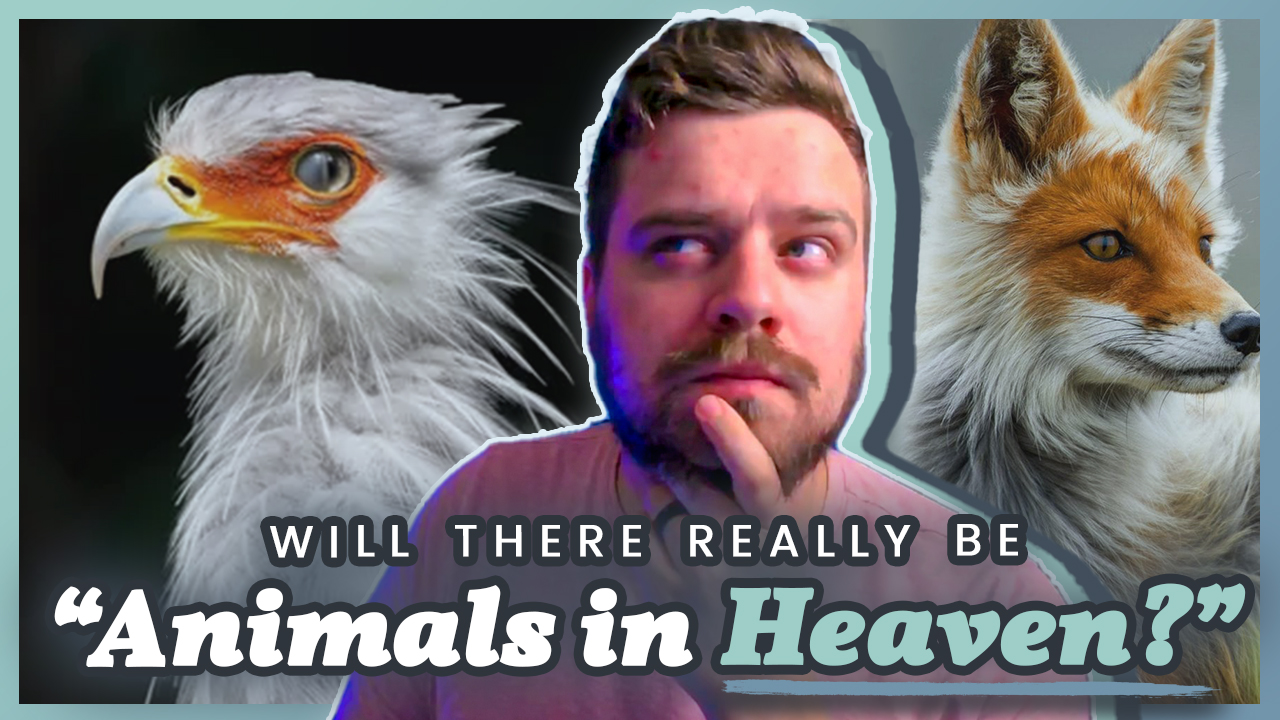
What the Bible Actually Says About Animal Suffering (And Why It Changes Everything)
What the Bible actually says about animal souls, suffering, and the promise that creation itself will be healed.
By Tim Barber··Video·Updated
Chapters
- 0:00Why Eternity Matters
- 0:47Introducing Animal Suffering
- 2:14Why Eternity Matters
- 2:46Do Animals Have Souls
- 4:19Steelman The Atheist Case
- 6:04Why This Question Haunts
- 20:09Defeat vs. Compensation
- 29:26Biblical Threads for Animal Redemption
- 31:29Cosmic Redemption Scope
- 31:49Do Animals Have Souls
- 34:23Resurrection vs Transformation
- 39:51Addressing Skeptical Objections
- 44:27Kant’s Ethics and the Self
- 46:48New Creation Hopeful Finale
- 47:04New Creation and Cosmic Redemption
- 57:03Final Reflections & The Tree of Life
If God is good and all-powerful, why do animals suffer?
It's a question that has haunted philosophers, tripped up apologists, and quietly unsettled pet owners who dared to ask a pastor what happens when their dog dies. The typical Sunday school answer goes something like: "Humans have souls. Animals don't. So their suffering isn't really an issue."
The problem? The Bible disagrees.
The Problem of Animal Pain
Atheist thinkers like Alex O'Connor have turned animal suffering into one of the strongest evidential arguments against God. And they're right to press the point. The usual Christian defenses for human suffering don't translate to the animal kingdom.
Free will? Animals don't make moral choices. Soul-making and character formation? A deer slowly dying from infection isn't becoming virtuous through the ordeal. "Ecosystem balance"? That reduces individual creatures to disposable parts in God's machine, and a loving God wouldn't operate that way.
Philosopher Trent Dougherty captures the weight of it: "Animals receive no compensation for their suffering. Their evil is not defeated."
So what do we do with that?
Animals Have "Souls" in the Bible
Here's where things get interesting. The Hebrew word nefesh, commonly translated "soul," first appears in Genesis 1, and it's describing fish. "Let the waters teem with living creatures [nefesh]." Whatever "soul" means in the biblical framework, the text gives it to animals before it ever gives it to humans.
This matters because the claim that "animals don't have souls" comes from Greek philosophy, not the Bible. It's been used for centuries to minimize animal suffering. But Scripture paints a very different picture: God formed Adam from dust, breathed His spirit into him, and Adam became a living soul. Body plus spirit equals living soul. And that same breath of life? God gave it to animals too.
Compensation vs. Defeat
There's a critical distinction in philosophy of religion between compensating for suffering and defeating it.
Compensation says: "Something bad happened, so here's happiness to balance the scales." But some evils can't be paid off like a debt. You can't un-betray a friend. You can't apologize away a destroyed reputation. The damage happened. It's real.
Defeat means something deeper. The suffering gets woven into a redeemed story where the sufferer's life becomes whole. The evil is overcome in meaning and reality. Jesus' resurrection body still had the scars from the nails. The wounds weren't hidden. They were transfigured.
If defeat is what divine love requires, and animals genuinely suffer, then animals need a future where that defeat can happen.
The Bible's Cosmic Redemption
Scripture comes alive on this point. In Genesis 9, God makes a covenant with "every living creature." In Psalm 104, animals receive life directly through His spirit. In Jonah 4:11, God rebukes Jonah's moral smallness by pointing to Nineveh's cattle. Animals are clearly within God's moral and covenantal concern.
Then there's Romans 8:22, where Paul declares that "all Creation groans as in the pains of childbirth, awaiting its redemption at the revealing of the sons of God." The metaphor is birth pains, not a death rattle. Creation groans toward something. It's pregnant with a future.
And in Revelation 21:5, God says "Behold, I make all things new." The Greek word is kainos (renewed in quality), not neos (brand-new-never-existed). God makes all things new. He doesn't make all new things. The existing Creation gets healed, animals and all.
Why This Matters Right Now
The biblical story starts with a good Creation (Genesis 1-2), follows the rupture of that goodness through the fall (Genesis 3), traces God's long campaign to reunite heaven and earth, and culminates in the full renewal of all things (Revelation 21-22). Those bookends speak to each other. What we were designed for in the beginning is what we're destined for in eternity.
If that's true, then asking "will animals be in the New Creation?" is like asking "will there be trees?" Of course. They were always part of the story.
Your beloved family dog who died too soon? Restored, healed, remade. That animal will recognize you. And your relationship with them will make what you had here look like a shadow compared to the real thing.
The Christian answer to animal suffering insists that the story is longer than the pain, wider than the wound, and that the God who called his Creation good will finish what he started.
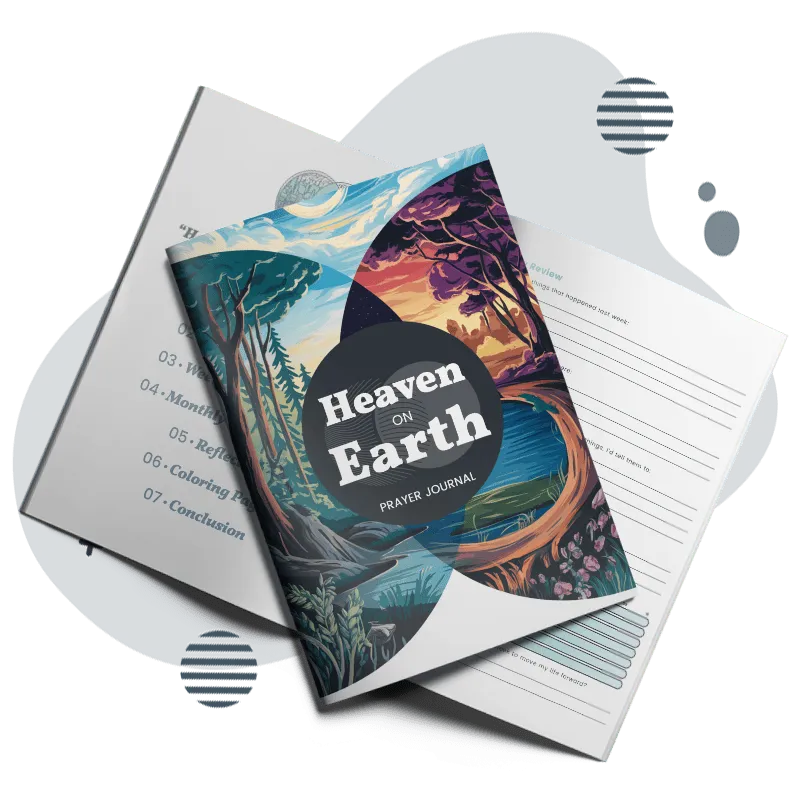
If this resonates, I'd love to help you explore what eternity really looks like. Grab the free Heaven on Earth Prayer Journal and start living every second of your life in light of what's coming.
Transcript
[0:00] I am often asked why is it that I care so much about this like eschatology stuff, the end time stuff. And if you're new here, please don't run screaming. I don't mean like rapture dispensationalism, you know, timelines of the end and all that stuff. That's not really what we're talking about. It's more the questions around like what happens in eternity and why does any of that matter? And my response has usually been some variation of the phrase, the story that you believe you are living in is the story that you will live out. [music] And we kind of understand this intuitively. If we think a certain kind of thing is happening here and that it has implications for eternity, then what we think that eternity looks like will have backwards facing implications on what we're doing here. It'll affect how we live our lives now. And I've found
[0:47] [music] that many of the non-Christians biggest problems, biggest objections to even considering Christianity, can actually be largely solved by a proper view of what the Bible actually tells us eternity looks like. One of the most interesting philosophical sort of standard questions to Christian theism is the problem of evil or the problem of pain, these various different things. An interesting twist on that is the idea of animal suffering, the problem of animal pain. And a good buddy of mine named Will Hess over on the channel The Church [music] Split, which is absolute cinema. I recommend everybody on this channel go at least check his stuff out because if [music] you like what I have to say, chances are good you'll like what he has to say. Put together an interesting video. I haven't watched the whole thing. I want to react to it live and give you my honest
[1:36] thoughts live while it's happening, countering a really famous atheists objection to Christianity on the grounds of the problem of animal suffering. And I'm wondering if he's going to take what I would take as an eschatological approach to answering that question. And there's no way out [music] but to try it and see. So, without any more uh further ado, I'm just going to switch right on over to the video with Will Hess and The Church Split. And we're going to give this a watch and see if I may pause to kind of offer some some critique or some thoughts, some pushback. Um but in general, I'm quite excited about it. In the world of theology and philosophy, the question of suffering comes up often. We call this the problem of evil. If God is real, then why is there so much evil in the world? There's a lot of really good Christian responses to this question. We have the free will
[2:23] theodicy, the heaven theodicy, soul-building theodicy, and on and on we could go. However, that's not what we're talking The problem is that some of those, depending on how you frame them up, only apply to humans. Um and so they won't apply to animals necessarily. I'm sure he brings this up, but we'll see where it comes. about today. Today we're talking about a very particular issue, which is that of animal suffering. Now, why do animals suffer? After all, human beings are moral agents, so we can make the free will case and things of the like. But why animals? Now, when I asked this as a child, oftentimes I'd just be told something like this, and maybe it sounds familiar to you. Mankind is created in the image of God, animals are not. Humans have souls, animals do not. Therefore, their suffering is basically a non-issue. Oof. Um gosh, I just think of The Last Jedi um I think of The Last Jedi quote where where Luke is talking to Kylo Ren and he says, "It's amazing. Almost every word of that sentence is wrong." Um the first line is correct, the second two are not.
[3:10] Uh humans are souls. The word for soul is nephesh, but the first time it's ever used in the pages of the Hebrew Bible, it is describing the physical bodies of fish. So, let the waters team with living creatures. The word creatures is is nephesh in the plural in in Genesis 1. So, um whatever whatever soul means, um creatures, life, all these things, it's a very deep word study. I want to do a the whole dedicated word study on the word soul for you guys because it's endlessly fascinating when you really dig into it. But just know that the first time the word appears on the pages of scripture, it's not describing the non-material part of you that lives on after you die in either heaven or hell. It's describing the entire embodied existence of something. And the first time it's used, it's describing fish. So, animals do indeed have souls or
[3:58] animals are indeed souls just as humans are. Anyway, let's keep going. However, I never found this very satisfactory because just because something's not made in God's image or doesn't have a soul, doesn't mean suddenly it's okay to torture them. They are not a moral agent. There is value within animals. After all, we all have had a family dog, Fido, who we all love very dearly. So, with that in mind, how in the world do we justify animal suffering? And what we've seen is that actually atheists like Alex O'Connor, formerly known as The Cosmic Skeptic, have been using it on things like Jubilee and other places. And what I've noticed is that not many Christians have strong responses to this. But this video is intended to be accessible to the general audience, so that way when others come here and they might find his philosophical musings too difficult to follow, they at least have a place where they can get the general idea of how this theodicy can be responded to. The other thing you're going to notice is I'm going to speak in my script here as though the world is old and we're going to give the ground of let's say God
[4:46] created through evolution and all those things. And the reason for that is because I want to give the atheist the strongest argument against Christianity as possible. The animals have suffered truly longer than humans and all those things. I'm going to give up as much ground so that way we can objectively build a case still in response to it that God and Christianity can still withstand this criticism and that there is actually still an answer to animal suffering. So, as I'm talking Man, that's really good. Yeah, I mean, you you obviously want to steel man an an opponent's position, but then you can also grant the This is This is would be kind of in more of a debate context, but you can also grant all of your opponent's premises that you want as long as that highlights where the actual point of disagreement is. And so, yeah, conceding those things ahead of time, completely normal, completely fine. This is exciting stuff. I like Will. He's a sharp thinker, man. And if you're Christian and you're a young earth
[5:33] creationist or you're creationist and you don't like me talking about pre-dating us or if you don't like the idea of millions of years or anything like that, I just want you to be aware that I am firmly stepping outside of that debate and giving as much ground as physically possible in order for us to have this conversation. Personally, I'm rather agnostic on the issue on the age of the earth or evolution and creation. And that's mainly just because that is not an area of study I particularly find interesting and therefore I just pretty much avoid it entirely. I don't think that the Bible nor Christianity is setting out to tell us how old the dirt is and you are free to go ahead and rebuke me in the comments below. But with that said, let's go ahead and jump in. Why this question won't leave us alone. Let me start with this question. And it's simple to ask but very hard to live with. Why is the world so hard on animals? It's not just hard in the sense of discomfort. I mean, predation, starvation, disease, parasites, accidents, fear, exposure, and violent death. Not as a rare exceptions, either, but as a standard feature of animal
[6:21] life. And when you zoom out beyond the backyard and beyond modern civilization, the question gets heavier. Because animal suffering did not begin last week. It did not begin with humans. It pre-dates us by an unimaginable stretch of time. If you accept modern science, the history of sentient life is ancient and the history of animal suffering is ancient with it. So, here's the problem. Christians believe God is good. Not mostly good, not sometimes good, not good in a complicated way that excuses cruelty, but good in the strongest sense. Christians also believe God is powerful, able to create I'm curious. I'm just curious where this is going to go once we kind of get into it because yeah, having a theology of creation itself as good as well is going to be very very important to this. Um and then of course there's going to be the eschatological question of like, well, then what happens to them in the end? Um I think that's where the answer is found ultimately. But then you I was having a conversation with a
[7:08] friend of mine um just yesterday about this and how uh there is a tension that I think a lot of modern Christians feel when they read Genesis 1 and 2 and they think of it as a perfect world, a perfect earth. Um but then even even people who um don't believe in animal death pre-fall and things like that, they still have to reckon with the fact that it had it had potential that wasn't realized yet. So, it was it was perfect maybe in the sense that there weren't any faults or flaws, but that it also wasn't all that it could be. It wasn't all that it was intended to become, right? There's a whole passage describing all of the beautiful raw materials like the gold and the and you know, the bdellium and the the onyx and all of these stuff and the oh, the the onyx of that area is like really really good. Um and it's
[7:57] describing raw materials that hadn't been made into anything yet. That you know, God just finished in Genesis 1 and 2. He spent all this time creating stuff. And the idea is that he's given humans over to the earth to do the same thing. He's created humans on the earth to be his co-rulers and create good things. But that they didn't really get started on that project. All they got through was basically naming the animals before the fall happened. So, >> [clears throat] >> how do we reconcile the idea of a perfect world? I'm hoping Will gets to this. We'll see if he doesn't. How do we reconcile the idea of a perfect world pre-fall with the fact that it still had potential and that things weren't as good maybe as they could have been. Like maybe it had reached the theoretical ceiling of how good it could have been at that time, but there was more pushing out of the ceiling of possibility of goodness, total existence
[8:45] of goodness being in the world that hadn't been filled yet. I'm wondering to see how he how he puts this together. sustain, govern, redeem, and ultimately renew the world. So, why would a good, powerful God create a world where so many animals suffer, often intensely, often pointlessly, and often with no visible redemption? The question is not sentimental, either. It's not just about pets. It's about wild animals and evolutionary history and nature as a system as a whole. And for many thoughtful skeptics, this isn't a side argument. It is the argument. People like Alex O'Connor have popularized a version of this challenge. Animal suffering looks like one of the strongest reasons to doubt God. Because it doesn't fit easily in the usual Christian replies to evil. If a human suffers, Christians sometimes point to free will, moral formation, repentance, love, courage against evil, community, and redemption. What about the deer
[9:33] slowly dying from infection? What about an animal caught in a fire? What about a young creature starving in winter? It didn't choose evil. It didn't learn a moral lesson. It didn't become virtuous through reflection. It just suffered and died. So, today I want to do something very specific. I want to walk through the problem of animal pain in a way that is clear and honest and then lay out a Christian answer that takes animal suffering seriously. I don't want this to be a shallow answer, not a God works in mysterious ways answer, not an answer that treats animals as background scenery. I'm going to argue that if Christianity is true, animal suffering must ultimately be answered in a way that reaches the animal themselves. And near the end, I'll recommend one of the strongest philosophical treatments of this entire question. Trent Dougherty's The Problem of Animal Pain is going to be our primary resource for further study as mentioned earlier because it develops this line of reasoning in depth with real intellectual care. But for now, we begin with the problem itself.
[10:20] So, what exactly is the problem of animal pain? When philosophers talk about the problem of evil, they usually mean this. If God is all powerful and all good, why does evil exist? There are two main versions. One is a logical version, which is is God's existence logically inconsistent with evil? Most philosophers today think the logical version has been answered. It's possible, at least in principle, for God and evil to coexist without contradiction. The stronger version is evidential, made popular by atheist William Rowe. This is This is interesting cuz it reminds me of when I was a Molinist, actually, um this was sort of the answer that that William Lane Craig gave on the problem of evil that uh sort of calmed my concerns for a while as far as yeah, well, is is God's existence logically incompatible with evil? And
[11:09] you know, again, this is sort of a classical theist sort of Molinist kind of God, the way that he was conceiving of it. Um and you know, the answer is no, which is good news. But then the evidential one always never really sit well with me. There's a um there's a an open theist counter argument here, uh but I I just remember this line of reasoning pretty well. And uh I'm I'm curious to see where Will develops it. Even if it's logically possible, does the amount and kind of suffering in the world make a God unlikely? Is the question. Animal suffering matters especially for the evidential problem because animal suffering seems both massive and in many ways not connected to the common explanations Christian use for human suffering. So, to make the challenge precise, we can say it like this. If God is perfectly loving and perfectly powerful, we would not expect the world to contain vast quantities of intense, apparently pointless, animal suffering. But the world does contain vast
[11:56] quantities of intense, apparently pointless, animal suffering. So, what do we do with that? Trent Dougherty names the key reality as a profusion of intense animal suffering and treats it as a serious datum that needs to be explained. He also states frankly that this kind of suffering seems not at all what we would expect if the world were created by an all-loving God. That's the starting point. Not denial, not minimization, but honesty that this kind of suffering seems not at all what we would expect if the world were created by an all-loving God. So, let's address the first objection. Do animals really suffer? And before we build an answer, we have to I I want to just I want to recognize that um there is honesty in that question, but and it may be an honest objection with an honest statement, but that the the assumption I can I I I can't help but think about um the biblical portrait of evil. Um I
[12:44] can't help but think about the fact that on the pages of scripture, God gets outcomes he doesn't want all the time as a result of his ongoing battle with evil in the world. Um that evil comes into the world and causes outcomes that that God is not happy about. You know, and it's important to be honest about that as well. Like the biblical witness has a lot to say to this that needs to be in allowed into the conversation even at the level of the question, but unfortunately, people don't know necessarily what the biblical uh data actually has to say. That's kind of what makes this so hard. So, um I appreciate where Will's going with this. Let's Let's see if I'm I'm hopeful that the creation account makes an appearance here soon because it's going to be pretty important. Block an escape route. That is often tempting precisely
[13:31] because it feels like it would make the problem go away. The escape route goes like this. Maybe animals don't really suffer. Maybe it's just biology, just reflexes, just instinct. Historically, some thinkers tried to argue that animals are basically machines reacting to stimuli but not having conscious experience. But most people find this view hard to believe. If you ever watch a dog in pain or a frightened animal trembling or a creature whimpering, you know the intuitive pull. Something is being experienced. And it's not just intuition. Pain, in the most basic sense, is not a math problem. It is felt as distress. It is an affective experience, something it is like to undergo. Dougherty makes this point in his discussion of pain. Don't ever intellectualize it as if real pain requires sophisticated self-reflection. Pain is fundamentally unpleasant experiences. So, if an animal has experiences, especially distressing ones, then the problem remains. It experiences pain. Dougherty argues that
[14:19] belief in animal suffering should be our default unless strong reasons defeat it. So, we proceed with the simplest, most realistic assumption. Animals really do suffer. Now, the question becomes sharper. If animals truly suffer, what would a good God owe to them? So, now let's answer why familiar Christian answers feel weak here before we get into it. Let's walk through several common Christian responses to suffering and see why animal suffering strains to answer them. The first one that is commonly brought up, why God would allow evil, is free will. The free will defense says God created humans with freedom and freedom allows for moral evil. That may explain some human suffering, but it doesn't explain most human suffering. Predators do not murder in the moral sense. Parasites don't choose sin. A drought doesn't violate the moral law. So, free will doesn't address the bulk of the data. So, one might say soul-making or character formation. Okay, so yeah, kind of um
[15:06] the the free will theodicy also needs to include that it's it's not saying that all um all evil or all suffering that takes place in the world is occurring with misused free will as a immediately preceding proximate cause. That's not That's not necessarily what a free will theodicy would say. Free will theodicy would also say that the the conditions in which we are currently operating, in which there is evil and death and destruction and chaos, uh those things are also um in the created order at this moment because of a past free will decision to disobey that introduced death and sin into the world. Um again, I probably wouldn't start there, but I just want to be precise with the argument cuz the free will theodicy does have an
[15:56] important contribution to this conversation that's beyond, you know, yeah, right, a drought does not get caused by human free will right now. But we have droughts, at least part of a Christian claim would be that we have droughts and other negative effects in the world because of past sin that ex- that brought sin and death into the world and caused the fall. So, there's more there, but we can keep chewing on it. Another answer is saying that suffering builds virtues like courage, patience, compassion, endurance, and love. Again, this may fit aspects of human life, but animals aren't engaged in reflective moral development. Can I Can I also just say that this like this eagle is gorgeous? It's so beautiful. I don't know. I just love looking at I love animal videos. I put them on at 4K. I get to find the really like bright, vivid ones. Um and I'm grateful because I think the answer to this question ultimately is very, very good news for
[16:45] animal lovers. And I I'm excited to get to it. A rabbit being hunted isn't becoming holy. So, soul-making, at least in its simple form, doesn't obviously apply here. And others will just say it's just nature. It's just ecosystem balance. Sometimes people say that predation is necessary. Death is part of life. Ecosystems need it. But notice what this does. It justifies the suffering of individuals in terms of the functioning of a system. And that's where moral discomfort rises because a loving God, we assume, doesn't treat individuals at this as disposable parts. So, we come to a core moral intuition, which is the moral center. The good must reach the sufferer. So, here is the intuition I want you to sit with, and I know it's going to sound bizarre to some Christians. If God permits an individual creature to suffer, then the goods that justify that suffering must ultimately reach that individual creature. Not
[17:32] merely others, not merely the ecosystem, not merely humans who learn lessons from seeing animals suffer. We need the sufferer to actually benefit in some way from the suffering. In other words, I mean, I kind of agree with that because it is also worth noting that I don't know. I had I had some friends here. I'm going to come back to to talk to you guys about this face to face cuz I think it's just important that we get really clear about what's happening here. But like I had some friends recently that were talking. I just kind of overheard a conversation. I walked past them. And one of them One of them said, "You know, people sometimes say that God will never give you more than you can handle." Um but but what's really real is that God will never give you more than he can handle. And it's like, you know, it's kind of like the sound bitey thing. God bless these people. I'm not judging them
[18:19] at all. I love them to pieces. But it was just kind of like okay. So, I stepped in and just kind of, you know, behind my hand was just like, "By the way, not everything that is given to you is given to you by God. Do you have a place for that in your theology, too?" You know, like um suffering is not something that God causes to you necessarily. I won't say never, but just not commonly. Like you you may freely say that everything happens for a reason, but sometimes the reason is that God has enemies that hate him and hate his people and hate everything good in the world and want to see you destroyed, ruined, and just, you know, with a severed spinal cord in a puddle of your own waste fluid on the ground, right? Sometimes that's why the thing happened.
[19:06] So, can God bring good out of that? Can God redeem goodness out of that? Sure, but to say that God allowing suffering or God causing suffering or whatever it is, um must be morally justifiable on the part of God and that there must, in order for it to be morally justifiable, be good that reaches the sufferer, I think is to sort of caricature what suffering is, biblically speaking. I'm not saying that that's what Will's doing, but I appreciate There There's complexity in this argument that I've not necessarily let him develop. Uh we're only about what, 10 minutes into this thing? Yeah. So, it's possible that this goes a different direction from here, but I would just pause there to say that it isn't necessarily true that the sufferer must benefit from the suffering in order for the suffering to be permissible.
[19:53] Um but we'll just have to see how that cashes out. >> Was the benefit must reach the sufferer. Otherwise, it looks like God is using the creature as a means to an end. Now, to be fair, many humans and animals do benefit others throughout their suffering in an ordinary life. But we're not talking about ordinary benefit. We're asking about justification, moral justification for allowing such intense suffering. If a being suffers intensely and then ceases to exist, never to have any kind of future, never to receive healing, never to receive restoration, then the suffering looks like a raw loss. And that is why animal pain hits so hard. Dougherty expresses the skeptic's intuition in a tight line. He says, and I quote, "Animals receive no compensation for their suffering. Their evil is not defeated." That sentence is devastating precisely because it
[20:42] captures what many people feel. Even if humans can sometimes grow through suffering, what about the animals who never get any answer at all? So, the Christian has a choice. Either animals are ultimately disposable and their suffering is morally tolerated for purposes outside of them, which is what my Sunday school teacher taught me as a child, or animals have a destiny in which their suffering is addressed, healed, and in some deeper sense defeated. The word defeated here matters because it leads us to the next distinction. Which is compensation versus defeat, the distinction that changes everything. Many people, when they try to solve the problem of suffering, default to a simple idea, that God will make it up to you later. That's compensation. The scales go down on one side, then later
[21:30] you get happiness and the scales balance. But that doesn't fully satisfy our moral instincts because some evils don't feel like they can just be paid off like a debt. There's a deeper category many philosophers of religion talk about, especially Marilyn McCord Adams, and it's the idea of defeat. Defeat So, before we get to defeat, we we we can understand this intuitively when we think about when people have been profoundly wronged by someone. Um like I don't know. I don't mean to drag our personal life into this too much, but like there's a person in our lives, my wife and my myself that is, and really our whole family, that we adore still, still to this day. Um but for years now, it has been an ongoing campaign of
[22:18] literal lies, uh outright slander, um assassination of my character and my wife's character, um just outright fabrications made up to imply that we have an open marriage, imply that I'm some false teacher who just wants to basically build a cult around myself. Um and we were very very very close with this person. Um we still love them and we always will. But like the fact of the matter is that you can't you can't restore you can't just compensate a person's lost reputation or a person's um if they were successful, most people have not believed this, thank God, although some people have and it's been kind of a major headache. Um but like you can't apologize for that and then have it be restored properly. Even if you went back
[23:07] to every one of the people that you told a lie to and then corrected the record, that still wouldn't be like a full restoration of compensation, so to speak. It wouldn't make things equal. You can't You can't apologize and restore a lost reputation. You can't apologize. You can't punch somebody in the arm, let's say, and then unpunch them. The The punch is still there. It landed. You did that thing. Now, they can forgive you and that's obviously Christian ethics 101 is that we who have been forgiven need to be willing and ready to stand to forgive others for anything that they've done to us. Uh and even bless those who would persecute us. But there's a there's a reason behind that as well. And that's I think I think that's where this defeat idea comes in, but I think we all intuitively understand that like
[23:56] when evil is done or when wrong happens, when suffering happens, when destruction happens, the toothpaste is out of the tube. Like that thing happened. We can't just like just make it all right again. We have There's There's more more there that needs to transpire. It does not mean that evil wasn't evil. Yeah. Defeat means that the evil is overcome by being woven into a redeemed story in such a way that the sufferer can affirm their life as a whole. This should be bringing ideas of Christ's work on the cross and how it overcame evil with good. But anyway, So, the goal here is not merely you get happiness later. The goal is that your story is healed, your suffering is answered, the evil is transformed in meaning without being denied. Dougherty emphasizes this difference and uses it to frame the
[24:42] animal problem. If animals don't have a future, their evil isn't defeated. And defeat is what love and justice require. Now, here's the key move. If defeat is what's required and if animals suffer, then animals must have a future. Otherwise, defeat is impossible. And this is where the argument begins to press toward resurrection. Yeah. Why resurrection becomes the moral horizon is that Christianity already claims something massive, that death is not the end, that bodily resurrection is real, that new creation is coming. So, the question becomes, is the Christian hope only for humans or is it cosmic? After all Yeah, okay, cool. So, I Okay. This is [clears throat] where This is where we're going to come back to Again, we got to talk about this face-to-face because can you see how
[25:30] what you believe about eternity would maybe shape the answer that you would give or even the the ideas you would reach for to explain and give an answer to this. Because if dogs don't go to heaven or, you know, if the idea is that animals are not included somehow in God's great plan to restore and redeem all all that exists, you don't have a great answer to this. Look, I mean, maybe it's kind of cringe, but let me get my book. Okay, so let's see here. You can get a copy of this, by the way, if you go to the overlapp.life, but I'm going to go to one of the chapters and start reading from what I wrote. If Christianity is for anything at all, it should be the triumphal announcement of some radically good news as a result of which the world is now a different kind of place and the future a different kind of reality. If it's worth placing your weight on, unlike your
[26:18] football team winning this weekend, or basketball team cuz we're in March Madness such as it is, it has to be a hope that overcomes, well, all of this. All the pain, all of the sadness, all of the evil, all of the brokenness, all of the crushing weight of the great destructive evils as well as the minor banal evils that beset every day, the pervading sense of pointlessness and despair and malaise and ennui that have haunted every second of the lives of every human being that exists and every human being that has ever existed in the history of the world. That sounds like a tall order. It is. We're skeptical of any claim that anything will overcome even the simple pains and foibles of our own lives. To imagine all of the suffering of the billions of humans all down throughout history, the Holocaust, the Trail of Tears, the Crusades, the Rwandan genocide, hurricanes, tornadoes, earthquakes, famine, diseases like
[27:06] malaria and the bubonic plague, whatever the hope of Christianity is, if it's worth anything, it will have to outweigh those real, weighty, and substantive evils to an infinite degree. Loving your neighbor is an excellent idea. Jesus himself said so. Being forgiven of your sins is a crucial pillar of what Christianity is about. Going to heaven when you die, while true in one very limited sense, is not the focus of Christianity. None of these is what Christianity is about. None of them represents a hope for a good future, a putting right of all that is wrong. It is the answer that Jesus gave that far outweighs the evils of the world. And so I often think about resurrection in those terms because ultimately, if if resurrection just means going to heaven when you die, there's we have this idea of a bodily resurrection and then we're like, but where does the body go? If you just think it's still in some heavenly
[27:53] realm and that the point of the story is for God to airlift us all off of the earth while he nukes it like the Death Star so that we can go up to the eternal worship service in the sky, then you're going to lose any ability to answer this question. So, if that's the mental picture that you have, then I strongly suggest you get an updated mental picture because the picture that the Jesus and the Bible give us is literally of the world itself being completely remade and reno- renewed and restored and healed. This earth, a new earth. The word for new in that in that phrase in the Greek is is not neos, which would mean like newness, like it just recently came into an existence, it it didn't exist before. It's kainos, which is more like renewed. If you have a new kitchen in a new house that just got built, then that's a neos kitchen. If you have a kitchen that's
[28:41] been remodeled inside of the old house, then that's a kainos kitchen. The kitchen itself existed in some sense before, but it's been fixed up and renewed. And that's the picture that the Bible gives us of the faith that awaits the entire created order, including our world, but not limited to our world, the whole universe, we might say. I love the line in um in Joy to the World when Isaac Watts says, he comes to make his blessings flow as far as the curse is found. How far is the curse found? Is sort of the follow-along question. And I would say it's the entirety of the created order, the entire of the known universe and beyond, if there is anything beyond, has been affected by the curse. And so, it will be uncursed. But anyway, Let's keep going. Paul, Jesus died for the entire world, and the Greek word there is, of course, kosma or entire kosmos.
[29:29] Scripture gives strong reasons to see redemption as cosmic. Let me stack several biblical threads carefully and slowly. First off, we see a covenant with animals in Genesis 9 after the flood. God does something Indeed. Oh man, this got put down to one x speed again. I got to speed him up. I thought he was going so slow, but here we go. Sorry guys, if this is too fast for you, you can also slow me down by putting me at 0.75 speed or something, but then I'll sound like I've been having a little bit too much to drink, but we got to put this we got to get a move on here. that is often overlooked. He makes covenant not only with Noah and his descendants, he explicitly makes a covenant with every living creature. That means animals are not outside God's covenantal concern. Two, God's care for animals. In Psalm 36, it speaks of God's saving care extending beyond humans. Psalm 104 portrays animals receiving life through
[30:16] God's spirit and breath. Creation depending continually on God. And this is also why we get constant pictures of the lion laying down with the lamb, a symbol of peace and God's care. We also see God's moral attention to animals. In Jonah 4:11, it is one of the most revealing passages in the Bible for this question. God rebukes Jonah's moral smallness by pointing to Nineveh and explicitly includes many cattle. That is not just a throwaway line. It shows that animals are not morally invisible to God. Number four is that new creation imagery involves animals. Isaiah 11, Isaiah 65 both depict the renewed world with animal imagery. Predation ceases, harm ceases, peace extends across creaturely life. That matters because it suggests that the future God promises isn't just a body to escape, it's a restored world. And then number five is cosmic redemption in the New Testament. Romans 8 says that all creation groans and awaits liberation. Colossians 1 speaks of reconciliation of all things. Revelation 5 depicts every creature drawing >> Uh that Romans 8 passage is basically the answer. Like if you were going to go
[31:04] to one passage for this, that would be the one. Um the whole creation groans as if in the pain of childbirth until the present time awaiting its redemption at the revealing of the sons of God. Come on, man. Like yeah. Um not much more to say. Paul Paul already said it. meaning in worship. Revelation 21 depicts a renewed creation where death and pain end. Taken together, scripture points toward a redemption that is not narrow, but expansive, not human only, but cosmic. Now, this does not prove a detailed doctrine of animal resurrection by itself, but it makes the direction possible. And the moral argument we built earlier makes it urgent. If animals suffer and if God is love, then the answer to their suffering must reach them specifically, which points toward their participation in the renewed creation. But first let's address the question, animals having souls. Let's clarify the claim. Because at this point many Christians get
[31:51] nervous because they heard the word soul. So let's clarify. Okay, yeah. Will smart. He'll he'll he'll get this right, but yeah. This is this is what gets people twitchy. Not like the YouTuber who hates Warren, but um this is what gets people kind of like shifting in their seats a little bit is like I don't know I don't know if I like where this is going, but In popular speech, soul often means an immortal immaterial ghost inside you. Okay, but that's Platonism. But biblically, especially in the Old Testament, the language of soul often refers to the living creatures as breathing animated beings, not disembodied ghosts. Dorthy observes that Genesis uses breath That's sometimes true. Um it's a it's a little hard to describe because an animal there are passages that also refer to dead animals uh on the side of the road, which in the Hebrew parlance would no longer have the spirit of God in them. The spirit left it and returned to the one who sent it.
[32:39] Um dead animals are it's are referred to sometimes as a dead nephesh, right? Uh so being a soul is not incumbent it's not required to be having the breath in you to still be called a soul. You're you'd be a dead soul. Um which is separate even from the idea of your body. There's a whole world of One of these days I really want to do like again deep dives on several New Testament words. Um sarx, soma, pneuma, and psyche. There's a whole whole lot of stuff to talk about there. Um but uh the best place to start here is in Genesis when God creates Adam. He forms his body out of the dust of the earth and then breathes into his nostrils the breath of life. The he he naphase the ruach Elohim, right? He he
[33:27] breathes into his nostrils the spirit his breath spirit wind air that's all the same word in Hebrew. Um and he became a living soul. So, it's almost like the claim is body plus spirit equals living soul. Um and then once it's been made into a living soul, when the spirit leaves it, it's now a dead soul. Um So, but there's a lot to this. It's we'll see how it goes from here. of life language in ways that do not give us an easy wedge between human life and animal life. But he says there is no reason to drive a wedge between them. In other words, scripture presents animals as living beings whose life comes from God's breath, and that gives us at least a foothold for treating animals as real subject of God's care and possibly of God's future. You do not have to settle every metaphysical question to accept the basic conclusion. Animal suffering is morally significant and divine goodness would require an answer that reaches animals. Also, we can acknowledge that animals are told that
[34:15] they have souls in scripture. After all, that same word is used for both. And we also see that the breath of God is put both in man and in animals. So now let's talk about transformation. Why just resurrection might not be enough. So now we're going to push one step further and this is where things can get kind of bizarre for those who are new to this idea. Even if animals are resurrected, does that alone defeat their suffering? Here's the difficulty. Defeat is not just you exist again, defeat is the integration of suffering into a redeemed whole. But for that the creature needs some capacity to receive the good that answers the suffering, healing, joy, restoration, and perhaps even understanding appropriate to its nature. Dorthy's provocative short hand for this is the idea of animals being deified and even talking animals. Not as a child's story, but as a way to imagine creatures elevated into a richer participation in God's life within the new creation. This connects to the Christian doctrine called theosis, which is participation in the divine life to put it shortly. Even if you're not Eastern Orthodox, Uh all that is so good. Okay, just stop and think about I like the invocation of
[35:04] Narnia here in the background because yes. Now, does it mean that all of the animals suddenly, you know, develop the facial structure and and labial ability to speak in human languages like English? Maybe not. Do we in turn maybe gain the ability to communicate with them? Possibly. Um but I'm interested in why why language is It's kind of funny cuz language is enormously powerful, but it makes you wonder why that is included in the um in the equation for what would require or what would constitute a defeat of evil on the part of the animals like for the animals' sake. This is kind of thing that makes me makes me think. Um cuz like a restored uh owl literally does not have the the lip shape doesn't have a lip at all. It doesn't have the lip shape to be able to
[35:52] speak English. Um but is it reducible to it's alive again, never again to die, and it is made physically speaking to be all that it was possible that it could be? In perfect health, nothing broken, nothing wrong, nothing faulted or nothing flawed. I'm just just kind of an interesting thought. I wonder why speech is included. But anyway, like like if the knowledge of the Lord will cover the whole world as the waters cover the sea like it says in Habakkuk, then it is a reasonable inference to draw that the created order will be permeated with God's presence in the same way that glorified humans will be permeated with God's presence. If the whole creation is glorified, then that would include whatever exists inside of that creation. And if the infer inference drawn from the earlier passages are that animals are included, then they are in included in the glorification. The whole world is
[36:39] prepared to be able to exist in the state of God's fullness of presence, which requires its glorification. Anyway, we'll see. The Bible itself speaks of participation. In 2 Peter 2:14, it describes becoming partakers of the divine nature. The Christian end is not merely survival, it is glorification. So if animals are included in the redemption, their inclusion may Sorry, I said said that because good old good old whatever we're typing in has got us glory education instead of glorification, so it's all right. It will I also I also edit my own [clears throat] videos for now and it's can be a hassle. Bible, it is glorification. So if animals are included in redemption, their inclusion may involve transformation. Just as we ourselves will be transformed in the new creation, which is an elevation into perhaps a fullness of life that answers their suffering. This isn't saying animals become humans, it's saying God may raise animal cognition into the fullness of what they were always meant
[37:26] to be. And if that is true, then animal suffering is not meaningless. It is part of a world whose end is glory. Now, we need to engage objections because this is where skeptics will push hard and perhaps even Christians. But the idea here is simply that God might not just resurrect animals, but we don't know what the new creation is going to look like. He might do a transformation to them just as he does to us that allows them to both understand and appreciate and their I I don't think that that's that controversial a claim if you're taking the Bible seriously. Like the only reason that you would as a a separate conclusion. Right? Like if you if you were a full-on Platonist who wanted to try to find a way to syncretize that with Christian theology, then you might still walk away thinking that the physical world is mean and and and crude and lesser such that um theosis as we might say being made more
[38:16] God-like or being healed uh the way that Michael Heiser put it was um becoming as much like God in Christ as possible without becoming another member of the Godhead. That's what we're des- what's what we're destined for in him. Um if that doesn't include the created order experiencing something similar after its own kind, then you know, I think that's the biblical claim, but you'd have to have some other view of of what that means in order to get to that that problem. Cuz the Bible is actually quite clear about this. I don't think it's all that controversial if you just examine the evidence. It's pretty clear that the Bible is describing the res- restoring and healing and renewal including all animal life. Because God made it in the beginning and called it good. And then if Revelation 21 and 22, the last two chapters of the Bible, and Genesis 1 and 2, the first two chapters
[39:03] of the Bible, mirror each other and speak to each other and are in dialogue, then I don't these are literally we are returning to in some sense what we were designed for. We are destined for what we were created for in the very beginning. And that's true of the entire cosmos that God made and called good in the beginning. That's the point of the bookends of scripture speaking to each other like that is that Revelation 21 and 22 are telling you that what's coming is the fulfillment of what was originally in the story in the beginning. What we were designed for in the beginning is what we're destined for in eternity. And it's just quite clear. It's not just us, but the whole created order. That's my point. >> port give and thanks to God is some ways he performed. After all, it does say that all creation also praises him. So, it does seem like there's even a possibility that animals in some ways perform have a relationship with God themselves. Yeah. Let's go ahead and
[39:50] start addressing some pushback from skeptics, especially with Alice a counter style objections. Let's take the skeptical argument seriously. Objection one, animal suffering is gratuitous. Gratuitous means suffering that serves no morally sufficient purpose. And the skeptic's point is often, even if some suffering could be justified, surely not this much. Surely not this kind. Surely not across millions of years. Despite the fact that this is sort of an appeal to some sort of invisible standard of what evil even is or what suffering is without God. Let's lie in a key response here. To say suffering is gratuitous is not merely to say I don't see the reason. It is to say that there is no possible morally sufficient reason. That is a much stronger claim. Because you would need to know not only what goods exist now, but what goods could exist in an afterlife, and what goods could exist in a renewed creation, and how those goods might reach the sufferers. If Christianity is false, >> Yeah, it's it's the difference between the the the positive claim of the atheist that there is no God, atheos, right? And there is no God. Versus the
[40:40] agnostic's more modest claim of I don't know if there's a God or not, or to say that um no one can know. That's maybe the stronger version of the agnostic's claim. Um but like the precision of what the claim is. To say that the evil is gratuitous, if we took that to mean that there is no morally sufficient reason, and I'm making a positive claim, I I possess sufficient knowledge to make the claim that there is no good reason for suffering. And again, I God isn't the one causing the suffering, but um I don't know. This gets into people's theodicy questions as well, but um people need to really think precisely about theodicy in general. Um sin, death, and evil entering into the cosmos was not God's idea. Uh and he's not the one sustaining and and effectuating it every minute. Um there
[41:27] are beings that hate God and hate life and hate everything that's good and beautiful and all order and want to destroy the world and drag it back into suffering and chaos because they hate God. And it's worth mentioning that, too. But it's kind of interesting. Like people frame up arguments has a huge huge impact on how they answer those arguments. >> The objection has certain force because death is the end and nothing answers the suffering. But, if Christianity is true, death is not the end. So, the evidential weight of animal suffering depends heavily on the truth or falsity of resurrection and cosmic redemption. And that doesn't make suffering not a problem. It means the logical space of the problem changes. This is exactly why Doherty insists that if animals are not compensated and their evil is not defeated, we have a severe problem. His answer is not to deny the force. It is to say the story must be longer. There must be resurrection for animals. Someone else might say that animal afterlife is simply ad hoc. They say, "You're inventing an animal heaven to
[42:14] patch your worldview." But, here is the reply. Christianity already includes bodily resurrection. Christianity already includes new creation. Christianity already uses cosmic language of all creation, all things, every creature, cosmo, the whole nine yards. So, the question is not whether we are inventing something out of nowhere. The question is whether we are following the implications of what Christianity already claims about God's justice and love. Doherty puts a conclusion in a very blunt conditional, that if God exists, then animals will be resurrected and deified. Notice, the claim is not this would be nice. It's this is what divine love implies. Objection three would be It's what divine love implies, and it's what scripture commands. It's what scripture makes very clear. If we call ourselves Christians, this is why it's so important to be actually in tune with what scripture says and not over depending upon things like systematic theologies or the teaching of certain people because people get things wrong all the time.
[43:01] We need to be able to we need to have the the skill set required to be conversant with our own scriptures and the world view that they espouse. And if we don't have that ability, we need to get that ability if we're going to make any claims to represent what Christianity teaches on the matter. Um because yeah, it's very very easy to to to bungle this if you don't understand the subject matter you're actually talking about. And that would be that would be a shame. God could have made a gentler world. This is a deep objection. Why design a world where predation and disease are built into the system? So, we have three thoughts. First, we should be cautious about assuming we know what forms of embodied life are metaphysically even possible. A stable world with consistent natural laws may require vulnerability. Second, a world with complex ecosystems may require competition, limitation,
[43:48] mortality, and risk. Third, and this is actually the most Christian point, Christianity doesn't merely promise a world without pain. It promises a world where pain is defeated through redemption. Romans 8 uses groaning language and birth pain imagery. That doesn't prove the details, but it suggests suffering is not meaningless. It's part of a creation moving toward liberation. So, the Christian answer is not suffering is fine. It's suffering is not final. Objection four, even if animals get happiness later, you still use them as means. And this is why compensation versus defeat distinction really matters. If the answer were merely, "Here's happiness," it might still feel like payoff. But defeat implies something deeper. The creature's life becomes an organic whole that is worth affirming, in which suffering is not denied but overcome in meaning. This is the kind of answer love would give. So, now let's go ahead and discuss Kantian ethics, the self, and why reduction fails. [laughter] And I want this to be very audience friendly. So, now I want to address a philosophical issue that seems abstract, but actually matters a lot here, the nature of the
[44:36] self. Because if we're going to talk about suffering being defeated for the sufferer, we need a stable sense of who the sufferer really is. So, let's talk about Kant. Briefly, clearly, and fairly. Kant did not deny that we have a self. What he argued is that we cannot know the self as a metaphysical substance, like a simple immaterial soul, based purely on introspection. He said, "I think accompanies experience, but it doesn't automatically reveal an immortal soul substance." Now, why does this matter? I personally do not subscribe to Kantian philosophy at all. However, I do think we should still address this. Kant's moral philosophy tends to locate full moral dignity in rational autonomy, beings capable of moral, rational deliberation, and responsibility. Animals in Kant's framework are not moral persons in the strict sense. This goes back to my Sunday school teacher. This creates tension because our moral outrage at animal suffering is not mainly outrage that we might become cruel. It's outrage at what they endure. And that outrage depends on This this feels beside the point, but you know, I'll let Bro Cook. Let's see. recognize the animals as real
[45:23] subjects, not merely instruments. Here's the deeper point. If you reduce the self to something thin, a mere function, a mere stream of experiences, a mere arrangement of matter with no enduring identity, then suffering itself loses the shape that makes it morally urgent. Because suffering is always someone's suffering. The moral seriousness of pain presupposes a bearer of pain. The subject endures across time at least enough for harm to be meaningful. So, here's what animal pain does to certain ethical frameworks. It exposes that we already treat sentient subjects as morally significant even when they lack rational autonomy. And once you grant that, you have moved beyond the strict Kantian boundary. You are admitting that suffering itself matters because it happens to a subject, not merely because it affects rational moral agency. And once you grant that animals are genuine subjects of experience, the earlier moral intuition returns. If God permits their suffering, the answer must reach them. So, the problem of animal pain pushes us toward a thicker ontology of creatures, not merely as biological events, but as morally significant
[46:11] subjects. I did not I did not wake up this morning thinking that I was going to hear the phrase, "We need a thicker ontology of creatures." Uh but here we are. That's That's a good one. That's a That's a pretty uh You know, forgive the the double entendre on a few different levels here, but that's a pretty beefy line. I like that a lot. Let's go back and and listen. Let's listen to that again. >> The answer must reach them. So, the problem of animal pain pushes us toward a thicker ontology of creatures, not merely as biological events, but as morally significant subjects in God's world. And that is exactly the kind of metaphysical space in which resurrection and defeat makes sense. So, let's discuss the larger theology of creation and redemption here. At this point, let's take the step back and simply ask, "What kind of Christian story are we actually telling?" Sometimes Christians speak of salvation as an escape hatch. Earth is bad, heaven is good, so we leave. But the Bible's arc is actually
[46:58] different. The Bible begins with creation called good, and it ends with new creation. Revelation See, I would have started here because I think this answers the question. Um I don't know. It's kind of funny cuz my video is going to be like almost an hour. His video is like 30 minutes. I think we could answer this question in about 5 minutes, 10 minutes if we just used this and started here. does not end with souls floating away. It ends with a world renewed, heaven coming down, God dwelling with humanity, death abolished. And in that final vision, that point is not that materiality is discarded. The point is that corruption is removed. So, what would we expect if that story is true? And actually, it's it's it's actually even stronger than that. Materiality is not discarded. It It's like he The way he just said it was not precise enough. And in that final vision, let's see. What it What was it that it was said? It's not that The point is not that material materiality is discarded.
[47:47] Actually, the point is that material materiality is not discarded. Like let's negate the proper part of that sentence. The point is that materiality is not discarded. >> point is that corruption is removed. So, what would we expect if that story is true? That if creation has a subjective vitality, creation will be liberated. That if all creation groans, all creation will participate in the joy. That if God covenants with every living creature, God will not abandon them. This doesn't mean we have a full map, but it means that the Christian imagination should be bigger than humans only. So, this is what a good God must do, or at least this seems to be the claim. Now, I'm going to say the key claim as simply as I can. If God is perfectly loving and perfectly just, then God must ultimately defeat animal suffering for the animals who suffered, not merely ending their pain, not merely compensating them, but by giving them a future in which their life is redeemed as a whole as well. Doherty captures the urgency of this by insisting that animal evil must be defeated, not left without answer. And he builds to the conclusion
[48:34] that divine justice implies animal resurrection and transformation. And he makes a sweeping statement about moral necessity. There is no possible world in which creatures suffer and are not given full opportunity for compensation and recovery. Even if you don't accept every word of that claim, you can feel the moral pressure. If suffering is permitted by love, love must answer it. So, what should Christians do with this? Well, there are several practical implications here. First, we should stop using shallow lines about it's just nature as if that settles anything. Second, frankly, we should stop doing that sort of thing anyway. Shallow lines don't help anybody. Uh not us, not other people. We need to be, you know, brave enough to think deeply about things that make us uncomfortable in order to give proper answers to things. We should recover a theology of creation that honors animals as God's creatures, not just props. Third, we should let this question deepen our hope. Christianity is not only about forgiveness of sins, as central as that is. It's also about the renewal of the
[49:22] world, and the world includes creatures. And that is why Christ's resurrection is the firstfruits of the new creation, so that way we might later all arise with him. Fourth, Christians should lead in compassion toward animals. Not because animals are our equals in every sense, but because they are God's, and their suffering matters. So, let me summarize the entire argument in very plain language. Animals suffer intensely. That suffering is often not connected to moral agency or soul making. So, animal pain creates a sharp evidential challenge to theism. A good God would not treat suffering creatures as disposable means. Therefore, the goods that justify suffering must reach the sufferer. Compensation is not enough. Evil must be defeated. Defeat requires a future for the sufferer. So, if Christianity is true, with resurrection and new creation, the moral horizon expands. Animals, too, may have a future, a resurrection, and a transformed participation in redeemed creation. That doesn't make the problem trivial, but it makes the Christian story large enough to answer it. If you
[50:09] want the most rigorous philosophical development of this line of thought that I've encountered, I recommend Trent Dougherty's The Problem of Animal Pain A Theodicy for All Creatures Great and Small. It treats the problem very seriously. It refuses to minimize animal suffering and presses toward a robust conclusion. Whether you agree or disagree with this, it is a model of how to face a hard problem with intellectual honesty and moral seriousness. Now, I will warn you about Trent's book. He uses a lot of Bayesian theory in order to justify his points. Remember this, if God is love, what does that mean for the creatures who suffers unseen? The Christian answer cannot be smaller than the suffering. It must be as wide as creation itself. So, there you have it. There's your new creation theodicy for why God would allow animal pain. Because it shows that God will not only resurrect them, but also transform them into an elevated and richer form of life. It doesn't mean that you have to affirm that this becomes Narnia and all the animals start walking around and talking. But, it doesn't mean that you can start valuing animals for what they are, which are beautiful creatures of God's creation. And that in the end, God will wipe every tear from all of
[50:55] creation's eyes, and he's going to restore all of us. I hope this video was helpful for you in responding to atheists who might be bringing up the question of animal suffering. I also hope that if you're an atheist and you listen to this, this might be a more robust and clearer answer than maybe some of the answers you've been given, or that even I was given back in Sunday school. I find this to be actually logically consistent, and also allows us to be a little bit more hopeful about the future of animals. Anyhow, guys, I'll see you Man, you know, like it's it's almost like hope for the future is a central and important aspect of what God's own word wants us to have when it comes to our reckoning for our own lives and the other things that are taking place in the world. Uh it's it's almost like that's a central feature of what he came to give us when he entered into the world as as Jesus to come and rescue us and restore the earth. Is that it was like the healing that he did was an illustration of the message, which was
[51:44] that he has come to do this for all the cosmos, for all that exists. He's come to set captives free, to bring res- restoration and healing not just to this world, you know, not just to humans, I should say, but to the entire world. So, I'm going to do the uh the the old wheelhouse has thing. I don't know if you know, but I actually wrote a book about this. Um the truth is that like the biblical framework of heaven and earth united in Genesis 1 and 2, torn apart in Genesis 3, partially overlapping through temple and Jesus and the church, and then fully reunited again in Revelation 21 and 22 is what gives this idea of animal redemption a home. This is not just a a bolt-on theodicy. It's a It's a very important aspect and implication of what the whole point of the story has been driving toward. All right, Will
[52:33] says that the story must be longer. He's right, but the biblical narrative here is shows why the story was always this long and why it's always been about the restoration of all things. There's a really powerful image of what we talk about when we are describing defeat of evil, the defeat of evil. And it's the the tree of life by four Mozambican artists. It's It's a little difficult to describe, but you can just sort of look at it, okay? And here's this image. Uh we'll see if we can zoom in yet even further. It's this It's called the tree of life. And it's this beautiful sculpture of of animals and the tree of life in this beautiful kind of restored, healed uh world. And it is entirely made up of decommissioned machine gun weapon parts that were from 600,000 recovered uh
[53:22] recovered machine guns. So, these were machine guns from a civil war that were literally reforged into an art installation honoring the tree of life. God doesn't paint over suffering or sweep it under the rug. It's It's more like that the raw materials of pain and suffering become the fuel for what Jesus is doing next. Jesus still had holes in his hands after the resurrection. Animal suffering isn't reducible to being answered in the new creation. It's transfigured. The groaning of creation is is instead of being erased from the story, um which would be compensated, basically. It It becomes part of the story's beauty. And again, depending on if Will phrased it this way or if if Mr. Dougherty phrased it this way, it could be could
[54:08] be different, but I believe I remember hearing something about like the concept of does God owe animals a future? Yes, therefore, you know, resurrection includes them or something like that. But, it still feels like a debt and payment framework, which is kind of ironic for Will in particular, because his book uh Crushing the Great Serpent is is a really good refutation of that kind of thinking in sort of the atonement conversation. Different Different thing. But, I think the whole question can kind of be reframed. It's not so much about God owing animals something. It's that the ending of the biblical story is the reunion of heaven and earth, and animals were always a part of earth. So, God makes all things new, not all new things. If the earth itself is res- restored rather than discarded, then asking will animals be there is like asking, you know, will there be trees? It's just baked into the premise. And this gives another very interesting
[54:58] cast on the present moment because of the fact that what we were designed for in the beginning in Genesis 1 and 2 is what we're destined for again in the end in Revelation 21 and 22, which recasts the entirety of the story now that we're living in now with some continuity. The central claim of my book is that heaven and earth were once totally united. The fall separated them. God has been bringing them back together and intends to complete the job one day. So, if heaven and earth are already partially opera- overlapping through Christ and the church, if Christians are already creating these little pockets of that overlap of heaven and earth, then compassion toward animals now isn't, you know, this is some ethical window dressing for something in the present time. It's It's going to be more like participation in the advance of the new
[55:45] creation. So, yeah, Will's right. Christians should lead in compassion toward animals um beyond simply, you know, be nice to animals because God will fix them later. Compassionate treatment of creation is part of the kingdom advancing. And yeah, I was I wasn't a huge fan of the Kantian section, but that's fine. That's not That's just not my uh That's not my world. I don't see any reason to even engage in uh Kantian ethics or anything like that. Oh gosh, and then there's the whole idea of reward as well. This sort of cat puts the whole uh conversation in yet another cast, yet another nuance. Like, if God promises rewards to humans who suffer faithfully, and Jesus himself doesn't rebuke Peter for asking, "What then will we have? You know, we who have followed you and all that, right?" Uh in Matthew 19, then the logic of reward for suffering is already embedded in the
[56:34] biblical narrative, certainly for humans, but extending it to animals is a stretch. It's It's the same God operating by the same character. The God who says, "I am here. My reward is with me." is the same God who, we might say, covenants with every living creature. So, yeah, from my perspective, the the problem of animal pain is only a problem if you don't understand Christianity. And Will put a really, really good spin on this. He He made a very good answer, but it's it's not a puzzle to be solved. It's It's a chapter and ongoing important footnote in a chapter of a story that has been told from the beginning and is headed somewhere fathomlessly magnificent. So, um But, yeah, I love I love when anybody talks about new heavens and new earth stuff um because I just candidly do not think that the Christian world can ever get
[57:23] enough of that. It's It's what we're made for. And I intend to do more of this. So, you know, Will, if you want to make more uh videos for me to respond to, then I would be very, very excited about that. But, this one was a lot of fun. So, um it's important for you to know that your that your pets, even the by identity, by name, are going to be remade. Because in the very end, let's go Let's just go to the passage. Let's just go right to it. I don't necessarily know why this is so zoomed out. Let me try to zoom in a little bit, but and I saw ouranon kainon, heaven new, kainos. There's that word we've talked about, right? And an earth new, kai gen kainin. Again, there's some really beautiful uh poetry here. But, new in the sense of having been remade. Then it continues on, if we just move forward in the passage a couple verses here, you go to
[58:11] 21:5, and the one sitting on the throne said, "Behold, kaina poio panta. New I make all things." And he says, "Write this down because these are the words faithful and true are. These words of mine are faithful and true." Now, again, doesn't It doesn't mean I make all new things. And if it were, it would be neos, not kainos, again, in usage here. New freshness, new in quality, fresh in development or opportunity, because not found exactly like this before, we might say. Refreshed, recently remade. Right? Not neos is like there's a new This thing doesn't didn't exist before. Anyway, I don't want to sit here and bog you guys down. The point is uh that God says that he's going to make
[58:59] all things new. So, there's a there's a there's a referent of all things, and those all things are going to be renewed. I think, based on earlier chapters in Revelation, that by this time, all that exists that was in opposition to God has already been dealt with and judged and passed out of existence. Again, this gets into your concept of hell and your other views on other doctrines, right? But, by that time, those things no longer exist, I think in the biblical record, which would mean that all that remains now is going to be healed and all that existed before that that was in was not in opposition to God will have its life restored and redeemed and given back to it. And so, you know,
[59:46] again, we may you may think I'm being fanciful here, but I think that this is a really important inference based on all of this thought is that that would probably include not only the animal kingdom but dinosaurs. Um that would include people from cultures that none of us have ever been able to interact with, languages that we've thought of as long dead. Um all of these things are are coming back as far as I think this uh the implications of this go. Um which Yeah, I don't see any reason not to invoke a little bit of Narnia here uh just between you and me. So, anyway, this is this is entirely too long now. I've enjoyed this thoroughly. Uh Will, thanks for the video, brother. You you did great. And um we need more people talking about this stuff. I think Christianity needs this and and Christians need this to re-enchant them with hope. Your pets will be remade. The beloved
[1:00:34] family dog who died in some awful accident that shouldn't have uh is going to be restored and remade and healed and given back to you. And he'll recognize you, will know who you are, and and your relationship with that animal will be even more beautiful than it was here. Your your relationship with that animal when they were when they were alive, when they were here, will pale in comparison [music] as a shadow does to the substance of the real deal for the kind of relationship that you'll have with that creature in the entirety of the new heavens and new earth for eternity. There's no reason to believe that uh the Bible is claiming anything less. [music] And that's part of what makes this part of the story so dang beautiful. So, this was great. As the unicorn himself said in uh the last chapters of the
[1:01:23] Chronicles of Narnia in the last battle, come further up and come further in. >> [music]
Tagsanimal sufferingnew creationtheodicyromans 8resurrection