Hope for the Hurting, Doubting, and Broken
Five kinds of hurting people, one bigger resurrection hope that reshapes ordinary, everyday life.
By Tim Barber··Video·Updated
Chapters
- 0:00The Easter Hope Lie
- 1:22When Monday Still Hurts
- 3:30Escape Theology Problem
- 5:08Resurrection Restores Earth
- 6:05Naming Five Pain Patterns
- 7:26Theological Pioneer
- 8:10Wounded Warrior
- 9:41Ragamuffin Church Hurt
- 11:31Faithful Doubter Shame
- 13:16Kingdom Builder Meaning
- 17:19Quiz And Community Invite
- 20:37Living Overlap Hope
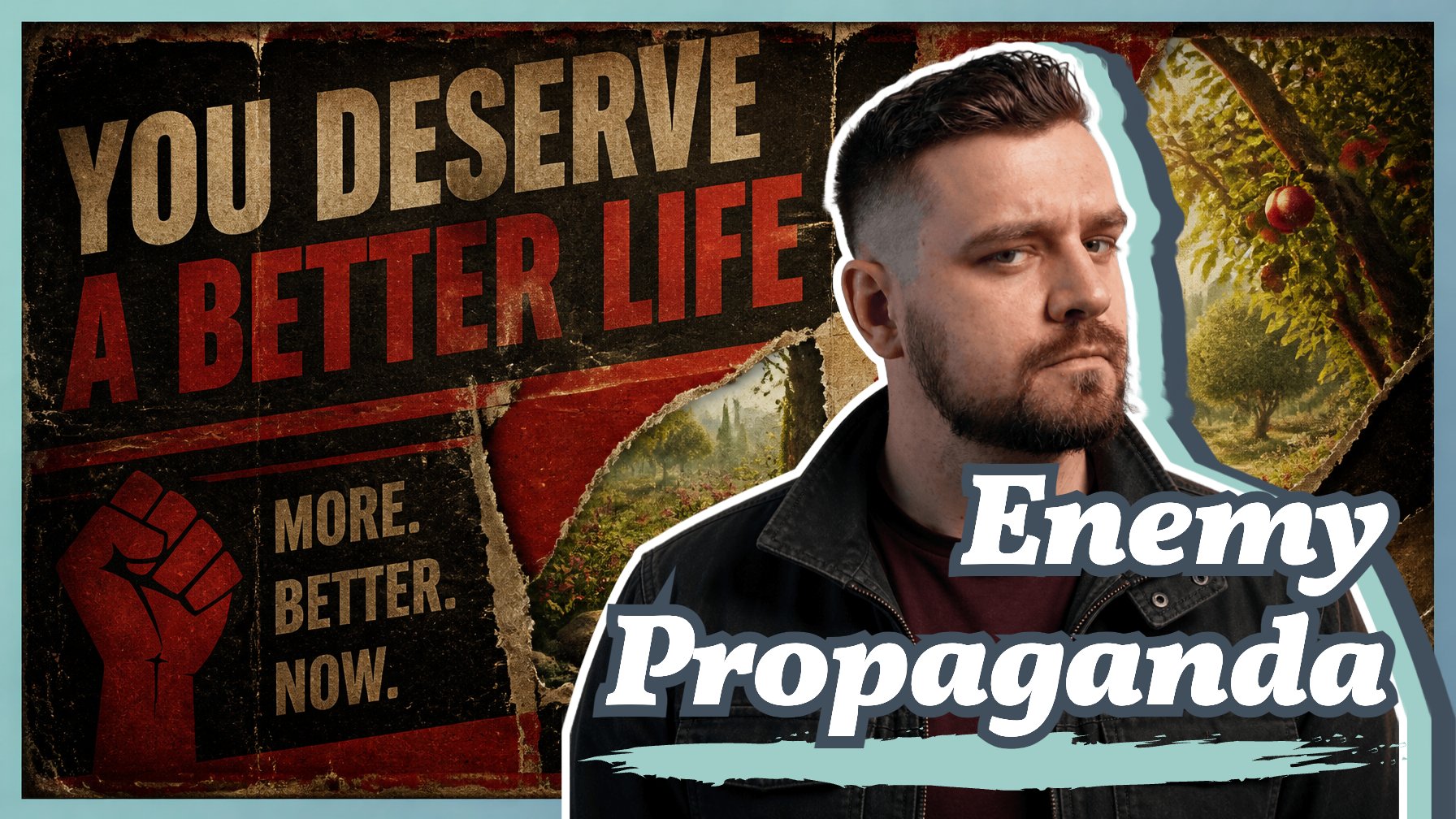
Easter came and went last month. Churches were packed. Songs were loud. Families gathered. And for a lot of people, Monday morning showed up carrying the same weight it always does.
If that was you… if Easter felt more like a celebration you attended than a reality you inhabit… I want you to know something. You are reacting honestly to a version of Easter that has been made too small.
The Problem With the "Escape Plan" Version of Easter
A lot of Christians have absorbed a version of the resurrection that goes like this: Jesus rose from the dead so that one day we can leave this broken world and go somewhere else.
That sounds comforting. But if that is the whole story, what are you supposed to do with your grief today? Your doubt today? Your church hurt today?
If resurrection only means departure later, then pain becomes something you merely survive.
The Five Types of People Living in "Hell on Earth"
Over the past several months, I have noticed five specific types of people who keep finding their way into my orbit:
- The Theological Pioneer • whose picture of God collapsed under the weight of real thought
- The Wounded Warrior • whose pain broke their world open and their theology could not hold it
- The Ragamuffin • who still loves Jesus but feels exiled from the people of Jesus
- The Faithful Doubter • who is quietly scared by their own questions
- The Significance Seeker • who wonders whether ordinary life carries any eternal weight
Each one is carrying a specific lie about God, themselves, or the story they are living inside.
What the Resurrection Actually Promises
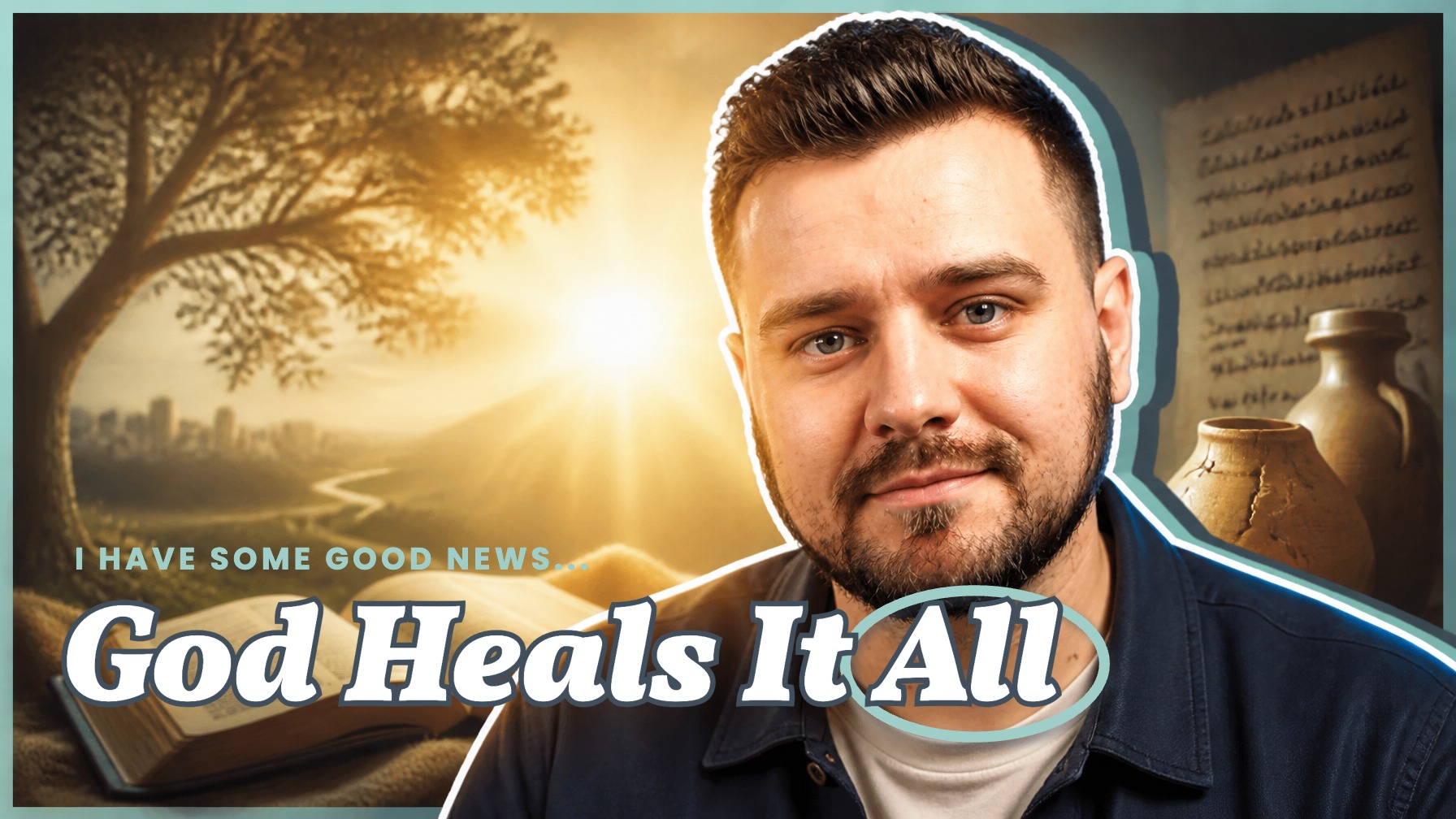
The resurrection of Jesus was an invasion. The first crack in the brokenness of this world. God's declaration that creation itself is worth saving.
Romans 8 tells us that creation is groaning toward resurrection, not destruction. Revelation 21 and 22 show us where the whole story is headed: heaven coming down, God dwelling with humanity, tears wiped away, death undone, all things made new.
That means your pain is temporary. Your tears matter. Your body matters. Your ordinary Tuesday-morning life carries eternal weight.
The Future Reorganizes How We Live Now
If Jesus is risen and new creation has already begun, then you are already learning to live in alignment with the world that is coming. You forgive because forgiveness belongs to that future. You make beauty because beauty belongs to that future. You resist despair because despair does not get the final word in that future.
This is what I mean when I say Overlap Life. We are living in the overlap between the world that still is and the world God has promised to bring. You can hurt honestly without surrendering hope. You can grieve deeply without calling death normal. You can build a meaningful life in the present because the future is solid, it is coming, and it has a name: resurrection.
Your Next Step
I made a full video walking through all five types, the lies they carry, and the resurrection hope that answers each one. I would love for you to watch it.
I also built a brand-new quiz called "Which Lie About God Is Secretly Ruining Your Life?" It takes a few minutes and will help you identify the specific distortion shaping your experience of God. Take the quiz and discover your path forward.
Transcript
[0:00] We just finished celebrating Easter not that long ago, but I'm seeing a massive lie quietly ruining the faith, the joy, and the peace of millions of Christians, and Sunday morning often makes it worse. It goes something like this. This world is broken, but Jesus rose from the dead so we can eventually escape it and go to heaven to be with him forever. The problem is that if you're hurting or grieving or wrestling with any serious pains or doubts right now, that message doesn't actually give you a lot of hope. It just makes your current pain feel meaningless. The resurrection of Jesus was an invasion, the first crack in the brokenness of this world proving that God's ultimate plan is to bring heaven to earth and restore everything again. If you're feeling spiritually homeless
[0:48] right now or weak and weary, stick around. We're going to look at what I've come to discover are basically five types of people that are carrying this pain, and we're going to take a nice, long, loving look at the hope, the real hope that changes everything. So, let me take you back to Easter. Churches were full, songs were loud, people got dressed up, took family photos, heard a sermon, ate a meal, and then moved on with the rest of their day. And I do not say that with any cynicism. I get it. Easter weekend is full. We had a great time, too. It's beautiful. It is meaningful. It's chaotic, but I also think a lot of people just whirlwinded right past the empty tomb without ever really pausing long enough to ask what it actually means. They heard, rightly, that Jesus is risen. They heard that death has been
[1:36] defeated. They heard that hope is alive in him, and all of that is gloriously true. But then Monday morning comes, and maybe their grief was still there. Their fractured marriage was waiting for them in the car on the on the ride home, and their disappointment with church or their community not really being a community was still there. The fear was still there. Their questions were still there. Their bodies still hurt. Their jobs still felt small. Their prayers were still felt unanswered. And because of that, Easter can start to feel like a a celebration you attend instead of a reality you inhabit. It certainly doesn't feel like the new reality that Christians are supposed to be living in is in any way shaped by by Easter or what we talk about at Easter.
[2:23] So, for a lot of people watching this, Easter Sunday didn't feel like a victory lap. It felt like an emotional collision. You're trying to sing about life while standing in the middle of loss. You're trying to celebrate hope while just sort of wondering whether God is as good as you once thought he was. You're trying to smile in a church congregation while carrying a private ache that nobody else in the room can really see. And this is, I think, one of the reasons that so many hurting Christians just feel spiritually disoriented. They They're handed language that sounds triumphant, but they're just rarely shown how the resurrection speaks to the exact shape of their pain today and gives them hope for it going away in the future. So, they begin to assume or often they begin to assume that the problem must be them. Maybe they're just too broken. Maybe they are too skeptical. Maybe they're
[3:12] failing spiritually. Maybe everyone else got the point and they somehow seem to have missed it. Now, I don't think that that's what's happening. I think a lot of people are reacting honestly to a version of Easter that has been made too small. When the message becomes thin, people with real wounds aren't going to be able to live inside of it for very long. And another another thing is that a lot of Christians, maybe even without realizing it, have absorbed a version of the resurrection that goes something like this. Jesus rose from the dead so that one day we can leave this broken world and go somewhere else. And that sounds kind of comforting on the surface. It certainly sounds pious and spiritual. And it sounds familiar for a lot of us, but if that is the whole message, then what are you supposed to do with like today? What are you supposed to do with your grief today?
[4:00] What are you supposed to do with church hurt today? What are you supposed to do with the fact that your faith feels fragile today? What are you supposed to do with the crushing sense that this world is still deeply wrong and something is broken? And if resurrection only means departure later, then pain becomes something you just got to grit your teeth and survive right now. It becomes something that you just kind of leg it out until God finally pulls you out of the fire. I think that is too weak. It's too small. And I really do believe that it leaves a lot of Christians stranded in what feels like hell on earth. Because if your faith only has categories for forgiveness of sin and then eventual escape, getting airlifted to heaven while God plans on nuking this place like the Death Star, then it we don't have a place to put healing or restoration or justice or
[4:49] renewal. We're going to lose entire categories like embodiment and creation and then the future that God is actually bringing and then that's also going to disenchant us with our own Bibles, with the message that Jesus and Paul and all the authors of the New Testament intended for us to gather and live out. It's just going to create all sorts of other problems. Because honestly, again, the resurrection of Jesus is the first inbreaking of God's kingdom to come in and restore the brokenness of this world. It's the opening act of new creation. It's God's declaration that death does not get the last word, evil does not get the last word and neither does trauma, deception, destruction, or chaos. And your present experience of ruin does not get the last word. Easter is the announcement that God has begun reclaiming creation through Jesus. And once we really get to see that, it
[5:40] it opens up a whole new branch in the conversation. We can start asking better questions. Why do some people hear Easter and feel hope while others hear it and feel like a distance? Why do some people feel seen by the message while others feel exposed by it? Why do some people leave a church service uplifted while others leave with that haunting sense that none of this is really touched the deepest thing that's hurting inside of them? That's where I want to go next because I've noticed there are five very specific types of people who just kind of keep walking into my orbit. Different stories, different wounds, different symptoms, but underneath all of it, each one is carrying some version of the same ache. Each one is dealing with a particular lie that keeps turning life into a kind of hell on earth. If we're
[6:28] going to talk honestly about hope, then we need to name those lies with some precision. So, let's do that now. At this point, I need to get more specific because when I say that a lot of people are living in some version of hell on earth, I don't want to just limit us to some kind of vague poetic language. I mean that there are real patterns, real wounds, real spiritual and emotional realities that keep showing up over and over again in the people who find me, find my work, and comment on my YouTube videos. And the reason that this matters for us is that pain always has a story attached to it. Pain isn't ever isolated by itself in a vacuum. It interprets things to you. It teaches you things. It whispers things about God, about ourselves, about the future, and about whether hope is actually reasonable. So, if we're going to talk honestly about
[7:15] resurrection hope, then we need to talk honestly about the kinds of lies people start believing when they're in the middle of going through their pain. So, here are the five kinds of people that I keep seeing. The first is what I call the theological pioneer. It's the person who took God seriously enough to follow the questions all the way down. They read the books, they studied the passages, they heard the sermons, they tried to be faithful, and somewhere along the way the version of God that they were handed, started collapsing under the weight of real thought and real life. Maybe they came out of Calvinism. Maybe they came out of a just, you know, a hard determinist version of sovereignty. Maybe they were told that every single thing that ever happened was scripted, ordained, and planned in exhaustive detail by God. So, they start asking the obvious questions. If that's true, then what does that make God like? What does that mean about
[8:04] evil? What does that mean about the death of a child or about abuse, about betrayal, about all the horrors of human history? The next kind of person I lovingly call the wounded warrior. This is a person who did not arrive primarily through argument. They arrived through their pain. Something happened that broke their world open. Sometimes, it was maybe like an untimely death or maybe it was a diagnosis of an illness or chronic suffering, a shattered family, or some wound that still has not closed. They're trying to carry something heavy on their shoulders and their theology has not helped them to do that. And they often find themselves circling the same question, where was God in this? Where is God in this? How am I supposed to understand his goodness when the thing that happened feels so catastrophic, so unfair, so grotesquely out of place in a world that supposedly
[8:52] has a God over it? And the lie that starts taking root here is essentially God either caused this or he stood by and watched it happen. And either way, he is not as good as I need him to be. That lie does horrible damage because it poisons the very place a suffering person is supposed to be running to for refuge. It goes beyond merely like an intellectual tension. It creates relational instability with God himself. Now, prayer feels strange. Worship feels strained. Trust feels dangerous. And things like Easter and big, huge Christian celebrations often make it worse because if resurrection hope does not speak directly to grief, pain, and profound suffering, then the songs can start to sound like they were written for somebody else's life. It doesn't
[9:39] really have anything to do with me. The third kind of person is someone that I'm lovely lovingly calling the ragamuffin. They still love Jesus, but they no longer know what to do with the people of Jesus. They've been bruised, beaten, and battered by church, sometimes deeply and often often deeply often dramatically, sometimes quietly. It might be, you know, just a general feeling of theological exile. It might have been a relational wound. It might have been years of sitting in rooms where they felt unseen, unheard, or subtly unwelcome, or maybe even outright rejected, mistreated, misrepresented, misused, misbegotten, and then tossed to the curb. They wanted family. They wanted the people of God to feel like the people of God. They wanted safety, honesty, community, intimacy, and belonging. Instead, they found politics,
[10:29] performance, power games, cliches, clicks, suspicion, or spiritual shallowness. They found a version of the church that did not seem big enough, brave enough, or loving enough to hold their real self, their real life, and all of them because what they wanted to do is give themselves over to the community of Jesus, and it let them down. And the lie that starts taking root here is that if God's people made it this clear that I do not really belong, then maybe I was never meant to belong at all. And once that lie sinks in, a person starts to become spiritually homeless. They might still attend something. They might stop attending something. They might sit in the back row. They might go quiet, but internally they begin to feel like outsiders to the very family that was supposed to embody resurrection life for them. They're like a numb digit off of a finger, sliced off of the body of Christ
[11:17] because the rest of the fingers and the rest of the body, unfortunately, decided that it was it was too much to deal with. They're ragamuffins not because they're weak, but because they're walking around with exposed nerves and no safe place to land in community. Another person is the faithful doubter. This is one of the most one of the most common sets of experiences. I think one of the most frequent, you know, one of the people that appears most frequently in the room, but it's subtle and it's quiet and sometimes it's hard to notice. They've not left anything necessarily. They may still be in church communities every week. They may still read their Bible. They may help in kids ministry or help in music or whatever else and they're involved. They may still pray. They may still serve all kinds of different places, but underneath all of that is like a private trembling. They're scared by their own
[12:05] questions. They hear everybody else talk with confidence and they wonder why certainty feels so easy for other people and so slippery and elusive for them. They worry that their questions, rather than a stage in their growth, are are more like evidence of their failure. They worry that doubt itself is proof that something is wrong with their heart or wrong with their faith or wrong with their standing with God. Again, the lie that sort of starts to take over here is real Christians don't struggle with doubt like this. My questions mean there's something wrong with me. First off, it's important for you to know if this resonates with you, that is actually not the truth. It's a lie. But it's also a lie that creates enormous shame. It makes people hide in plain sight. It makes them sing while self-editing. It makes them pray while
[12:53] second-guessing themselves. And because they assume they are abnormal, they rarely bring the questions into the light where they could actually be held with wisdom and love. They stay faithful, but they're scared. They stay present, but they're fragmented and it becomes going through the motions. And if you just go through the motions for long enough, eventually the realness, the heart of it, just sort of starts to wither and die on the vine. And then another person that I think kind of rounds out the main categories of people who seem to find my stuff is who I call the kingdom builder or the significance seeker. It's the person who looks at ordinary life, their job or their parenting or their relationships with their friends, doing the yard work, all of that stuff, and then just sort of finds themselves wondering whether any of it actually matters, right? Again, they they go to work, they pay their
[13:40] bills, they raise their kids, they make their dinner, they rest, they create, they build, they show up for the routines of life, and then somewhere inside there's this persistent ache asking whether any of it carries any eternal weight at all. A lot of modern Christianity has accidentally trained people to think that the truly important things are the explicitly religious things. Church stuff, which they take to mean the stuff that helps the nonprofit function. Church stuff matters. Evangelism matters. Spiritual activities matter. But ordinary, you know, embodied human life begins to just feel like filler. Work just reduces itself to a paycheck. I'm not doing anything that actually matters. Rest is just the thing I do so I don't die. It's not a glorious gift from God, right? Relationships
[14:30] are fine and good, and maybe we even prioritize those things, but we don't think of them as having any kind of eternal weight. Monday morning becomes the time and the place that you endure the whole rest of the week ahead of you until the next spiritual moment arrives. And the lie, and this is a pernicious one that I know a lot of people deal with that begins to take root here, is that essentially my ordinary life doesn't really matter to God in any ultimate sense. The people that are really serving God are the ones who are out there in the churches or in the mission field or whatever serving him. And what I do in my time, it really doesn't have any bearing or doesn't matter at all. And when that lie takes hold, people start living with a low-grade hollowness and a again a perfunctoriness that they can't fully name. They're not always in crisis. They're not always like visibly wounded,
[15:17] but they are haunted by the sense that their lives should mean more than this. They suspect that they were made for significance and they keep bumping into a theological view that has not given them permission to believe that their Tuesday morning, their Wednesday afternoon, their Saturday morning activities with their friends and family carries any eternal consequence. Now, those are five very different profiles, different entry points, different experiences, different emotional textures and experiences of life. But each one is carrying a lie that turns life into a kind of hell on earth. One feels abandoned by their theology. One feels like crushed by their pain. One feels exiled from community. One feels ashamed of their doubt. And then one feels trapped in meaninglessness and that all of their life has no meaning at
[16:05] all. And that's why I care so much about pointing these things out clearly. I don't want to just offer you vague encouragement. I don't think that's enough. People don't need one more generic reminder that God is good while they continue drowning in confusion about the exact thing, the actual thing that is truly breaking them down. We need new language for this. You need a diagnosis. You need to know that your experience isn't random. It's not invisible and it's not beyond the reach of God himself who is much more good than you've been led to believe and it's not beyond the reach of the resurrection which holds hope that can transform everything that you're going through and give you a place to put it in a story of redemption that ends in a better place that brings an ending to your story
[16:55] that's better than you've probably been led to believe. But the key thing is that if you can name the lie, then you can start to refuse it and oppose it. Once you can see the pattern, you can confront it. And once you understand which of these wounds sounds most like your own life, then you're finally in position to start asking better questions. What does God want to say directly into that pain? And that's where I want go with you next. I want to tell you about something I am genuinely excited about. Over the past couple of weeks, I've spent a lot of time thinking, praying, journaling, and building around this one big question. Why do so many sincere Christians stay stuck in the same pain patterns for years, even when they still love God? And what I kept seeing was that these people, you know, all five of the ones we just discussed, their hurts
[17:43] aren't random. Very often they're living under a very specific lie about God, themselves, or the story they find themselves in. So, I built a quiz and a whole resource library that I'm calling which lie about God is secretly ruining your life. This quiz is designed to help you identify the core distortion that's shaping your pain, your spirituality, and the way you experience God, Christianity, and the rest of the world. In other words, it's meant to help you put language to the thing that's underneath the thing, not just I feel off, or I feel bad, or I feel stuck, but why you feel stuck, and what kind of false story you might be quietly draining out your hope. When you take the quiz, you're going to discover which of the five profiles sounds most like you. The Theological Pioneer, the
[18:31] Wounded Warrior, the Ragamuffin, the Faithful Doubter, or the Kingdom Builder. And my hope is that the result does two things for you at once. First, it's going to help you feel seen with startling clarity. The next is that it's going to help you realize that you're not crazy, and you're definitely not alone. And ideally, it's also going to give you as many resources as I can possibly create to help you navigate this in as pastoral and loving a way as I can possibly conjure. Because on the other side of that quiz, I want to invite you into something deeper than just this is your result, share it to social media. Of course, that's there. I also want to invite you into my brand new school community that I'm building. That's s k O O L. I really want to emphasize this part. Yes, you will find out who you are, but even bigger than that, you're going to be
[19:19] seeing who else is in the room with you. There's something powerful about realizing, "Oh, wow, like there are other people carrying the same kinds of aches and pains and suffering that I am. Other people that are asking the same questions. Other people trying to heal from this same kind of rupture." And sometimes real hope gets to kindle again the moment that your isolation breaks and you find yourself among friends and family. And I also want to be really honest with you. At the time of this recording, that school community is still very new. I'm actively in the middle of migrating my Patreon community and my Facebook group over there. So, if you come in and the room feels a little quiet right now, that is why. We're building it from the ground up in real time. But, I believe with my whole heart that this is going to become the foundation for everything that we build next. This is where I want people to gather.
[20:05] This is where I want these conversations to deepen. It's where I want theology, healing, hope, and community to start to overlap in a much more intentional way. So, if this message is resonating with you, please don't just watch this video and move on. Take the quiz. Find out where you're most stuck, where the lies really are. Get the resources that you need and then come join us in the community on the other side. Help us build out that room. We want you there. I think in the long term it's going to be something really, really beautiful. But, for now, let's get back into it. So, these are the five kinds of people that I keep meeting. And if each one is living under a particular kind of lie, then the next question becomes unavoidable. What exactly is the resurrection of Jesus saying to people like that? Because I want to answer that pain. I want to confront every one of those lies
[20:54] with something stronger. And I believe the resurrection is the decisive public announcement of what kind of future God is bringing, what kind of king that Jesus is, and what kind of story you and I are actually living inside of because the story you live in is the story that you live out. So, let me say it as clearly as I can. The resurrection of Jesus means God is restoring, healing, reclaiming, and redeeming this world and all that is happening in it. The resurrection, we might say, is the first fruits of new creation happening. When Jesus walked out of the tomb, he was not just a ghost. He he didn't rise as a metaphor or just a a great spiritual teacher or anything. Better even than he didn't just rise to announce that material existence was a
[21:41] temporary mistake and that salvation means leaving embodiment behind. He rose bodily, gloriously, tangibly, physically. He ate with people. He spoke with people. He held out his scars to Thomas to touch them. He was made of flesh and bone again. Glorious, perfectly healed, flesh and bone, but flesh and bone nonetheless. He was recognizable and yet transformed, which means that Easter is God's declaration that creation itself is worth saving. God will do for the whole created order, not just this world, but the whole universe, what he did for Jesus on Easter morning. It matters so much because if God raised Jesus bodily, then the future is more real than just this existence right now. It's this world,
[22:31] this whole created order made whole. It is the creation healed, liberated, renewed, and flooded with the life of God himself. That is why I keep saying that the resurrection is like the first inbreaking, the first crack into the brokenness of this world. It's the beginning of the repair. And if that's true, then every one of the lies we just talked about starts to lose its power. The theological pioneers begin to learn that God is better than the systems that distorted him. The wounded warrior learns that suffering is being marked for destruction. Suffering itself will face its day in judgment. The ragamuffin learns that belonging gets the final word and that God's people aren't reducible to the ones that mistreated them in that building or that denomination or that group. The faithful doubter learns that questions don't cancel out their belonging. In fact,
[23:21] they're invited. The kingdom builder learns that embodied ordinary life, their work, their rest, their relationships, all of those things actually matter because God intends to redeem embodied ordinary life. All of these things, this is one of the reasons that I just love Romans 8 so much. Paul says so clearly that the creation itself has been subjected to futility. It's groaning. It's in bondage. It's waiting like a woman in childbirth. And that that image is so breathtaking. It's everything here. Childbirth is agony. Yes, I've heard. I'm not a woman. I've never experienced it, but I've seen my wife experience it. It's agony. It's pain, but it's pain that's moving towards life. It is travail with a future in it. And that means that the Christian story begins to sound like this.
[24:08] Look at this groaning world. God has already begun the work of liberation in Jesus and the groaning will not last forever. Creation is groaning because redemption is underway and the present age is not capable of holding the future that is coming. And friend, listen, if you are hurting, that matters for you personally. Romans 8 isn't reducible to the creation groans. It says that we groan. We wait. We ache. We long. We feel the tension. We carry the already and the not yet inside our own bodies, relationships, work, and prayers. So, if you're feeling disoriented by the fact that you still hurt after Easter, the resurrection did not fail you. You're living in the overlap of heaven and earth. The The has broken in, but
[24:56] the war is not fully over yet. But it's a very different emotional world than the hopelessness. Groaning is often what faith sounds like when it refuses to quit before the dawn. And where the whole story is headed ultimately, I have to go back to Revelation 21 and 22. The climax of the biblical story is not saved souls getting evacuated from the earth. It's heaven and the kingdom of heaven and the city of God and God himself and all of the angels coming down. God dwelling with humanity. The dwelling place of God with his people. Tears wiped away, death undone, mourning ended, pain answered, curse reversed, the river of life flowing from his own throne, the tree of life healing the nations of the world. Cosmic healing even. And notice how
[25:45] comprehensive that is. God is abolishing everything that produces sorrow, death, decay, alienation, chaos, and ruin. He's making all things new. Not all new things, all things new. That means your tears matter. Your body matters. Your story matters. Justice matters. Beauty matters. Work matters. Community matters. Creation matters. History matters. None of that is disposable to God. He intends to restore and redeem all that he does not deal with in destruction and judgment. And that is exactly why the resurrection is such a direct answer to the lies that us so many of us are carrying. If you fear that God isn't good, look at the future that he has determined to bring. If you feel like your suffering has made your life
[26:32] irreparably shattered, look at the God who wipes all tears away rather than explaining them away. If you have the the the belief, the mistaken belief that your questions and your concerns and your doubts disqualify you, look at the Jesus who keeps calling wounded people toward himself. If you feel that your ordinary life has no eternal significance, look at the fact that eternity is more embodied than this life, more integrated, more alive. Now, let me be very careful and very clear here. I don't want resurrection hope to just become one more lovely idea that we admire from a distance. I want this to become a way of inhabiting in your ordinary, mundane, moment-by-moment existence, your daily life, your Tuesday morning.
[27:21] If Jesus has risen, and if new creation has already begun, then your life, right now, if you're in him, it already carries the weight of the world that is coming. You're learning to live in alignment with what God has promised. You forgive because forgiveness belongs to that ultimate future. You make beauty because beauty belongs to that ultimate future. It also reconnects you, by the way, with what humans were designed for in the beginning. Genesis 1 and 2, and Revelation 21 and 22, the first two chapters of the Bible and the last two chapters of the Bible are talking to each other, and you might not have overheard that yet, but they have dialogue with each other. They reflect each other. What we were designed for in the very beginning is what we're destined for again when God comes to restore and
[28:09] redeem and heal. You tell the truth because truth belongs to that future. You resist despair because despair does not get the final word in that future. You pursue healing and justice, prayer, love, courage, embodied faithfulness, and meaningful work because all of those things are foretastes of the kingdom that is on its way, and fulfillments of what we were made for in the beginning. This is what I mean when I say overlap life. We are living in the overlap between the world that still is and the world that God has promised to bring. Overlap between this age and the age to come. Overlap between heaven and earth. So, yeah, there is still grief. There is still confusion. There are still unanswered prayers and unfinished stories and nights where the darkness
[28:56] feels stubborn, like it won't it won't just give in to the light yet. But, none of those things define ultimate reality anymore. Easter does. And what happened at Easter is what's waiting for the entirety of the cosmos. Once God sets things right and judges that which has no place in his next world, all that remains is restored, healed, redeemed, and given fullness of beautiful, perfect life for all eternity in the same way that Jesus himself did when he rose from the dead. That means that you can hurt honestly without surrendering hope. You can grieve deeply without calling death normal and without letting it have power over your eternal future. You can name evil without baptizing it as God's secret plan or his hidden will.
[29:45] You can long for healing without pretending that you already have it in full. You can build a meaningful life in the present because you know the future is not a vapor. It's solid. It's coming. What you do now is a reflection and a foretaste of what you'll be doing then. It has a name and the name of that future is resurrection in Christ. But, you know, what about that delay? What about the fact that I, you know, I'm still in pain right now. It still hurts right now. I know that this is the objection that rises up for a lot of people and honestly, it probably should. Because if we're going to walk this way and talk this way and we're going to live this way about hope, we can't do it cheaply. We can't do it with our eyes shut or our heads in the sand. So, what do you say to the person whose loved one is still
[30:34] gone? What do you say to the person whose body is still sick? What do you say to the person whose marriage didn't magically heal, whose church wounds still hurts, still stings, whose depression still hangs on, whose doubt didn't evaporate just because their theology got better. What do you say to the person who hears all this and then thinks, "Well, that sounds really nice, Tim, but my life is still broken." You can say, "Yeah, it still hurts. It's still broken in some ways. And the gospel doesn't require you to deny that. The Christian hope is that pain is temporary. Easter Sunday is stronger than Good Friday. Death doesn't have the final word. Resurrection does. The delay is real. The The tears are real. The ache is real. And you should probably be around people who know that it's real and can bear your burdens with you. But the delay is
[31:22] not forever. The tears are not forever and the ache is not forever. The resurrection of Jesus is forever. The resurrection of Jesus is God's pledge that everything destroying life will itself be destroyed. Death has been sentenced. The grave has been breached. The future has already entered into the room. So, here's what I'm asking. Keep hurting honestly. Keep feeling what you feel, but anchor yourself in a bigger story than the one that your pain is telling you. I'm asking you to believe that your deepest wounds are not the truest things about your future. I'm hoping that if we are together in this and you come alongside me and allow me to come alongside you and the whole rest of this community to be in this together, that you can somehow begin to receive
[32:10] the hope of new heavens and new earth and the hope of Easter and resurrection coming as a lens for interpreting your entire life, including your entire life now. So, if the resurrection really is the first in-breaking crack into the brokenness of this world, then hope is realism of the highest order. Confidence that the God revealed in Jesus is actually going to finish what he started. And what that means is, you know, whatever kind of person you are in this story, the pioneer, the wounded warrior, the ragamuffin, the doubter, the kingdom builder, whatever it is that you go through in this life, wherever the the flaming darts and arrows of the evil one have pierced you, there is a word from God for you here. You are not abandoned. You are not disqualified. You are not invisible. You are not trapped
[32:58] forever. The future belongs to the one who restores and heals all things by his own death and burial and resurrection, and that's Christ himself. And no one else has the power to offer that life. And if you're in him, it's yours. It's real. It's coming, and no one can take it from you. So, the invitation is to begin living toward that future, trusting it, and letting it reinterpret your pain. And that is why I want to close this by putting something again very practical into your hands. Again, we're still kind of in the aftershocks of Easter. And for a lot of people, it came and went like a holiday. But what we've been talking about today is the hinge of the entire story of God and the world. The resurrection of Jesus is the first crack and in-breaking tip of the spear into the brokenness of
[33:46] everything. It is God's public declaration that death, grief, exile, chaos, doubt, and meaninglessness don't have the final word. Heaven is what is coming here, and it changes everything about how we carry our pain, how we interpret our lives, and how we look at tomorrow. So, if you're a theological pioneer, the resurrection tells you that God is better than the system that broke your picture of him. If you're the wounded warrior, the resurrection tells you that your suffering is being marked for total destruction, and that you will be made whole. If you're a ragamuffin, the resurrection tells you that your story ends in belonging, and in fact, that if you find the people who are looking to that same end, belonging is also yours here. If you're a faithful doubter, the resurrection tells you that your
[34:33] questions don't disqualify you. They are part of growing into a God who is bigger and likely better than you have been led to believe. And if you're the kingdom builder, the resurrection tells you that your ordinary, embodied, maybe even mundane and sometimes boring Tuesday morning life carries eternal weight because God made it this way, made it physical, made it real, gave you work to do, and he's redeeming all of it. Now, if any of that resonated with you, I don't want you to just close this video and move on. I want to give you some very practical steps. Ideally, if this is powerful enough, you'll share it with other people because I think that frankly, a lot of us are going through pains that we haven't been bold enough or brave enough to name. And if any of these five seem to resonate with you,
[35:20] I would like to invite you also to take the quiz. It's called which lie about God is secretly ruining your life. The link is in the description below, but you can also just go to the overlap.life/quiz and it'll take you straight to it. It's just a few minutes. It'll help you identify the specific lies that have been quietly shaping your experience of God, yourself, and the world. You're going to get a personalized result that names what you're carrying with ideally some real precision, and it'll point you toward a path forward with some resources to allow me to help you try to navigate through that with as much pastoral care as I can give you. And once you have your result, you could come join us in the school community. I'm not saying you have to. You make the decision that's right for you. But that's where these conversations are going to keep going. Ideally, in the next weeks and months and years, that's
[36:08] where you get to meet the other people that are carrying the same aches, asking the same questions, and learning to live in the overlap between the world that still is and the world that God has promised to bring. The link for that is also in the description if you would like to join us. No pressure, but I'm sure we We love to have you. But if this video has helped you see Easter differently, the resurrection differently, or if it put language to something that you've been feeling but had a hard time putting words to and naming for yourself, please do me a favor. Hit the like button. Subscribe if you have not already. It genuinely does help us reach more people with this channel. And share it with someone you know who needs to hear it because I promise you there's someone else in your life right now who sat through that service, as good as it was, on Easter Sunday, feeling invisible, feeling numb,
[36:57] feeling broken, feeling misunderstood. And this message might be the thing that finally tells them that they're not crazy and that they're not alone. Thank you for being here. I mean that personally. The fact that you watched this far into this video tells me a lot about the kind of person that you are. You're not content with the shallow answers. You're not willing to let pain have the last word. And you're not done hoping even when hoping feels hard or even irrational. You're the exact kind of person that this quiz is for. You're the exact kind of person that this channel is for. You're the exact kind of person that my community is for. I'll see you in the next one. I'll see you in the next one. And until then, remember, the resurrection is God's future breaking into your present moment, and it has your name on it. Signed, sealed, and delivered as a gift from the one who loves you and is better than you've been
[37:45] led to believe. Further up and further in.
Tagsresurrection hopedoubtgriefchurch hurtnew creation