The Simple Genius of “Practicing the Way”, by John Mark Comer
A video reflection on John Mark Comer's Practicing the Way and what it means to apprentice under Jesus.
By Tim Barber··Video·Updated
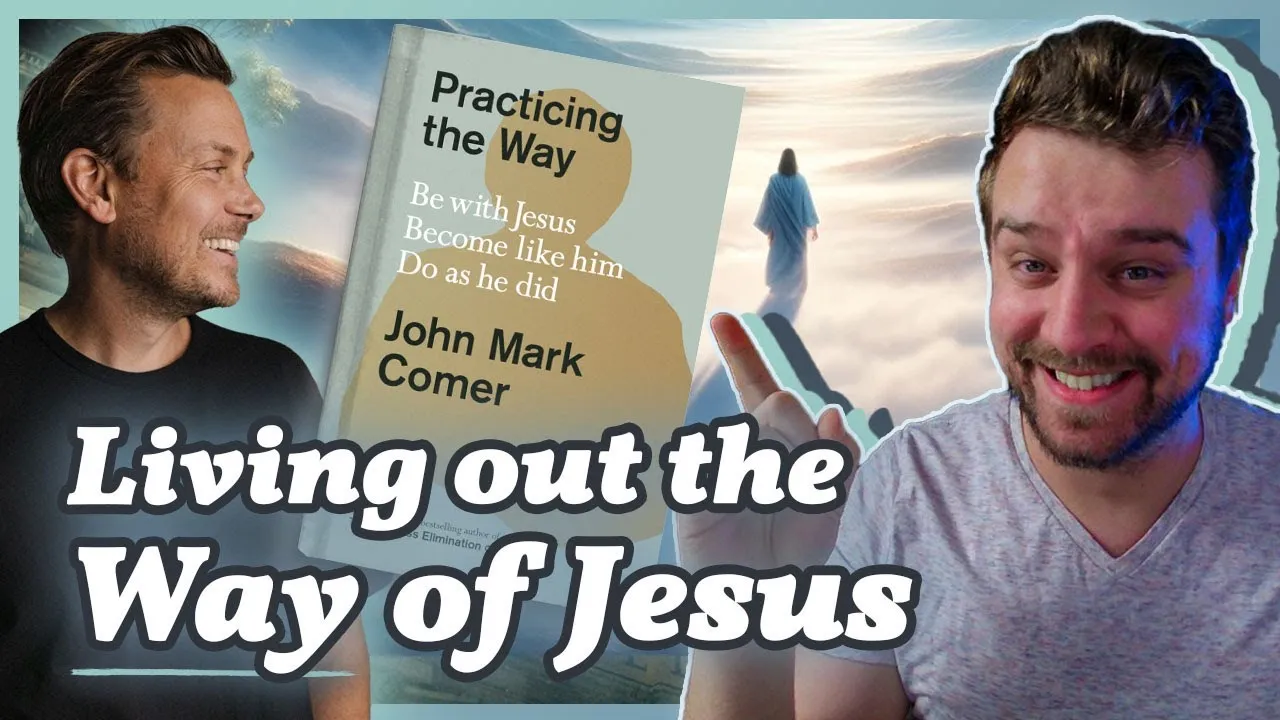
Today, I want to share with you my thoughts on a groundbreaking book that has truly transformed my perspective on what it means to live like Jesus in today’s world. The book I’m talking about is “Practicing the Way: Be With Jesus, Become Like Him, Do As He Did” by John Mark Comer.
In “Practicing the Way,” John Mark invites us to embrace a new way of life centered around the teachings and example of Jesus of Nazareth. He challenges us to move beyond merely believing in Jesus’ death, burial, and resurrection and instead calls us to become His disciples, apprentices who live out His teachings as a way of life. The book is divided into three main sections: “Being with Jesus,” “Becoming Like Him,” and “Doing What He Did.”
Each section explores essential aspects of discipleship and offers practical insights on how to apply them in our daily lives. I must admit, the book gripped me from the very beginning. So much so that I finished it within hours of its release. I couldn’t help but pause every now and then, taking notes and reflecting on its profound insights.
This isn’t just another self-help book or a list of practical tips. It’s a call to embrace a way of life that leads to true abundance and peace in the midst of our chaotic world. If you’re seeking to deepen your discipleship and truly live like Jesus, I wholeheartedly recommend “Practicing the Way.”
Let’s join hands in this transformative journey as we learn to prioritize the way of Jesus in every aspect of our existence. To dive deeper into the profound ideas presented in this book, I encourage you to watch the full video on YouTube. Trust me, it’s a game-changer! Together, let’s take up the easy yoke, set aside the burdens of this world, and journey towards a life of true discipleship.
Are you ready? Let’s practice the way of Jesus and experience a life that overflows with His love, grace, and purpose.
Watch the full video on YouTube and let’s embark on this transformative adventure together.
Transcript
[0:00] the word Christian appears three times in the entire New Testament and each time it's used as a pejorative but the word disciple occurs 261 times just from that fact alone the serious reader of the New Testament would have to conclude that the Bible isn't terribly interested in converting you over to a new religion so much as it is creating a new way of life around the T example of Jesus of Nazareth but how many of us have ever really thought hard about how to truly live like Jesus in today's world just saying it out loud it sounds idealistic almost unattainable right but what if I told you that it is not just possible it's real it's practical and it's transformative this is the thrust of John Mark Comer's new book practicing
[0:48] the way be with Jesus become like him do as he did out today wherever you buy books does John Mark rise to his usual level of incisive subversive Brilliance in service to the church or does he hit a sour note let's jump in and find out together before we go too much further the reason I'm wearing a coat is because it is -22° right now in Colorado and I have a drafty window right there on the other side of my set plus I think it looks nice just in case you were wondering now it's a short list of authors that I will buy just about every book that they release as soon as it's released n t Wright is on that list if Tim Mackey ever releases books I'll be the first one to buy them John Eldridge is up there and another person who I have really fallen in love with his line of work in the past few years is John Mark comr now if you don't know that
[1:34] name you're welcome my two favorite books that he's written before this one were the ruthless elimination of hurry and Garden City the first of which is around living a life of Simplicity in service to Jesus and abandoning the things that we all have agreed to as a society and as a culture that actually are making us hurried and harried and stressed which is the opposite of a place of abundance and peace which is is what's required in order to really live and serve and follow Jesus and the second of which is A Treatise on the new heavens and the new Earth as it relates to work and serving God with what you do for the majority of your waking hours both incredible books so as of right now the book came out uh about 10 hours ago and I've already finished it I was not given an advanced copy I didn't do anything really to earn one I simply
[2:22] downloaded the audible book went to the gym and listened to it on 2.5 speed or so pausing to take notes and not having the workout I've ever had in my life this isn't going to be a total review per se if you want my review it's six out of five stars 11 out of 10 buy it immediately you should absolutely read it this is really what I want to do is unpack some of the ideas that John Mark presents and put our own spin on them in terms of what is important that John Mark says and that we also want to say the message that we think that the body of Christ needs to hear in 2024 for what it means to be a faithful disciple Apprentice to follower of Jesus not simply someone who believes in his death burial and Resurrection so the simple Genius of the book is that John Mark takes the Bible very very seriously
[3:11] three of thousands of years of cultural crft between us and the core of its message he cites from Catholic Scholars from people in the spiritual formation movement he cites from Augustine and quotes irenaeus and all of these great church fathers but he doesn't treat them as authoritative the way that we tend to John Mark style is to take the scriptures as they are from their original context from the authors writing to their original audiences and he's so serious about taking that message in a first century Jewish context for the New Testament and the entire history of the Jewish Nation for the Old Testament and taking that seriously enough to not squash it down under the weight of thousands of years of protestant or Catholic tradition that came afterward and the result is John Mark just takes the New Testament reads
[4:00] it at face value and without making apologies for it or without bending it to answer questions for theological debates we have in our day he's simply saying what does it mean to live in light of what this is saying and he goes to some pretty radical places that a lot of Christians sort of cringe and get worried about because we would rather have our nice neat and tidy Sunday services and our American Dream the rest of the six days of the week and we don't really want to ask and answer the question what does it mean to Apprentice to Jesus and follow him radically in our entire lives to give you an idea of what you'll find on its Pages I'm not going to give you a synopsis of the book I'm going to give you a bunch of snapshots and vignettes about the sorts of things that John Mark comr typically talks about on the pages of this book the 62nd summary of this thing is that John Mark
[4:48] comr paints Jesus as an ancient Jewish rabbi which of course he was but a rabbi was not someone whose teachings you simply mentally ascented to so that you had all the facts there was a person that you followed behind and imitated which is what it means to be a disciple a disciple isn't somebody who simply agrees with doctrines or affirms truths it's a person who lives them out as a way of life imitating the teaching and the example of another person that's what it means to be a disciple and a disciple or an apprentice would have three main goals being with their Rabbi becoming like their Rabbi and doing what their rabbi did and that's really the threefold structure of the whole book I'm flattening out a lot of things here but it's it's incredibly well structured it's incred incredibly well taught and here is an overview of some of the things that will come out as you read
[5:36] John's book Sabbath is a main idea in a world that really never stops practicing the way reintroduces us to the ancient practice of Sabbath not an legalistic way not in a rueping way in a you were designed for pausing your life setting down your burdens and your work and simply resting in God's care for you and in your loving relationship with him kind of a way it's not just about taking a day off it's about creating space in your life for rest for worship and for reflection and in our lives in our world it's a radical act in our busy lives it's a deliberate pause that reminds us to rely on God not just in our own efforts another Central focus of the book and everything in it is prayer prayer is more than just a ritual it's a Lifeline to God it's honest conversations with your lord pouring out
[6:24] your hearts to him and listening for his guidance it's even abiding in him and simply contemplating the nature of the fact that you have a loving relationship with the creator of the universe who looks at you in love he heavily emphasizes integrating this kind of prayer into our daily life in a pray without ceasing kind of way the same way that Paul would say and it should bring a profound sense of connection to and direction from God the Creator who wants to guide and love us and Shepherd us through our lives Solitude might seem counterintuitive in our connected world but it's crucial for spiritual growth practicing the way shows us how Solitude helps us hear God's voice amidst the noise offering Clarity and peace that only comes from time spent alone with our creator there's a heavy emphasis on
[7:12] Christian Community Christianity is never meant to be a solo Journey where it's just me and God against the world practicing the way emphasizes the importance of living a way of life amongst other apprentices amongst other disciples of Jesus in a community a place where we're really Lear learning growing and supporting each other in our walk with Christ but not in the empty platitudes way where we think of Fellowship as a potluck with coffee in a church basement it's in real true open radically honest relationships that we actually experience the breadth and the depth of Jesus's teachings and example for his world living in generosity it's more than just giving that's a way of life John Mark emphasizes that generosity reshapes our hearts steering us away from the accumulation of stuff
[8:00] that's so prevalent in the modern West and towards a life of giving and serving others and as you can see as we're going forward every one of these is something that marked the daily life of Jesus himself and the followers who were imitating his teachings and his practices so in this case generosity is about creating a culture of giving and others focused love that reflects Jesus's own heart for others rather than his elevation and preference of himself even the way that scripture reading is treated on the pages of this book is incredibly benef icial it's not just about reading the words and memorizing them so that we have all the facts it's about letting those words read us back practicing the way encourages us to engage deeply with the Bible allowing it to really inform and shape our thoughts actions and decisions making scripture a living and active guide in our daily
[8:48] walk with Christ Hospitality making space for where the gospel could be preached means living in a such a way that you're opening your home to people who are previously strangers to set aside their strangeness and come into a place where they're going to be loved and accepted and in that place of others focused love acceptance and service that they're important to you is a way that you can prove to them that they're important to God I Echo John Mark's thoughts when he says in the book that all of the best conversations he has had about Jesus and following Jesus with people who are not yet followers of Jesus happened around a kitchen table there's something about that intimacy Jesus himself modeled that right how many scenes are there in the New Testament of Jesus eating with Sinners who then come to recognize that they want to follow and serve him with their life it's a model that's given to us to
[9:36] follow and it's closely tied with generosity but even outside of that kitchen table in terms of our witnessing it's not just witnessing with words and preaching from the street corner on a soap boox with a bullhorn it's about our actions our choices and the way that we treat others and how that should reflect the love and Grace of Jesus it's about being a living testimony to the transformative power following Christ John Mark discusses fasting which is an often overlooked practice in the west it's about more than simply abstaining from food it's a spiritual discipline that refocuses on dependence on God it helps us control our desires and strengthens our spirit but I want you to hear me loud and clear this isn't just another how-to book this isn't just practical tips for living a more jesus-like life there's deep theological truth underpinning absolutely every one of these and it is not in a try harder
[10:24] mode practicing the way of Jesus is not about doing more it's about doing less it's about setting aside the heavy yoke and the the broken practices of our world that has gone so insane with hyperactivity and pumping our brains full of all kinds of entertainment we're entertaining ourselves and amusing ourselves to death and it's taking that heavy yoke off and taking on the light yoke of our savior the easy burden and the light yoke and living that out as a way of life so here are some of the things that I loved about this book the first thing that I'm so thankful that John Mark does in all of his work is that he issues a correction to Western Christianity while not pulling from other modern or post-modern sources to fill in the gaps created by those Corrections instead John Mark focuses on
[11:13] a return to what we know of first century Jesus following he points out extremely helpfully that in the west we typically view Christianity as a set of ideas to affirm not a way of life to live out the this goes back to what I talked about at the very beginning of this video we emphasize the word Christian which was a pejorative term used by people who were against Christianity to call them little christs now there's something to be said for owning the slur so to speak and taking on that ownership and not letting them keep you down from it but if you just create Christianity as a religion to set alongside Judaism or Islam or secular humanism or Buddhism you're missing the point it's not meant to compete with these as though they're on the same level originally the religion of Jesus's followers if you could call it the religion of that was called the way
[12:02] which of course had its doctrines and its beliefs but it the name of it emphasizes that it is a way of life that fleshes itself out in decisions actions and choices not just in doctrines held and affirmed in the west we tend to way way overemphasize knowing things and having facts even our you know churches the way that we run our institutional churches is really focused on helping people not necessarily to live right but to get all the right facts fully constructed inside of their brain and a lot of our counseling is centered more around getting the right ideas in your head with the assumption that change and life change will naturally follow which really isn't the case of course knowing facts is important but it's not the whole story knowing facts is different
[12:50] from knowing how to do something that's what's called procedural knowledge there's perspectival knowing which is knowing what it's like to see and perceive something from a certain angle and then there's participatory knowledge which is knowing what it's like to experience something and participate in it knowing what a kiss between husband and wife is is different from knowing how to do it which is different from knowing how it feels to you to kiss your wife which is different from the actual knowledge of participating in kissing your wife John Mark doesn't use these these terms but the modern West ever since the time of the Greeks has so overemphasized that first propositional knowing of kn truth facts in like a having mode I have the truth has been a major issue in Christianity I would I don't want to say especially it's been a
[13:37] it's been a major issue in Christianity because that's so at odds with what the New Testament and the Old Testament have to say to us and so then we come to the scriptures with this lens of they're just telling us all the facts when that's not even the way that the story of the Bible presents itself it's a narrative intended to guide you into an experience of encountering and then following God and changing your entire life to be in keeping with what this God is telling you both the facts of the matter and the example of life that he lives and calling you into participatory relationship with him this is what CH Christians have been trying to get at with things like what would Jesus do and it's not a religion it's a relationship and while those things sound trit there's so much truth behind that we don't want to just know things and practicing the way John Mark comr does a really good job of explaining the origins of that kind of thinking and why
[14:25] it's deficient the way people think change works in the west is that you you learn facts you get educated and then you change your life but information's not all we need if information were all humans needed to change you would never see smoking doctors you'd never see lawyers in jail and Librarians would all be billionaires with six-pack abs having the information at hand isn't enough for people to actually change their way of living but at the same time neither is willpower or even things like B Bible study and waiting for a download from the Holy Spirit it takes intentional practice most of us live in such a way that it's like maybe I'm dating myself a little bit but it's like having one of those Scantron test sheets where you have to fill in the right multiple choice answers the way that we think of
[15:14] Christian discipleship is learning facts so we can fill in the Scantron the right way as though our goal should be to have the best answers before we die and get our answers corrected get our test graded by God based simply on how much truth we know as though that's the goal of the Christian life rather a whole life Moment by moment surrender to service and obedience and love of Jesus and love for your neighbor and even your enemies the degree to which we do that is the measure of maturity in God's kingdom and this book is an attempt to create a description of the kind of life that produces that kind of outcome and the intentional choices and and the long obedience in One Direction that produces that kind of Life as a follower of Jesus
[16:03] not merely someone who has sents to the right doctrines about him another thing I really loved about this book was the honesty and the practicality of this book we need a rule of life we need habits and practices we need intentional formation communities and a lot of people aren't finding that in institutional Church structures he's pretty unflinching in his criticism of the way that house churches and big mega churches Focus not on the things that actually lead to spiritual formation and how we've really missed that script a lot in the western church and he gives very practical correctives to this where he outlines practices and things that we can do and pursue that will lead to this kind of life but ultimately he also emphasizes to his unending credit we are not the ones in control of producing christlikeness within ourselves the
[16:51] spirit is the one who produces those things as we follow along in discipleship to Jesus so discipling under a apprenticing under and following Jesus is not as simple as just reading your Bible and praying every day it includes those things and calls them up into the greatest version of them but John Mark's vision is whole life obedience by being with Jesus becoming like him and doing what he did it sounds so simple but it really is radical because if you pause and look around at how little we're doing those things it is possible to become a Christian simply by assenting to the fact about the death the burial and the resurrection of Jesus without ever becoming a disciple of Jesus that's the way that we've set up our understanding of the Gospel in the 21st century and
[17:38] that's led to thousands and millions of people wanting to get rescue from Jesus but not wanting to be rescued for a life of following Jesus they want the benefits but they don't want the call to take up the light Yoke the easy Yol and the light burden and follow after their new master they don't recognize him as Master they don't recognize him as Lord they don't recognize him as king and that's a deficient gospel that we're teaching we're allowing a state of affairs where followers of Jesus are rarer and rarer of my generation the Millennials of those that grew up in church and spent their lives inside of the institutional Church structures only 10% of us are still what you would call resilient followers of Jesus still living as though Jesus is our King that is an abysmal success rate and yet the message of this book which is radical to
[18:26] our ears is not about doing more and trying harder and bringing yourself out in service to a church institution it's about setting aside the things that don't lead to life in order to pick up the things the practices the identities the habits that do and to that end I think that this is a lifechanging book that every serious Christian who wants to be a follower of Jesus should pick up and read and put to practice now there is one critique that I have about this book and John Mark's teaching in general and I'm not sure if this is a gap in Comer's usually quite rigorous and far-reaching thought or if it's a conscious difference of interpretation and opinion but he seems to miss in my view the consistent witness of scripture in the New Testament specifically in
[19:13] that those who are followers of Jesus are already made into the new creation the new creature who can consistently follow the way of Jesus now and that that's the empowering energy behind our ability even to pick up the easy yoke and follow along behind Jesus he'll use language like disciples becoming Saints which is a very sort of a Catholic way of viewing the nature of sanctification whereas Paul simply for one example calls all of the Believers in galatia and Corinth the Jesus communities for whom he had the most to correct in terms of their Doctrine and practice the Galatians had completely started beling believing an entirely different gospel and the Corinthians practices were an absolute disaster of sin and debauchery notwithstanding he still addresses them
[20:01] as Saints at the beginning of his letters and Paul's logic throughout those letters is that you have already been made that which you are now being asked to live out and become so whether that's an actual a mission in Comer's thinking where that doesn't come into the millu of what he thinks is necessary here I think that's a central Focus because the key thing that is supposed to happen once you're a Jesus follower Paul calls you if you're in Christ you're a new creation you're a new being you're ontological Nature has already changed and the practice of being like being with Jesus becoming like him and doing what he did is how you live out the implications of who you already are not becoming who you were made to be your identity has changed already and it's living that out day by day and living out those implications and if you go into the book with that in mind
[20:49] practicing the way is a life-changing wonderful work and I can't wait to do more and put some of these practices into my own life and live them out because there's so much practical wisdom but there is a danger that if I'm reading this book without that perspective I will hear a do more to become better kind of message which I know is not his intention he's very clear about that nonetheless it's a danger if you're not nuanced in that approach but to summarize what I love most about this book is that it is an attempt to give answers to the questions that should rise up when someone is really considering what does discipleship to Jesus look like and I think honestly right next to the Divine conspiracy this is the best answer I've seen and since I've invoked the Divine conspiracy let me close with a Dallas
[21:37] Willard quote that I think encapsulates this discussion perfectly John Mark seizes on it too the greatest issue facing the world today with all its heartbreaking needs is whether those who by profession or culture are identified as Christians will become disciples students apprentices practitioners of Jesus Christ steadily learning from him how to live the life of the kingdom of the heavens into every corner of human existence because how you understand the gospel is how you understand discipleship if you understand it at all and to truly be a follower of Jesus is to be all in it's not being a face in the crowd it's not being someone who just passively of the right ideas about Jesus it's someone who follows and practices his way which again to be
[22:26] clear isn't about doing more it's about setting down so many of the burdens and the things that we put into practice in our lives that don't lead to life in order to take up the light burden the easy burden and the light yoke to follow Jesus toward what is abundant life so I heartily recommend the book If you go into it with this one cave you are if you're in Christ you are already who you are made and intended to be and the process of your sanctification of your apprenticeship is not to become someone you're not yet but to become someone you already are in Christ step by step day by day in obedience to his way not simply his teaching but following his example so grab your copy of practicing the way wherever you buy books I'm an audiobook guy so I picked it up on
[23:13] Audible and let's all take up the easy o together and live out the way of Jesus as a community and if that's interesting to you go ahead and check out this video where we talk about what it means to live with God's priorities as your priorities and how to serve god with every second of your existing life I think it'll be a major blessing and an encouragement further up and further in
Tagsjohn mark comerpracticing the waydiscipleshipbook reviewapprenticeship