“The Atonement” is MUCH more complicated (and beautiful) than you thought.
Atonement is richer than one theory: ransom, victory, sacrifice, and the space it makes for us with God.
By Tim Barber··Video·Updated
Chapters
- 0:00Rethinking the atonement
- 1:15Defining atonement
- 2:30The Kingdom of God
- 4:29Living in the Kingdom
- 6:33Atonement theories
- 11:00The overarching biblical story
- 13:29Biblical roots of sacrifice
- 15:31The two goats of Leviticus
- 21:42Parsing the sacrificial images
- 25:45Jesus as Passover Lamb
- 28:27Christus Victor and restoration
- 30:47Participating in new creation
- 33:34Living at-one
The journey into the heart of Christian faith reveals the pivotal role of atonement – the process that bridges the gap between humanity and God. My quest for understanding led me to delve into one of the most enlightening explorations of this concept.
Unveiling the Essence of Atonement Theories
My exploration began with an overview of how atonement is fundamentally perceived. Drawing from Biblical narratives, I realized that Jesus’s mission on earth transcended the mere act of dying to bear the punishment humans deserved. It was embedded in a grander narrative of victory, liberation, and restoration that threads throughout the entirety of scripture.
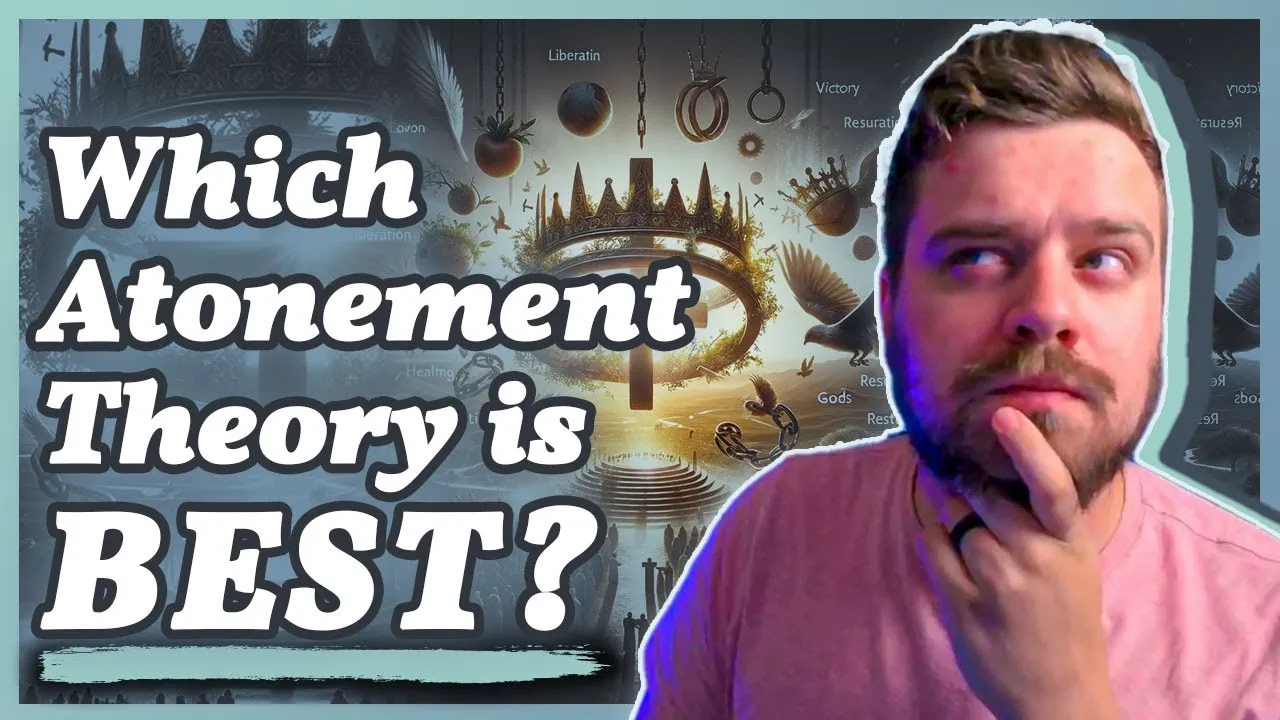
I then journeyed through the seven primary atonement theories that have been discussed throughout Christian theology: Ransom, Christus Victor, Moral Influence, Penal Substitution, Governmental, Satisfaction, and Recapitulation. Each theory offered a unique lens through which to view Christ’s redemptive work, from conquering evil forces to fostering moral growth and mending the fractured relationship between humanity and God.
Beyond a Single Sacrifice: Deciphering Sacrificial Symbols
To grasp the full depth of atonement language, I turned to the sacrifices described in Leviticus, particularly focusing on the ritual involving two goats during the Day of Atonement. This ritual, I found, was profoundly symbolic, with one goat sacrificed to create a sacred space for divine-human connection, while the other bore the community’s sins, removing them from the people and symbolically handing them over to darkness.
This understanding deepened when considering Jesus’s sacrifice, often likened to a lamb. His crucifixion emerged as a victorious symbol over sin, death, and evil forces, embodying both the sacrificial goat and the scapegoat, creating a holy space for us to commune with God and removing our sins in one divine act.
Embracing Atonement in Daily Life
My discovery taught me that atonement is not just a theological concept to be debated but a reality to live by. Jesus’s sacrifice invites us into a new existence marked by God’s love, justice, and peace, even amidst a fractured world. It calls us to be agents of reconciliation, stewards of creation, and bearers of hope.
This gospel, focused on God’s kingdom, doesn’t merely prompt us to reject sin. It calls us to engage actively in God’s mission of renewal and reconciliation, embodying the Kingdom’s values in our interactions, communities, and the broader world.
My Invitation to You
To truly comprehend the multifaceted nature of atonement, I encourage diving into the Biblical stories and teachings that illuminate Jesus’s sacrificial act. This journey can transform your understanding of the gospel, inviting you to experience and share the profound love and redemption offered to us all.
Transcript
[0:00] hoser once famously said what comes into our mind when we think about God is the most important thing about us and unfortunately for many people the good news we have heard about Jesus hasn't sounded good at all just this week I've seen depictions of God that sound less like for God so loved the world that he gave his only son and more like for God so hated the world that he killed his only son something in the way that we're telling people about the good news and Christ's work isn't getting cross the way that we wanted to and it has to change so today we're going to talk about what is broadly called the atonement but you'll also see why that phrase really isn't as helpful as we would like it to be when we look at the biblical data so if you think that the whole purpose that Jesus came to fulfill when he came to Earth the first time was
[0:47] just to die on the cross and take the punishment we deserved you're not wrong but there's a lot more to it there is a deeper more powerful story woven through scripture from the very beginning one of victory of Liberation and restoration So today we're going to dive deep into the heart of what Jesus came to do try to look beyond the modern debates about the atonement and look for ancient truths from the Bible that could change everything about how you feel about the good news of Jesus let's dive in now when I use the term atonement that's probably going to bring to mind an image of like a Heavenly transaction Christ's sacrifice taking on and paying the debt of human sin and an exchange I want to say at the outset that this is not wrong there are all sorts of things that we stack on top of that image that don't come from the Bible and have more to do
[1:34] with medieval class politics and philosophy that we'll have to unpack as we go along but that core image is not wrong this view which is pretty deeply ingrained into much of Christian theology is emphasizing Jesus as a mediator who reconciles Humanity to God through his death on the cross but reducing the atonement to merely a transaction is going to overlook the rich tapestry of biblical narratives that reveal Jesus's work as a mission to restore reconcile and renew all things under God's Reign so we've got to talk about the word atonement comes from the anglosaxon at onement literally at one suggesting a state of being at one with another it suggests that you've harmed a person through your own wrong actions and that something needs to be done to
[2:21] make that relationship right again unfortunately that's not what everybody means when they use the word atonement when they when they use the word atonement what they mean is the work of Christ so in the context of discussions about biblical atonement it usually is going to Encompass the entire scope of Jesus's life death and Resurrection through which God invites Humanity into a renewed relationship with him with each other and with creation so this broader understanding is going to take us Beyond sort of the legal Frameworks that a lot of people have in mind and that the scripture forwards to see atonement and the gospel really as the inauguration of the kingdom of God through the work of Christ not just on the cross but also in his resurrection and Ascension and the kingdom of God is Central here it's a realm where justice peace and love flourish and anywhere
[3:10] that the will of God is being done and it encompasses the full extent of his rule in fact we've looked at these verses before but they're enormously important for understanding what's happening in this passage as it relates to this concept of the kingdom of God the gospel the atonement Mark 1 starting in verse 14 after John was put in prison Jesus went into Galilee proclaimed the good news of God now the good news is the gospel that's the word the yelon in the Greek and what he doesn't say is I'm going to die as a substitute and take the punishment that you deserved so that we can change places and I'll be cursed by God and you'll be given eternal life in heaven that's not what he says that's what we expect him to say that's what when when we think about the gospel and how Jesus made atonement that's what we think what does he say instead the time has come the kingdom of God has come near or is at hand or is here it's
[3:59] called close enough you can touch it repent and believe the good news so there's that word again and we've talked about this on the channel before where this is not a message of us dying and going somewhere in eternity it's about a place coming here now so whatever the gospel is it's fundamentally about God's kingdom influence spreading further and further and hear me again forgiveness of sins rescue from the penalty we deserve to pay and Jesus's death is at the center of that it's not that it's not wrong it's just not right enough now this is where I times get in trouble talking about this because people really don't like it when I point out that Jesus's proclamation of the kingdom was not just an announcement of a future reality but an invitation to live within this new reality now Jesus's teachings his miracles his interactions with the marginalized and his negative
[4:47] interactions with those who had power and influence are underscoring the Kingdom's presence Among Us Now inviting a radical reorientation of life in response to God's love and his lordship so whatever the gospel is it is a call to active participation in God's Kingdom Here and Now through Jesus it's not just about securing a place in heaven but it's about embodying the values of the Kingdom of Heaven in our daily lives Seeking Justice loving mercy and walking humbly with God and we've talked about this before and I'll go into more detail here in this video if you want to go and unpack that first before we start talking about atonement but our view of the Gospel should transform our perspective on salvation it's not just individual forgiveness for Eternal Heavenly life it's a Collective calling to participate in the restoration of all creation through the life of Jesus
[5:34] himself so taken in that light the atonement becomes a multifaceted story of how God through Jesus is reconciling the world to himself inviting us into a life that mirrors the realities of Heaven on Earth it's about becoming agents of reconciliation stewards of creation and bearers of Hope which is a Divine invitation to live differently in light of the comprehensive work that Jesus came to accomplish which is why when I hear atonement I think think something very different from what most of Christianity in the west wants to talk about when the idea of atonement comes up when they hear atonement they just mean Exchange in sacrifice for for rescuing from sins I think at one mon making God and people at one making Heaven and Earth at one in other words everything that Jesus came to accomplish not just our rescue but including it in
[6:22] a bigger story that encompasses more of what the scriptures have to say about Jesus and why he came now we can't go a whole lot further without talking about what are the various what are called atonement theories over the 2,000 so or so years since the death and resurrection of Jesus the church has wrestled with well why why did Jesus come and a number of different answers have been given and some of these take the form of well we want to say that Jesus's purpose was blank and these fall into what are called atonement theories and there are seven major ones that we're going to unpack right now just in brief and it should be pointed out at the outset that you don't have to pick one that's mutually exclusive over the others it's it's a multifaceted sort of a tapestry of theories to look at and make sense of all of the different things that Jesus came to accomplish there really lenses through which to view the multifaceted work of Christ on
[7:10] the cross and while no single theory is going to capture the entirety of his Divine Mission each one is going to offer unique insights into the nature of Jesus's work and its implications for Humanity and creation and God so there are seven primary theories Ransom Christus Victor moral influence penal substitution which is probably the one that you're most amiliar with governmental satisfaction and recapitulation each of them highlight different aspects of Jesus's work from defeating evil powers to inspiring moral transformation and restoring Harmony between humanity and God so let's start from the top Ransom Theory suggests that Christ's death was a payment made to Satan or the powers of evil to free Humanity from bondage emphasizing Liberation and victory over the forces that enslave Humanity Christus Victor views the atonement as God's triumph over sin death and the devil what the
[7:59] New Testament would call the principalities and Powers portraying Christ's death and Resurrection as the decisive victory in God's war against evil Powers highlighting Victory and Liberation moral influence Theory suggests that Christ's life and death serve as the Supreme example of God's love intended to inspire moral Improvement and a transformation of the human heart towards love and compassion penal substitution Theory broadly posits that Christ took upon himself the punishment that was due for human sin satisfying God's justice and allowing for Humanity's reconciliation with God emphasizing legal satisfaction and substitution we will have to camp out on this one in a lot more detail later because there are a lot of other entailments that get stacked up on top of the idea of Christ as legal substitute that are the root of some of those issues that we talked about
[8:47] earlier in the way that people think the gospel portrays God as an Angry God who hated the world and wanted to kill his own son to get his punishment and his anger poured out on somebody and take it out on Jesus rather than other people so there are some entailments that we might not like that we need to talk about governmental Theory argues that Christ's death was a demonstration of God's moral government showing the seriousness of sin while Allowing God to forgive Sinners emphasizing God's justice and his Mercy this draws heavily on the language around the atonement sacrifice back in Leviticus and has a lot to recommend it as well now satisfaction Theory which was developed by anom is kind of like an earlier part of the penal substitution Theory basically suggesting that Christ's death was an offering to God satisfying the honor offended by human sin and restoring the relationship between humanity and God
[9:35] and some of Canterbury was very much thinking about medieval class politics when he was formulating this Vision satisfaction Theory more as a sort of a secre istic way to explain what Jesus did to a medieval audience in terms that they would find palatable but it doesn't really have a whole lot to do with what's spoken about in the scriptures and then recapitulation Theory posits that Christ through his life death and Resurrection recapitulates or re heads Humanity re reversing the effects of Adam's sin and restoring Humanity itself to its intended glory in himself now chances are if you have you know taken all of those and you didn't come predisposed to say that some of these are already heretical or wrong for some reason if you hear all of those you're like yeah Jesus came to do that he came to do that he came to do that and the theories taken together they paint a
[10:22] really vibrant picture of Christ's Mission when he came the first time not merely just sins's penalty being paid but as a comprehensive Act of victory of liberation of moral transformation restoration of the image of God in its fullness in humanity and understanding these theories collectively is going to allow us to really appreciate the depth and breadth of what Christ accomplished on the cross in his resurrection and in his Ascension there is no one atonement Theory to rule them all every one of them has a seat at the table and something to say as long as they arise from what the scriptures say and that's really the most important point that I want to emphasize here the story of Jesus does not happen in a first century Greek vacuum he was after all the Jewish Messiah the Fulfillment of the Jewish hopes elucidated by the prophets of the
[11:10] god of the Jews and so anything that his life death and resurrection and ascension mean they have to mean to that original backstory before we find ways of making it make sense in our modern contexts and our modern sensibilities we have to we have to go back to the root of what was happening in Jesus What story did Jesus see himself as fulfilling so so that we can sort of fill in the following acts of that story after Jesus's atonement and his death burial resurrection and Ascension to kind of figure out what does it mean for us on the other side of it but again as we pointed out earlier The Gospel According To Jesus centers not on simply forgiveness of sins for eternal life in a future heaven but in the present reality of God's kingdom Among Us now and that Vision stands in pretty stark contrast to the interpretations that reduce the gospel to a transaction for individual salvation focusing instead on
[11:59] the transformative presence of God's Reign on Earth as it is in heaven through Jesus whose declaration in Mark 1:15 as we just read it the time is fulfilled and the kingdom of God is at hand repent and believe in the gospel it's inviting us into a radical reorientation of our lives in light of God's nearness so let's see if we can find a way to weave all of these theories together into a cohesive story that takes the entire Bible and this is what's so hard about this is I could talk about this for hours and still will only really be scratching the surface of a few key points so I'm going to have to skip over a lot of the deeper word studies and jumping into the Greek and the Hebrew that we would normally do and sort of just give you an overview and we can dive into this later if you do want to talk about this in more depth let me know in the comments because I think that this is extremely important stuff
[12:46] that we really need to be clear on so that people hear the good news as good news and they see all the ways that Jesus's atonement made Oneness and unity possible where before there was rupture and Brokenness and that's a good news message that that anyone in the world who's in their right mind wants to hear as long as they believe it's true but like any good story this one begins at the beginning in the beginning God created the heavens and the Earth he filled them with all kinds of life and Order and beauty and flourishing and he created humans to be his Partners in ruling over the world he made and called good their task was to be co-rulers alongside him and extend the effective range of God's Rule and Reign Over what was still a wild and Untamed Earth that he created created of course the humans fall prey to the Temptation from the serpent who gets them to doubt God and
[13:34] His provision and his love and his plan for them and tries to get them to seize power and autonomy for themselves rather than humble submitted obedience to God who created them for a purpose and a plan God immediately sets to work preparing the atonement the the way that the humans can be rescued from the situation in which they find themselves so after the fall just imagine a world enslaved not by chains visible to the eye but by by the profound bondage of sin and death post fall this is The Human Condition it's a plight from which Escape seems impossible but then there's a promise made God tells the serpent that a seed of the woman will one day come to crush his head and in so doing the the serpent will bite this man's heel but it's a promise that there will come a person in the future to destroy evil at its source the story continues and in The Exodus God delivers Israel
[14:23] from physical slavery in Egypt through the Passover Lamb Of course if you fast forward to the New Testament we find Jesus fulfilling the same role as the Lamb of God on a cosmic scale John the Baptist even declares Behold the Lamb of God who takes away the sin of the world Jesus isn't just another sacrifice if you were to focus on only one of these atonement theories you might think that's all he came to do he's not just another sacrifice he's the ultimate Passover Lamb whose death and Resurrection shatter the chains of sin and death this creates a Liberation that isn't just about God punishing his son in our place but about a victory that frees Humanity from sin's tyranny and through Jesus God confronts and conquers the powers that hold us captive offering us freedom and a new way of living it's not a theological concept alone it's a transformative reality that really should change how we understand God ourselves and our place in the world
[15:12] this is really where we have to kind of start talking about the whole animal sacrifice thing and there are lots of ways in which it cashes out the image that most of us have is we think of Jesus as the Lamb of God and we just have a sort of a generic Temple Animal sacrifice scene where I'm sinful the lamb isn't I want to go and be with God in the temple but I can't until I make the sacrifice I kill the lamb it takes my sin I no longer have sin and then I can go and be in be in God's presence the only problem is that that's a mish mash of four or five different animal sacrifices outlined in the levitical law and the Passover Lamb which was not even Leviticus at all it was in The Exodus when the Jews were making their escape from Egypt so we got to talk about these two goats so we got to go all the way back to Leviticus 16 this is after Genesis this is after The Exodus this is in Leviticus now and the tension is is that Aaron just had two sons die by
[16:00] flippantly walking into the temple and it just wasn't safe for them to be in the presence of God they didn't take the proper precautions they were be really flippant about it and because God is Holy and powerful and we are not they died in his presence and it was a pretty sad episode so the tension is now God is giving Moses instructions about how Aaron is going to enter the most holy place the holy of holies he brings a bowl for a sin offering and a RAM for a burnt offering this is for Aaron to enter into the place then we hear in vers 5 from the Israelite Community he's to take two male goats for a sin offering and a RAM for a burnt offering so the first thing is Aaron needs to get himself ready he needs to be purified so he makes these offerings so that he can kind of be the mediator person now the part that's more appropriate for this discussion for us is what happens with the Israelite Community how is it that they're going to be able to come close
[16:47] to God because the priest had a special role which again there's this whole other conversation we could talk about how now we are the priests Jesus is the high priest it's this whole thing but what's important for us to talk about now is how does Israel as a whole come near to God verse six Aaron is to offer the bull for his own sin offering to make atonement for himself and his household Aaron's clear now this is when it starts to get interesting in verse 7 then he is to take the two goats and present them before the Lord at the entrance of the tent of meeting he is to cast lots for the Two Goats basically throwing dice to figure out which thing happens to which one one lot for the Lord and the other for the scapegoat now I'm going to change it to a different translation yeah here we are in ESV and oh boy this is this is quite the rabbit hole we're going to go down Aaron cast lots over the two goats and one lot is for the Lord and the other lot is for Azazel what on Earth is Azazel so this little um footnote they have in the ESV
[17:35] is the meaning of Azazel is uncertain and that's true there are a lot of different ways of trying to explain this possibly the name of a place or a demon traditionally a scapegoat um what's important for you to know is it's if you were an ancient Jewish person and you read Azazel you would literally see two words and then l l just means spirit being and aat means powerful we have to keep going in order for this to make sense but I want you to recognize the predominant view here is that atel is either just some kind of powerful malevolent spirit being or the Devil Himself the devil has never given direct names like this in fact Adel it shouldn't be capitalized here it's not a proper noun Lucifer comes from the Latin it's not a proper noun Satan is not a proper noun it literally just means the opposer the Bible never gives the personification of evil a proper name ever on its Pages it's called the
[18:24] slanderer the accuser the dragon the serpent any number of things these aren't proper nouns these are just ways of getting at what the personal evil really is the devil is real and as we go through this passage you'll see why I think that atel is a reference to the powerful spirit being of death and we'll get to it let's keep going Aaron shall present the goat on which the lot fell for the Lord and use it as a sin offering but the goat on which the lot fell for atel shall be presented alive before the Lord to make atonement over it that it may be sent away Into the Wilderness so again the next several verses leading through verse 14 about how Aaron does his thing and makes sure that he's able to kind of represent the people and go in there as the mediator priest sort of cleansing up the place with his sacrifices and then starting in verse 15 is when we start talking about what the people do or what he does for
[19:11] the people so there's two goats there's one that's for the Lord and there's one for the evil spirit being out in the wilderness I want you to notice what this says then he shall kill the goat of the sin offering that is for the people and bring its blood inside the veil and do with its blood as he did with the blood of the bull sprinkling it over the mercy seat and in front of The Mercy Seat thus he shall make atonement for the holy place because of the uncleanness of people of Israel and because of their transgressions all their sins and so he shall do for the tent of meeting which dwells with them in the midst of their uncleanness stop very very carefully and think through this with me did this lamb bear the sins of the people of Israel did the sins of the Israelites come onto the lamb that was sacrificed and whose blood made the space clean and I'm sorry I said lamb it's goat no no sin was put on this goat that would defeat the entire purpose of
[19:59] this sacrifice the goat needed to be spotless perfect faultless pure nothing at all wrong with it and it's not the goat's death that covers the people and makes it so that they're able to come into God's presence it's the life that is in the goat's blood that purifies the space and allows humans to come in so a perfectly sinless goat dies to make a clean space for us to enter in but something still needs to happen with our sins because it's not this thing that took our sins it's not this goat so what happens with the other goat first the blood is used to sprinkle on the on the holy place we talked about it all over the altar all these different things and that gets us through to verse 20 here which starts like this and when he has made an end of atoning for the holy place in the tent of meeting in the altar that's that blood sprinkling from the life of the sinless goat it says he
[20:48] shall present the live goat where is this one going this one's going to atel again right and Aaron shall lay both his hands on the head of the live goat and confess over it all the iniquities of the people of Israel and all their transgressions all their sins that's the the trifecta of bad things that you can do as an Israelite in relationship to God you got iniquity you got transgression and you got sin we should talk about those another day and he shall put them on the head of the goat and send it away Into the Wilderness by the hand of a man who is in Readiness the goat shall Bear all their iniquities on itself to a remote area and he shall let the goat Go free in the wilderness so I need to look at you face to face to talk about this the way that we have become conditioned to think about Jesus's sacrifice is as though both of
[21:36] those things were just shoved into one something takes our sin and then dies and then we can go be with God that's trying to conflate two different aspects of how atonement was made first is the death of something totally pure sinless faultless and the life that is in its blood is what allows for a holy space to be made for humans to enter in it's something about the death of some something totally innocent and morally pure that obliterates evil and death and its life is found in its blood that's one aspect of what Jesus did and that's beautiful there is something substitutional about that the other half is what happens to the other goat and this is called one sacrifice of atonement by the way it's two animals but it's one sacrifice of atonement what happens to the other one that one does bear our sins Aaron specifically takes
[22:23] the sins of all the people and he puts them on the head of that ghost and it's not the sins of all the people in the world it's the sins of all the people who are in The Covenant Community he puts them on the head of that goat and then sends that goat out to Satan to get a little childish and kind of purile about this it's a little bit like that game of ding-dong ditch you you just imagine you know some I don't know '90s 2000s teenager movie where you know they put a bunch of human waste in a paper bag light it on fire and leave it on the front porch of somebody that they don't like that's a little bit like what's going on here all the sins go into the goat's being they get put on this goat and it's sent out for for Satan to go deal with sin was his idea in the first place this whole mess is his fault so let's go ahead and return to him the awfulness of all the stuff that he's brought into this world and so you
[23:10] notice if you just flatten these two down you miss that there are these are two aspects of what Jesus did on the cross it's the purity of his sinless life and the life that's in his blood in his sinless nature that creates the holy space for the people who trust in him to come before the presence of the god that sent Jesus to rescue Us in the first place who promised rescue and atonement all the way back in Genesis 3 and it's a gift of life it's not a sacrifice where God puts all this stuff on Jesus that he hates and then punishes it to kill it it's a rescuing death a sacrifice of pure life that creates this opening for humans to come and be in God's presence again and the other Goat Who Bore our sins is sent back to the devil it's performing another service for humankind it's bearing the sins and going and
[23:59] putting them in the face of the devil and saying this is yours we don't want any part of it and in that way that goat takes away our sins isn't this beautiful you guys now Jesus is not called the goat of God he's called the Lamb of God so all of this imagery just kind of gets Mish mashed together and if we don't do the hard work of going through and parsing it like we just did going to Leviticus 16 sometimes we get kind of like mixed up I was teaching our I was teaching our kids class at the Spanish-speaking Baptist Church I'm still a part of a couple of months ago and I was talking to them about the gospel because a a member of our church Community who was an wonderful wonderful older lady she passed away and I asked them what the gospel means and I straight up heard some of the children say God wants to save our sins and I was like hold on back up and start that over again he wants to save our sins what does he want to save our sins for and
[24:47] they recognized that they had just tried to oversimplify the language they meant to say he well God wants to save us from our sins and I said that is totally different from God wants to save our sins and so if we are not careful and we just Mash down what Jesus did into a couple of cute little slogans we lose the whole point of this if we want to make sense of the atonement and of what Jesus did he saw himself as fulfilling all of these different sacrificial needs it's his life and his holy blood and the death that he died as a sinless Son of God that created the holy space for us to step in and he also in a separate sense bore our sins and took them away from God God's covenant people and the holy Place dumping them on the porch of Satan to deal with and he wasn't a sinful sacrifice that somehow died creating life it has to be both of those
[25:36] things as separate Concepts in order for it to make sense with the Old Testament but the real magic is when we start getting into the Passover Lamb after all again he was not called the goat of God he was called the Lamb of God who takes away the sins of the world so if we're going to go back to Leviticus to understand the sacrificial system and the goats and the priest and all of that stuff where do we have to go for the Passover Lamb well we have to go all the way back to Exodus 11:2 if you if you've seen Prince of Egypt you probably know this story really really well God is at war with Egypt and he keeps sending these plagues they still won't let the Israelites go and form their own Nation they still want to keep them engaged in slavery so God comes up with one final plague which will be the death of the firstborn the firstborn child in every household in all of Egypt will die in the night now God instructs the Israelites in this context this is way before Leviticus by the way he instructs the Israelites to observe a Passover feast as a lasting Memorial of how he's
[26:25] going to protect them from this he instructs every household of the Israelite people to select a year old male lamb without defect the head of the household is going to slaughter that lamb and taking care that none of its bones are broken and is going to apply the blood of this lamb to the tops and sides of the door frame of the house and then the lamb was to be roasted and eaten and enjoyed as a gift of protection and rescue from punishment for all the Israelites so God said that when he saw the Lamb's Blood on the door frame of a house he would pass over that home and not permit the Destroyer to enter any home with without the blood of the Lamb would have their firstborn son struck down that night and this is hard to hear but God took Extreme Measures to rescue his people so when we get to the New Testament authors and they're trying to put words to what Jesus did they they quickly establish a link between that Passover Lamb and the consumate Passover
[27:13] Lamb which was Jesus himself John the Baptist called him the Lamb of God Peter calls him in 1 Peter 1:19 a lamb without blemish or defect and of course famously John the Apostle sees Jesus as a lamb looking as if it had been slain Jesus was crucified during the time that the Passover was observed and the last supper was a Passover feast and the only thing that is not mentioned in any of the Last Supper narratives as being present as part of the meal is a lamb hear this the reason they didn't need a lamb at the Last Supper Passover feast is because Jesus himself was the lamb isn't that beautiful so those of us who are in Christ according to Hebrews 9 specifically verses 12- 14 roughly it's the blood of Jesus both in the atonement sacrifice goat sense and the p Passover Lamb sense that allows us to escape Eternal death have our sins taken away
[28:02] and it purifies the area that allows us to enter into God's presence and come before him it's not just the lamb it's the two goats and the lamb that give us the full picture of Everything Jesus came to accomplish sorry that was a long Rabbit Trail but it's important for us to talk about these things because this is the Old Testament background that Jesus saw himself as coming in in fulfilling when it comes to the concept of atonement so what I really want to do now is cash this out in terms of our daily life and what this means for the eternal life we have ahead of us after all the point of this channel is talking about what we should be doing as followers of Jesus in the present day to live in light of the eternity we we read about when we read his word and so there are so many different ways of approaching this when Jesus died on the cross that was a symbol of suffering and shame but it's also become the ultimate symbol of victory victory over sin death and the powers of evil that weave
[28:50] through the fabric of this world and it's not just a moral Victory it's the cosmic Triumph of God's love and Justice as manifested in Jesus Christ the lamb and the two goats who take away the sin of the world but Christus Victor which we talked about earlier that's an ancient understanding of the atonement it presents Jesus's death and Resurrection as the decisive battle where God defeated the forces of evil that corrupt and enslaved creation Colossians 2:15 proclaims that he disarmed the rulers and authorities and put them to open Shame by triumphing over them in him that is in Jesus the cross is God's battle standard raised High to signify that death's Dominion is broken and the Serpent's head is crushed and this victory was not one through violence or overpowering might but through the self-giving love of Jesus who absorbs the world's sin and evil and exhausts their power in Christ's victory in atonement we find our fear of death
[29:39] undone our guilt taken away our punishment passed over and the life of the pure sinless one making space for us to enter in and and be before the father making us pure in this at the same time we are called the temple in the New Testament both individually and as a collective community and so the same blood that made the holy space made us holy for the spirit to come and enter in and for God's presence to manifest itself in our being because of the sacrifice of the two goats and the lamb our sin was taken away by the one that sent was sent to Azazel we were purified as a place for God to dwell by the lamb again I said lamb the goat was sinless and pure that died for its blood and Life to make us new and we were passed over by the Lamb of the Passover all three of which are fully culminated in Jesus so the gospel is the good news of
[30:26] God's Kingdom and at the center of the good news of God's kingdom is the fact that there has been an atonement made God has done what was required for humans and God to be at one and for heaven and the Earth which has been broken by sin to be at one as well so the atonement the work of Christ is at the center of what it means to spread the good news of God's kingdom because all of those who were before far off are now invited to come near by the blood of the sacrificial one but the gospel story the story of the atonement the story of what Jesus Jesus came to accomplish is a story of healing and restoration where Jesus's sacrifice on the cross mends the broken relationship between humanity and God and ushers in the promise of a restored creation it's not just about it is about individual healing but it's also about the cosmic restoration of all things Isaiah 535 reminds us that by his
[31:17] wounds we are healed these words which were spoken centuries before Christ's crucifixion they capture the essence of the atonement as healing Jesus's suffering and death are not nearly transactions to balance the scales of justice but acts of divine love that restore wholeness to our lives and our existence and our world this healing extends Beyond just our spiritual ailments it touches every part of creation Romans 8 oh God what an amazing chapter versus 21 and 22 it speaks of the whole creation being set free from its bondage to decay in Jesus God inaugurates a new creation one where pain suffering and death will have no place the call of atonement then then is a call to participate in this healing and restoration now of making the world around us in our circle of influence
[32:04] look more like a world that has been put at one as followers of Christ we're invited to be agents of atoning reconciliation embodying Jesus's love and peace in a world that's marked by Brokenness and division our Ministries our relationships and every second of our very lives can reflect the restorative work of Jesus offering glimpses of the new creation that's breaking into our world and every one of the atonement theories that we just talked about has so much to say remember the ransom Theory suggests that Christ's death was made as a payment or a a dumping off of sin for Satan to deal with that covers the scapegoat part of the sacrifice of atonement Christus Victor is very all-encompassing and it views all of this as a destruction of the power of sin and death and evil through Christ who died and made all the sacrifices once and for all and then
[32:51] rose again to life thereby defeating the power of sin and death forever they no longer have any sin say they've been disarmed they've been put to open shame and Christ is the Victor over all of them through his sacrifice which took away sin made us the holy space for God to dwell and passed over us that was how Christ had the victory penal substitution while it very often sort of flattens all the sacrifice language and then smashes it down further with medieval politics same with the uh satisfaction Theory by anel it nevertheless shows that God punished sin in the flesh of Jesus who substitution arily took our place when separation from God would have ultimately led to our death which we deserve for our sin and the way that we have broken the relationship if that's what you mean by penal substitution you've got my vote that is another aspect of how Jesus
[33:39] rescued us the governmental and moral influence theories while a little bit hard for people to understand sometimes in Christ's work God did show the seriousness of sin through Christ's death while still allowing for himself to be both just and the justifier of him who believes allowing God to demonstrate his just Justice and his Mercy as the ruler and healer of the world and the moral influence Theory showed that Jesus's death and burial and resurrection and Ascension was the Supreme example of God's love intended to inspire moral Improvement and a transformation of the human heart towards love and compassion and looking at the recapitulation theory Christ is now the reigning head of humanity the new Adam who represents all of humanity to God the new priest and all of these not one of them all of them speak to what Christ did when he came and died
[34:28] for us but that is all the story of Jesus's first coming the story of the atonement culminates in an invitation into a new way of being for eternity a new creation inaugurated through Jesus's life death and Resurrection this is not merely a future hope but a present reality into which we as Citizens in God's kingdom are invited to participate Here and Now 2 Corinthians 5:17 declares therefore if anyone is in Christ he is a new creation or it could just be written New Creation has happened the old has passed away behold the new has come and this verse is about the transformative power of the atonement it's not just about being forgiven it's about being made new about participating in the life of the new creation that Jesus has brought into being and this
[35:15] participation involves embracing our identity as beloved children of God living in ways that reflect Jesus's love Justice and peace it means being agents of reconciliation in a divided world stewards of the creation in an age of Crisis and bearers of Hope in places of Despair the atonement and the implications of the atonement invites us into a story that is much bigger than ourselves a story of how God's Redemptive love for all creation will result in the renewal of all things and as we live out this invitation we become living signs of the new creation pointing towards the day when God will make all things new so this Kingdom focused gospel call it's about repentance not just turning away from sin but turning towards God's Kingdom and his way it's an invitation to participate actively in God's work of renewal and Reconciliation embodying the
[36:03] values of the Kingdom in our relationships our communities and The Wider world living in the Kingdom now means Seeking Justice where there is wrongdoing offering forgiveness where there's hurt and embodying love where there's hatred it's about bearing witness to the reality of God's Kingdom in our midst challenging the prevailing narratives of our present world with a counternarrative of the good news of the Kingdom secured by the atoning sacrifice of the Lamb of God who comes to take away the sins of the world rather than arguing about the atonement why don't we shift our Focus now to living out the implications of the atonement in our day-to-day life now in our relationships with one another as Believers why don't we work as Jesus said in John 17 at being one having at onement with one another in the same way that Jesus and the father are at one with one another
[36:51] if we were to focus on that then the world which is so desperately in need of having their sins taken of becoming a holy place for Jesus to dwell in and having the punishment they deserve passed over and if we were to live that way out in front of a world that's looking to Christians to see if we're the real deal Jesus says himself in John 17 that the world would believe that God sent him if we were one so let's live a life of at onement with one another with God and with the world around us through Jesus who is the atoning sacrifice that takes away the sins of the world
Tagsatonementpenal substitutionchristus victorday of atonementsacrificegospel