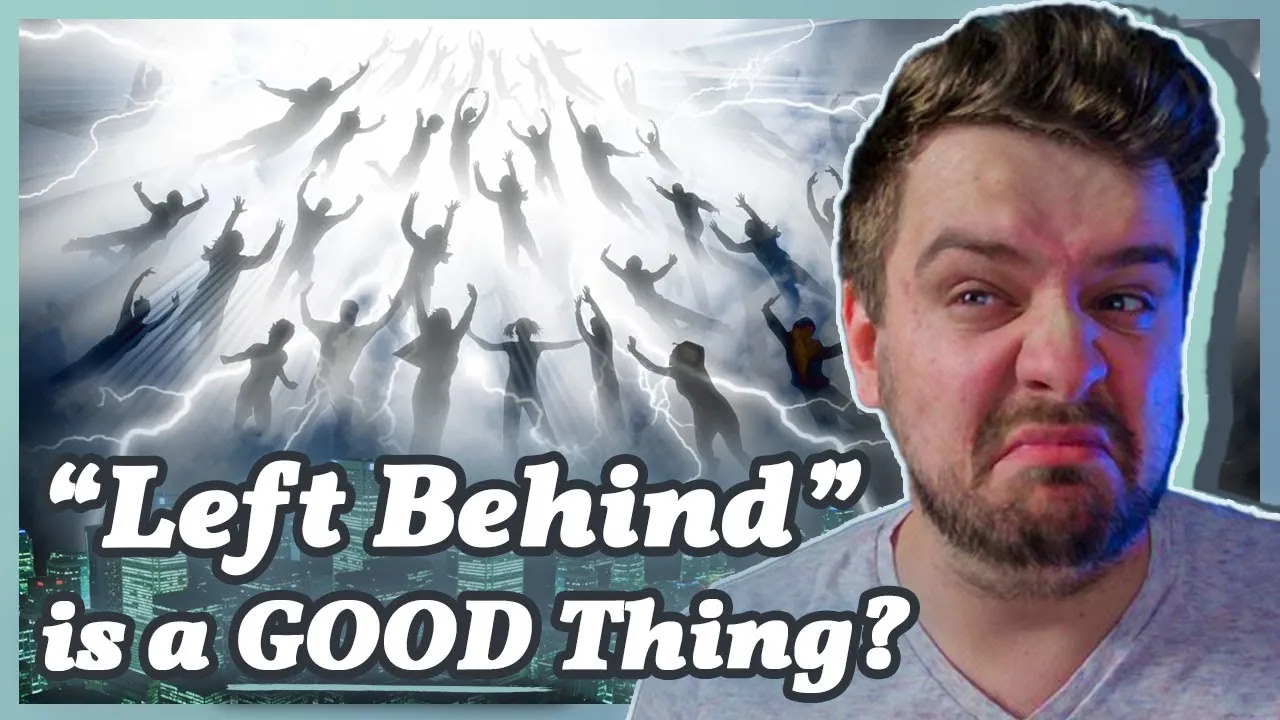
“The Rapture” is a Big Nothing-Burger
The word Rapture isn't in the Bible. Here's what the actual text says about Christ's return.
By Tim Barber··Video·Updated
Chapters
- 0:00Introduction: Unraveling the Rapture Myth
- 0:31The Popular Misconception of the Rapture
- 2:53Diving Deep into Scripture: The True Meaning of the Rapture
- 3:57Paul's Letter to the Thessalonians: A Closer Look
- 6:41The Resurrection and the Second Coming: A Unified Event
- 10:40Debunking Rapture Myths with Biblical Context
- 14:09Conclusion: Embracing a Hope-Filled View of the End Times
Unraveling the Rapture Myth
Have you ever wondered why the idea of the Rapture feels more like a Hollywood blockbuster than a Biblical teaching? You’re not alone. Today, we’re going to be putting this idea of the End Times spectacle under the microscope, using the Bible itself to separate fact from fiction. If you’ve ever had doubts, questions, or just a nagging curiosity about what Scripture really says about the End Times, then you’re in the right place. Let’s bust some myths together and discover the truth about the Rapture. This is one reality check you are not going to want to miss.
The Popular Misconception of the Rapture
Now depending on your church tradition and where you grew up as a Christian, the Rapture may be either extremely popular or just an interesting side show. But, isn’t it fascinating how this idea seems to have captured the imagination of so many believers? Today, we’re going to examine the foundational beliefs behind the Rapture and challenge some common misconceptions.
One reality check we need to make right from the start is that the word “Rapture” isn’t found anywhere in the scriptures. It is a term that has been derived from various translations and interpretations. The Latin Vulgate, a translation of the Greek New Testament into Latin, used the word “rapiemur” to describe the concept of being caught up or snatched away. However, it was not used as a proper name for the event.
Diving Deep into Scripture: The True Meaning of the Rapture
To truly understand the concept of the Rapture, we must dive into the Scriptures themselves. It’s interesting to note that the focus of the passage often associated with the Rapture, 1 Thessalonians 4:13-18, is not about believers disappearing or being taken up to heaven. In fact, the passage speaks volumes about the resurrection of the dead and the second coming of Christ. It describes a loud command, the voice of an archangel, and the trumpet call of God as precursors to believers meeting the Lord in the air.
Paul’s Letter to the Thessalonians: A Closer Look
In order to fully grasp the meaning of the Rapture passage in 1 Thessalonians, we must understand the historical and cultural context in which it was written. The Thessalonians were facing confusion and anxiety about the return of Christ and the fate of those who had died. Paul’s intention was to comfort and reassure them that the dead in Christ would be resurrected and united with Him at His coming. This passage emphasizes the hope-filled anticipation of Christ’s return and the victory over death, rather than a secretive snatch-away event.
The Resurrection and the Second Coming: A Unified Event
Another misconception surrounding the Rapture is the idea of it being separate from the Second Coming of Christ. However, a careful examination of the scriptures reveals that the return of Christ is a singular, glorious event that encompasses the resurrection of the dead and the transformation of living believers. The timeline of end times events is not a series of disparate moments, but rather a unified event culminating in the triumph of Jesus over sin, death, and the devil.
Debunking Rapture Myths with Biblical Context
Though the concept of the Rapture may be popularized in certain circles, it is important to approach biblical prophecy with a balanced perspective. The Rapture theory is rife with misconceptions that cloud our understanding of Biblical eschatology. One major myth is the idea of believers disappearing in a secret event before the tribulation. This understanding detracts from the biblical theme of God’s people enduring through trials and tribulation, rather than escaping it.
Jesus’ parallel between Noah’s story and the Second Coming in Matthew 24 further challenges the assumption of being taken as a positive outcome. In both instances, those who were taken away faced judgment, while those who were left behind were saved. This passage does not align with the popular notion of the Rapture as a secret, positive event.
Conclusion: Embracing a Hope-Filled View of the End Times
In conclusion, our exploration of the Rapture myth reveals the need for a biblical and contextual understanding of the Scriptures. The Rapture is not a separate event, but a part of the grand narrative of the return of Christ and the resurrection of the dead. By embracing a hope-filled view of the end times, we can live in victory and anticipation, actively participating in the unfolding of God’s Kingdom here and now. Let us seek a deeper understanding of God’s word and encourage open dialogue to grow in our faith.
Transcript
[0:00] have you ever wondered why the idea of the Rapture feels more like a Hollywood Blockbuster than a Biblical teaching you're not alone today we're going to be putting this idea of this end times spectacle under the microscope using the Bible itself to separate fact from fiction if you've ever had doubts questions or just a nagging curiosity about what scripture really says about the end times then you're in the right place let's bust some myths together and discover the truth about the Rapture this is one reality check you are not going to want now depending on your church tradition and where you grew up as a Christian or where you got saved and sort of discipled and and what you've been taught the Rapture is either going to be extremely popular like a huge focus of what you study week in and week out on Sundays or it's going to be sort of an
[0:47] interesting Sideshow that a lot of people like to debate and talk about but isn't necessarily the main focus of what they teach but if you're in the United States like I am it is an extremely popular View and there are a few just key chapters where this idea seems to present itself to a lot of people that we're going to examine in a minute but the idea is this Jesus returns to the Earth to supernaturally transport all the Believers that are alive on Earth that time and take them up to be with him in heaven forever while he sends usually what's going to be called the Great Tribulation to essentially wipe out all evil on the earth before his actual second coming now this whole concept belongs to one group of people who've taken a particular stance on Revelation that's called futurism futurism basically teaches that all of
[1:36] the passages in Revelation from about the first verse of chapter 4 onward are all future and they're to be taken as literally as possible and this usually gets tied right in with another school of thought called premillennialism which teaches that the second coming of Jesus happens before A 1,000-year Reign of Christ on the earth and this is all confusing already I know eschatology always like this and I'm sorry there's really nothing for it but the key thing that you need to notice is that there in this view there's a difference between the Rapture which happened before the second coming and then the second coming itself and all of these views of the Rapture are connected with What's called the Great Tribulation which is a certain way of interpreting certain passages in Daniel that says that there's going to be seven years of really horrendous stuff happening on the earth extreme
[2:24] destruction and violence and that the Rapture of the church all the Believers are going to get taken out of here either before that happens in the middle of it happening or after it happens and all those views are the pre premillennial pre-tribulation Rapture or the mid-tribulation Rapture or the post-tribulation Rapture again I'm sorry this is all confusing but at the end of this video I'm hoping that you'll see that we don't have to really worry about all of these categories because that's really not what the Bible's saying in any case but I've got to prove it first we're going to jump into the scriptures now because I think that that should frame everything that we're discussing now we're going to jump into the scriptures now because I think if if you've been around my channel for any length of time you know that that should be the frame of reference for what we're discussing and I think it's interesting that you should know this that the word rapture isn't found anywhere in the scriptures the word comes from the 17th
[3:13] verse follow me because this gets a little complicated translated from the Greek Paul was writing into Latin and then into English the Latin Vulgate which is a translation of the Greek New Testament into Latin translated this word here or caught up which is harp say that five times fast as rapur I believe is what it is all of this means the word itself doesn't actually appear it's never referred to as a proper name for the event in the same way that you might have the second coming or the day of the Lord those are proper names given to named events and this is the only reference to anyone being snatched up or caught up and Paul's not using it as a proper name I just think that's interesting and I think the real kicker is that that's not what this chapter is about at all that's not the focus of this chapter let's back up a little bit and we're going to start in 13 before we
[4:00] start in verse 13 of this fourth chapter obviously we've skipped chapters 3 you know 1 2 and 3 and the historical context so let me just fill in a little bit of details Paul wrote this to a church in a town called thessalonica and the main thing that you need to keep in mind about this group of people is that they believed that the day of the Lord had already come and they had been told that essentially the day of the Lord had already happened the resurrection already happened and they missed it and other people heard that same message and cashed it out that well my loved one who was just killed by the Romans for Insurrection against Caesar is is he also dead still I didn't see him come out of the Grave did he not get resurrected and people were starting to get freaked out other people were believing that the day of the Lord was literally just around the corner a few days away so they were quitting their jobs and they were just kind of kicking back waiting for the second coming so Paul is writing this whole section of
[4:48] the letter to comfort them and to tell them the truth about what's next and what's last here's what he says but we do not want you to be uninformed brothers and sisters about those who are asleep meaning those who have died probably those who have been killed by the Romans is who he has in but it could be you know people who died of old age too he's just saying those who are in Christ who have died I don't want you to I want you to know what's happening with them so that you will not grieve as indeed the rest of mankind do who have no hope for if we believe that Jesus died and rose from the dead so also God will bring with him those who have fallen asleep through Jesus so who's he talking about here he's talking to these Thessalonian Believers about the people who have already died that's the subject of his discussion right now and he's saying listen close the people who have already died Jesus when he comes back in
[5:36] the same way that he died and rose from the dead they're going to rise from the dead just like Jesus did God is going to bring with Jesus those who have already passed away so this is a this is a discussion about Resurrection dead people coming back to physical bodily life he goes on to say this for we say this to you by the word of the Lord that we who are alive and remain until the coming of the Lord will not precede those who have fallen asleep so what does that mean whatever is coming next those who have already died in Christ get to go ahead of us they go first it's like there's a line of people moving in the direction of something and we're in the back of the line those of us who are alive behind the people who have already died they get to go first what do they get to go first to do let read verse 16 for the Lord himself will descend from heaven with a shout with the voice of the Archangel and with the trumpet of
[6:24] God and the dead in Christ will rise first now this is all very explicit language pulled from Exodus 19 all of these other passages describing in various Shades the day of the Lord and what does he say the dead in Christ will be the ones to rise first then we who are alive who remain will be caught up together with them that's that harpazo you know harpazo is the shortened version will be caught up together with them in the clouds to meet the Lord in the air and so we will always be with the Lord therefore Comfort one another with these words now if you were to ask most Rapture proponents to describe the Rapture it usually doesn't have anything to do with the resurrection or the coming of Jesus but that's explicitly what this passage is about in fact in the same way that Rapture isn't a proper
[7:11] noun given to a a discernible event anywhere else in the scriptures but you do have things like the second coming the renew of all things the day of the Lord one of those is referenced here and it's right here the coming of the Lord that word coming is this one right here parusia parusan toiro the coming of the Lord so just looking at the Greek I contend that this passage isn't about a separate event called The Rapture where all the living Christians are taken up to be with God in heaven forever well in advance at least seven years in advance of the the resurrection I think that this is a reference to what happens at the resurrection at the second coming and that's shocking because this is the main passage that people use to talk about this but I think from the context clearly what's being described is the Dead who are in Christ those who have already trusted INR Christ but our dead
[8:00] will be resurrected first and they get to go and be with God first and then we follow along behind them if we're alive at that time on that day then we will be caught up to go see him but if it's the second coming now this this passage nowhere mentions the direction of travel Rapture enthusiasts insist that the direction of travel is us going with him up to be in heaven forever but it doesn't say that but the parusia language at his coming very clearly indicates that he's coming back to Earth and so I feel very comfortable saying definitively this passage isn't this is about the second coming of Christ not some secretive snatch away moment in other words what we have depicted in like the Left Behind books the Left Behind movie there's been more than one hasn't there movies of people getting Zapped out of their clothes and then empty clothing just falling onto the
[8:47] ground and pilots who are Christians driving you know piloting planes just disappear from the cockpit and then planes fall to the ground and people die by the hundreds all the Christian moms and dads who were driving their kids home from school or from you know they're coming home from work or whatever cars careening everywhere and it just happens secretively and nobody knows it's happening until people start disappearing that's not what's going on here it literally couldn't be less secret the Lord himself descends from heaven with a shout with a voice of the Archangel and with the trumpet of God it's as loudly announced as it could possibly be and the dead are resurrected before anything else happens at the second coming which is explicit in the text and Paul's explicit goal was to comfort the thes iians about the return of Jesus reassuring them that those who had died in Christ would not be left
[9:36] behind but would be United with him at his coming listen the context is crucial here because it's Shifting the focus from sort of a fear-driven narrative of being left behind to a hope-filled anticipation of Christ's return that's clearly what Paul was intending to do in this passage and that's what we should take from it so understanding parusia in its Biblical context helps us grasp the real essence of Paul's message a call to Readiness and hope not a riddle about Escape tactics in this chapter alone Paul is addressing a concerned Community with comforting words about the return of Jesus it's not a secret hidden Rapture the passage actually speaks volumes about the resurrection Paul describes a loud command the voice of an archangel and the trumpet call of God as precursors to Believers meeting the Lord
[10:23] in the air and it is a vivid public Declaration of Christ's victory over death a commun Resurrection where the living and the dead in Christ rise to meet him with the dead going first and the key is the Assurance of the Resurrection emphasizing that death does not have the final say for those that are in Christ but of course that's not the only passage that people go to that's just the main one there's one other passage that's extremely popular and it's the entirety of this the 24th chapter of the Gospel of Matthew I did a whole video talking about that chapter right here and why I don't think it has to do with the end times but there's one part right at the end that is of particular interest interest for our discussion about the Rapture so let's open up that chapter now and we're not going to go through the whole thing like we did in the other video but particularly we're going to start looking at around chapter uh 24:36 now just to give you a little bit of the
[11:10] context Matthew 24 is an enormously fascinating chapter but it's often misunderstood this passage primarily references the destruction of the Jerusalem Temple in ad70 which was a major and pivotal event in Jewish history Jesus's prophetic words not one stone here will be left on another everyone will be thrown down we're fulfilled when the Romans sacked to Jerusalem and the historical context is really essential for interpreting Matthew 24 correctly it's not a distant prophecy about the end of the world it's actually a near-term prophecy to Jesus and his immediate audience that had immediate relevance to them in their time in their day and their context and understanding that helps us approach biblical prophecy in all of it really with a balanced perspective recognizing sort of the layered fulfillment of prophecies and the importance of the historical context but there's a little part here starting in verse 36 that we'll just read and it'll probably sound
[11:57] very familiar to you if you have have any concept of what people talk about when they use the phrase the Rapture and here's how it goes but about that day and hour no one knows not even the angels of Heaven nor the Sun but the father alone for the coming of the son of man will be just like the days of Noah for as in those days before the flood they were eating and drinking marrying and given in marriage until the day that Noah entered the Ark and they did not understand until the flood came and took them all away so will the coming of the son of man be and what is that word coming you got it so Jesus sets up direct parallel between between Noah's story about the ark and the flood and the second coming of Jesus and in the story who is taken Noah enters the ark but the flood came and took all of the people on the surface of the Earth away and what were they taken away for they were taken away for judgment so
[12:44] being taken in this story is not good news in fact he goes on at that time there will be two men in the field one will be taken and one will be left two women will be grinding at the Mill one will be taken and one will be left therefore be on the alert for you do not know which day your lord is coming but be sure of this that if the head of the house had known at what time of the night the thief was coming he would have been on the alert and would not have allowed his house to be broken into for this reason you must be ready as well for the son of man is coming at an hour when you do not think he will and then again we talk about this in the other video in the parallel passage in Luke they explicitly ask him where are they taken Lord and he says where the cor where the corpses are there the vultures will gather so most people who would adhere to a Rapture Theology and they teach this passage they'll say that being taken is being taken up to be with God in heaven forever but Jesus in both
[13:31] of the passages where this has been explained thoroughly is actually referring to being taken away in judgment and being left behind is a good thing now those are the two main passages there are several others I know that people will probably pop into the comments with their own favorite Rapture passages if they're defend in this view but it's my contention that the Rapture Theory itself is Rife with misconceptions that are going to Cloud our understanding of biblical eschatology one major myth is the idea of Believers disappearing in a secret event before the tribulation it does doesn't have the scriptural support it detracts from the robust biblical theme of God's people enduring through trials and tribulation not escaping it we'll have to talk about the tribulation another day another misconception is a timeline of end times events where the Rapture is seen as separate from the second coming of Christ but as we've just seen and we've looked at these
[14:17] passages scripture presents the return of Christ as a singular glorious event that encompasses the resurrection of the Dead in Christ and the transformation of the living Believers and by returning to the scriptures examining the original languages and considering the historical context we can correct these misunderstandings which if we do that I think it'll Foster a more biblically grounded and hope-filled view of the end times I for example would take us to 1 Corinthians 15 if I wanted to take a ton more time and really dive into this where the final Resurrection the final judgment victory over death the arrival of the New Creation in its fullness and the second coming of Christ are all one event in Paul's view he does nothing to separate them which means that all we have to look forward to is the second coming not a Rapture and then seven years of torture on the earth and then a Thousand-Year Reign where people are
[15:05] suffering because the world still isn't glorified even though Jesus is reigning on this view we are simply waiting for Jesus to decide for God the Father and Jesus in the spirit to all decide that this world has had enough evil it's the the evil spiritual forces that are ruining Humanity have had their way for long enough and judgment is coming and maybe my favorite part about this view to be honest is that it places the Vic iory of Christ at the cross as the central event in all of history that was where the victory was won and all the details are just working themselves out in the meantime we're not waiting for a series of events way off in the future that are disempowering because we have no control over them and we have no contribution to make to them like the Rapture the tribulation and the Millennium we're waiting for the second
[15:52] coming and the second coming is going to be a lot like his first coming in that he came to establish the kingdom the first time the kingdom that we are supposed to be citizens of living in day in and day out as followers of his every day in the meantime until the second coming when he brings the fullness of the kingdom and stamps out all evil it allows our lives in the moment to be thematically connected with our eternal life later it helps the Bible to really take the shape of a cohesive narrative that culminates in the Triumph of Jesus over sin death and the devil and this Viewpoint doesn't diminish the Future Hope of Christ's return but rather affirms the ongoing present reign of Christ and the kingdom of God's present reality it encourages us to live in Victory and anticipation participating in the unfolding of God's Kingdom Here and Now assured by the fulfilled
[16:41] Promises of the past now don't just take my word for it I want you to be a good ban I want you to open the scriptures yourself and I want you to find all these passages and read them in their context read the the sentences before and after the sentence you think teaches the Rapture read the paragraphs before and after the paragraph you think teaches the rapture read the chapters leading up to and following the chapter you think teaches the Rapture set aside your commentaries for a second be bold enough to look at the Interlinear Greek like we were doing earlier and let the text itself do its work on you and you even if you do that you may come away with a different view from me and that's totally fine the key is that I don't want you to Simply assume uncritically that what you've always been taught is the truth and that's not to be rebellious or conspiratorial it's to be a good ban and do your due diligence as a follower of Jesus to work out what
[17:29] that means in your own life and sound off in the comments do you think I'm crazy you've probably seen a few of these videos if you've been around my channel already we've talked about things like Matthew 24 we've talked about Calvinism all kinds of subjects you probably have some points of disagreement with me which is fine pop those down in the comments so other people can see your Viewpoint as well I don't hide my comment section I invite that open dialogue I want to see what other people have to say you may get a response from me as well but if this has been helpful to you please don't like subscribe and hit the notification Bell because that's just going to you more to these things that people have people who are getting paid hundreds of thousands of dollars and millions of dollars have handcrafted every part of its design and its function just to keep you enslaved and keep your attention on it so don't do that but if it was valuable go ahead and share it in a message to someone or post it to your own personal social
[18:16] media accounts and spread the word so that this sort of thing can go further and impact more people and if you want to have a look at that Matthew 24 passage in a little bit more detail go ahead and watch this video as well and we'll dive in together make God continually bless you as you seek to understand him and his word better further up and further in
Tagsraptureend timessecond coming1 thessalonianseschatology