Eternity is Physical – on “Being God’s Image”, interview with Dr. Carmen Joy Imes
A conversation with Dr. Carmen Joy Imes on creation, God's image, and why eternity is physical.
By Tim Barber··Video·Updated
Chapters
- 0:00Introduction to Carmen
- 0:55Connecting Denver roots
- 5:05Biblical theology approach
- 10:55Redefining the story
- 14:27What it means to be human
- 21:00The importance of the body
- 27:15Ethics of life and death
- 35:41Future resurrection hope
- 41:50Nature of glorified bodies
- 49:48Reappraising human limits
- 55:17Vocation and creation care
- 1:00:40An attractive gospel message
- 1:05:20Future plans and resources
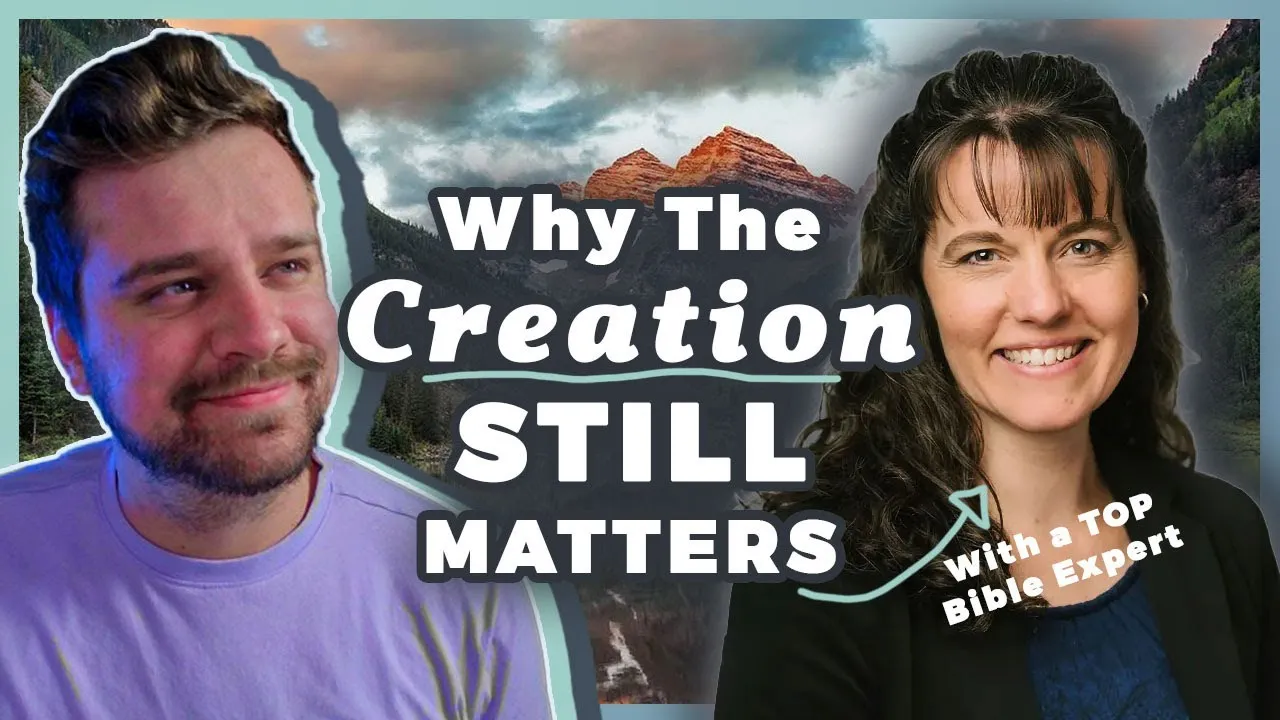
Dr. Carmen Joy Imes is one of the world’s foremost Old Testament Scholars. She just recently released a new book “Being God’s Image: Why Creation Still Matters”. I went through it 4 times, and came to the conclusion I just HAD to interview her for the channel. It was a super encouraging – and enlightening! – conversation. We even found out we’re from the same hometown!
I hope you enjoy it thoroughly. Grab a copy of her book here:
And check out her BibleProject Classroom series on Exodus here:
https://bibleproject.com/classroom/overview/exodus-overview/
Transcript
[0:00] Carmen Joy Iams is an incredible legitimate Bible scholar Old Testament expert and author of the book being God's image which came out just a couple of months back and the subheading is why creation still matters I went through this book on audio three or four times taking copious notes and I decided to just reach out and see if she'd be interested in hopping on and answering some questions that I had she's done a Bible project classroom for them a classroom class it's 14 plus hours of content and she might be the single person alive today who knows the most about Exodus and it was a really wonderful conversation there's lots of gold nuggets in here I was really grateful for her time and we even found out we grew up in the same Hometown and her thoughts uh illuminated a lot of
[0:48] what I was hoping to find when I opened up her book it was really wonderful to speak to her so without further Ado here's our interview [Music] I'm so excited to have this conversation with you I'm going to sort of I would like to treat this like a podcast but it's not really I just have so many questions and I wanted to record it I don't I don't even want there to be like an audience necessarily in the room okay between you and me um because I think that that can lead to people being kind of weird about the way that they answer questions I just want to know what you think about certain questions I want to cover the book I want to give you an opportunity to sort of like tell me where I can find more of your stuff um but I'm super grateful for your time and your willingness to jump on yeah you bet glad to be here excellent so um there's a lot that we
[1:38] have in common uh was kind of an interesting um it was it was interesting for me to kind of discover these things gradually I discovered you through Tim Mackey and Bible project and sort of that entire we'll call it like the ray Lubeck tree okay fair enough which was really uh it's been a fruitful uh fruitful tree I'm gonna break this this metaphor down eventually but uh it's been a fruitful tree for me to sort of climb into the branches and and look for look for wonderful things to just find and enjoy um but then I found you on on Facebook and unfriended you because what you were saying especially regarding things like women in Ministry and the importance of embodied physicality in the Christian Life those things were really resonating with me and then I found out you're from
[2:26] Denver which was I spent the first 17 years of my life there nice me too which was really cool for me yeah yeah what part of Denver did you grow up in it was Denver itself um like Colorado Boulevard and Evans kind of where they intersect yeah I went to Denver Christian High School so for sure that's kind of yeah like south of Denver proper right yeah so now the high school is south of of Denver like it's in Highlands Ranch or something but when I went it was in Denver itself so on the south end of Denver yeah oh cool yeah I I love that area um I have friends definitely who lived in that area my high school was down on I went to TJ oh yeah down on Hampton okay which is right there yep uh but I lived in I lived in it's actually I come to find out later uh that it's actually
[3:16] the most polluted zip code in the entire country in spite of having pretty good air quality um do you know that spot on uh there's I-70 right and then there's that spot where the Purina Dog Chow Factory is hmm like it's the part everybody drives past obviously you haven't been here for some time I know it's been a long time yeah um but it was that part of I-70 where like the Coliseum was where the dog jump okay three was yep uh they had like the stock show over there yep um it was the part of the highway where everybody would drive by and sort of plug their nose because it smelled terrible yeah that was my neighborhood growing up so okay okay it was it was fun for me uh to see that there was some uh some brilliant Bible thinkers coming out of Denver made me really happy that's great um so your book is outstanding uh I read
[4:06] bearing God's name uh a long time ago at this point now I guess relatively speaking um and then being God's image came out just recently and I've gone through it four times oh wow it's almost as many times as I have it's been extremely fruitful uh it's super it's super cool because I feel like it's a bit of a um it's operating on a lot of levels I appreciated that it's doing um it's talking about you know the subject the sub headline is why creation still matters and for for my channel and what we're trying to do uh it's all about how to live your life in light of what the bible really says about eternity what does the Eternal State actually look like a lot of people think
[4:53] it's nebulous it really isn't the Bible gives us so much to chew on exactly and then we live in light of that today uh and all of that is rooted in Genesis one and two so your book I just I thoroughly appreciated its approach in that way and I appreciated that it was really a Biblical theology right it's starting from the Genesis 1 and 2 and tracing key themes and motifs all the way through until the end and and seeing how those All Connect together so yeah how is it that that I would really love to know like where did this kind of thinking come from um why is it important to approach biblical you know scriptural study that way what are some reasons you might want to do that rather than like a Systematic Theology that could be running the risk of picking and choosing why would we do it that way yeah yeah so uh you
[5:42] mentioned Ray Lubeck he is the he was my probably first inspiration or first exposure to biblical theology he was a professor of mine at Multnomah University and he I took a class with him on Old Testament biblical Theology and he asked us you know just as a as one of our assignments to come up with what is the center of Old Testament theology like express it in a sentence and that forced us to try to figure out how can we say something that's true about the Old Testament that includes all of it without being super vague like God is love you know how can we say something that's specific but also that accounts for all the data and it was it was our big challenge that we were working on
[6:29] through the semester and then we had a couple of other assignments where we had to choose a theme and trace it through the whole Bible so the theme that I chose was the garden and that was my first experience tracing from the Garden of Eden to the Garden in the New Creation in the New Jerusalem and it I would have to say that assignment changed my life because it was the first time I saw the way the Bible was working together as a unified story I knew lots of stories I was compelled that it that it was all scripture but I didn't I I hadn't ever traced a thread like that all the way through and to see the richness now not not that every time we see the word Garden it's evoking all of this necessarily but kind of to go back
[7:18] through and and wrestle with it and see how do all these things fit together at when is a passage echoing a previous passage and when is it not that was really transformative for me and Ray lubeck's way of grading those assignments we we could only turn in one page front and back with all the data and all of our conclusions so it forced us to synthesize and to express things clearly and if he didn't like it if he didn't think it was quite on to on point yet he would just give it back to us and say try again I mean he would you know highlight or or Circle problems and make us work on it some more and I I see now what a great pedagogical tool that was to keep us going back until we were satisfied and then our final project for
[8:06] that class was to to do some creative project that expressed what we learned so I made a quilt like a quilted wall hanging of the new the walls of the New Jerusalem with the garden uh in the middle and that that was that again that was a deeply formative experience because I was getting a vision for the big picture and I get I hadn't really thought until you just asked me I hadn't really thought about how that really was the backstory to this book um even though that was back in 1996 97 Maybe probably 96 probably fall of 96. so that's a long time ago now but uh was really really transformative so then when I was looking for a doctoral
[8:53] program later I many years later I it it was important to me to find a program that didn't just slice and dice the scriptures but that also helped see those themes and so I found out about Wheaton College's program and the the degree is actually in it's a PhD in biblical theology so we spent you know three years reading all the Old Testament theologies and thinking about our projects our individual projects in terms of big themes so it really trained me or I had already had the initial Foundation from Ray Lubeck but it gave me a more methodological rigor about that process and I think you see that over and over again in the Bible projects work uh you
[9:43] know Tim Mackey was in that class with me That Old Testament biblical theology class we were all sitting there to be a fly on the wall together I know right so much fun it was a class there were there were professors of Hebrew Bible at Duke and Harvard nashoda house uh the Bible project Biola I'm probably missing a couple of of schools uh but it was just such an amazing you know so the professor can only do so much if the students aren't totally engaged then there's only so much the professor can do to make the magic happen and being in that class was magic because not only did we have an amazing educator but we
[10:32] had an incredible cohort of students that pushed each other and you know it was the kind of thing where students wouldn't just switch topics right after class was over they would walk out of class still wrestling and thinking about it and talking about it over lunch and late into the night and then the next day that's what they were still talking about so I think that's probably where this all came from it's so tremendously interesting because you're 100 right if if people aren't completely bought in then you know even the best teacher of really any kind can only do so much yeah but I do find that there's something something really interesting happens when people even get a glimpse of what the real story is yes that it can sort of create that desire and then they really want to know more and I've seen people who you know would
[11:19] never consider themselves an academic um as soon as they discover that the story that I've had on repeat about what Christianity is capital A about is maybe not the full picture right right they're thinking I will die eventually and then because Jesus paid for my sins I will get to go up to heaven and sing to God forever that is at the the bottom line of what I was trying to address or counteract in this book was this very truncated view of the story the biblical story and our place in it I wanted to help blow the sides of the Box off and say actually the story doesn't start with you are a sinner the story starts with you are made as God's image you you have inherent dignity and worth
[12:08] and you are part of something much bigger than yourselves so yes we're a sinner stand you know we stand in need of of saving I I'm not denying that but we need to turn back the clock all the way to the beginning to get the beginning of God's vision and then see where it's all going and where it's going I'm convinced you're convinced is not a disembodied or nebulous existence uh Airy fairy in the clouds but is actually physical embodied in the new creation I I like to liken it to um you know imagine going to to a theater to see a movie and you're really excited about the movie but you arrive 15 minutes late so yes the entire Exposition and everything that's setting up all the plot conflict and all of the different you know maybe the inciting incident all of those things are just
[12:56] unknown to you yep and then you go through the movie and you're kind of confused you don't really know what's going on so you decide to leave 15 minutes before the end that's that's sort of the way that we read our Bibles there's you know 1 000 I think it's 1189 chapters in our Protestant Bible and there's the first two chapters in the last two chapters have such outsized weight on what the story is about and if we go if we sort of start with a concept of humans that is they're fundamentally broken totally depraved Sinners and we don't go just a couple chapters before that becomes partial truth and say humans are also intended to be God's Partners to rule over the world that he made and called good and take it someplace incredible yes together and
[13:45] that status has not been lost right if we can recover that message it changes everything exactly so so I I was super encouraged as I read your book I um my own you know everything that I've tried to do with my book and everything I've tried to write and and the videos that I put out it is all about this subject and um I was extremely excited about it I I don't want to necessarily go through Point by Point what it is that you spoke about I just whatever I can say I just recommend 100 10 out of 10 this book should be read by everybody who's serious about understanding um understanding the true biblical story and their role within it and what that should mean for what they do now um there are other cool interviews you could do with you know that Carmen has done that you could go watch if you want
[14:32] to go see other other conversations about that what I wanted to do is dive really deep onto a few key ideas that are touched on in the book but that maybe this could stand as almost a like supplementary chapters that's what you and I are talking about things that didn't really get fleshed out quite the way we would like to yeah and I would love to see what you have to say sure thank you Okay so I like that you said made as God's image not made in God's image and I like that you're not using because obviously this has been a discussion for many years um you touch on in the book how people say for example that um you can image God and they use image as a verb there right which is tied to a function right but that's not really the case of the biblical data right the biblical data seems to lend itself way more towards being a human simply is
[15:20] being it Salem Elohim it's being a physical manifestation or a representative of God himself yes to his created order yes right and then image gets fleshed out in other ideas too where you know how you have prophets and Priests and Kings who all represent God to his Creation in a different way um but I most people who have a basic Christian background in the United States don't have any of those categories instead they're thinking in well they're thinking in terms of what makes humans different from let's say the animals is the immortal Soul yeah that's usually what I'll hear in conversation with somebody who's got a basically Conservative Christian background in the United States yeah so what is if you have to limit yourself to
[16:10] Old Testament feel free to because I know there's some changes when it gets to the New Testament what is the Old Testament concept of the Soul yeah and why is that not what makes humans different from animals yes so I think um you've set this up really well I'll just add to your setup that um just underscore I think you kind of said this is that so so often when people talk about the image of God they want to pour into that net or into that container everything that makes humans different from animals and say that's what it means to be the image of God and I want to be more rigorous about saying what does the bible actually say about being the image of God what does it mean not use that as a sort of catch-all for everything that makes us different so are we different from animals absolutely
[16:59] there are qualitative differences between us uh and soul talking about the soul is one way people try to get at that and I think there is some Credence to the idea of um our ability to have a spiritual connection with God is something that seems different than what the animals have and that probably goes back to Genesis 2 when God breathes into Adam that's probably what's communicating that we're getting something of God's Essence within us that animate us but um but I absolutely agree that this that soul is not the best way to talk about what it means to be the image of God because in the Old Testament uh in the Hebrew Bible the word soul is nephesh and there's a great Bible
[17:46] project video on nephesh and what it means which I love to show my students because we think of Soul as being nefesh is usually translated Soul we think of that as being the non physical part of ourselves but the Bible uses nephesh in many different ways and it usually refers to the whole person what we would consider Body Soul and Spirit or body and soul depending on whether you're a dipartite or a tripartite theologian and I don't know what I am on that I what I know is that from an Old Testament point of view we are a soul we are a nephesh and nephesh includes our bodies so it's not just the disembodied part of ourselves I haven't done the same Deep dive in Greek to see how that how that
[18:35] plays out I was going to say how that flashes out but that might not be the right metaphor to use here um but I think you're right that there's a a reading back into the Old Testament Greek concepts of a difference between matter and non-material Ness that we don't have in the Old Testament as clearly and so I think it's important not to read backwards in that sense a hundred percent agreement this this was a this was a a piece of study that I underwent um several years ago with the teens in my church okay and we were looking at uh we were looking at the word soul and I pointed out that the first time that the word Soul appears in the Bible it's in Genesis 1 and it's not describing human beings it's describing fish you know if you just open the book
[19:23] and you read from Genesis 1 1 onward the first occurrence of the word nephesh is for sea creatures God says let the waters team with living nephesh oh yes yes good so the second time that that arrives I'm sorry go ahead yeah so then that can't be the basis for our difference from animals right yeah so we do have differences but the difference is not nephesh yeah so that was super interesting for me because there's a lot of again there's a lot of Greek thought that's tied into the immortal Soul The Immortal Soul being the thing that lives on in a non-material realm after you die um you know that whether that's the good place or the bad place and all of that is Greek platonic thinking and I find that when you understand
[20:12] first off that the new the Old Testament isn't trafficking in those terms at all and then that the New Testament has its roots much more deeply in the Old Testament than it does in any Greek thought in fact Paul will bring up Greek thought to critique it right more than to uh more than to cite it as a reliable source um then the the image of the image of the immortal Soul becomes something that doesn't really pass muster biblically speaking you can't really make a a Biblical case for it right so the idea that ours that are non-material self lives forever and our physical self doesn't or that the physical self is like a like a shell to be discarded so that the non-material part of our self can persist forever yeah these these are not biblical Concepts
[20:59] No in fact when you and this is what was so interesting because you point this out several times in the book um that the the physicality of a human being is assumed and doesn't show up often in the way that we translate things right so the word nephesh which again is the whole embodied self the whole person yeah is so often just translated me yes or especially in the Psalms because nephesh ends up being the fancy poetic way of saying me or I my nephesh is like a more poetic way of referring to myself and yes it's it it's not talking about my inner self as opposed to my body it's just saying me because both of those things is me yeah right I there's there's a there's maybe some other person maybe you're the
[21:49] person to talk about this maybe not um but the the concepts of uh the different um attributes of God that are also themselves identities of God right where something is God but it's distinct from God you have like the the word of the Lord in the Old Testament acts as a character in certain scenes where the angel of the Lord or um you know God's glory is its own character yeah acts in certain ways yeah um maybe it's something similar where there's a human and then there's the the physical part of the human and then there's also the the spiritual part of the human but both of those could rightly be called human yeah I don't have training just to be really clear I don't have training in metaphysics and so I have friends who do who are like like it's very important to them to use very nuanced and careful
[22:38] language about this so one of my friends would argue I am not my body I there is something different I I can talk about my hand in a way that like I have a Consciousness that's outside my body so I want to acknowledge yes that's true I think we all we we can all attest to that but if we drill down to how does the Old Testament talk about human personhood and how does it describe us as the image of God it's very clear that it's something physical that the word use the word selum used to describe humans uh as the image that that word is very concrete it's not referring to a an intangible similarity between us and God but it's our physical embodiment because
[23:26] an image is a statue or Idol of a of a deity that makes obvious it's its presence so as uh an idol of a God is supposed to represent that God's presence in a particular location and similarly God makes humans as His Image so that we can represent his presence on the earth so that so what I like to say is that every human being is the image of God the only qualification for being the image of God is to is human embodiment you don't have to have a certain set of capabilities or uh or personality traits or character traits or functions uh it's it's just built into who you are as soon as you have a body you are a human made as God's image and I'll just hasten to say because I
[24:15] can hear my metaphysicist friend uh in the background warning that what I'm not saying I'm not a physicalist apparently that's a thing where some some people think that we're only physical there's nothing immaterial and I'm not that um but I just want to see the unity that the Old Testament sees in are nephesh that's yeah 100 yeah I have I have friends who are of a similar discipline who yeah they would call that a physical essentialism or like a physical reductionism where it's trying to reduce they would use big words like Epi phenomena of the mind or of things that would be you know emotional down to simple physical chemical processes that would be what a physicalist would be saying and that's not really the claim and that yeah that's why that's a
[25:04] different question than the question I'm trying to answer I'm trying to say what does the bible say that it means to be the image of God so it's not this isn't meant to be the sum total of all that we can know about human personhood but all that the Bible is trying to communicate about human personhood in these terms so I'll also say I'm not a trained classicist so when you ask about Greek philosophy and the influence of Greek philosophy on Christian thought I can see it I don't I'm probably not the expert at naming it but I see it all the time this sort of pouring back into the Old Testament later categories of thought that aren't really appropriate that it's anachronistic to to do that and so I want to be careful that we don't separate body and spirit or body and soul in ways that Plato wanted to do later
[25:52] right yes yeah it's I don't think you have to have too much training to see the influence but it is good to it's good to be careful with our categories and be really mindful of our speech in the way that we're presenting things so that we don't misrepresent yeah having a doctorate sometimes people assume that if you have a doctorate you're an expert on anything you open your mouth about that is in fact not the case which my family will attest to um Mom is not an expert in everything um so I just wanted to be clear about my my training is Hebrew Bible that's where I'm that's where I've landed completely but what what is clear I think and you do such a good job of articulating this in the book is that human personhood being an image a little idle statue a little statue of God running around the creation necessarily
[26:41] implies physicality yep and it's not something to be excluded from what it means to be human as though it's sort of a as though it's sort of an artifact a secondary artifact of being a human it's core to what Being Human means and it's core to what God intended when he created them yes exactly and that has all kinds of implications for ethics once we once we land on this truth that our bodies matter that they're god-given and that they're part of who we are then that has all sorts of you know Trails we could walk down this is exactly where I kind of wanted to go next um is this this becomes a really interesting discussion okay well when does it become a human body at what point in its you know gestation and development what at what point does it
[27:28] become a human body there are lots of arbitrary lines you can draw where you'd be saying okay you know maybe it's you wait until there's heartbeat that you can notice in utero maybe there's um when there's brain activity some people would want to wait until it's you know they'll say fully independent even though all humans are dependent all the time and um infants infants especially so I mean what infant is not dependent uh an infant is not born able to feed itself and nourish itself and clean up after itself as every parent knows very well and so yes this is such an interesting question to then return to with this in mind if the Bible says we are the image of God because we have bodies we are we we're embodied that's therefore we are the image of God then
[28:16] we no longer need to look for a specific capacity that qualifies us to be the image of God and so if you know the the majority of people who are talking about the image of God are attaching it or defining it as a certain capacity and probably one of the most common ways people Define it is rationality humans are more rational than animals we're rational beings therefore were the image of God and if you define it as rationality then you could look at the gestational development and wait for a certain moment of insight or but then how would you define that exactly so is it when the infant the unborn child pre-born child can feel pain is it when they are self-aware
[29:05] because I saw a baby the other day who's clearly not aware that his hands were connected to his arms and that he had control over them you know they were still flopping them all over the place like we it takes months and months for babies to figure out this hand is my hand and I can make it do things uh to get what I want and you are not I can't make you do things the way that I can make me do things and so it takes time so then would we say that um a child under one year of age is not the image of God because they don't have full rational capacities I mean at what point I've got teenagers they say you know develop your prefrontal cortex till like 24 and so does does that mean none of my children are full-fledged human beings made as God's image and and I would say
[29:52] no categorically no the Bible teaches that every human is the image of God and so I would say we could roll back the clock to the very moment when the sperm of your father and the Egg of your mother met in a fallopian tube somewhere and began multiplying because that is that's in that's a body you have two gametes that form a zygote with unique DNA structure yeah and then from that moment on it's a unique distinct human being you know and and you know they don't use the word image necessarily when we're when we're going through for example the Psalms and that's not this is even incidental to the point of what most of these Psalms are trying to communicate but they will locate a person's initial life spark in the womb they'll say yeah you know David would say almost casually as though he's
[30:42] taking this Truth for granted that he's that he was sinful from when he was in the womb yes right yeah and there's a sort of an idiom that he's using there and you know the point isn't he's not trying to communicate something about when life exists but in communicating what he does communicate he incidentally claims that that's when life begins right how far can we roll back the clock we can roll it right back to that moment of conception and God does with this with Jeremiah as well you know before does he even say before you were in the womb yes okay so that's a different thing so that the fun part about that is that it it's telling us that Jeremiah is not self-determined his identity is given by God and that's what I think is a huge takeaway for say the student population that I'm working with I I mainly teach
[31:30] 18 to 22 year olds who are in this process of identity Discovery and formation and many of them feel like they're under a lot of pressure to determine their path for for life and who am I and there are all sorts of options now for who am I that didn't even used to be options and so there's a company a lot of accompanying pressure to figure out who I am and the Bible reaches into that conversation and says you are who God says you are you your identity is given by God it's it's you were born in the heart of God uh you're who you are your personhood came from outside of yourself and was given to you so that that is tremendously counter-cultural because we like to be independent and
[32:19] self-determined and self-actualized and all of that a hundred percent and and this leads neatly into um conversations and questions about calling and work and what we choose to spend our efforts on and what actually matters for eternity and what doesn't matter for eternity but just to tie a bow really neatly on what we just discussed personhood is you know the image of God which I've completed with personhood unhelpfully sorry but being the image of God yes begins at conception yes and that seems to be the best most consistent most reasonable place to locate the beginning of a person's personhood an image of godness right right yes you know someone with profound disabilities right regardless of their
[33:06] gender regardless of their ethnicity regardless of any other you know we would call them an immutable characteristic of their personhood regardless of what those developmental qualities end up being it's simply the moment of there's distinct genetic code that marks the beginning of a new a new unit of a human being and that's when image of God is conferred yep and and it would persist then all the way until death um so that in your later years of life this this week I had an opportunity to speak to an adult Sunday school class where probably the average age in the room was upper 80s and so many of them were single again having lost their spouse many of them were dealing with difficulties of Mobility or hearing uh
[33:56] some of them one of the prayer requests they shared was about one of their members who seems to be confused and is experiencing dementia and I was able to say to them what this means for you in this stage of your life is that you can let go of the worry that if you start to lose your memory your personhood will be lost because yours your sense of self is held for you by God it's not up to you to maintain it and so you can be you can begin to forget who you are but that's okay because God knows who you are and he's holding that for you and so there's there we never come to a point in life where we've outlived our value or outlived our dignity it did because our value and dignity are not attached to what we're able to think
[34:44] they're not attached to what we're able to do and so when you can do less and when you're thinking faculties begin to wane you are still every bit as valuable as you were which then has it's like the bookend to the conversation about um abortion is is euthanasia like does it do do we get to the point where it'd be better we'd be better off dead and I think the Bible is really clear in Genesis 9 6 that we're not to take the life of a of a human being because every human is God's image and so I'm saying from conception and to death you have value and dignity that are worth preserving yeah that's that's one of them and that's it's honestly there are only very few instances in the Old Testament where
[35:33] the phrase is used to get yes after Genesis one and two and that's one of them yep so that's that's a profoundly interesting application of it so then this leads I I would say neatly I I want to get back to I want to get to calling and work and all those things but I kind of want to go to the end of the story first and then build a bridge back to today because I think that that's probably what I think that that's Paul's logic in a lot of his letters is thinking through okay you are this person that God has redeemed you are seated with Christ in the heavenlies so live that out in your day-to-day life and this is what it looks like in community um but in terms of Resurrection then so what is the difference in nature especially when it comes to like image of God quality between our birth to death image of God inhabitation in the Fallen World and
[36:20] then in the resurrected State what is the difference in quality of image of God is it the same thing but now it's just a glorified rendition of it obviously Jesus himself is called the image of God where it's like that definite article yep um how do those ideas all work together so I don't think there's a difference between image of God before we're raised in the resurrection and after like I think our life on Earth We're the image of God and in the resurrection we're the image of God I don't think there's a difference in the Imago day itself but definitely glory is there's a difference in glory and I think Gloria is the best way of describing what was lost at the fall I don't believe that the Bible teaches
[37:07] that we lost the image or that it was diminished in any way because because of Genesis 9 6 reaffirming that every human's the image of God that's why you can't kill each other uh so I would say that what what's wrong when we look out at the world and say but surely you'd say something is wrong we're we're not we're not who we're supposed to be I would agree that and the way I would describe it is we are we are the image of God but sometimes we live according to a lie and we fail to live in alignment with our true identity we live according to other versions of reality we live into other stories that ex that explain why we're here and what we're for and so so what's missing then is the glory that's what gets diminished and I think that's what gets restored in the new
[37:57] creation the New Testament talks about us being conformed to the image of Christ and I want to insist that Jesus is the image of God not because he's God but because he's human and some people will say only Jesus is the image of God and the rest of us are tagging along and hoping it's aspiring to be the image of God and I don't think that works theologically with respect to all those out there who I I know are doing good work and have drawn other conclusions I would say that Jesus is the image of God because he's human and we see in him the all the glory that's supposed to go with that that Jesus is living congruently with his identity and so he shows us how to do that and so we're conformed to His Image
[38:44] we follow his modeling of how to be God's image he lives out his vocation in a way that's appropriately appropriate and we're supposed to follow his lead in that so yes there is a restoration of Glory or an increase of Glory but I don't think there's any increase of image that's that's a really helpful way of articulating this because I was wrestling through this years ago too um my my father passed away in 2018 to uh lung and liver cancer and he in the in the final days it was very quick as I understand as cancers go it was about as painless uh an experience as it can be it was about a month uh of real experiencing of symptoms which had meant that it was obviously really Advanced by
[39:31] the time that he started to uh eventually suffer from it it was stage four we had no idea um but I was reading a book called um I was reading a book called All Things New by John Eldridge and you know John is not what you would call an academic uh he's not someone who has you know done the the really hard work of going in into the Hebrew in Greek but he's um he's a very heartfelt wise experienced counselor of a Believer and this book is all about um you know how the how the hope of new creation is what the hope of Christianity really is and all that ought to change the way that we think about things today and I was thinking about these ideas of image of God as my father's health started to really deteriorate and
[40:20] in studying it and what I came away with what my understanding was is that image of God is really an unassailable Baseline fact of humanness there's nothing that can remove that from a person at all it simply is contemporaneous I guess would be the word it's part and parcel of Being Human in any form in any state at any stage yep um but but my my thought was my dad looks like a a shadow of himself you know and it reminded me poignantly I had also listened to surprised by Hope by n.t Wright yeah years before that uh another incredible incredible work but he says that our our existence today in this life under the curse of sin is
[41:09] almost like we're a shadow of our future selves hmm right so he's picking up on you know Lewis C.S Lewis has this idea of Heaven being a more substantive more weighty and that kind of deals with like Glory that's the term in the Hebrew Bible too yep so it's exciting for me because if you if you believe that Christianity is true and you believe it's truth claims then you should understand that what we're heading toward then would be a more physically embodied more weighty existence in a new world where there's no no suppression from the curse or or sin or death in existence anywhere in the universe yeah it's extremely exciting yes it's very exciting too it is super exciting and this is what I really wanted to dive into
[41:56] um is you know if you think about our embodied existence if we're lucky we get 80 years right maybe a little bit more than that um but that's around what amount of time we can expect if ever if we don't die earlier in our lives due to unforeseen circumstances um and that's this tiny infinitesimal blip but there will come a day when we've had hundreds of thousands and then millions and per you know billions and trillions if you follow the logic of of years of existence in a new glorified body so I I think it's much more interesting to try to locate what what can we learn about that experience and what does the bible teach us there so I wanted to ask
[42:43] you there are different lines of thought on this Michael Heiser uh who you know uh rest may God Rest his soul I know he's in much better shape than any of us right now yes um he likes to say the uh he talks about glorification as becoming as close to Jesus is in his glorified State as possible without also becoming a member of the godhead um that's how he tries to articulate yeah uh glorification my Lutheran friends would talk about uh I believe it is the theosis you know concept so when you talk about a glorified body what are some of the you know properties that you would think that that would take from a Biblical perspective yeah so this is where we move into the
[43:34] area of speculation because we have a very limited data set uh and that is we have Jesus resurrected body and we see what he can do and what's true about his body and then we can extrapolate from that to make assumptions about our body now I heard just a few days ago that some people think Jesus resurrection body is not a model for our new creation body because he hadn't ascended yet so there's a whole there's another whole layer of transformation that awaits him when he appears to his disciples I don't know I I hadn't considered that what I know is when he when he rises from the dead he still eats or is able to eat so it's still a body that can ingest material and receive nourishment from it
[44:23] we know that he has scars so there's a sense of continuity between his Earthly body and his resurrection body in that the the things that happen to him on Earth are still visible so that opens up the question of whether all scars will still be present in our new creation bodies or whether only this guy you know I've heard people say only the wounds of Love Will persist so then it's a question you know will I still have my incision from my c-section will I still have the scar on my toe where I I cut my foot as a child trying to help my neighbor uh will I still have the place where my birthmark was removed on my from my back will you still be able to see the zigzag like I
[45:10] that wasn't a wound of love that was just a you know precautionary make sure this doesn't turn into cancer so I don't know will I still have a tattoo in the new creation will all tattoos still be around or only those that are consistent with our Christian testimony and our identity in Christ if the latter then I'll still have this one because it says belonging to Yahweh and that will still be true um but maybe maybe some of the sillier ones will disappear or the rebellious ones I don't know um all I can do is speculate based on this very limited data set that Jesus has scars I've if I if there's anything I've gotten pushed back from about this book it's this area this question because I also speculate in the book about what happens to disabled bodies in the new
[46:00] creation yes I don't know if I don't have a definitive answer to this but I think it's worth speculating about it's interesting it's an interesting thought experiment because of Jesus scars and I have friends with disability who fall across the Spectrum some of them who are like uh I better get a new body I better be healed I don't want I don't want these things these limitations anymore in the new creation and I have other friends who say I don't I honestly don't know who I'd be without this disability and and I expect that my new creation body will not experience pain it won't be a source of angst but I don't know that my limbs will all be straight and I'll be able to walk and
[46:48] run uh because if I did then who would who would I be what would be unique about me and so I I think that's it's worth at least toying with the idea because for most of my life I would say 44 out of my 46 years I just assumed that people that I knew who are wheelchair users would be skipping and jumping in heaven or in the new creation and I am no longer positive about that not because I doubt God's ability to heal obviously God can heal but I wonder if the healing that will happen in the new creation will be a healing of our community so that the barriers and limitations of disability will be removed not the disabilities themselves
[47:34] I wonder whether we'll actually be so accepting of each other and so interdependent on each other that the disabilities won't be experienced as problems in the same way that they are now and so that that's that new thinking for me has come about as a result of a couple of factors one is studying Exodus and seeing the story of Moses and his speech impediment in chapter three and four God reassures Moses I made your mouth I made you this way and I know what I'm doing and so if this was he doesn't indicate like this is because you live in a broken and Fallen World God God talks about disability in that in that passage as if it was his idea so that was the first thing that really
[48:22] challenged me and then the other Factor is as I be as I worked on the book I became more and more aware of how persistent this image of the ideal person in our minds is an able-bodied middle-aged successful male individual white um and how and how much that's a lie like that that the that if every human being is the image of God then we follow along a spec a diverse Spectrum of personalities abilities and disabilities and that we're meant not we're not intended to be self-sufficient we're intended to be interdependent and sometimes this ideal of healing the
[49:13] disabled body is an ideal that that has centered the idea of Independence and self-sufficiency in a way that I think is not biblical so I am not here it is I am not here to say I know this is how it's going to be in the new creation but I am here to say we should interrogate our assumptions about how it will be and why we think it will be that way because it might in the process uncover some lies that we're believing about what it means to be human excellently stated yeah the the Nuance here is where it's it's it makes so much room for interesting discussion I've heard people um sort of locate the healing concept back into Jesus's
[50:01] own miraculous healing sure right where someone who had an eye that was intended to be able to do something is then not able to do it for some reason and in some cases it's you know uh they were born that way and there's no reason given and other times it's so that the works of God might be made manifest like the blind beggar you know right um and then the the healing is a is is then to be made an illustration of the kingdom of God coming right it's present it's here and it has this healing power to restore something that was intended and designed for a purpose and I to see appears to hear um bodies to not bleed too much um and then legs to walk but I when I read that in your book I it just hit me I was like why why what are the things
[50:51] that we assume are broken that are just being human right yes most of us are conditioned to think that having too much fat on your body we have an idea of what too much fat is and there's actually an amount that's healthy yep and there are problems items that arise in both men and women when you go below a certain percentage right that we would think is more aesthetically pleasing right right yeah so it's like we're not all going to necessarily be you know bodybuilders with six-pack abs and tans in the new creation no we're just going to have a body that has no actual faults whatever that means so then it's yeah this process of like parsing out what is it that's actually a fault in a flaw and actual Brokenness that will be healed
[51:40] and what is it that is just something that I dislike because of my cultural context right because of a self-image that needs to be healed and right and we actually fall along a whole spectrum of sizes and body shapes and abilities and um and and we go through throughout the course of our lifetime we move in and out of seasons of being able to do things right so young children can sometimes do the splits and then can't anymore by the time they're in their 20s or 30s um and now by the time you're my age it's a little hard to paint your toenails like okay this is getting harder so uh we we move in and out of seasons of ability and I and and some people
[52:29] experience persistent disability through the whole span of their life and I think we would do well to begin to appreciate the complexity and diversity of human experience and not see our failure or not see our limitations as a problem but our limitations as a feature uh Kelly kapik's new book you're only human is a really good exploration of human limitations um I I just saw a podcast interview with him in which they titled it Kelly CAPIC has limits or something like that that was clever um because he is trying to lean into the it's okay to have limits it's actually good because when I'm limited then I discover I I need others I can't do everything all by myself exactly yeah it's it what we should
[53:19] affirm regardless as well is just to reiterate and maybe Place more emphasis on someone who has something that they even they would consider is a a limitation that you would blame on Brokenness and sin and the curse even that person there's nothing that has been done to their image of godness right right it's a re-emphasis of you are as valuable and as worthwhile and as important to God as something that he made and called good and you represent him regardless of what you like or don't like about your body and what state you know what what is the cause of those pieces of your body that you don't like being the way that they are regardless of any of that there's nothing that will assail your your nature as the image of
[54:07] God exactly super interesting so we're coming up on like 58 minutes almost an hour um I have a couple of things I wanted to just talk about briefly if we could yep and it's the idea of vocation and calling um a lot of that's one of the things the other thing will be what are the first three things you want to do in the new creation and we'll get to that um but when it comes to calling and vocation and what we do with the time and energy that is given to us um what are the the Eternal valuable things on which to spend at that time small questions like this that's right you know things you could just you know a cup of tea by the fireplace for a couple hours and you'll have that solved
[54:56] oh right um of course uh the way that I would want to boil this down to make it not such a massive thing is you know how does our understanding of what we do now change because our Eternal State reflects the physicality of our current state like yes a lot of people will think because I'm going to get airlifted to Heaven eventually in my eternal state is going to be singing to God in a nebulous non-physical realm forever yeah however you make the all that yeah they tend to devalue the the secular things that they do now and they tend to overvalue sort of a platonized sacred things that I do sure or they'll they'll keep the value of real work on the shoulders of pastors and missionaries and evangelists rather
[55:43] than on accountants and police officers and bookkeepers and designers right so what does what changes about the way that we should look at vocation and work and calling and things like that because our Eternal state is physically embodied as well yeah yeah I mean the subtitle of the book is why creation still matter and I would say that when you when you drill down in Genesis 1 about to to the question of what is the image of God you find out it's human identity but immediately God says so that so humans are the image of God so that they may Rule and so there's an there's an attendant vocation that comes along it's a package deal
[56:31] um and so that's I think what we're talking about when we say that the image has been lost we see people not doing this vocation but that I want to just separate between the identity and the vocation long enough so that we we understand that a disability can't disqualify you your age doesn't disqualify you all of that and and so the vocation of humans from the beginning is to rule over creation that is to maintain order to create spaces for flourishing to contribute to to contribute to creativity and and Kingdom building activities in whatever ways are not exploitative or domineering or whatever so humans are supposed to rule creation but not each other we're
[57:19] supposed to be side by side as partners doing this work and when you have that piece in place and then you notice that Jesus comes in the flesh his Incarnation is in fleshed he's he rises from the dead in his body he ascends in his body and he announces the new creation then we discover oh that thing that God told Adam and Eve to do in the garden is still going to be in effect in the new creation a creation still matters not just now but for eternity this this planet actually matters and so our investment in human institutions in politics in the economy in in education in creation care like actual taking care of the environment all of
[58:09] these things are ways of living out our human vocation and so we need to practice doing those things in a way that brings honor to God and is consistent with where this is all going if we don't if we don't think of this world as something that's going to just go up in flames then this the ways that we manage these resources matters so it was we're recording this on the 5th of July it's kind of a big holiday yesterday lots of people blowing things up all over the place and and we had 15 000 people to send on our local park to watch fireworks and on my walk to work this morning I saw a lot more trash than usual and I I typically don't look at that as boy somebody should get over here and do their job what I think is ooh on my way home I
[58:56] need to take a plastic bag with me so that I can fill it up with all of this trash because it's my job I'm human I've been given the the dominion over creation this is my corner of the world I walk past it every day therefore I should be the one reaching down and picking up the trash uh and that is not a distraction from my calling in Ministry that is part of my human vocation mm-hmm it's part and parcel with it yes that is so um that's so very different we'll just I I could go deeper on that that's very different from what most of uh again most of my we'll call them Conservative Christian friends uh have in mind when they think about the calling of a human being yeah what
[59:45] humans were made for yes in terms of creation care there's there's a weird sort of a conflation of a certain political ideology and and a skeptical a skepticism around environmentalist causes and things like that and I grew up in Denver as you did as well and I I don't know if it's true everywhere but in my growing up context people who cared too much about the environment were were people we suspected they didn't they were they were off by a few degrees because they they didn't care about the real thing that matters which is the disembodied Souls of our neighbors and and I I just want to say that as I go back to scripture and look at the teaching about what does it mean to be human I see creation care is absolutely Central to what it means I
[1:00:33] don't understand how we ever got to the place where it didn't matter or whether that was peripheral and and we don't need to worry about it I it's so it's so interesting because when we really take God at his word and we read this and we really start to parse out how do these things walk out in shoe leather how do we actually put this stuff to work I I think that and this is just a suspicion I have but you know you can tell me what you think too I I suspect that a watching world of unbelievers who have a a an intuitive sense that the physical created World matters and it should be taken care of and we should be taking care of other people you know goodness knows where they got this idea I have no idea
[1:01:20] who have this this General sense that the created World matters whether they would use those terms or not they look around and they want to protect the environment they care about animals they care about animal rights they care about the rights of disenfranchised human beings yeah if there's if there's a if if we were to embody not just a moral philosophy but a way of life that also elevates those things on the basis that God also wants to see them elevated and cared for yep I wonder how much more attractive the good news would be that God is King over this place yep how much more Winsome it would sound to to people who you know if if we actually value what God values and I think that humans have an intuitive sense to Value those things
[1:02:09] even though it's twisted and marred and shaped by all sorts of other like you said lies and stories that we shouldn't be leaning into and believing yeah I just wonder how much more Winsome the gospel would sound to people if it were truly embodied in our lives the way that God seems you know what God actually prioritizes and seems to care about on the pages of scripture totally I agree yep I totally agree and I actually end the book with a with a two-page uh redo of how should we share the gospel because I think I think a lot of the hesitancy that people have about caring for the planet comes from the way that we've embraced a gospel message that was truncated we've said I want to ask Jesus into my heart to pay for my sin so I can go to heaven when I die
[1:02:56] that story has nothing to do with this created world and so I don't see my vocation as part of it but if we invited people into a living relationship with the God who created them as His Image and if they're becoming part of God's family his royal family and given dominion over this Earth and that's part of the Gospel message then it matters how we clean up our neighborhoods mm-hmm I have to I have to share this one little Motif before I get to that last question this one little thing that kept coming up for me um as I was listening because I I almost exclusively listen to books um I I read them as well but it's just a lot easier for me to be able to multitask and let something sort of sneak past my inhibitions down into my subconscious yeah if I listen to it yeah um and then I can do you know I can do a
[1:03:43] book like yours four or five times and really get to Riff on different things and listen for different cues so I would go to the gym or I'd go to the grocery store or I'd be driving and I'd be listening to your your book and I would um unconsciously find myself just vigorously nodding my head and and you know sort of sub vocally saying yes like yes um but when I got to the end and I got to that little section where you're talking about you know a revised way of presenting the gospel uh I was driving in my car and I was listening to it and I had my windows down because it was a hot day here in Fort Collins and I was I was very certain that I was alone or that no one was paying attention um and I was wrong about that but I just I let out a really effusive God yes and
[1:04:33] then I like I didn't have it on the speakers it was my earphones right and I just look over and there's a person who's like okay wonder what he's listening to it's the gospel man it's the kill it's the good news that's the good news that God is King over this place that he created it for a purpose he created All Humans for a purpose that he's coming back to restore that purpose and you're allowed you're invited to participate in it if you abandon the rebel kingdoms and join the kingdom of Jesus right amen and it's it's extremely invigorating and life-giving it is yeah so thank you for your contribution to that your book was incredible um I enjoyed it thoroughly I will continue to enjoy it I've got lots of other stuff I want to go through and take notes on um but one last question
[1:05:21] and it's the hardest one I think I found for people who are basically thoughtful I teed you up with it earlier yep what are after The Feast however you parse that maybe the feast is ongoing whatever after the feast after you know whatever ceremonies writing of wrongs what other whatever other things make up the the God has exacted Justice and created righteousness as as far as the eye can see as far as the curse is found the entire created order is restored redeemed and then we sort of step out of the gates of the city into a world full of potential ready to be taken in the direction that God intended for it to be taken when he first commissioned humans yeah what are the first three things that you do in the
[1:06:09] new creation I I find a great fruit tree and try the fruit I tracked down either Moses or Paul I mean it would really be great if I could find them both and we could just sit down and have a heart to heart all three of us I'm convinced that people think the two of them would not get along and I'm convinced that Paul and Moses are actually on the same page so I'd like to just actually confirm that and have a have a heart to heart and then I don't know I feel like I want to go on a really great hike with some great companions um I I love being out in nature and I feel like when the earth is all I mean
[1:06:56] it's amazing now so when it's all restored what will it how gorgeous will it be it's a fantastic answer I have almost the exact same one yeah I yeah it's like I wonder what the Tree of Life tastes like you know the fruit from the Tree of Life whether that's literal or not yep if it is literal I'm sure going to want to try it yep um yeah a fun thing about I had this thought the other day about spending time with Moses and Paul and I don't know if they would ever want to spend time with me you know maybe they're so charitable they've got forever so right exactly maybe they've got such a such a restored and glorified uh level of love that they would be willing to spend a bunch of time with me but technically if we have eternity and it's infinite I could actually spend infinite time with
[1:07:43] each of them oh sure when it comes to Moses and Paul and theoretically and they wanted to and because it's the new creation and all the lies have burned away they would not see you as any less if if either of them had an arrogance issue it would be gone so they would be delighted to spend the day with you sounds like heaven scratch that it sounds like sounds like the new creation um and as far as hikes go I wanted to share this photo here is from Aspen Colorado that's amazing it is literally from it's a place called The Maroon Bells out here in Denver I've been there if you're looking for a good hike and you're ever back in the area I can't recommend the Maroon Bells enough it was gorgeous man that was a great picture
[1:08:31] but I'm with you 100 just being out in the created order and especially as beautiful as it is now I can't fathom what it would look like in a glorified state but I'm excited I mean I know I'd love to do the walk with Jesus like do the hike with Jesus and be able to ask him like how did you think up that one and you know just I I'm convinced that we'll have all eternity to keep learning and there's so much I want to ask so a hundred percent yes completely agreed well it's been nothing short of a pleasure this has been super Illuminating and super fun um I'm really grateful that you are going to be in eternity because there are going to be even more questions I'll have all the time in the world to chat sounds great it sounds great
[1:09:19] um but I really appreciate it where can people go like where would you ideally direct people obviously your book is being God's image why creation still matters where would you prefer people go if they wanted to learn more about your ministry about your book about your teaching if they wanted to find out more about Carmen Iams where would they go uh probably the two the two One-Stop shopping places actually as if there's two then it's not one stop anyway is my my YouTube channel is which is where I keep video libraries of all the conversations like this one and all the lectures that I've given and all that I make weekly videos called Torah Tuesday that people can check out so that would be a great place to find all the video content and then I try to keep a running list on my blog of any other content
[1:10:07] around the web plus any books that I write or contribute to my blog is carmenjoyimes.blogspot.com outstanding yeah those Torah Tuesday videos are outstanding and whenever whenever you have uh conversations with your daughter as well it's always really exciting um I will add one to the list that I will recommend highly to people which is your uh Exodus uh class for Bible project classroom yes uh was that's a good just mind-bending left and right nice yeah that was really fun to record it's a 14 and a half hours of content that you can find over at thebibleproject.com uh forward slash backslash classroom I just say slash click on slash yes there you go yeah right I just know which one to push
[1:10:55] click on classroom and you'll see my class on Exodus and it's free because other people paid for it so
Tagscarmen joy imesimage of godcreationold testamentbeing god's image